
Educational information only; individual safety questions require professional advice.
The promise is neat; the evidence is messier
A stacked formula can promise energy, appetite control and “thermogenesis” in one serving. It sounds comprehensive, but each extra component introduces another dose, possible interaction and claim to verify. NIH ODS says multi-ingredient weight-loss supplements make it difficult to isolate ingredient effects or predict the combination. If two separate products are taken together, the same uncertainty extends across both labels. This article focuses on complexity and exposure rather than deciding whether one ingredient or many is always better.
The single versus multi-ingredient comparison explains the broad tradeoff. Here the practical question is what happens when formulas or products overlap in one day.
Count what overlaps across the whole day
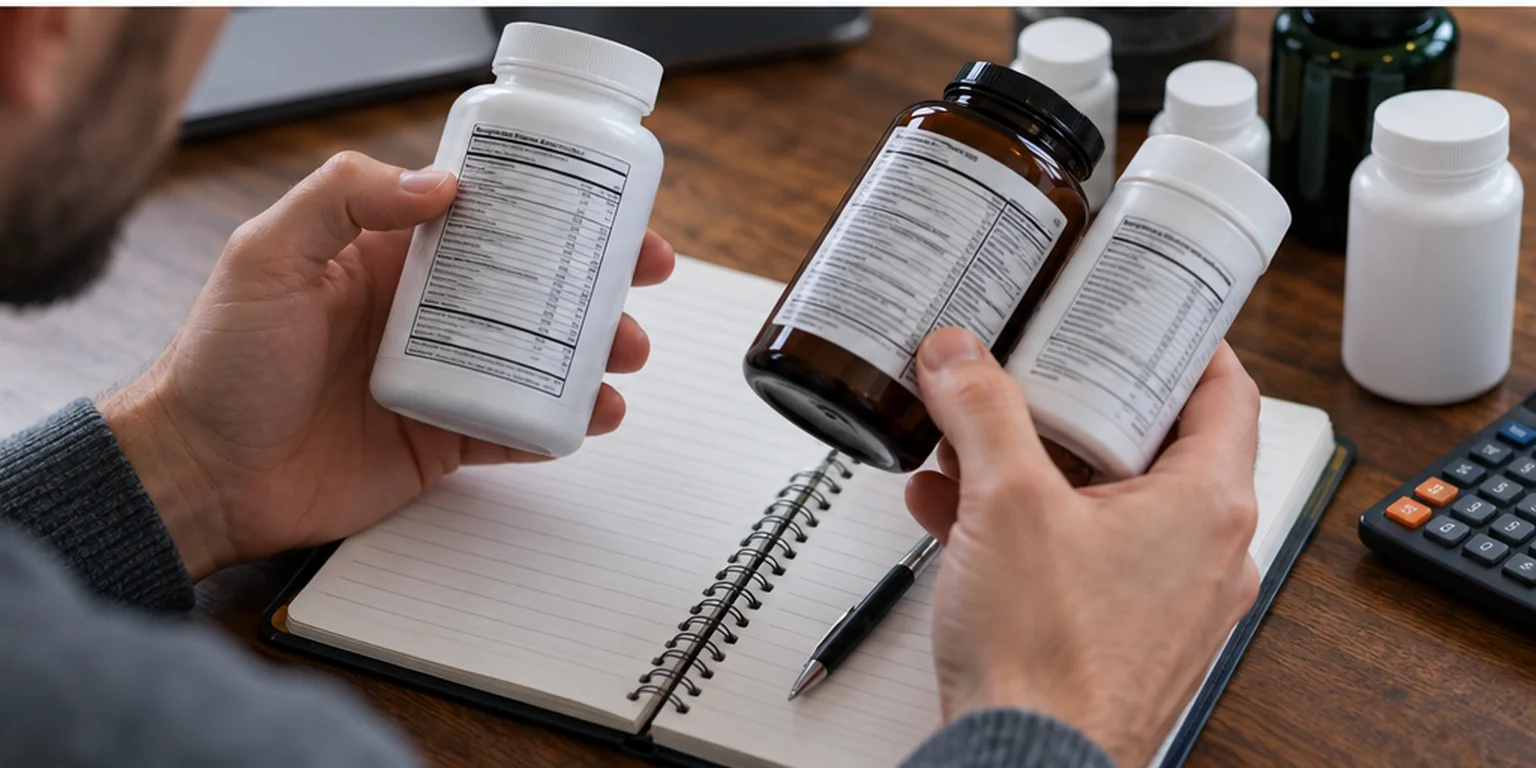
List everything taken: fat burner, pre-workout, energy drink, coffee and any cognitive or appetite product. Look for caffeine sources, stimulants, botanicals repeated under different names and ingredients hidden in blends. FDA warns that combining medicines and supplements can increase harms and that “natural” does not guarantee safety. Do not add amounts from a proprietary blend as if you knew each component's dose. An undisclosed amount is an uncertainty, not zero exposure.
The total caffeine guide gives a focused method. The broader stack review should also include medicines, medical conditions and the timing of each product.
Separate plausible mechanisms from outcomes
One component may be studied for acute energy expenditure, another for subjective appetite and a third for alertness. Combining those findings does not show the stack reduces body fat. Human evidence for the current finished formula and serving schedule would answer a more direct question. Check whether the marketed weight-loss claim matches the studied outcome, time frame and population. The evidence-grading guide helps keep the hierarchy clear.
A product can contain several ingredients with some individual research and still have no trial of their combined use. That does not prove failure; it makes the combined outcome uncertain.
Watch safety as the list grows
Stimulant overlap may affect sleep, anxiety, palpitations or blood pressure in susceptible people. Other botanicals can interact with medicines. FDA advises discussing supplements with healthcare professionals, especially when combining products. A person taking a prescribed medicine or managing a heart, liver or kidney condition should not treat an internet stack recipe as a personalized safety review. Even a non-stimulant ingredient may add digestive effects.
If severe symptoms occur, stop using the product and seek appropriate medical care. Do not try to identify the “guilty” ingredient by continuing a combination that caused a concerning reaction.
Use a four-column stack inventory
For each product write its serving, every declared active amount, missing amounts and time taken. Add food and drink caffeine to the same day. Then mark duplicate ingredients and ingredients with clinical cautions. Keep a copy of the current labels because online listings may be outdated. The evidence checklist can sit beside the inventory: one records exposures, the other asks whether the advertised outcome is established.
If a product has undisclosed blend amounts, do not “solve” the gap by guessing based on ingredient order. Consider a more transparent alternative or decide that no purchase is needed.
A worked decision example
Suppose a capsule contains caffeine and bitter orange, while a pre-workout adds caffeine and a branded botanical. The buyer also drinks a large coffee. The first task is to identify total disclosed caffeine and any hidden stimulant amounts. Next, check whether the finished combination was studied; separate ingredient papers do not establish it. Finally, ask a clinician or pharmacist about relevant health and medicine interactions. The answer might be to avoid layering products, but the right choice depends on the specific labels and person.
Do not treat a temporary increase in alertness as a sign of fat loss. A pleasant sensation is a different outcome from a sustained change in body composition.
Where Fat Burn Active fits
Fat Burn Active's current formula should be evaluated as a whole before anyone considers combining it with another supplement. The full review discusses its label and evidence; it does not establish that adding a second product improves results. NIH ODS notes uncertain benefits and potential harms for many weight-loss products.
For a useful next step, collect the complete labels of anything you already use. If exposure cannot be calculated or a health concern applies, ask a qualified professional rather than experimenting with a stack. A simpler routine around meals, sleep and activity may answer the actual need with less uncertainty.
Why a neat stack chart can mislead
Suppose a company shows a chart with three arrows: energy, appetite and calorie burn. Each arrow points to a different ingredient study, and the advertisement places the chart next to a bottle containing all three. The chart does not demonstrate that the current bottle creates all three effects together. Check whether the studied amounts are disclosed, whether the studies used the same population and outcomes, and whether any trial tested the full formula. If two bottles are involved, ask the same questions about the combination and timing. The number of arrows is a measure of marketing design, not necessarily evidence quality.
A practical inventory might show one 150 mg caffeine source in a fat burner, another disclosed caffeine amount in a pre-workout and an unknown contribution from guarana inside a blend. You can add the known numbers, but you cannot determine the true total if the guarana contribution is not specified. That uncertainty should change the decision. Moving a serving to the evening may create a separate sleep issue. A person using blood pressure medicines or managing anxiety has still more reason to seek individual guidance. Do not copy a stack from a social post or an athlete whose circumstances differ from yours.
Keep the decision proportional: if the combined claim is not supported by a relevant trial and exposures are unclear, choose fewer products or none. If you still want to investigate one product, compare its complete label, finished-formula evidence and risks on its own. The goal is to recognize when information cannot support a confident purchase or safe self-experiment.
Check the complete combination before deciding
Check the current package, ingredients, serving directions, your other caffeine sources, and relevant health conditions. For an evidence-based starting point, read the full Fat Burn Active review. If this product still fits your circumstances, you can inspect its current offer. We may earn a commission if you buy through that link. Choosing no supplement is equally reasonable when the evidence or safety questions do not support a purchase.
Frequently asked questions
Do more ingredients mean more weight loss?
No. Effects and interactions of a combination need their own evidence.
Can I stack a fat burner with pre-workout?
Review overlapping stimulants, exact labels and individual health with a qualified professional first.
Is a proprietary blend a safety assurance?
No. Undisclosed component amounts make exposure harder to assess.
Sources
- NIH ODS: Weight-Loss Supplements
- FDA: Medicines and Supplements
- FDA: Supplement Label Rules
- FDA: Caffeine Sources
- NCCIH: Using Supplements Wisely
- FTC: Evidence for Health Claims
Reviewed against the sources listed above. Educational information only; not medical advice.