
Research and quality checks are distinct; this guide is educational, not medical advice.
Save the exact product and claim
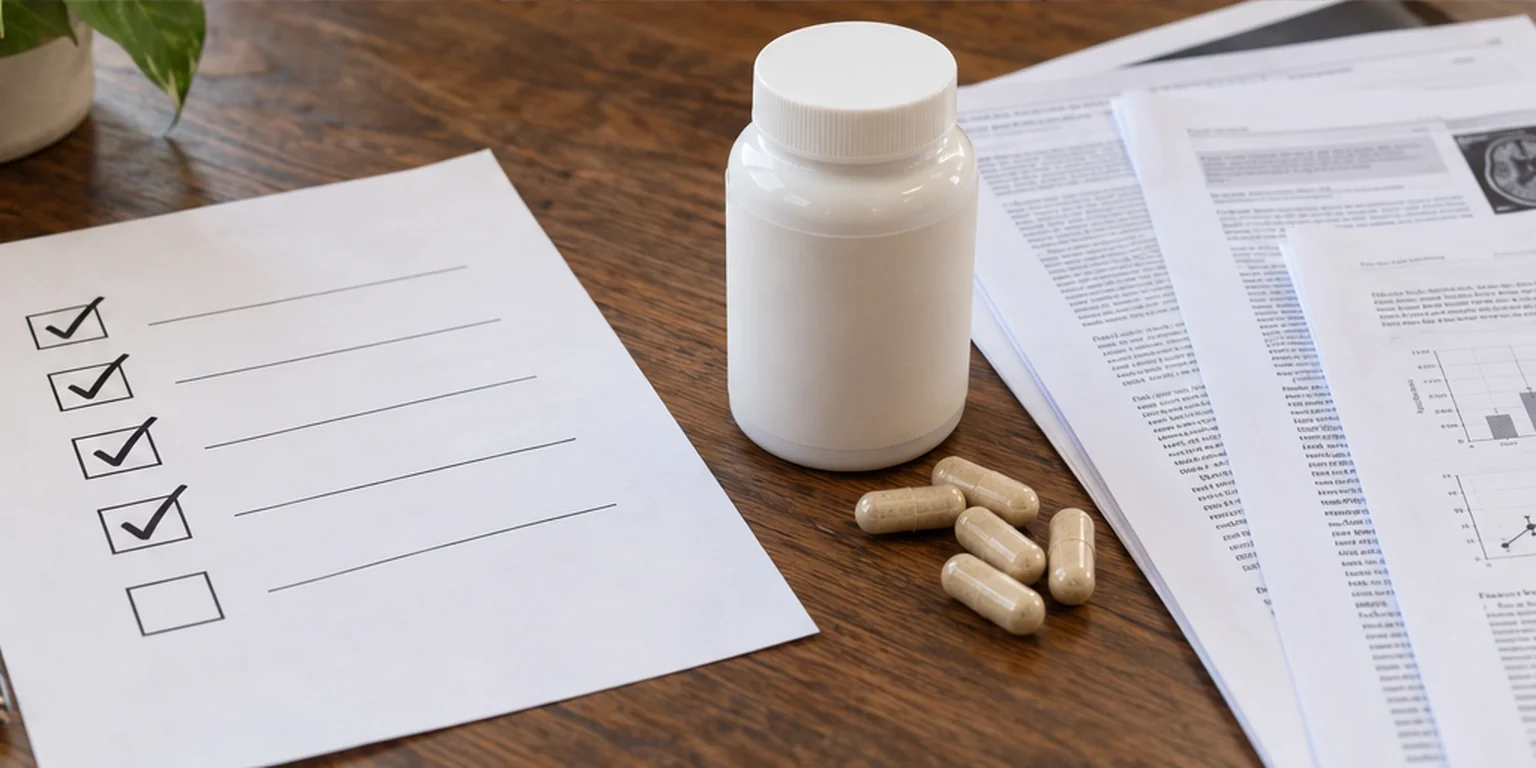
A product name can cover multiple versions, bundles and label revisions. Save the current Supplement Facts panel, serving size and date before comparing evidence. Write each promise in plain language: weight change, appetite, energy or exercise performance. The FTC expects substantiation relevant to the claim a consumer takes away, not just a footnote about an ingredient. A checklist is useful because it keeps the moving parts visible.
This is a buyer's worksheet. The grading guide explains strength of evidence, while the Fat Burn Active label checklist applies product-specific questions.
Box 1: is the dose visible?
Check the amount per serving for each active ingredient and the total daily serving. FDA guidance permits proprietary blends to show the total while withholding individual amounts, with ingredients listed by weight order. If a dose is hidden, you cannot verify that a cited trial used a matching exposure. Record “unknown,” not “probably enough.” Add caffeine from coffee, energy drinks and other supplements when assessing stimulant load.
The blend guide explains the label rules. A transparent number still does not prove efficacy; it only lets you compare a claim more honestly.
Box 2: is there human evidence for this claim?
Locate the cited paper or trial registry and check whether participants, comparison group, duration and primary outcome match the advertisement. An ingredient trial answers a narrower question than a finished-formula study. NIH ODS notes that multi-ingredient products complicate attribution and prediction. A cell experiment, animal study or before-and-after testimonial cannot substitute for a relevant human outcome trial.
Note the size of any effect and uncertainty. A statistically significant change can still be small in practice. If a website lists many citations, check which actually concern the current product and advertised result.
Box 3: how independent and complete is the record?
Look for funding and author conflicts, independent replication, negative findings and whether the study was registered. Industry support does not automatically invalidate research, but an isolated positive study deserves caution. FTC guidance asks for the totality of relevant evidence. Mark “limited” when support depends on one small or short study. Do not turn missing evidence into proof of no effect; it means the claim remains unsettled.
The study-funding guide offers questions to ask without assuming every funded result is wrong.
Box 4: what was independently tested?
A laboratory report or certification may address identity, contents or selected contaminants. OPSS warns that third-party certification does not establish clinical safety or effectiveness. Verify the exact product in the issuer's directory and check the test scope and current status. A badge copied onto a listing is weaker than a verifiable product entry. Testing one batch or ingredient is not the same as testing every sold bottle.
The third-party verification guide provides a document-first process. Keep product quality and weight-loss evidence in separate boxes.
Box 5: is it sensible for you?
Check age and pregnancy warnings, medical conditions, medicines, stimulant sensitivity and the complete ingredient list. NIH ODS describes interaction and adverse-effect concerns for some weight-loss supplements. A clean label does not guarantee safety for your circumstances. Ask a clinician or pharmacist about relevant interactions rather than inferring safety from a natural-sounding name. If the formula or directions have changed, refresh the assessment.
Do not combine multiple stimulant products to test a marketing promise. A product with modest evidence and uncertain safety may be a poor fit even when an individual ingredient has plausible research.
Turn the boxes into a decision
Write a one-line outcome for each box: verified, limited, missing or not applicable. Do not add the marks into a fake scientific score. A product might have transparent doses and no finished-formula trial, or a quality seal and an important medication interaction. Those differences need explanation rather than a single star rating. If a key safety item is unknown, delay the purchase and seek advice. If evidence is weak, spending nothing is a valid choice.
If you independently assess Fat Burn Active, begin with the full review and current manufacturer label. The checklist is useful even if every affiliate link is removed: it can prevent a claim from outrunning its supporting evidence.
A filled-out example without a fake score
Suppose the label lists caffeine clearly and four plant extracts inside a proprietary blend. The current marketing page cites two cell studies, one supplier-funded ingredient trial and a quality-test badge. Your checklist would read: product/version documented; caffeine amount visible but four extract doses unknown; no relevant finished-formula weight-loss trial identified; one indirect human ingredient study requiring dose comparison; badge not yet verified in the issuer's product directory; individual safety and medicine interactions still to review. This is a useful conclusion even though it does not say “buy” or “avoid” for every person. It tells you what to ask next and what cannot be claimed.
If the seller later supplies a batch certificate, check the product and batch identifiers and what analytes were tested. A report limited to heavy metals does not establish label accuracy for each botanical or clinical efficacy. If a trial is presented later, compare the study formula and serving size with the package in your hands. If the paper involves a different product or a much larger dose, keep the efficacy box marked indirect. A marketing page's number of citations is not a substitute for that matching exercise.
Finally, ask what you expect to gain. If your main concern is fatigue, sleep loss or an inconsistent meal routine, a stimulant product may distract from the actual barrier. If you take medicines or have a health condition, bring the ingredient list to a clinician or pharmacist. A careful buyer can leave several boxes unresolved and decide against purchasing. That is not a failed checklist; it is the checklist doing its job.
Check the full claim before deciding
Check the current package, ingredients, serving directions, your other caffeine sources, and relevant health conditions. For an evidence-based starting point, read the full Fat Burn Active review. If this product still fits your circumstances, you can inspect its current offer. We may earn a commission if you buy through that link. Choosing no supplement is equally reasonable when the evidence or safety questions do not support a purchase.
Frequently asked questions
Does a quality seal prove the product works?
No. Verification of contents or manufacturing is separate from clinical effectiveness.
What if the blend hides ingredient doses?
Mark dose comparison unknown rather than guessing from the total.
Does no finished-product trial prove it cannot work?
No. It means the exact product claim has not been directly established by the evidence found.
Practical decision checkpoint
Use a two-column checklist: what the product page claims and what its cited research actually tested. For each ingredient, record the exact form, dose, study population, duration, and measured outcome. Add a separate row for the finished formula; leave it blank when no direct trial exists. Finally check the full stimulant exposure and safety information. A list of references can look impressive while failing to support the advertised result. The decision is stronger when every claim has a matching piece of evidence and uncertainty remains visible.
Sources
- FDA: Supplement Facts Labeling
- FTC: Health Products Compliance Guidance
- NIH ODS: Weight-Loss Supplements
- OPSS: Certification Scope
- FDA: Dietary Supplement Q&A
- NIH ODS: Product Integrity
Reviewed against the sources listed above. Educational information only; not medical advice.