Educational information only; individual safety questions require professional advice.
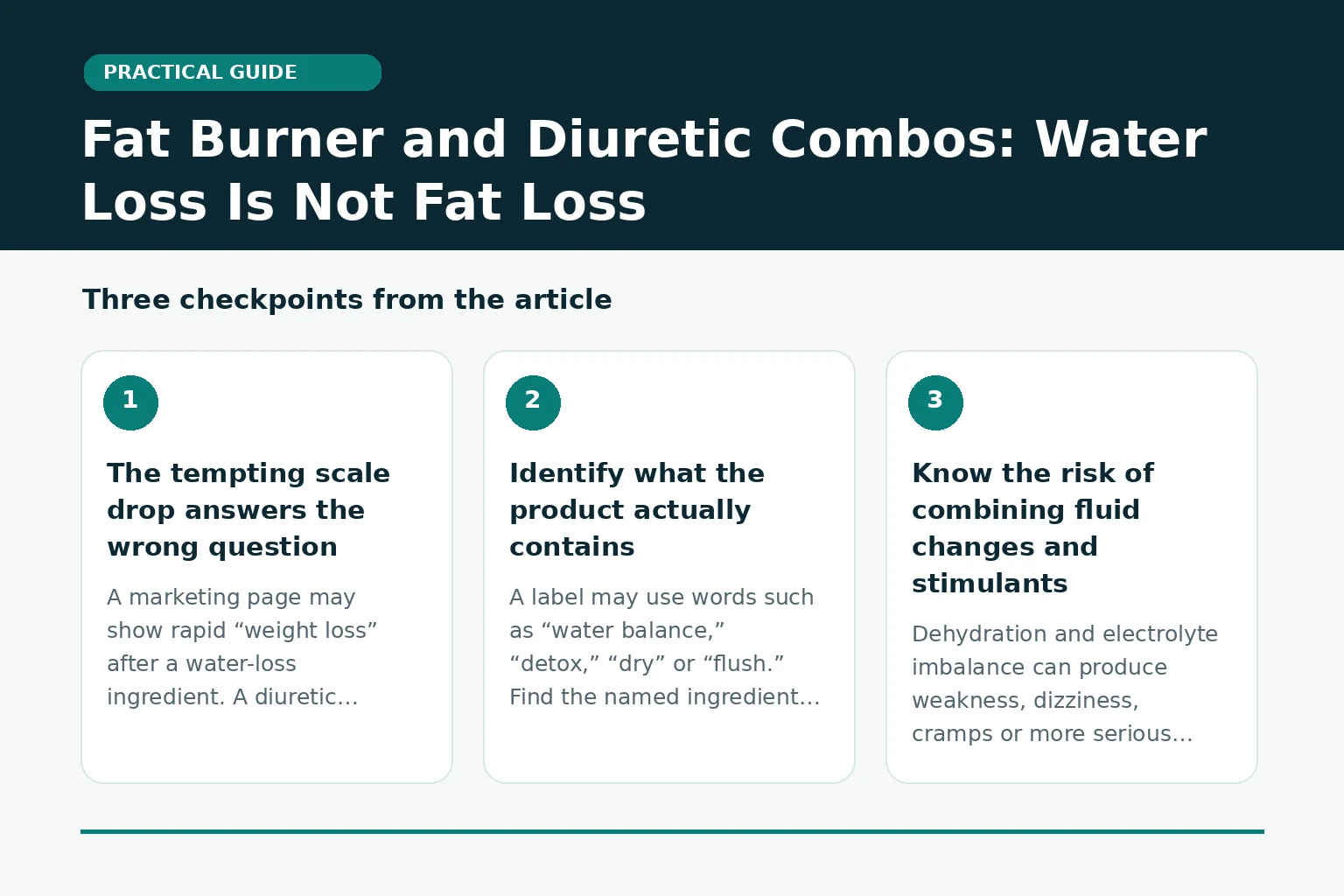
The tempting scale drop answers the wrong question
A marketing page may show rapid “weight loss” after a water-loss ingredient. A diuretic changes how much fluid is excreted, so a lower number need not reflect any change in body fat. NHS patient guidance on water tablets notes that related weight loss is fluid and can reverse when fluids are replaced. Prescription diuretics are medical treatments for specific conditions and should be used according to clinician instructions. This article addresses the misleading weight-loss combo claim, not the treatment of edema or high blood pressure.
The weight fluctuation guide explains why a daily number is not a direct fat measurement. A temporary drop is not evidence that the fat-burner component worked either.
Identify what the product actually contains
A label may use words such as “water balance,” “detox,” “dry” or “flush.” Find the named ingredient and amount, rather than assuming all products are prescription-style diuretics. Some formulas contain caffeine, which can have diuretic effects, while other botanicals may lack good evidence for a weight-loss outcome. NIH ODS describes varied ingredients and limited evidence in this market. If a serving hides amounts in a blend, exact exposure is uncertain.
The fat-burner basics helps distinguish marketing categories. Do not diagnose swelling or choose a water-removing product based on a label phrase.
Know the risk of combining fluid changes and stimulants
Dehydration and electrolyte imbalance can produce weakness, dizziness, cramps or more serious symptoms. MedlinePlus warns of these risks for medical diuretics; a supplement's effects and risks depend on its actual ingredients. Adding a stimulant can complicate how you feel during exercise or hot weather. Do not assume drinking an arbitrary large amount of water neutralizes every risk. People taking prescribed diuretics, blood pressure medicines or medicines affected by fluid balance need individualized advice.
The hot-weather guide covers another context where pushing through symptoms is unwise. For concerning symptoms, stop and seek medical care rather than using a scale as a safety gauge.

Compare outcomes over a sensible interval
If the sales claim is fat loss, ask for human evidence measuring body fat or a meaningful long-term weight outcome with the exact formula. A one-day decline in scale weight after increased urination does not support that claim. NIH ODS cautions that many weight-loss products have little convincing efficacy evidence. A comparison with a control group is needed to separate product effects from diet, exercise and normal fluctuation.
The evidence guide explains what to look for. No supplement should be called a fat burner just because it alters water balance.
Do not self-treat unexplained swelling
Swelling can result from a range of causes and deserves assessment when new, persistent or accompanied by shortness of breath or other concerning symptoms. MedlinePlus describes edema as fluid in tissues and notes that clinicians may sometimes prescribe a diuretic for a medical reason. A commercial “water-loss” stack is not a substitute for diagnosis. If your clinician prescribed a diuretic, do not stop, adjust or add products based on this article.
Bring the full supplement list to your doctor or pharmacist. FDA notes that supplements can interact with medicines, and a “natural” ingredient is not automatically safe.
A scale-based marketing example
Suppose a two-bottle offer combines an energy capsule with a “water flush” capsule and promises a visible three-day transformation. Ask what was measured: daily scale weight, body fat, or a clinical outcome? Review both current labels and the combined serving schedule. If a buyer eats differently and sweats in training at the same time, those factors further complicate attribution. If product-specific fat-loss evidence is missing, do not treat a rapid change as proof of a permanent result.
The safest next step may be no purchase and a consistent measurement plan. If fluid retention is a medical concern, seek medical guidance rather than experimenting with a stack.
Fat Burn Active is a separate decision
Do not combine Fat Burn Active with a diuretic product to force a lower weigh-in. The full review discusses its formula, evidence and safety limits, but it does not establish benefits for any combination with a water-loss agent. A concern about edema or rapid unexpected weight change should go to a clinician, not a sales page.
The useful conclusion is simple: a fluid shift is not a body-fat result. Compare long-term habits and measurements under similar conditions, protect hydration appropriately and review medicines with a qualified professional when relevant.
Read the bathroom-scale story correctly
Imagine a sales graphic showing a lower weigh-in after two days of a “water loss” supplement. Without measurements of body composition and a suitable comparison, it cannot show that body fat declined. Fluid intake, salt, exercise, digestion and the time of weighing can all change the number. If a person with a medical condition is already using a prescribed diuretic, the numbers may be part of a clinician's fluid-management plan, which is entirely different from a commercial fat-loss claim. Never change a prescribed dose or use a nonprescription stack to manage a medical fluid problem.
For an ordinary weight-loss plan, compare trends under similar conditions over longer intervals. If a product leads to increased urination, do not respond by drinking extreme quantities or ignoring dizziness. Monitor symptoms and seek care for weakness, confusion, palpitations or other concerning signs. A person exercising in heat faces additional fluid demands, and a generic product label cannot account for their medicines and health history. A pharmacist can help review exact ingredients if the buyer is unsure.
The commercial decision is often simpler than the physiology: a short-lived lower number is not the outcome most people mean by fat loss. The best evidence would involve a controlled human study of the complete product with meaningful longer-term outcomes and safety monitoring. If the advertisement offers only a rapid scale photo and a water-flush mechanism, the fat-loss claim remains unestablished. Focus on a routine that supports health rather than trying to make the next weigh-in smaller by changing fluid balance.
Check the complete combination before deciding
Check the current package, ingredients, serving directions, your other caffeine sources, and relevant health conditions. For an evidence-based starting point, read the full Fat Burn Active review. If this product still fits your circumstances, you can inspect its current offer. We may earn a commission if you buy through that link. Choosing no supplement is equally reasonable when the evidence or safety questions do not support a purchase.
Frequently asked questions
Does a diuretic burn body fat?
No. A diuretic changes fluid balance rather than establishing fat loss.
Can I combine a water-loss capsule with a fat burner?
Do not assume it is safe; discuss exact ingredients and medicines with a clinician or pharmacist.
What if swelling is persistent?
Seek medical evaluation rather than self-treating with supplements.
Practical decision checkpoint
Use waist and multiweek weight trends rather than a rapid drop after extra urination to judge fat-loss progress. Review the whole product label and fluid context. A short-term scale change should not be converted into a claim that body fat was lost.
Sources
- NHS: Water Tablet Weight Change
- MedlinePlus: Diuretic Safety
- MedlinePlus: Edema
- NIH ODS: Weight-Loss Supplements
- FDA: Supplement and Medicine Interactions
- MedlinePlus: Electrolytes
Reviewed against the sources listed above. Educational information only; not medical advice.