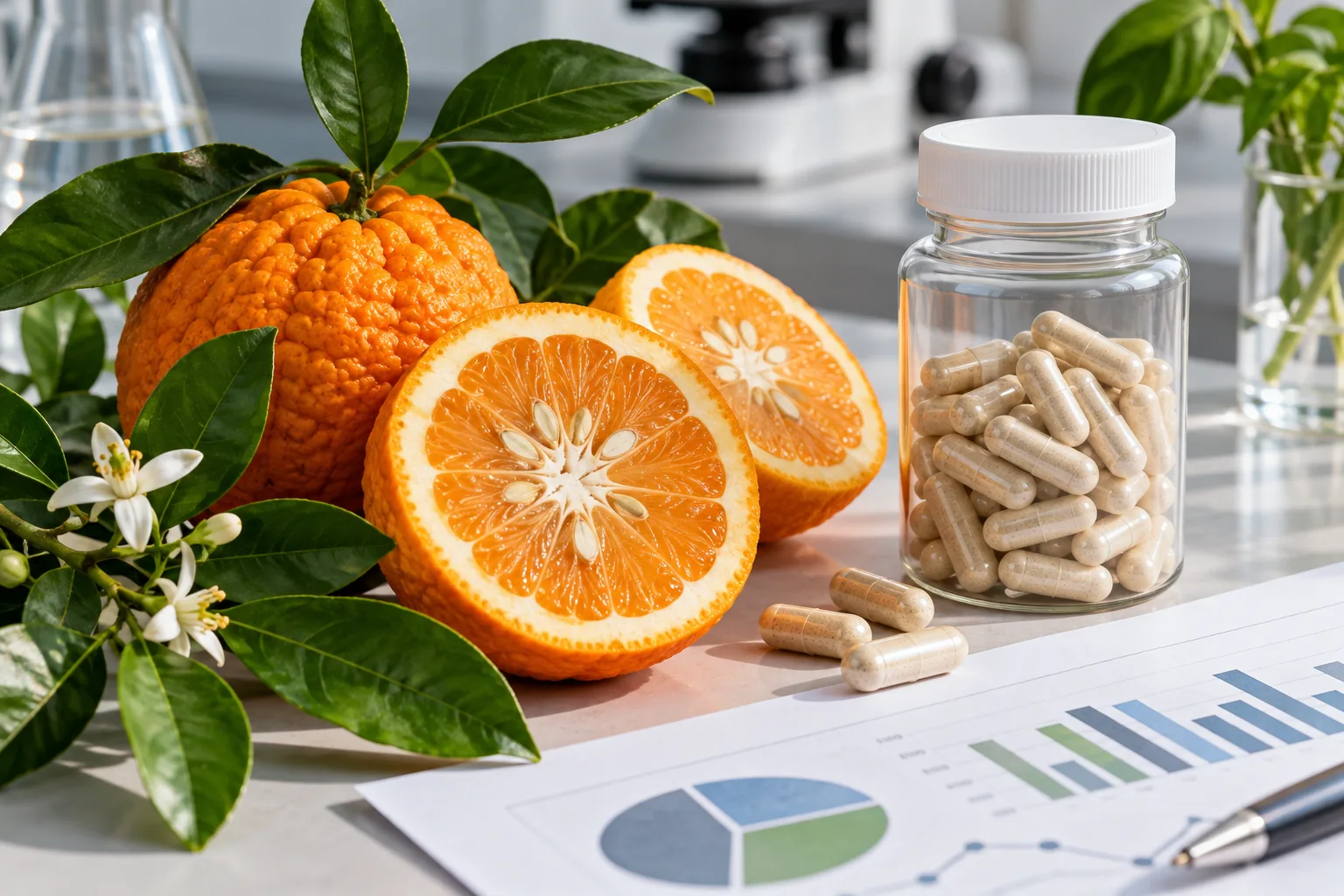
| Ingredient | Extract | Standardization | Nominal marker |
|---|---|---|---|
| Bitter orange extract | 100 mg | 6% synephrine | About 6 mg synephrine per two capsules |
The marker figure is arithmetic based on the merchant’s published percentage, not independent laboratory verification. Confirm the label on the bottle.
What the current product page actually says
The manufacturer’s US page lists bitter orange extract at 100 mg with 6% synephrine in a two-capsule serving. Multiplying those figures gives 6 mg of nominal synephrine. This is a calculation from its published formula, not independent verification of an individual bottle or an assurance about bioavailability. Check the Supplement Facts panel on the package you would receive: formulas and labeling can change. The page names the extract but does not provide a finished-product study isolating the effect of bitter orange within Fat Burn Active.
The same two-capsule list includes 200 mg guarana standardized to 22% caffeine and 76 mg caffeine anhydrous. Those two disclosed sources imply about 120 mg caffeine before considering any caffeine that might remain in the green tea extract, whose caffeine quantity is not specified. Avoid treating 120 mg as an audited all-source caffeine total. This matters because a claim about synephrine alone cannot be applied directly to a mixture containing other stimulants.
Does synephrine cause meaningful fat loss?
Bitter orange is often presented as a thermogenic. A short-lived change in energy expenditure or fat oxidation is an intermediate measure: it is not proof that someone will lose more body fat over weeks or months. The NIH National Center for Complementary and Integrative Health notes that human studies have generally been small, sometimes methodologically limited, and often used multi-ingredient products. That makes an ingredient-specific benefit difficult to isolate.
A 2022 systematic review and meta-analysis of Citrus aurantium and p-synephrine reported no significant weight-loss effect after longer use in the included trials. Interpret that conclusion with the limitations of the underlying studies, not as proof that every person or formula has identical results. The merchant’s assertions about faster fat reduction and performance describe its marketing position; they do not establish that 6 mg of synephrine in this product delivers those outcomes. A fair verdict is limited evidence for a useful weight-loss effect at this formulation.
The combination with caffeine is the practical issue
The product’s own caution says it contains caffeine and should not be combined with other caffeine sources or ingredients with similar effects. Coffee, energy drinks, and pre-workout products may add exposure that an ingredient-by-ingredient review misses. Even when a study of synephrine alone appears reassuring, it cannot settle the safety of a person’s combined stimulant use, medical history, or medication interactions.
NCCIH reports serious events in people who took bitter-orange supplements, while emphasizing that the products often had multiple ingredients and a causal role for synephrine is uncertain. Evidence about effects on blood pressure and heart rate is mixed. Those caveats matter in both directions: avoid saying the ingredient definitely caused each reported event, and avoid calling the blend risk-free. People with cardiovascular concerns, stimulant sensitivity, or relevant prescriptions should discuss the complete label with a qualified clinician or pharmacist before use.
A four-part evidence test
Separate four questions on a note. First, is the product label current and does the bottle actually match the online formula? Second, does a human study test the same ingredient form and daily amount, including co-ingredients? Third, does it measure sustained changes in body weight or fat mass rather than a few hours of thermogenesis? Fourth, what risk follows from the full formula and all other stimulants you use? Unknown is a valid answer; it should not be converted to a favorable score.
The cited literature answers some of those questions for bitter orange but not for this finished formula. The nominal 6 mg amount is useful for comparing labels, yet dose similarity by itself cannot transfer a clinical result across formulations. If the seller changes the label or your caffeine intake changes, repeat the assessment rather than relying on an old review. Our broader caffeine and guarana guide examines the overlapping stimulant sources.
Who might reasonably pass on this formula
If you already struggle with palpitations, elevated blood pressure, anxiety, or poor sleep, an added stimulant blend can be a poor fit even if its label seems transparent. Pregnant or breastfeeding people and children are excluded by the merchant’s warning. The same warning advises against use with cardiovascular disease or caffeine hypersensitivity. Do not disregard those directions because an advertisement highlights a botanical name or a small calculated synephrine number.
If you want to compare alternatives, first decide whether a stimulant supplement fits your health context at all. A non-stimulant option is not automatically effective or safe; it simply poses a different set of questions. A sustainable food and activity strategy is a legitimate alternative to purchasing any fat burner. The answer to “Is synephrine the reason to buy Fat Burn Active?” is no: current ingredient evidence does not support making that ingredient the deciding promise.
How to compare a study with this serving
Start with the administered daily amount, not only the name Citrus aurantium. Look for an explicitly measured p-synephrine content, a placebo comparison, and the presence or absence of caffeine. Then identify the primary endpoint and the difference between groups. A study that reports a transient metabolic response in fasting adults cannot be converted into a prediction of kilograms lost while taking this combination with meals.
Also examine whether the trial screened out people with blood-pressure concerns or excluded common medicines. Such exclusions may make results less applicable to a buyer with those circumstances. Short follow-up and a small sample can miss less common unwanted effects. Neither a reassuring isolated-ingredient trial nor an alarming case report establishes the net effect of this exact product. The most defensible purchase comparison gives uncertainty its own place alongside the price and disclosed formula.
If you are considering the product
First read the full Fat Burn Active review and compare the current package with the manufacturer’s online panel. Check the other stimulant sources, your medicines and health conditions, and whether the expected benefit is worth the cost and uncertainty. If the product still fits your decision, you may inspect the current product offer. We may earn a commission from a purchase. That relationship does not change the evidence standard; choosing no supplement is a valid outcome.
Frequently asked questions
Is the label’s 6 mg a measured result?
No. It is 100 mg extract multiplied by the stated 6% standardization; it is not an assay of your bottle.
Does bitter orange replace the need to track caffeine?
No. Fat Burn Active also lists guarana and caffeine anhydrous, while the green tea extract may add an undisclosed amount.
Can a short thermogenesis study prove fat loss?
No. Sustained body-fat outcomes require appropriately designed longer human studies.
Sources
- Fat Burn Active US ingredient panel and cautions
- NCCIH: Bitter Orange Usefulness and Safety
- Koncz et al., 2022 systematic review
- NIH ODS: Weight-Loss Supplements
- FDA: Dietary Supplement Questions and Answers
Ingredient evidence and manufacturer claims were reviewed separately. Educational information only; not medical advice.