The complete disclosed two-capsule formula
These calculations use the current official page reviewed September 13, 2026. Percent standardization multiplied by extract mass estimates the named constituent; it does not verify laboratory content or bioavailability.
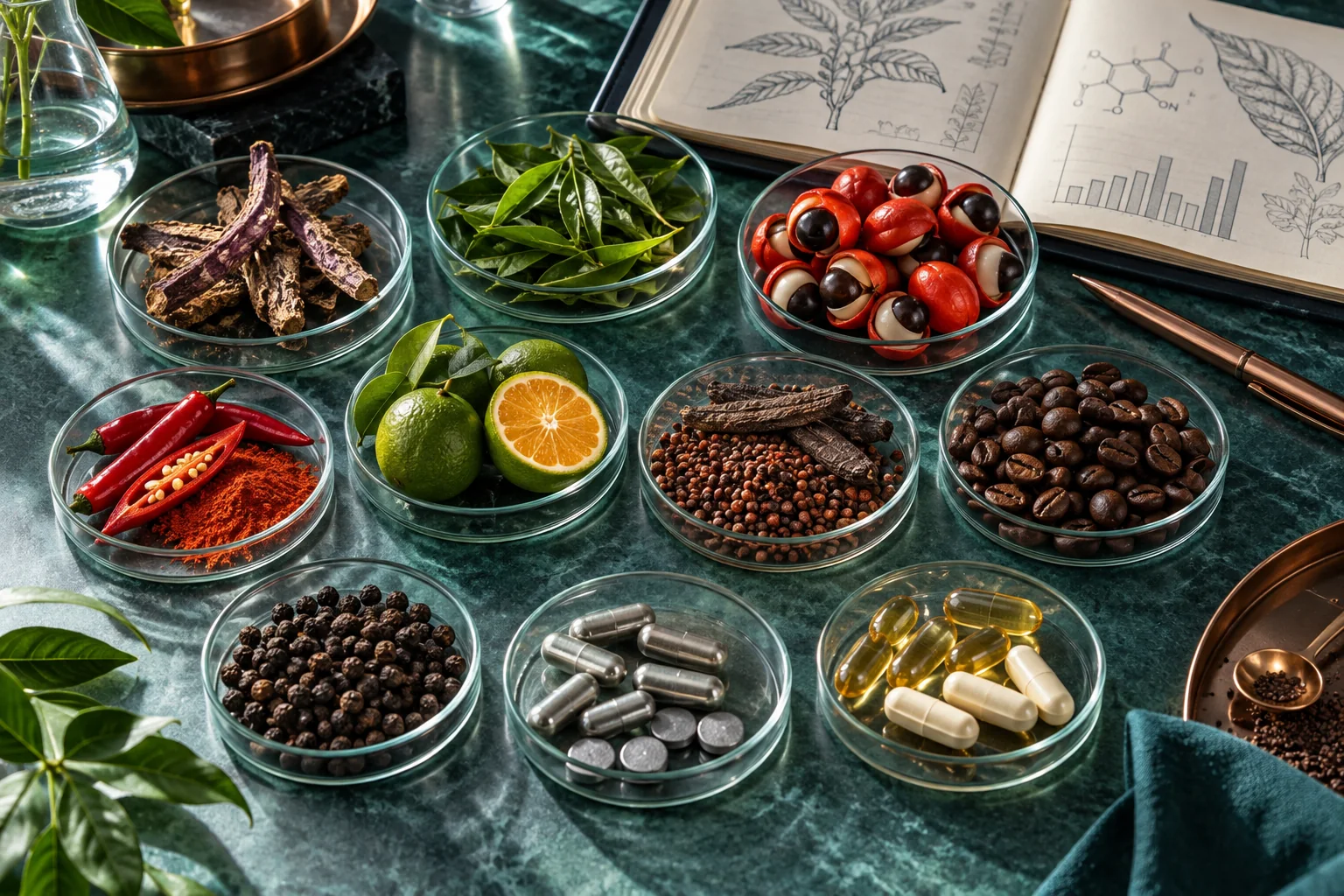
Coleus, phenylcapsaicin, and grains of paradise
Coleus forskohlii is included for forskolin-related metabolism and body-composition claims. Small human studies have produced inconsistent findings, and the NIH characterizes evidence for many weight-loss supplement ingredients as limited. A biological pathway involving cyclic AMP or lipolysis is not equivalent to loss of stored body fat.
Phenylcapsaicin is a synthetic analogue designed to deliver capsaicin-like exposure with less pungency. The disclosed yield is calculable, but studies of a branded ingredient or acute thermogenesis must match dose, population, duration, and outcome before they can support a claim. Grains of paradise supplies 6-paradol; research has explored brown-fat activity and energy expenditure, yet evidence for durable weight loss remains much thinner than a marketing mechanism implies.
Caffeine, guarana, green tea, and bitter orange
Caffeine anhydrous and guarana create at least 120 mg of disclosed or calculable caffeine per two capsules. Green tea extract can contribute additional caffeine, but the current table gives EGCG standardization rather than an all-source caffeine figure. Therefore, 120 mg is a known minimum, not a confirmed total.
Green tea contributes a calculated 100 mg EGCG. Concentrated extracts are not interchangeable with brewed tea and carry different safety considerations. Bitter orange contributes a calculated 6 mg synephrine. Research on caffeine, green tea, or synephrine alone cannot establish the effect or safety of their combination in this exact product.
BioPerine, vitamin B6, pantothenic acid, and zinc
BioPerine supplies piperine, which is often included to influence absorption. Increased bioavailability is not automatically beneficial: it can also make medicine-interaction questions more important. The low dose does not eliminate the need to review a complete medication list.
Vitamin B6 and pantothenic acid participate in normal metabolism, and zinc has recognized physiological roles. Correcting a deficiency and taking a high-percentage supplement are different scenarios. The presence of nutrients involved in energy metabolism does not demonstrate extra fat loss in a person whose intake is already adequate. The disclosed B6 amount also makes total intake from multivitamins, energy products, and other supplements worth checking.
Why eleven ingredients do not equal eleven proofs
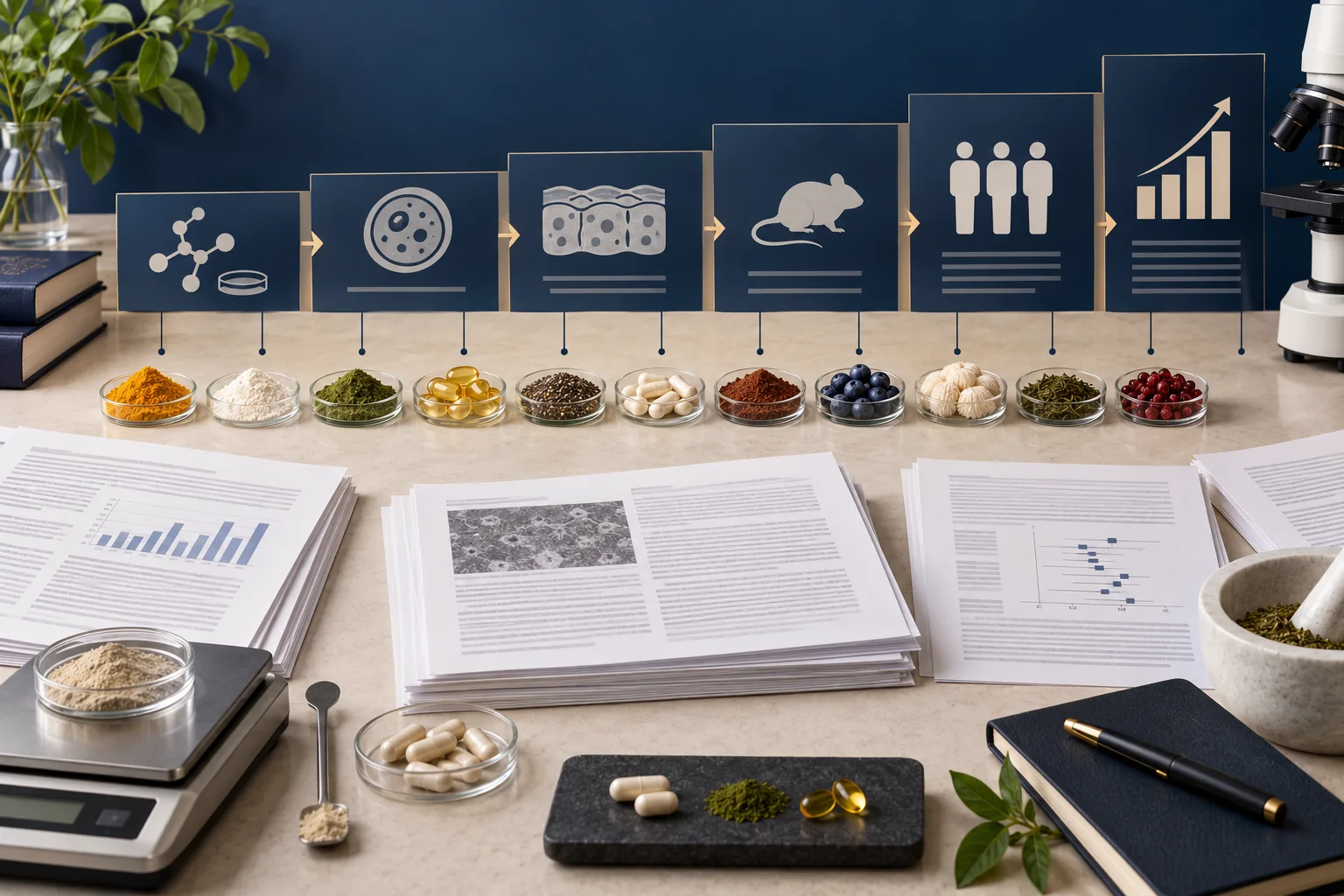
Every component sits on a different evidence level. Ingredient identity and dose are product facts. A study on one standardized material may support plausibility at a matched exposure. Only a trial of the same complete formula can directly estimate the product's average benefit and harms.
Adding several small or uncertain effects is not valid because ingredients can overlap, interact, or fail to reproduce outside controlled conditions. The relevant outcome is not warmth, sweating, alertness, or an acute metabolic reading. It is a meaningful change in weight, fat mass, waist, function, or adherence over a suitable duration, with adverse events reported.
Use a one-page evidence and exposure worksheet
Begin with a dated copy of the official table and create one row for every ingredient. Record the extract or chemical form, amount in the recommended two-capsule day, standardization, calculated active yield, proposed purpose, closest relevant human evidence, material adverse effects, interaction questions, and what remains unknown. This prevents a familiar ingredient name from carrying a stronger conclusion than its actual form and dose support.
Use separate columns for four evidence objects. A manufacturer claim describes what the seller says. Ingredient evidence concerns one material tested on its own. Combination evidence concerns a defined group of ingredients. Finished-product evidence concerns the exact formula sold under the current name. Do not promote an ingredient study into a product result, and do not add small effects together unless the complete combination was tested.
Next, create an exposure ledger. Calculate standardized yields only when both mass and percentage are available. Keep known caffeine, unresolved botanical caffeine, and non-caffeine stimulant-like compounds on separate lines. Add coffee, tea, energy drinks, pre-workout, medicines, and other supplements. Record timing because a total taken early and the same total taken near bedtime do not create the same sleep question.
Finally, define the decision before starting: the outcome to track, the observation period, which other variables will remain stable, and the stopping rules. Scale weight alone is noisy, so combine an appropriate multi-week trend with waist, sleep, appetite, training, blood pressure when relevant, and adverse effects. Stop rather than escalating when the intended benefit is absent, the product disrupts sleep or normal eating, or concerning symptoms appear. This worksheet cannot prove personal safety, but it makes uncertainty visible and gives a clinician or pharmacist a usable record when professional review is needed.
What to verify on the delivered bottle
The official page provides a formula table for a recommended daily allowance of two capsules, directions, cautions, manufacturer, origin, net weight, and storage instructions. That is materially better than a front-label ingredient list, but online information can change. Save the dated page, then compare it with every panel on the delivered container before opening it.
Check the serving size, ingredient forms and amounts, other ingredients, warnings, batch number, best-before date, manufacturer, and country of origin. Ask for clarification when the bottle and website disagree. A current certificate of analysis or credible independent certification can add information about identity or contaminants within its testing scope; neither automatically proves weight loss.
Keep product facts, manufacturer claims, ingredient studies, and finished-product evidence in separate columns. The official page describes several benefits, but we did not identify an independent controlled trial of the exact marketed Fat Burn Active formula. A testimonial cannot close that evidence gap.
A practical decision before purchase
The formula is unusually specific about extract amounts and standardizations on its expanded ingredient table. Its main unresolved issues are all-source caffeine, independent verification of the sold batch, and direct evidence on the complete product.
No supplement is necessary for losing body fat, and Fat Burn Active cannot replace a sustainable calorie deficit, adequate nutrition, activity, sleep, or appropriate medical care. If the disclosed formula fits your goal and risk profile, you have reviewed medicines and conditions, and you accept the remaining evidence limits, confirm the current price and terms on the official website. We may receive a commission at no additional cost to you. The commercial relationship does not alter the analysis, and results are not guaranteed.
Frequently asked questions
How many ingredients are in Fat Burn Active?
The official page highlights eleven entries, counting the three micronutrients separately.
Do the percentages show the dose?
Only when multiplied by the extract amount. They estimate the named constituent, not clinical effectiveness.
Is the complete formula clinically proven?
We did not identify an independent controlled trial of the exact marketed formula.
Sources
- Fat Burn Active official formula and directions
- NIH ODS: Weight-Loss Supplements
- NCCIH: Green Tea
- NCCIH: Bitter Orange
Sources reviewed September 13, 2026. This article is general educational information, not medical advice, diagnosis, or treatment.