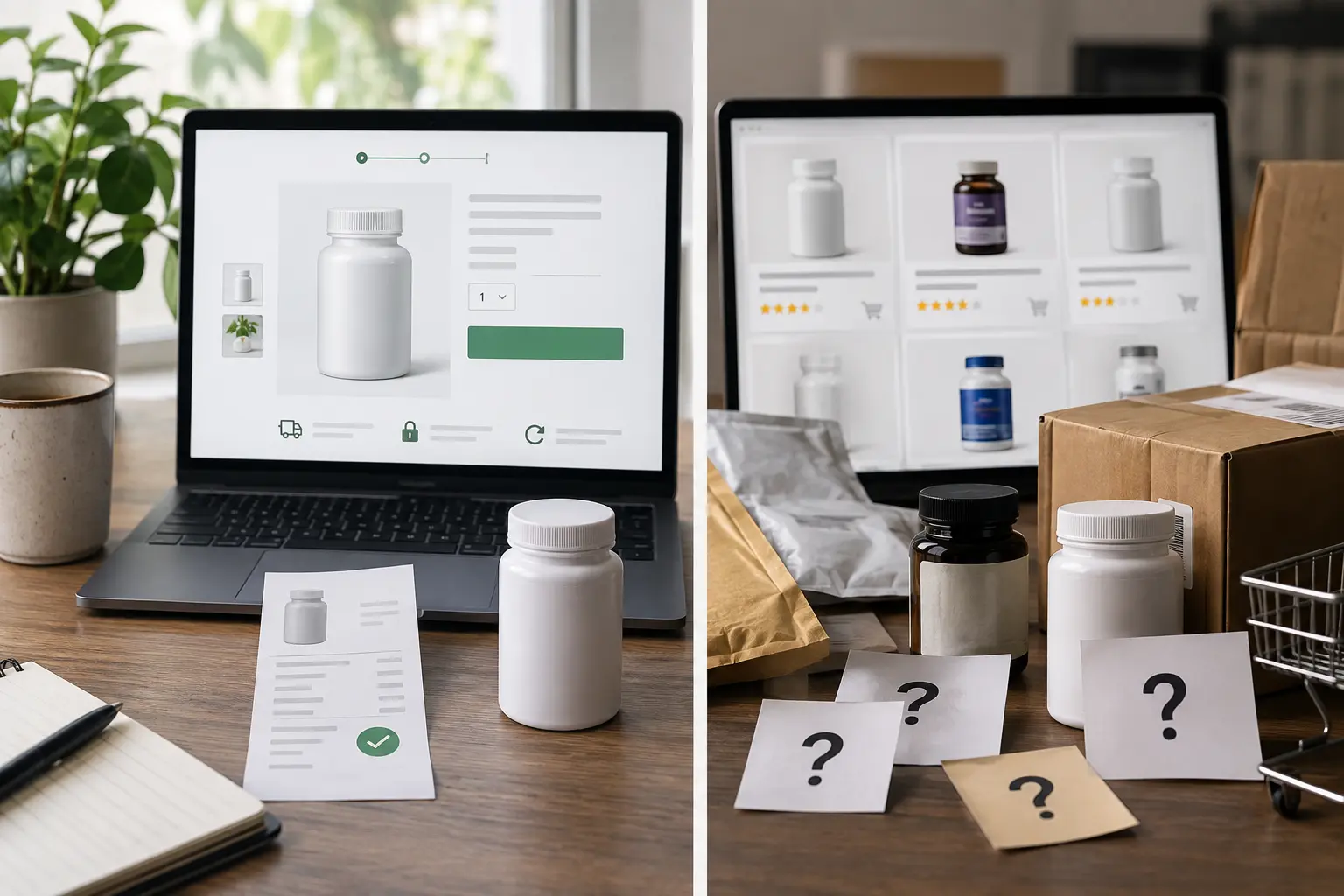
The real difference is the chain, not the webpage design
An official product page can describe the current brand formula, directions, warnings, and offer in one place. Checkout or fulfillment may still involve another entity, so the buyer must record who sells, charges, and ships. A marketplace inserts at least one listing seller and may mix offers, fulfillment methods, regions, or old inventory on the same product page.
This does not mean every marketplace bottle is counterfeit or every direct order is problem-free. It means the evidence burden differs. The more handoffs between manufacturer and buyer, the more questions exist about authorization, storage, formula version, and responsibility when something goes wrong.
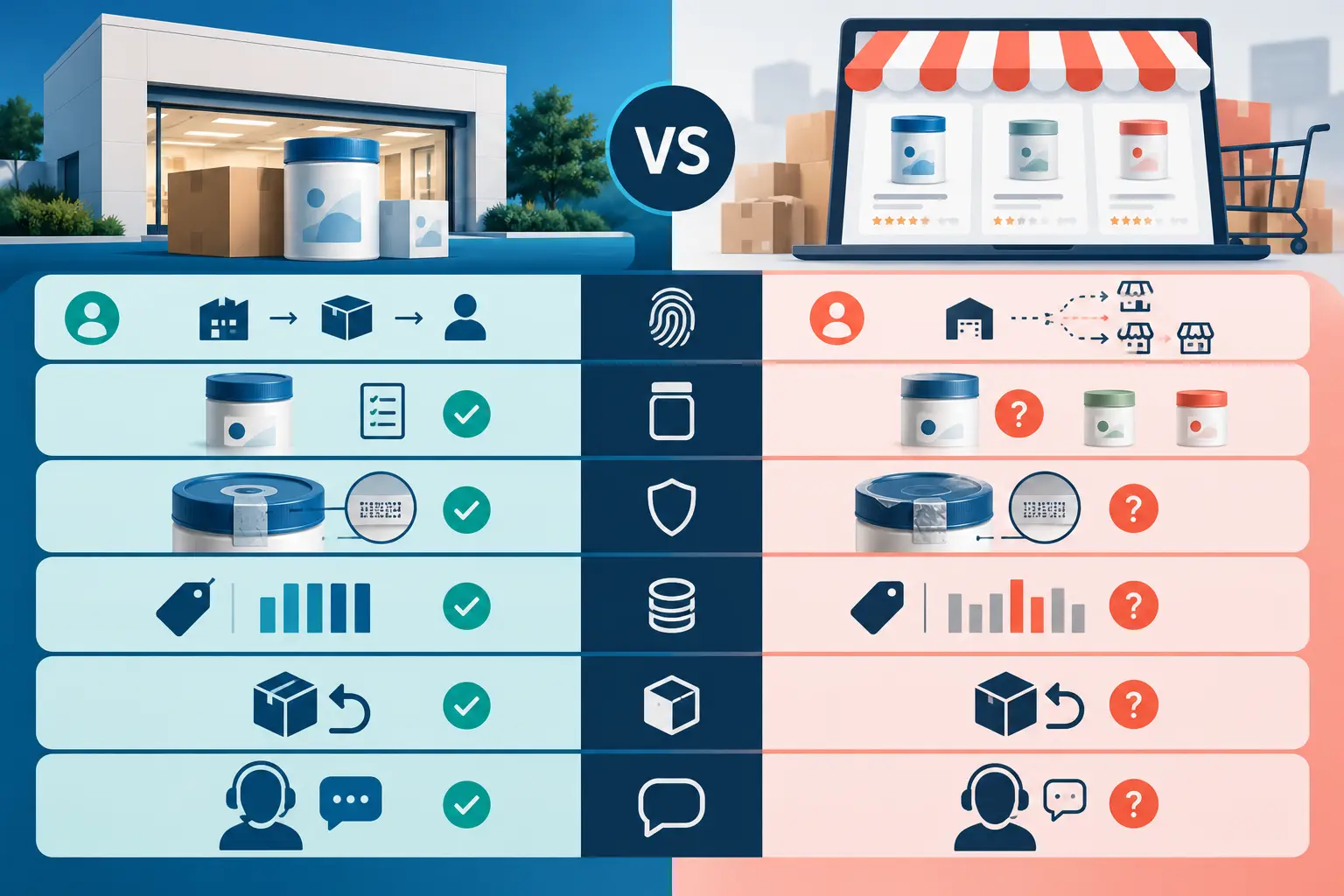
Official route vs marketplace listing
How to audit a marketplace listing
- Open the seller profile and record the legal or trading identity, location, history, and contact route.
- Ask whether the seller is authorized and request verifiable confirmation.
- Compare all label panels, ingredient amounts, capsule count, warnings, manufacturer, and origin with the dated official page.
- Confirm condition, storage, lot, expiry, fulfillment party, delivery estimate, and return eligibility.
- Calculate the final total rather than comparing headline prices.
- Save the listing and seller's answers before ordering.
Ratings can describe prior transactions but cannot authenticate the bottle you will receive. Reviews also may combine multiple sellers or formula versions.
How to audit the official route
Start from a known brand or reviewed partner link, then check the destination domain and seller shown at checkout. Read the current formula, directions, warnings, bottle count, currency, shipping, tax, delivery, privacy, recurring-charge status, and return terms. Save them because an official route can change offers.
The latest saved Active Body Hub snapshot, reviewed September 13, 2026, showed totals of $53.99 for one bottle, $107.98 for three, and $161.97 for six. We could not independently confirm today's live checkout, so those figures are context only. The cart total controls. Our price guide explains the unit-cost calculation.
Example: why a lower listing price may not win
A marketplace seller lists one bottle below the saved direct price and offers local delivery. At first it appears cheaper. The product photograph, however, shows a different ingredient panel, the seller will not confirm the lot or expiry, and opened supplements cannot be returned. The difference is not merely price; it is unresolved identity and remedy risk.
Another marketplace seller provides authorization, current-label photographs, sealed condition, traceable fulfillment, a long expiry, and clear returns. That is a stronger case, but the buyer should still compare final total and inspect delivery. Marketplace status is not the verdict; seller-specific evidence is.
A six-question channel decision
Ask: Who legally sells it? Does the formula match the current official table? Who stored and ships it? What is the final total? What happens if the bottle differs or arrives damaged? Who can answer a batch or adverse-event question? If one route produces documented answers and the other produces assumptions, choose the documented route even when it is slightly less convenient.
If neither route can provide a clear formula, seller, payment, and return chain, do not buy. Waiting protects both health and budget. A supplement is optional, and a discount never creates an urgent need.
Use a channel scorecard before comparing discounts
Give each route one point for a verified seller identity, current complete label, disclosed fulfillment, intact-condition guarantee, lot and expiry visibility, clear final total, usable return process, and reachable product support. Make seller identity and formula match mandatory: a route that fails either should not win because it accumulates convenience points elsewhere.
Next, classify every answer as documented, seller-stated, inferred, or unknown. A marketplace badge is not documentation of manufacturer authorization. An official-looking page is not enough if the checkout suddenly names an unrelated seller. Follow the transaction to the final payment screen without submitting it, and record the entities shown.
After delivery, score the physical item again. Confirm the bottle matches the saved current label; the seal, lot, and expiry are present; and the shipping condition is acceptable. A route's real quality includes how it handles a discrepancy. Fast delivery is helpful, but a seller who refuses a documented mismatch has poor remedy quality.
Example: the direct route scores seven of eight and costs $8 more after delivery. A marketplace route scores five, with authorization and storage unknown. The lower price is compensation for accepting unknowns, not necessarily better value. If the marketplace seller later provides verifiable authorization, current-label photographs, and storage information, the score can change. This keeps the comparison fair, current, and seller-specific rather than turning “official” or “marketplace” into an automatic verdict.
Date the scorecard. Seller status, inventory, formula, price, and policies can change, so an old comparison should not control a new order. Repeat the decisive checks at every purchase and again when the parcel arrives.
Frequently asked questions
Does “sold on a major marketplace” prove authenticity?
No. Verify the individual seller, fulfillment, formula, seal, lot, expiry, and authorization.
Is the official route always cheapest?
Not necessarily. Compare the live final total, bottle count, delivery, tax, and usable supply.
Can marketplace reviews verify the formula?
No. Reviews may cover different sellers, batches, regions, or older versions.
Which route should a first-time buyer use?
The route with the clearest current formula, seller identity, support, delivery record, and remedy if the bottle differs.
A disciplined final decision
Write the decision before opening a checkout page. State the job you expect the product to perform, the evidence limit you accept, your maximum total cost, and the conditions that would make you stop. Keep diet, movement, sleep, and other major variables reasonably stable during any trial. Track a multi-week weight trend, waist, appetite, sleep, training, blood pressure when relevant, and adverse effects. Warmth, sweating, stimulation, or a lighter scale after water loss is not proof of fat loss.
Fat Burn Active is optional; it cannot replace an achievable calorie deficit, adequate nutrition, movement, sleep, or medical care. If the current label fits your situation and you accept the limitations, verify the live formula, price, delivery, and return terms on the official website. Results are not guaranteed. Save the order confirmation and compare the delivered bottle with the listing before opening it.
Sources
- Fat Burn Active official product and offer
- FTC: Online Shopping
- FDA: Questions and Answers on Dietary Supplements
- FDA: Weight-Loss Product Notifications
Sources reviewed September 14, 2026. This article is general educational information, not medical advice, diagnosis, or treatment.