The balanced snapshot
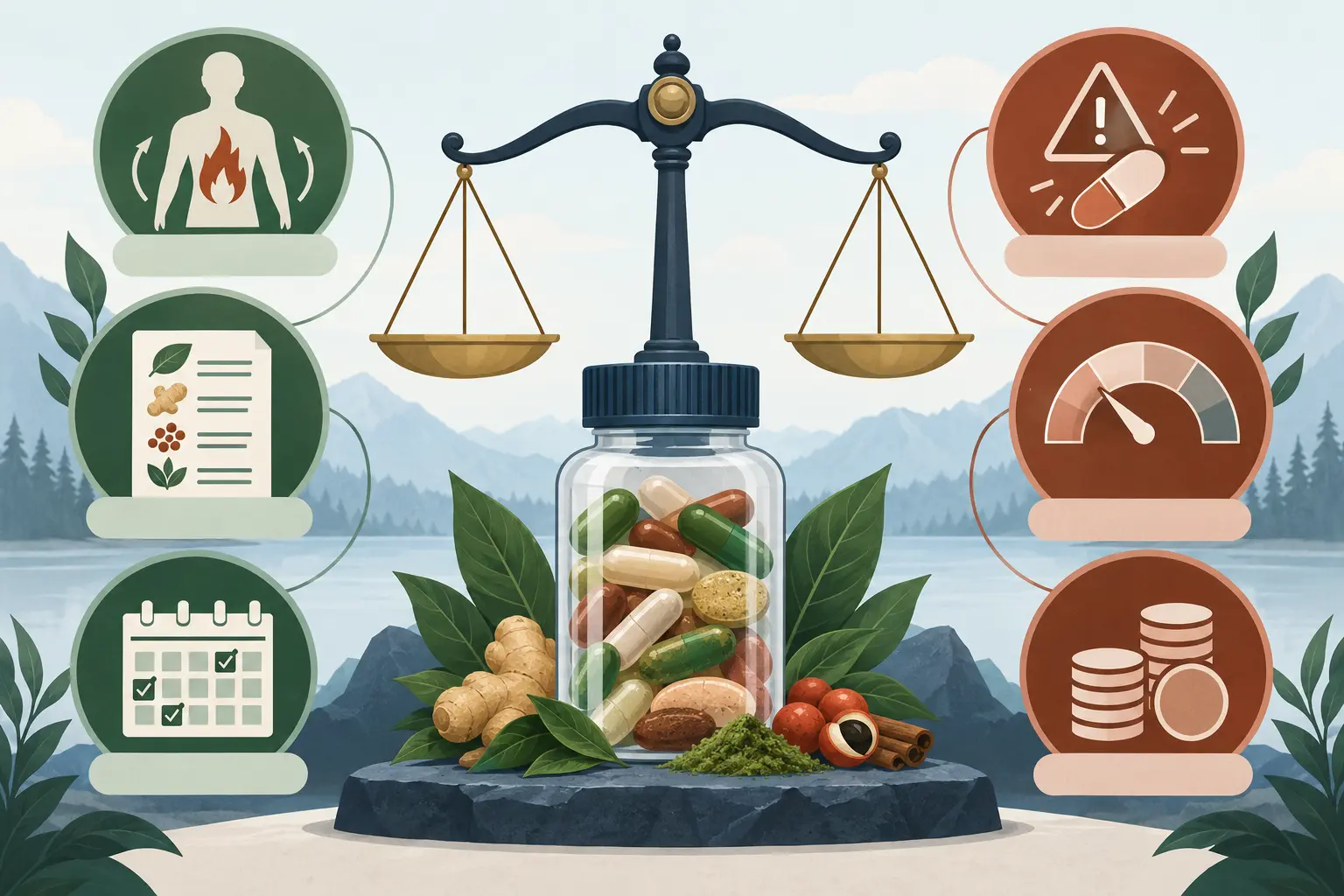
Potential advantages
- Individual amounts are disclosed for the recommended two-capsule day.
- Several extracts state standardization, allowing active-yield calculations.
- The formula and cautions are more specific than a vague proprietary blend.
- Multiple bundle sizes let a buyer compare unit cost.
Important limitations
- All-source caffeine is not confirmed because green-tea caffeine is unstated.
- The product combines caffeine with calculated synephrine and other thermogenic materials.
- Ingredient studies do not prove the sold combination works.
- No independent controlled efficacy trial of the exact finished formula was identified.
These lists are not a scorecard in which four items cancel four items. A single safety mismatch can outweigh several conveniences, while an evidence limitation remains even when the label is clear.
Pro: the formula supports real calculations
The current two-capsule table discloses 250 mg ForsLean coleus at 10% forskolin, 250 mg green tea at 40% EGCG, 200 mg guarana at 22% caffeine, 112 mg aXivite phenylcapsaicin at 1%, 100 mg bitter orange at 6% synephrine, 80 mg grains of paradise at 12.5% 6-paradol, 76 mg caffeine anhydrous, 2 mg BioPerine at 95% piperine, plus vitamin B6, pantothenic acid, and zinc.
That permits estimates of 25 mg forskolin, 100 mg EGCG, 44 mg guarana caffeine, 1.12 mg phenylcapsaicin, 6 mg synephrine, 10 mg 6-paradol, and 1.9 mg piperine. Calculable does not mean laboratory-verified or effective, but it allows a more disciplined comparison than ingredient names alone.
Con: plausibility is not product proof
Caffeine can affect alertness and short-term energy expenditure. Green tea, capsaicinoids, bitter orange, coleus, and grains of paradise each have proposed mechanisms or limited human research. The clinically useful question is not whether something changed in a laboratory measurement; it is whether the exact formula produces meaningful additional fat loss with acceptable harms over an appropriate duration.
We did not identify an independent randomized trial of the finished product. Effects from separate studies cannot simply be added because forms, doses, participants, diets, and outcomes differ. Interactions may also change tolerability. Marketing descriptions therefore deserve a lower confidence level than direct product evidence.
The tradeoff created by stimulation
The disclosed minimum is 120 mg caffeine per two capsules: 76 mg caffeine anhydrous plus approximately 44 mg from guarana. Green tea may contribute more. Bitter orange provides an estimated 6 mg synephrine, which is not caffeine but belongs in the stimulant-risk discussion. The official caution advises against same-day use with green tea, caffeine, or similar-effect ingredients.
For a caffeine-tolerant adult, stimulation may feel useful and simplify an early-day routine. For someone with anxiety, palpitations, blood-pressure concerns, poor sleep, or heavy coffee use, it may be the decisive disadvantage. Feeling stimulated is immediate; detecting a small difference in fat loss is slow and noisy. Do not confuse the easier-to-feel effect with the outcome advertised.
Use a weighted score, not a simple list
- Give safety and interaction fit a pass-or-stop result.
- Score formula transparency separately from efficacy evidence.
- Calculate known and unresolved stimulant exposure.
- Estimate total cost for the test period, including delivery and tax.
- Define the smallest benefit that would justify continuing.
Example: Daniel values label detail and accepts uncertain efficacy, but late shifts mean he can only take the product near bedtime. Sleep disruption would undermine hunger control and recovery, so timing outweighs the formula pro. Another adult who can take it early may reach a different practical decision without changing the evidence.
Turn the list into an evidence audit
Create five columns labeled fact, advantage, limitation, personal relevance, and verification. “Contains 76 mg caffeine anhydrous” is a fact. Predictable caffeine disclosure may be an advantage. Unknown green-tea caffeine is a limitation. Whether either matters depends on total daily intake, sensitivity, medicines, health, and timing. The final column records where the statement came from and when it was checked.
Apply the same discipline to standardization. A label that identifies 40% EGCG or 6% synephrine supports calculation and deserves transparency credit. It does not verify the batch, absorption, interaction profile, or long-term outcome. Independent certification can answer selected identity or contaminant questions within its scope, but it is not a weight-loss trial.
Finally, assign weights before looking at the offer. Safety fit might be pass-or-stop, product evidence 30%, formula clarity 25%, practical timing 20%, cost 15%, and convenience 10%. Your weights may differ, but discounts should not silently become the largest factor. Repeat the scoring using the delivered label. If the formula or directions differ, the original analysis no longer describes the item in hand. This system preserves the genuine pros while preventing a long ingredient list, immediate stimulation, or bundle discount from hiding the central limitations.
Separate short-term experience from outcome. Record dose time, other caffeine, hunger, sleep, blood pressure when appropriate, training, symptoms, waist, and average weight. Predetermine the minimum useful change and review date. If stimulation is obvious but the primary outcome does not improve, that is not partial success. If weight changes while diet or activity also changed, do not automatically credit the capsule.
Revisit the cons after the first week because insomnia, anxiety, headache, palpitations, nausea, or appetite rebound may appear before a reliable fat-loss signal. Never increase the labeled serving to make the product feel stronger. A sound analysis remains open to “not worth continuing,” even after money has been spent.
Frequently asked questions
Is the disclosed formula a guarantee of quality?
No. Disclosure permits evaluation; batch identity, contaminants, label accuracy, and efficacy require different evidence.
Is 120 mg the total caffeine?
It is the known minimum. Green-tea caffeine is not quantified on the current table.
Do more ingredients make it more effective?
No. Ingredient count cannot replace matched doses, trials of the complete formula, meaningful outcomes, and adverse-event reporting.
What is the biggest practical advantage?
For an appropriate buyer, the detailed table makes exposure and value easier to audit than a proprietary blend.
A disciplined final decision
Write the decision before opening a checkout page. State the job you expect the product to perform, the evidence limit you accept, your maximum total cost, and the conditions that would make you stop. Keep diet, movement, sleep, and other major variables reasonably stable during any trial. Track a multi-week weight trend, waist, appetite, sleep, training, blood pressure when relevant, and adverse effects. Warmth, sweating, stimulation, or a lighter scale after water loss is not proof of fat loss.
Fat Burn Active is optional; it cannot replace an achievable calorie deficit, adequate nutrition, movement, sleep, or medical care. If the current label and stimulant profile fit your situation and you accept the limitations, verify the live formula, price, delivery, and return terms on the official website. Results are not guaranteed. Save the order confirmation and compare the delivered bottle with the listing before opening it.
Sources
- Fat Burn Active official formula and directions
- NIH ODS: Dietary Supplements for Weight Loss
- FDA: Dietary Supplements
- NCCIH: Green Tea
Sources reviewed September 14, 2026. This article is general educational information, not medical advice, diagnosis, or treatment.