This guide concerns practical decisions about supplement use. It does not establish that a fat burner treats a medical condition or produces weight loss.
The mineral claim can outrun the evidence
A weight-loss product highlights zinc because the body needs it for many biological processes. A separate chart links lower zinc status with higher body weight. Together they can sound like an argument to take a large zinc dose. But association does not establish direction or treatment: dietary patterns, inflammation and other factors could be involved. Correcting a deficiency is a health goal; claiming additional zinc causes meaningful fat loss requires its own controlled evidence.
The label guide helps identify elemental amounts. This page asks how to use that information without mistaking a nutrient for a fat-burner mechanism.
Start with adequate intake and food
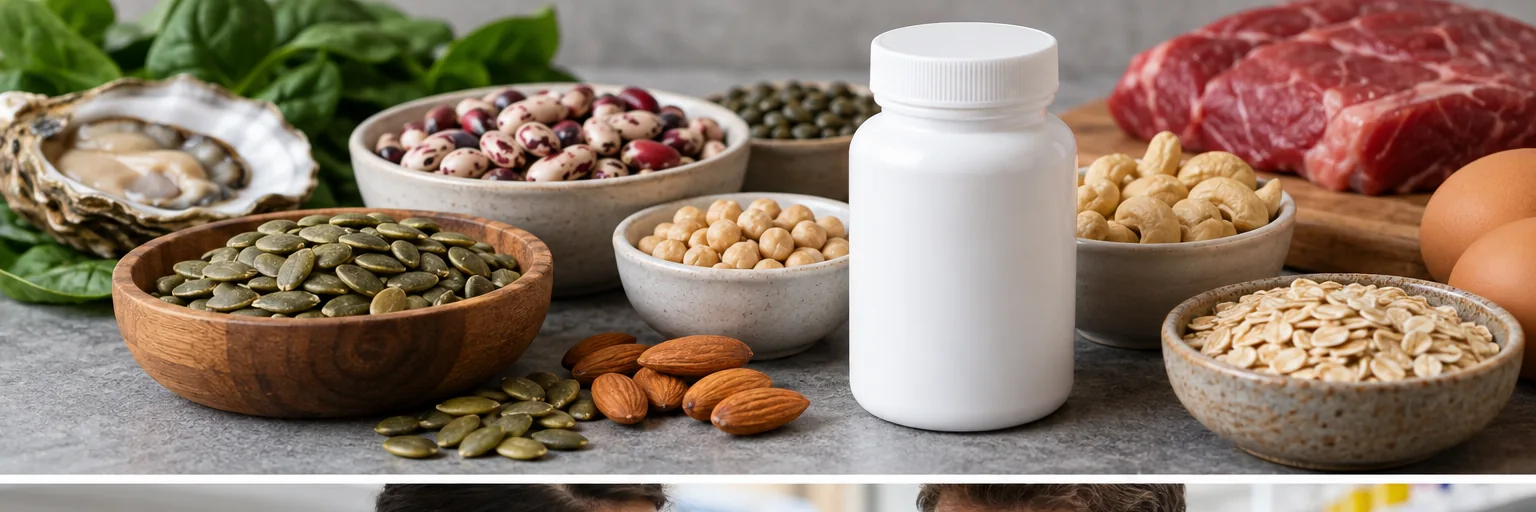
Zinc occurs in foods such as meat, seafood, beans, nuts and fortified products, with absorption varying by food pattern. People following restrictive diets or with medical conditions may have different needs. A clinician or dietitian can assess potential deficiency using the broader history and, when appropriate, testing. Do not diagnose deficiency from hunger, body size or a seller's quiz.
NIH ODS explains zinc's roles and recommended intake by life stage. Food provides more than isolated zinc, and a balanced meal pattern can make weight management more sustainable. Treat a supplement as a response to a specific need, not as proof that any increase over adequate intake produces extra benefit.
Evaluate study design and outcome
Some weight-management studies of zinc involve participants with particular health conditions or diet patterns, and some measure blood markers rather than body-fat outcomes. A trial of zinc combined with other interventions cannot isolate zinc's effect without the right comparator. Even a difference in weight over a short period must be weighed against study size, baseline zinc status and whether it persists.
Ask whether a study enrolled people with documented deficiency, whether food intake changed and whether the exact dose and form match a retail bottle. The evidence guide helps distinguish a mineral mechanism, an association and direct human results.

High doses introduce a real tradeoff
Zinc is not a “more is better” nutrient. NIH ODS notes that excessive zinc intake can cause nausea and interfere with copper status; sustained high intake can lead to copper deficiency. Compare the elemental zinc amount from the proposed product with your multivitamin and other supplements. The adult upper limit applies to total intake from food and supplements, with specific exceptions under medical supervision; ask a clinician for individual advice rather than using a number as permission to self-prescribe.
The supplement safety guide covers broader interactions. A fat burner with high zinc does not become safer because the ingredient is a mineral.
A label math example
Suppose a daily multivitamin already supplies zinc, and a new weight-loss capsule adds another full daily-value amount. A buyer looking only at the new bottle may miss the total. Write each product's elemental zinc amount and serving size on one line, then consider food and any clinician-directed products. If the label lists a zinc compound, distinguish the compound name from the elemental milligrams in Supplement Facts.
The goal is not to calculate a personal treatment plan from a webpage. It is to notice duplicate exposure and bring accurate information to a professional when needed. An “immune support” banner cannot validate a body-fat claim.
What if a deficiency is found?
Follow the care plan for the reason the deficiency occurred and for how to correct it. Absorption, diet and other health conditions can matter. A diagnosed deficiency may justify targeted supplementation, but the response should be monitored in that medical context. Feeling better after correction does not establish that people without deficiency should take the same dose for weight loss.
A balanced weight-management plan can address meals, movement, sleep and treatment needs at the same time. Do not use high-dose zinc in place of adequate food. If changes in appetite or weight are unexplained, seek appropriate evaluation rather than attributing everything to one nutrient.
Where Fat Burn Active fits
A sensible purchase decision asks for a meaningful expected benefit and an acceptable safety profile. If the only reason for buying is the belief that more zinc “unlocks” fat loss, the evidence does not support that leap. Review your food and supplement intake first.
Use a nutrient-need checklist
Record the outcome you want, your usual eating pattern, any known diagnosis, all supplement labels and the exact elemental zinc amounts. Mark uncertainty where a blend obscures doses. Ask whether the supporting paper studied deficiency correction or body-fat change in a comparable population. This separates nutritional care from a generic retail promise.
If you feel well and already meet needs, an extra mineral may add cost and possible adverse effects without solving your weight-management challenge. If you suspect deficiency, seek a tailored assessment. Neither path requires buying a multi-ingredient fat burner to obtain an essential nutrient.
A study citation under the microscope
A brand may cite an observational study in which a group with higher zinc status had a different average body weight. That does not show zinc caused the weight difference. The group may differ in diet quality, income, activity, health conditions or other nutrients. A randomized trial can address a more focused question, but only if the intervention, baseline status and outcome match the marketing promise. If the study measures an inflammatory marker or blood zinc concentration rather than body fat, state that limitation plainly.
The same caution applies to a study in people with diagnosed deficiency. Correcting a deficiency is meaningful care, yet it does not establish that higher doses work for everyone. A useful purchasing step is to find the exact dose on the label and compare it with the study, including the control group and duration. If the product contains several ingredients, you still cannot assign an effect to zinc alone. A good answer may be to improve food variety rather than buy an expensive blend.
Compare the whole formula before deciding
Check the current package, ingredients, serving directions, your other caffeine sources, and relevant health conditions. For an evidence-based starting point, read the full Fat Burn Active review. If this product still fits your circumstances, you can inspect its current offer. We may earn a commission if you buy through that link. Choosing no supplement is equally reasonable when the evidence or safety questions do not support a purchase.
Frequently asked questions
Does zinc deficiency cause weight gain?
The relationship is complex; do not self-diagnose from weight alone.
Will extra zinc burn fat if intake is adequate?
There is no reliable basis to assume that.
Can too much zinc be harmful?
Yes. Excess can cause adverse effects and impair copper status.
Sources
- NIH ODS: Zinc
- NIH ODS: Zinc for Consumers
- NIH ODS: Weight-Loss Supplements
- NIDDK: Eating and Activity
- FDA: Supplement Safety
- FDA: Supplement and Medicine Interactions
Reviewed against the sources listed above. Educational information only; not medical advice.