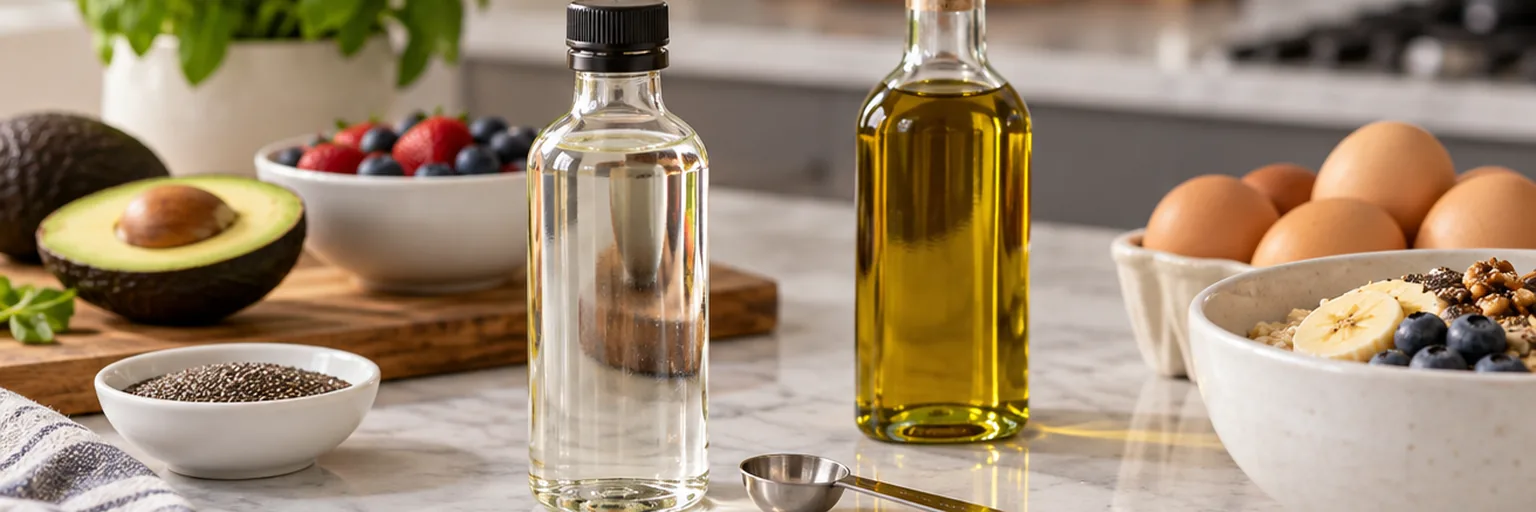
This guide concerns practical decisions about supplement use. It does not establish that a fat burner treats a medical condition or produces weight loss.
A spoonful can quietly change the wrong variable
A morning coffee recipe promises that adding MCT oil will switch on fat burning. The oil may be digested differently from longer-chain fats, but it still supplies energy. If the drink comes on top of breakfast and the rest of the day stays the same, the person has added calories. Many favorable trials ask a different question: what happens when MCTs replace another dietary fat in a structured eating plan? The distinction between replacing and adding changes the answer.
The energy-balance guide explains the foundation. This article focuses on how to interpret MCT oil evidence and decide whether it fits an ordinary meal plan.
What MCT means on a bottle
Medium-chain triglycerides are fats with medium-length fatty acids. Products vary: some emphasize caprylic or capric fatty acids, while ordinary coconut oil includes a different mix of fatty acids. Do not assume two oils with similar marketing language contain the same MCT profile. Check the ingredient list, actual serving and Nutrition Facts or Supplement Facts panel. An advertised scoop and a measured teaspoon are not interchangeable.
MCTs can be used as a fuel, but the body using some ingested fat for fuel is not identical to losing stored body fat. The fat oxidation guide separates a short metabolic measurement from change in body composition over time.
The comparison trials have a modest question
A randomized study compared MCT oil with olive oil during a weight-loss diet. The trial investigated whether substituting one oil for another affected body-weight and fat outcomes within that program. A meta-analysis of randomized comparisons reported modest average differences favoring MCTs over longer-chain triglycerides. These findings may be relevant to the particular substitution, but they cannot show that unlimited oil added to food speeds weight loss.
Look at the control oil, diet instructions, serving amounts, length and population. A result from adults following a structured plan may not predict the outcome of a casual coffee addition. The practical-significance guide helps weigh an average effect against cost and effort.

Satiety and ketones are separate outcomes
Some experiments ask whether MCTs change fullness, ketone levels or short-term energy expenditure. A rise in blood ketones does not prove the person will eat less over weeks or lose more body fat. Feeling full after an oily drink may also change the rest of a person's food intake in either direction. The meaningful question is whether the entire eating pattern remains adequate, comfortable and sustainable.
MCT oil is sometimes grouped with exogenous ketone products, but they are different exposures. One is fat in a diet; the other supplies ketone compounds. Neither measurement alone is a verdict on lasting fat loss.
Digestive comfort and context matter
Adding a large amount of oil abruptly can cause digestive discomfort for some users, including nausea or loose stools. Sensitivity and serving size vary. A person with a condition affecting fat digestion, a medically prescribed diet, or relevant medicines should discuss the plan with a qualified clinician or dietitian. Do not use a supplement recipe to replace a balanced meal simply because a marketing page calls it ketogenic.
If a modest amount of MCT oil is simply one chosen cooking or beverage fat and fits your intake, judge it like food rather than a drug. There is no need to buy a special oil to make a sustainable weight plan possible.
A breakfast comparison
Suppose one person replaces a measured amount of olive oil in a meal with MCT oil while keeping total meal energy similar. Another pours two spoonfuls into coffee after eating the same breakfast. The first situation resembles a substitution trial; the second adds energy. It is inaccurate to apply an average trial difference from the first setting to the second person's coffee.
Record how much oil you actually use and what it replaces. If nothing is replaced, ask whether the extra energy is offset elsewhere without leaving you unsatisfied. Do not credit a one-day scale change to a new fat source: water and digestion can move the number.
Where Fat Burn Active fits
MCT oil is a dietary-fat choice, while the Fat Burn Active review
If you are researching a product purchase, read its formula and risks rather than using the word “metabolism” as a bridge between unrelated trials. A reasonable outcome is to improve meals and activity without adding either product.
Make a small substitution test on paper
Write the fat source currently used in a meal, its portion and the proposed MCT portion. Ask whether the change replaces it, adds to it, or makes the meal less satisfying. Then read the study you are relying on: did it use an equivalent substitution and track an outcome you care about for long enough? If you cannot answer, the evidence for your plan is indirect.
Consider practical costs too. A bottle may be expensive compared with ordinary fats. If a small average group difference would not matter to you, it may be more useful to focus on repeatable portions, protein, fiber and movement. The goal is a workable routine, not an ingredient that sounds metabolically interesting.
A week of ordinary use matters more than a viral recipe
Before changing an ingredient, look at the week's meals. If oil appears in cooking, dressings and drinks, adding another fat source may move total intake even when individual portions look small. A measured substitution can be tested without abandoning the foods you enjoy. Record the amount and what it replaces, then notice whether the resulting meal remains satisfying. If it leaves you hungry and you snack later, a theoretical metabolic advantage may not improve the full-day plan.
The evidence does not require treating olive oil or other fats as bad. Trials compare specific diets under controlled conditions; they do not decree one universal oil for everyone. MCT products can also vary in composition and price. If you have digestive symptoms after adding one, do not interpret them as a sign it is working. Stop the optional change and seek professional advice if symptoms are persistent or concerning. A reasonable plan is one you can afford and repeat while meeting nutritional needs.
Compare the whole formula before deciding
Check the current package, ingredients, serving directions, your other caffeine sources, and relevant health conditions. For an evidence-based starting point, read the full Fat Burn Active review. If this product still fits your circumstances, you can inspect its current offer. We may earn a commission if you buy through that link. Choosing no supplement is equally reasonable when the evidence or safety questions do not support a purchase.
Frequently asked questions
Does MCT oil have calories?
Yes. It is dietary fat and should be counted as part of the meal.
Can I add it to coffee and expect trial results?
No. Most relevant comparisons substitute it for another oil in a diet.
Does higher ketone level prove fat loss?
No. Blood ketones and long-term body-fat change are different outcomes.
Sources
- Randomized MCT versus Olive Oil Trial
- Meta-analysis: MCT versus Long-Chain Fats
- Meta-analysis: MCT and Body Composition
- Systematic Review: MCTs in Overweight Adults
- NIDDK: Eating and Activity
- FDA: Dietary Supplements
Reviewed against the sources listed above. Educational information only; not medical advice.