The short answer
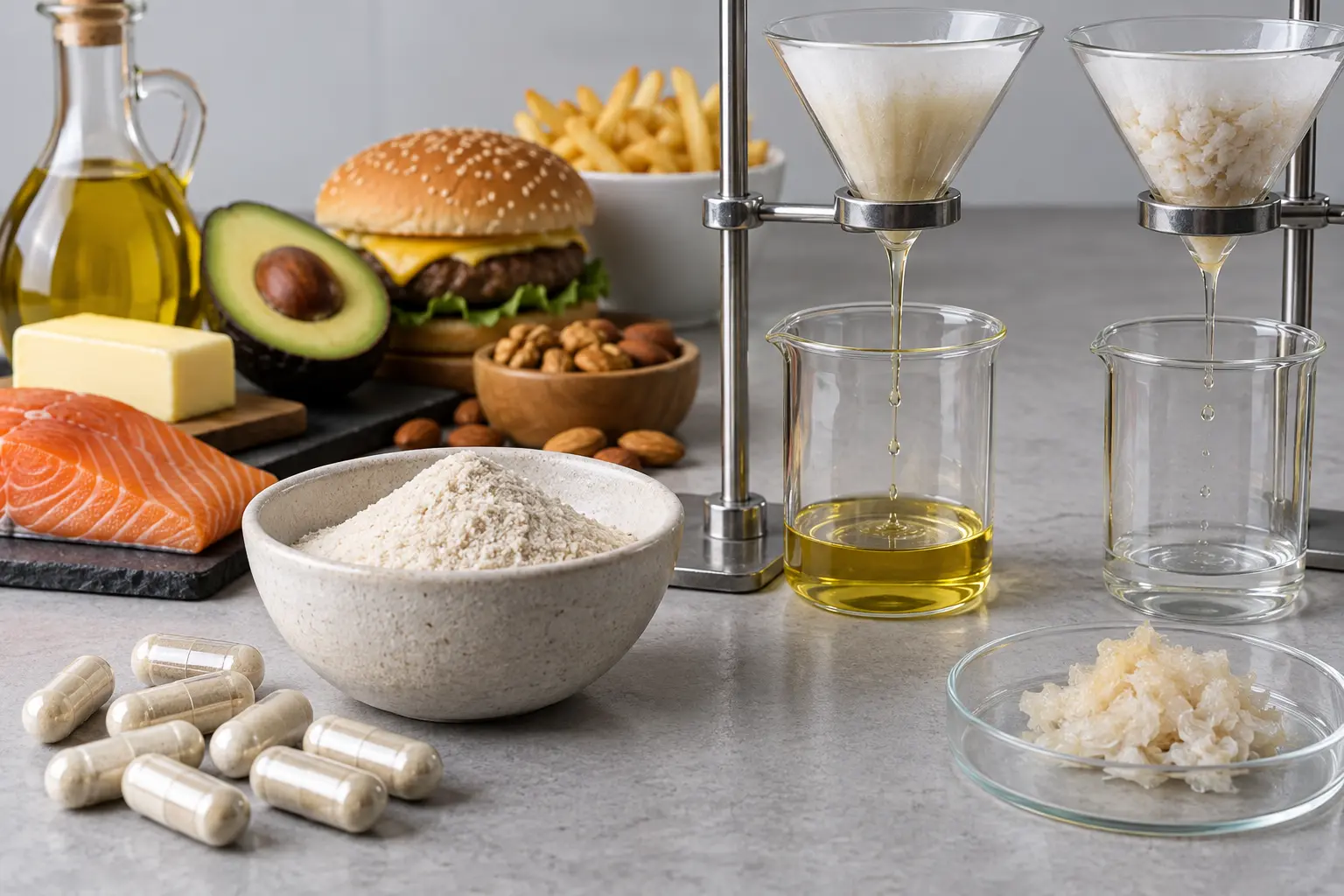
Supplement fat blockers—usually chitosan products—are marketed as binding dietary fat, but laboratory binding is not proof of meaningful long-term fat loss in people. No supplement cancels the energy in an unrestricted diet, and a plausible mechanism is not the same as a clinically meaningful result.
Chitosan is a fiber-like material derived from chitin. The proposed mechanism is binding some fat in the digestive tract so less is absorbed. Real digestion is more complex than a beaker experiment: dose, meal composition, acidity, timing, and adaptation all affect what happens.
What the claim means—and what it does not
Systematic reviews have found small or uncertain average effects, with higher-quality trials generally less impressive than early marketing. Chitosan supplements must not be confused with orlistat, a medicine that inhibits lipase and has its own evidence, labeling, contraindications, and adverse-effect profile.
Evaluate the exact product rather than the category name. Two bottles can use different extracts, doses, serving sizes, co-ingredients, and quality controls. Evidence for one formulation cannot automatically validate another, especially when a proprietary blend hides amounts.

How to judge the evidence
Start with randomized controlled human trials that measure body weight, waist, or body composition over a meaningful period. An enzyme test, animal experiment, post-meal blood marker, or one-day appetite score can explain a hypothesis, but it cannot establish lasting fat loss.
Read the between-group difference, not only how much the supplement group changed from baseline. Check the confidence interval, dropout, adherence, adverse events, background diet, and funding. A statistically significant difference can still be too small to notice or justify the price.
A five-step label and use system
- Identify chitosan amount and source rather than accepting “fat-blocking matrix.”
- Check shellfish-related manufacturing and allergen information.
- Separate laboratory binding claims from randomized human outcomes.
- Do not combine it casually with medicines or assume nutrients are unaffected.
- Compare the small plausible benefit with cost and digestive tolerance.
Photograph the Supplement Facts panel and write down the date, full serving, timing, symptoms, hunger, diet consistency, and weekly average weight. Change only one optional product at a time. That makes it easier to identify an adverse effect and avoids crediting ordinary scale noise to a capsule.
Worked example
A product demonstrates that its powder captures oil in a glass. That experiment establishes a physical interaction under laboratory conditions. It does not show how much fat is prevented from absorption in a human meal or whether body fat changes after months.
The disciplined conclusion is narrower than the advertisement. Ask what was directly demonstrated, in whom, at what dose, for how long, and against what control. If the answer is only a biochemical possibility, classify the weight-loss claim as unproven.
Set a realistic decision threshold
Decide in advance what outcome would make continued use worthwhile. Use four-week rolling weight trends, waist measurements taken consistently, appetite notes, side effects, cost, and adherence to the underlying food plan. Do not use one unusually low weigh-in as proof.
If the supplement adds no clear benefit after a reasonable evaluation window, stopping is a valid result. Increasing the dose beyond the label to chase an effect increases risk without creating evidence. Sustainable food, activity, sleep, and medical care remain higher-priority levers.
Safety and quality questions
“Natural” does not mean risk-free. Supplements can cause gastrointestinal symptoms, headaches, sleep disruption, allergy, or interactions. Risk changes with pregnancy, chronic disease, surgery, and prescription medicines. A clinician or pharmacist can help when the label includes an unfamiliar blend.
Look for a complete facts panel, lot number, contact information, sensible warnings, and independent quality testing where available. Quality verification can confirm identity or contamination controls; it does not prove the product causes weight loss.
Related Active Body Hub guides
Read the evidence review of chitosan for fat absorption and our broader answer to whether fat burners can block fat absorption.
Also review how to find the true daily dose and ingredient trials versus finished-product trials before comparing prices.
Where Fat Burn Active fits
Use the Fat Blockers Sold as Supplements criteria to assess Fat Burn Active rather than relying on a headline claim. Our formula evidence analysis explains the remaining uncertainty. If the product fits your needs, view current availability and ordering terms on the official website. We may earn a commission at no extra cost.
Binding fat in a test tube is not a body-weight outcome
Supplement fat blockers often use chitosan and propose that it binds some dietary fat in the digestive tract. The mechanism is testable, but the marketing leap is much larger: how much fat is bound in a real mixed meal, whether that changes net energy intake across weeks, and whether weight differs meaningfully from placebo. Look for randomized human outcomes rather than a laboratory demonstration or a diagram of fat molecules attaching to a fiber-like substance.
Do not confuse a supplement with prescription orlistat. They differ in mechanism, evidence, regulation, dosing, and potential adverse effects. A seller's reference to a medicine's outcomes cannot substantiate a chitosan capsule. Check the exact chitosan source and dose in the cited trial against the current label. If the product lists a proprietary blend, even the basic dose comparison may be impossible.
A fat-blocking claim can also create a behavioral trap: the impression that a higher-fat meal no longer counts. No capsule makes intake irrelevant. Digestive tolerance, allergy considerations related to ingredient source, and medicines deserve attention. People who have symptoms or relevant conditions should ask a clinician or pharmacist, not increase the dose to chase a stronger binding effect.
For a practical verdict, write the absolute between-group weight difference, study duration, daily serving, adverse events, and what the product would cost for the same period. If the effect is small or uncertain, compare that cost with changes that improve the whole food pattern. A fiber supplement may support fullness through a different pathway; a carbohydrate blocker targets starch digestion. Those categories should be evaluated separately, not ranked by which label sounds most powerful.
Frequently asked questions
Can this type of supplement replace a calorie deficit?
No. It may influence appetite, digestion, or a metabolic marker, but sustained fat loss still requires energy intake to remain below expenditure over time.
How quickly should scale weight change?
Daily weight reflects water, glycogen, food, and bowel contents. Judge a trend across several weeks alongside waist and adherence rather than expecting an immediate capsule effect.
Does a stronger dose work better?
Not necessarily. Effects may plateau while adverse effects rise. Use the labeled amount and evidence from the same ingredient and dose; never improvise a high dose.
Who should get professional advice first?
People who are pregnant or breastfeeding, under 18, managing chronic disease, preparing for surgery, or taking medicines should ask an appropriate clinician or pharmacist before use.
Record the reason for trying the product and the evidence level in one sentence. This simple note protects against changing the goal after purchase—from weight loss to “feeling something”—and keeps the decision tied to a measurable outcome, tolerability, and total cost.
Sources
- Cochrane: Chitosan for overweight or obesity
- Chitosan evidence review
- Meta-analysis of chitosan randomized trials
- NIH ODS: Weight-loss dietary supplements
- Dietary supplements for body-weight reduction review
Evidence reviewed September 16, 2026. Educational information only; not medical advice.