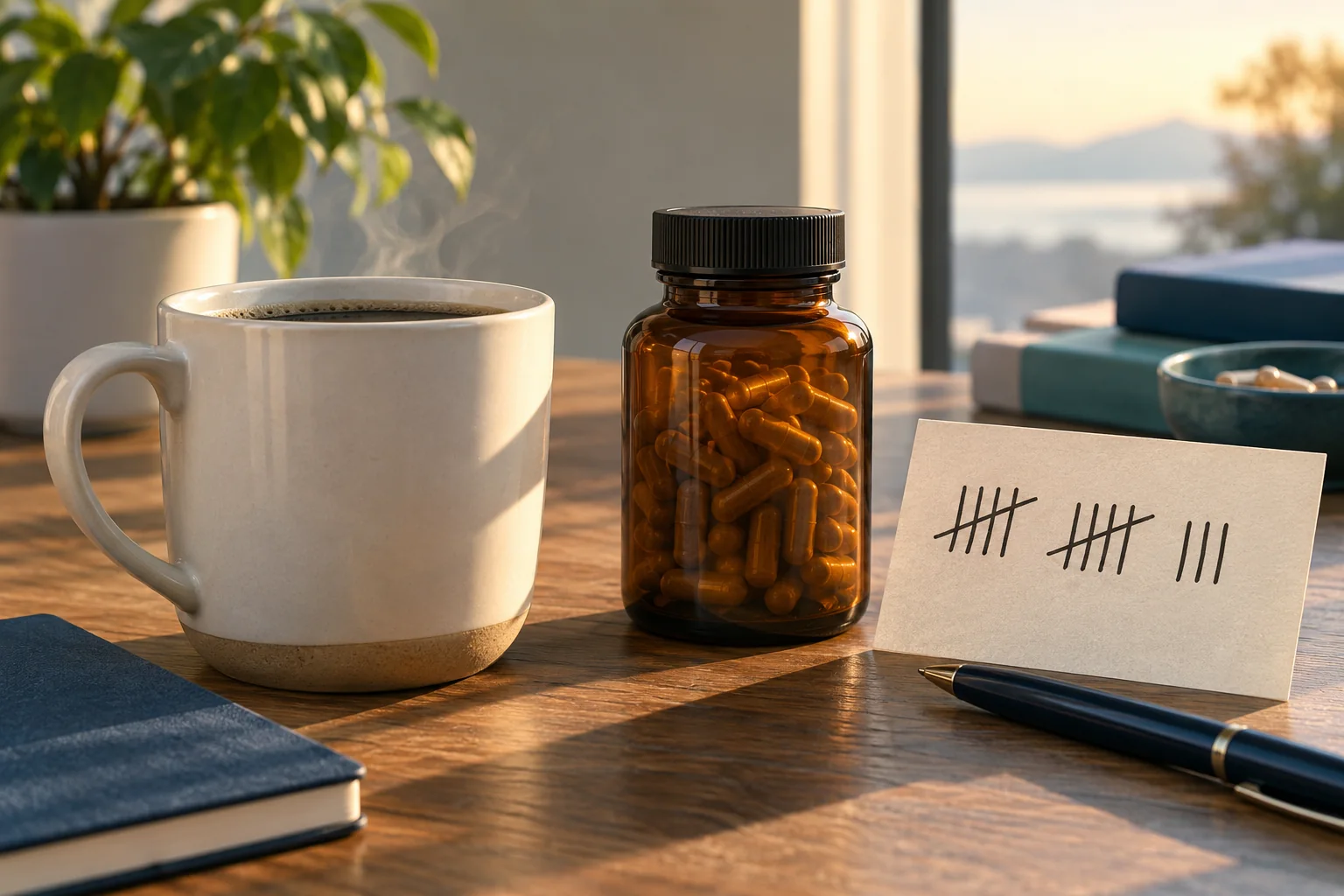
The direct answer
A small coffee may fit beside a genuinely stimulant-free supplement for some healthy adults. The answer changes when the fat burner contains caffeine, guarana, green tea, yerba mate, kola nut, bitter orange, yohimbe, or another stimulating compound. Coffee then becomes another active dose, not a neutral beverage.
The FDA cites 400 mg of caffeine per day as an amount not generally associated with negative effects for most adults, but it is not a personal target or guarantee. Sensitivity, pregnancy, medicines, cardiovascular conditions, anxiety, sleep, body size, and the speed of consumption can lower an appropriate exposure.
How to calculate the real caffeine total
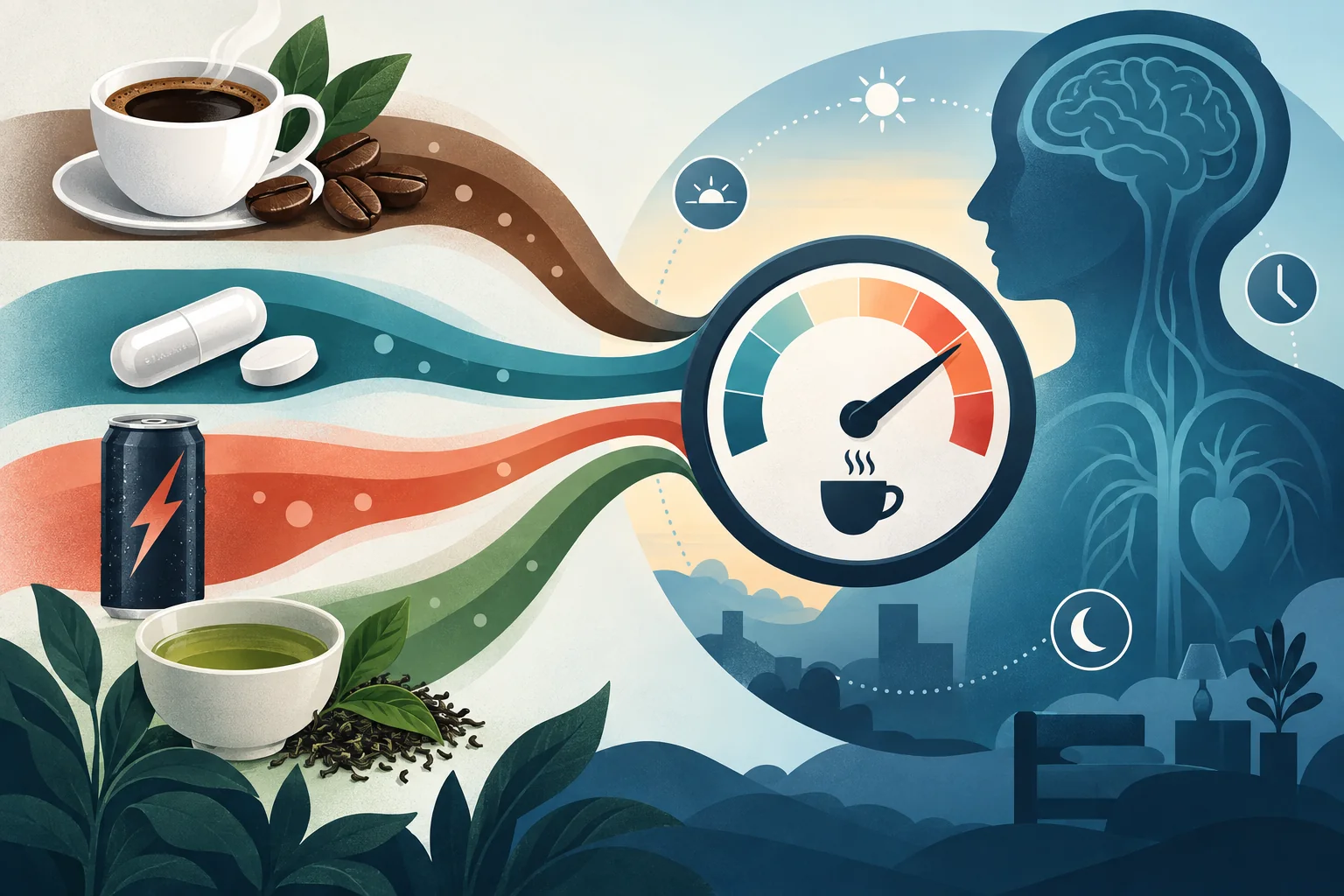
Start with milligrams, not cups. Coffee caffeine varies by bean, preparation, serving size, and retailer. Add the label-declared caffeine in the fat burner, then add caffeine contributed by guarana, tea, mate, pre-workout, energy drinks, soft drinks, chocolate, and medicines. If a proprietary blend prevents a credible total, treat the amount as unknown.
Calculate the maximum daily serving, not just one capsule. Include a second coffee and afternoon drinks before deciding. The total for the day matters, but a large amount consumed close together can feel very different from smaller separated exposures.
Look beyond caffeine
Bitter orange may provide p-synephrine, while yohimbe products may supply yohimbine. These do not become harmless because caffeine is within a familiar range. Products can also contain capsaicinoids, grains of paradise, black pepper extracts, or other ingredients with separate tolerability and interaction questions.
Read both the Supplement Facts and other-ingredients panels. “Energy blend,” “thermogenic matrix,” and botanical names can disguise overlapping purposes. A transparent total is necessary, but ingredient identity and health context still determine whether combining is sensible.
Warning signs and common tradeoffs
Too much stimulation may produce jitteriness, anxiety, tremor, nausea, headache, rapid heartbeat, palpitations, blood-pressure changes, frequent urination, or insomnia. Stop the combination and seek medical help for severe chest pain, fainting, marked breathing difficulty, or persistent rhythm symptoms.
A subtler tradeoff is damaged sleep. Morning coffee plus a later fat burner can keep exposure active into the evening. Poor sleep may worsen hunger, recovery, mood, and training consistency, undermining the goal that prompted the supplement.
Timing does not erase dose
Separating coffee and capsules can reduce the intensity of a peak for some people, but it does not remove either dose from the daily total. Caffeine clearance varies widely. A fixed cutoff copied from another person is not proof that your sleep is protected.
Use sleep onset, awakenings, next-day fatigue, resting symptoms, and training response as feedback. If you need coffee to overcome fatigue created by late supplement use, the schedule has become self-defeating.
A practical decision checklist
Write down product name, daily serving, declared caffeine, botanical caffeine sources, coffee size, timing, medicines, and relevant health conditions. If every amount is known, compare the combined exposure with your usual tolerance and professional advice. Start no new combination before driving, high-intensity exercise, or another situation where unexpected symptoms matter.
The safer alternatives are simple: use coffee without the fat burner, choose decaf, reduce the coffee serving, or select a verified stimulant-free product. Do not compensate for a smaller dose by taking more capsules later.
Applying the check to Fat Burn Active
The current Fat Burn Active listing identifies caffeine sources including guarana and added caffeine, alongside stimulating botanical extracts. Coffee therefore belongs in the same exposure calculation. Ingredient studies do not establish that adding coffee improves the complete formula or produces more fat loss.
Before purchase, verify the current label and serving instructions. If total caffeine is unclear, contact the manufacturer. People using medicines or living with cardiovascular, anxiety, sleep, pregnancy, or other relevant conditions should obtain individualized advice rather than testing the combination.
The simplest decision rule
If you want coffee for enjoyment, preserve that choice by avoiding a redundant stimulant supplement. If you want a fat burner for alertness, coffee may already provide the effect you notice at lower cost. If you want weight loss, neither option replaces a sustainable calorie deficit, protein, movement, training, and sleep.
Combine only when every stimulant is known, the total is appropriate for you, timing protects sleep, and there is a clear reason for using both. “I tolerate each separately” is not proof that the stack is suitable.
Risk depends on the complete exposure, not the reassuring name printed on the front of either package.
Why label uncertainty changes the answer
A combination cannot be evaluated from product names alone. Labels may describe one capsule while directions permit several, list botanical sources without stating their active contribution, or group ingredients inside a proprietary blend. Online images may show an older formula. Compare the bottle in hand with the manufacturer’s current page, and use the maximum daily serving you would actually take. If the exposure remains unknown, do not turn the uncertainty into a reassuring estimate.
Independent quality certification can help with identity, contamination, or prohibited-substance questions within its stated scope, but it does not prove that a combination is effective or suitable for a particular person. Likewise, an absence of dramatic symptoms does not prove that sleep, blood pressure, glucose, medicine exposure, or surgical risk is unaffected. The burden of proof should rise when more active products are combined.
Also distinguish evidence about one ingredient from evidence about the exact finished stack. A trial using a standardized extract at a stated dose cannot validate two retail blends taken together. Testimonials are even less useful because users may change food intake, training, sleep, or medicines at the same time. When direct combination evidence is absent, the responsible conclusion is limited: assess known exposures, avoid unnecessary duplication, and seek product-specific professional advice where the consequences matter.
Document the decision
Save the current labels, date, planned serving, timing, other caffeine or medicines, and the reason for use. Record sleep and symptoms as seriously as scale weight. If information is missing, uncertainty belongs in the decision rather than being replaced by a guess. Product formulas and personal prescriptions can change, so repeat the review whenever either changes.
A supplement is optional. Do not use it to compensate for sleep deprivation, illness, inadequate food, medication effects, or a rushed weight-loss target. The safer plan is the one that remains understandable to you and to the clinician or pharmacist helping you.
If one transparent thermogenic formula still fits after this safety check, read our independent Fat Burn Active review. Then, only if it remains appropriate, verify the current official label, directions, and warnings. We may receive a commission at no additional cost.
Frequently asked questions
Does decaf solve the problem?
Decaf usually contains much less caffeine, but not always zero. It can reduce exposure while preserving the coffee routine.
Can I judge the dose by how stimulated I feel?
No. Tolerance can reduce sensation without proving that cardiovascular or sleep effects are absent.
Is guarana extra caffeine?
Guarana naturally supplies caffeine. Count it when evaluating the complete formula.
Should I skip coffee on the first day?
Using one product at a time makes tolerability easier to interpret, but medical risks still require professional advice.
Sources
- FDA: How Much Caffeine Is Too Much?
- NIH ODS: Weight-Loss Supplements
- NCCIH: Using Dietary Supplements Wisely
- MedlinePlus: Caffeine
- FTC: Health Products Compliance Guidance
Sources reviewed September 18, 2026. This article provides general educational information and does not replace medical advice.