Why fixed cycle numbers sound more certain than they are
Commercial advice often repeats four-to-six, eight, or twelve-week cycles without identifying the product, ingredients, dose, study, or person. A caffeine-heavy thermogenic blend, a fiber product, and a stimulant-free formula cannot inherit one schedule simply because all are sold for weight management.
Duration also cannot repair weak evidence. If the finished formula has not been tested for meaningful outcomes, using it longer does not convert ingredient mechanisms into product proof. Longer exposure can increase cost and opportunities for sleep disruption, tolerance, interactions, or adverse effects.
Five factors that set the useful duration

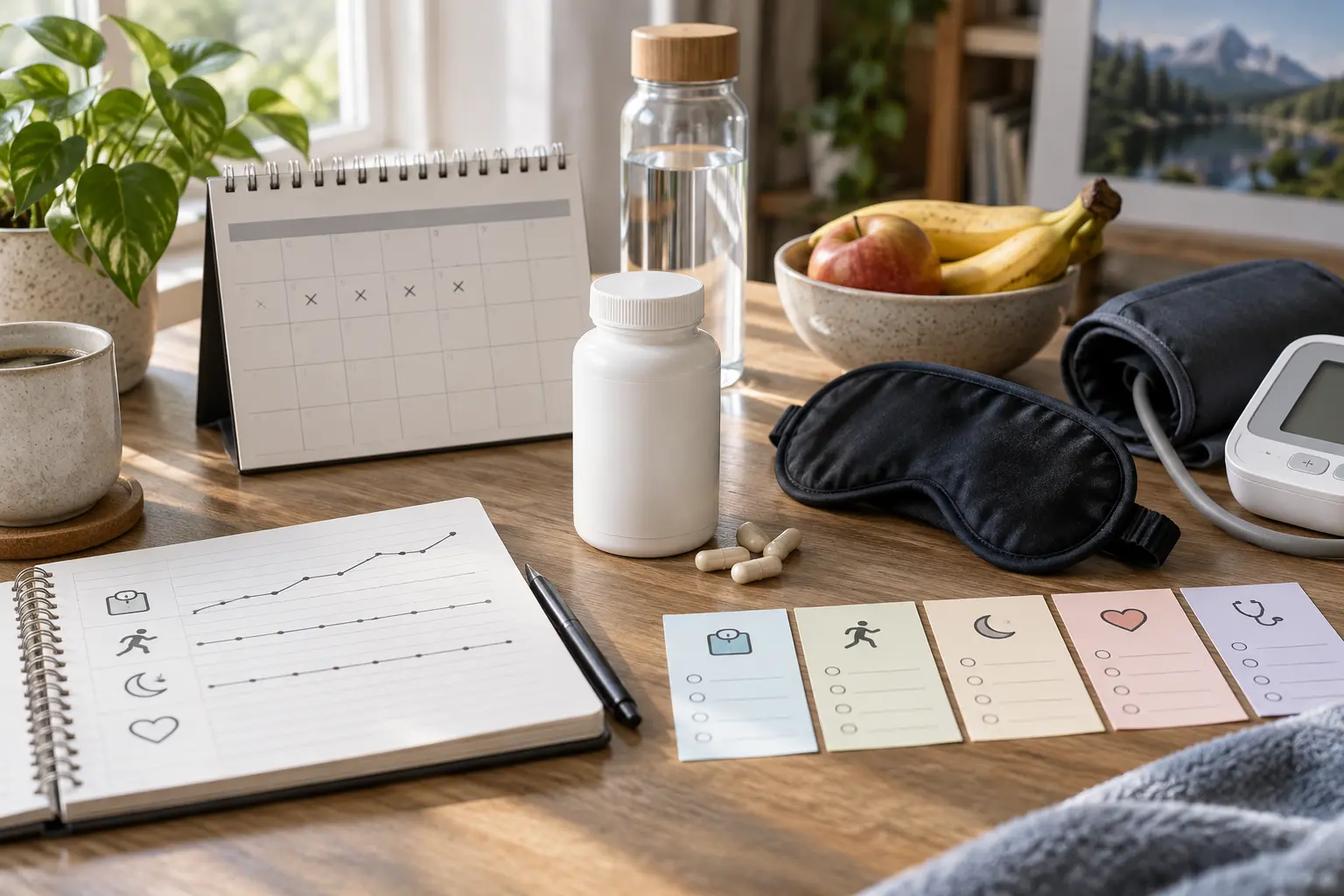
A practical decision timeline
- Baseline: collect one to two weeks before changing anything.
- Day one: verify the physical label and do not stack stimulants.
- Early check: review sleep, anxiety, heart symptoms, headache, nausea, and blood pressure when appropriate.
- Weekly check: compare adherence, appetite, activity, and weight averages.
- Planned endpoint: decide continue, stop, or obtain advice using the criteria written beforehand.
Do not move the endpoint because the result is disappointing. Extending an unclear trial invites hindsight: every good day becomes evidence for the product and every bad day becomes an excuse to wait.
Duration is not the same question as cycling
Duration asks how long this specific trial should last. Cycling asks whether planned breaks reduce tolerance, risk, or declining effects. Those questions overlap but are not interchangeable. A break does not prove that repeated cycles are safe or effective, and tolerance is not the only reason to stop.
Our cycling guide examines that narrower claim. This page sets the overall decision window: start only with a defined job, check safety early, and end when benefit, tolerability, directions, or uncertainty no longer support use.
Use three clocks instead of one arbitrary cycle
The first clock is the safety clock. It begins with the first serving and can end the trial immediately. Do not wait for an advertised cycle when sleep deteriorates, anxiety rises, blood pressure changes, or concerning symptoms appear. Early effects deserve attention even when a weight trend needs weeks.
The second clock is the outcome clock. Choose a window appropriate to the outcome and normal measurement noise. Alertness can change within hours; appetite patterns need repeated days; fat-loss trends require comparable weeks. This clock cannot exceed label limits or override safety. It also needs a baseline showing what happened with similar diet, activity, and sleep.
The third clock is the decision clock. It marks scheduled moments when you choose stop, continue to the next checkpoint, or seek advice. Put those dates on the calendar before purchasing another bottle. At each point ask: Is the product tolerated? Did the primary outcome improve? Are other behaviors stable? Is the remaining cost justified?
These clocks prevent opposite errors. Stopping after one quiet day may be too early to judge a noisy outcome, while continuing indefinitely because no dramatic problem occurred is too long. Duration is a sequence of decisions, not a countdown supplied by a seller. Document the reason for each extension and never make “finish the bottle” the clinical or evidentiary rationale.
Example: the bottle is not the schedule
Alex buys a sixty-serving bottle and assumes it defines a sixty-day program. After ten days, sleep is shorter and afternoon hunger is worse, although morning alertness feels stronger. The remaining capsules are sunk cost, not a reason to continue. Because the primary outcome did not improve and the stop rule was triggered, the rational duration is ten days.
Another user may tolerate the same product but see no difference by the planned review. “No meaningful benefit” is a complete result. The next step is not a higher serving or automatic second bottle.
One more check before the decision
At the endpoint, create a one-page record: dates used, actual servings, missed days, total caffeine, primary outcome, weekly weight and waist trends, sleep, symptoms, cost, and final decision. Keep it with the label. For any later trial, this record is more reliable than memory and helps prevent repeating a product that produced no clear value.
Do not renew automatically. Recheck the formula, directions, medicines, health context, price, and reason for use before another bottle. A previous period without obvious harm does not prove that indefinite exposure is safe or useful.
Use a baseline, review date, and stop rule
Before the first serving, record seven to fourteen ordinary days of morning weight, waist, sleep, appetite, caffeine, training, daily movement, blood pressure when relevant, and symptoms. Choose one primary outcome and a review date. “Feeling it” is not an outcome: warmth, sweating, alertness, or reduced appetite for a few hours does not establish meaningful fat loss.
During use, keep food, exercise, and other stimulants reasonably stable. Record the label-directed serving, time, meals, all caffeine sources, sleep, symptoms, and adherence. Compare weekly averages rather than selecting the best day. If several variables change together, do not automatically credit or blame the supplement.
Write stopping rules in advance. Chest pain, fainting, severe shortness of breath, a serious allergic reaction, or a sustained rapid or irregular heartbeat requires urgent assessment. Persistent insomnia, anxiety, tremor, headache, nausea, rising blood pressure, or appetite disruption justifies stopping and seeking qualified advice. Do not respond by adding another supplement or exceeding the label.
How this applies to Fat Burn Active
Fat Burn Active's current two-capsule formula contains at least 120 mg caffeine from caffeine anhydrous and guarana, while green-tea caffeine remains unquantified. It also provides a calculated 6 mg synephrine from bitter orange. The official directions and warnings control use; our independent review cannot determine personal suitability or promise results.
Fat Burn Active is relevant to How Long Should You Use a Fat Burner? because its official listing identifies standardized plant extracts, caffeine sources, vitamins, and zinc in one formula. First read our independent review. If the formula, stimulant profile, evidence limits, and warnings fit your situation, check the current formula and purchase options on the official Fat Burn Active website. We may receive a commission at no additional cost.
Frequently asked questions
Is there one correct schedule for every fat burner?
No. Ingredients, amounts, directions, risks, and evidence differ. Follow the current label and qualified individualized advice.
Does a stronger sensation mean better fat loss?
No. Stimulation and sweating are easier to notice than a small change in body fat and may instead signal adverse effects.
Can a supplement replace a calorie deficit?
No. A fat burner is optional and cannot replace sustainable energy balance, nutrition, movement, sleep, or medical care.
Sources
- NIH ODS: Weight-Loss Supplements
- FDA: Dietary Supplements
- FDA: How Much Caffeine Is Too Much?
- NIDDK: Choosing a Safe Weight-Loss Program
Sources reviewed September 14, 2026. This article is general educational information, not medical advice, diagnosis, or treatment.