
What may change—and what should not be assumed
Caffeine withdrawal is not fat regain
Caffeine withdrawal can begin after stopping regular exposure and may include headache, sleepiness, reduced energy, difficulty concentrating, irritability, nausea, or muscle discomfort. Symptoms are generally temporary, but severe or unusual symptoms need assessment rather than automatic attribution to caffeine.
A multi-ingredient fat burner complicates prediction because botanical caffeine may be unquantified and other compounds may have different kinetics. Count coffee, tea, energy drinks, pre-workout, and medicines before deciding whether exposure actually fell to zero.
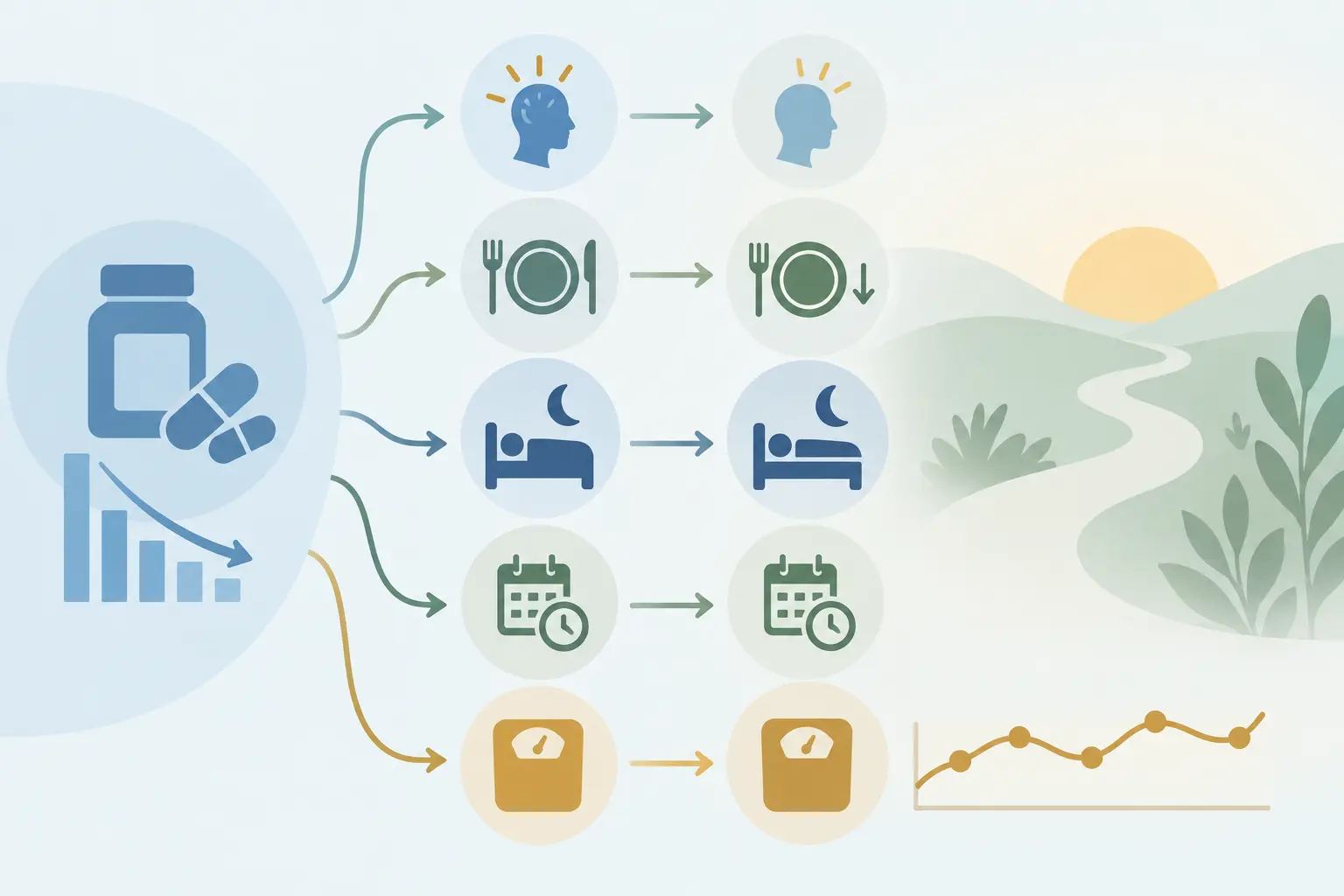
Use a seven-day transition record
- Record the last serving, product label, and estimated total daily caffeine.
- Keep meals, hydration, movement, and bedtime consistent.
- Track headache, fatigue, mood, appetite, sleep, heart symptoms, and weight without catastrophizing single readings.
- Do not compensate with uncontrolled coffee or another supplement.
- Seek care for severe, persistent, or alarming symptoms.
Some people prefer gradually reducing caffeine rather than stopping abruptly, but a taper must consider all sources and should not be improvised when the product contains several active ingredients. A clinician or pharmacist can help distinguish a caffeine plan from continued exposure to the whole blend.
Protect the routine the supplement never owned
Keep the behaviors that matter independently: regular meals, protein and fiber, walking, training, sleep opportunity, and a reasonable calorie target. If appetite rises, adjust meal structure rather than treating hunger as proof that the body can no longer lose fat.
Compare two weeks before and after stopping. If sleep improves and appetite becomes easier despite less stimulation, discontinuation may strengthen the plan. If fatigue persists, review sleep debt, deficit size, illness, medicines, and other causes instead of restarting automatically.
Build a stop plan before the last capsule
Write why use is ending: planned endpoint, no meaningful benefit, adverse effects, cost, label change, medical advice, pregnancy, surgery, or another reason. Different reasons create different next steps. An alarming reaction needs care; an ordinary endpoint needs observation; a formula mismatch needs documentation and seller contact.
Inventory every stimulant source for the week before stopping. Removing the supplement while doubling coffee does not create a clear comparison. Removing the product, coffee, energy drinks, and pre-workout simultaneously may create a larger caffeine change than expected. A pharmacist or clinician can help when exposure is high, symptoms are significant, or medicines complicate the plan.
Prepare meals and work breaks for times when the product previously reduced appetite or increased alertness. A protein- and fiber-containing meal, water, daylight, a short walk, or earlier bedtime addresses the practical gap without pretending to reproduce the supplement. Keep the plan ordinary enough to maintain.
Review at day three, seven, and fourteen. Compare symptoms, caffeine, sleep, hunger, activity, and weekly weight averages. Do not interpret one hungry afternoon as dependency or one lower-energy workout as permanent metabolic slowing. If symptoms worsen, persist, or do not fit a familiar caffeine pattern, obtain medical advice rather than restarting the product as a diagnostic test.
Example: separate withdrawal from the weight trend
Priya stops a caffeine-containing blend after eight weeks. For two days she has a headache and feels less energetic. Her scale rises one kilogram after a salty restaurant meal. Those events occur together but do not prove that stopping caused a kilogram of fat gain.
She maintains meals and walking, measures a weekly average, and reviews symptoms. The headache resolves, sleep improves, and the two-week weight trend remains consistent. The useful interpretation comes from time and controlled observation, not the first morning.
One more check before the decision
Keep the calorie target, meal pattern, step goal, training, sodium habits, and weigh-in conditions reasonably similar during the comparison. Note travel, menstruation, illness, restaurant meals, or unusually hard training because each can change appetite and scale weight independently of stopping.
At two weeks, classify the transition as improved, worsened, unchanged, or still unclear. Record which symptoms resolved and which persisted. Do not manufacture certainty from one weigh-in. A longer observation can help interpret an ordinary weight trend, but persistent adverse effects should not be observed through renewed exposure.
If stopping followed a suspected adverse event, preserve the bottle, lot, label, remaining capsules, receipt, and timeline. A clinician or reporting authority needs the exact product, not merely the category name “fat burner.”
Use a baseline, review date, and stop rule
Before the first serving, record seven to fourteen ordinary days of morning weight, waist, sleep, appetite, caffeine, training, daily movement, blood pressure when relevant, and symptoms. Choose one primary outcome and a review date. “Feeling it” is not an outcome: warmth, sweating, alertness, or reduced appetite for a few hours does not establish meaningful fat loss.
During use, keep food, exercise, and other stimulants reasonably stable. Record the label-directed serving, time, meals, all caffeine sources, sleep, symptoms, and adherence. Compare weekly averages rather than selecting the best day. If several variables change together, do not automatically credit or blame the supplement.
Write stopping rules in advance. Chest pain, fainting, severe shortness of breath, a serious allergic reaction, or a sustained rapid or irregular heartbeat requires urgent assessment. Persistent insomnia, anxiety, tremor, headache, nausea, rising blood pressure, or appetite disruption justifies stopping and seeking qualified advice. Do not respond by adding another supplement or exceeding the label.
How this applies to Fat Burn Active
Fat Burn Active's current two-capsule formula contains at least 120 mg caffeine from caffeine anhydrous and guarana, while green-tea caffeine remains unquantified. It also provides a calculated 6 mg synephrine from bitter orange. The official directions and warnings control use; our independent review cannot determine personal suitability or promise results.
Fat Burn Active is relevant to What Happens When You Stop Taking a Fat Burner? because its official listing identifies standardized plant extracts, caffeine sources, vitamins, and zinc in one formula. First read our independent review. If the formula, stimulant profile, evidence limits, and warnings fit your situation, check the current formula and purchase options on the official Fat Burn Active website. We may receive a commission at no additional cost.
Frequently asked questions
Is there one correct schedule for every fat burner?
No. Ingredients, amounts, directions, risks, and evidence differ. Follow the current label and qualified individualized advice.
Does a stronger sensation mean better fat loss?
No. Stimulation and sweating are easier to notice than a small change in body fat and may instead signal adverse effects.
Can a supplement replace a calorie deficit?
No. A fat burner is optional and cannot replace sustainable energy balance, nutrition, movement, sleep, or medical care.
Sources
- NIH ODS: Weight-Loss Supplements
- FDA: How Much Caffeine Is Too Much?
- NCBI Bookshelf: Caffeine Withdrawal
- FDA: Reporting Supplement Problems
Sources reviewed September 14, 2026. This article is general educational information, not medical advice, diagnosis, or treatment.