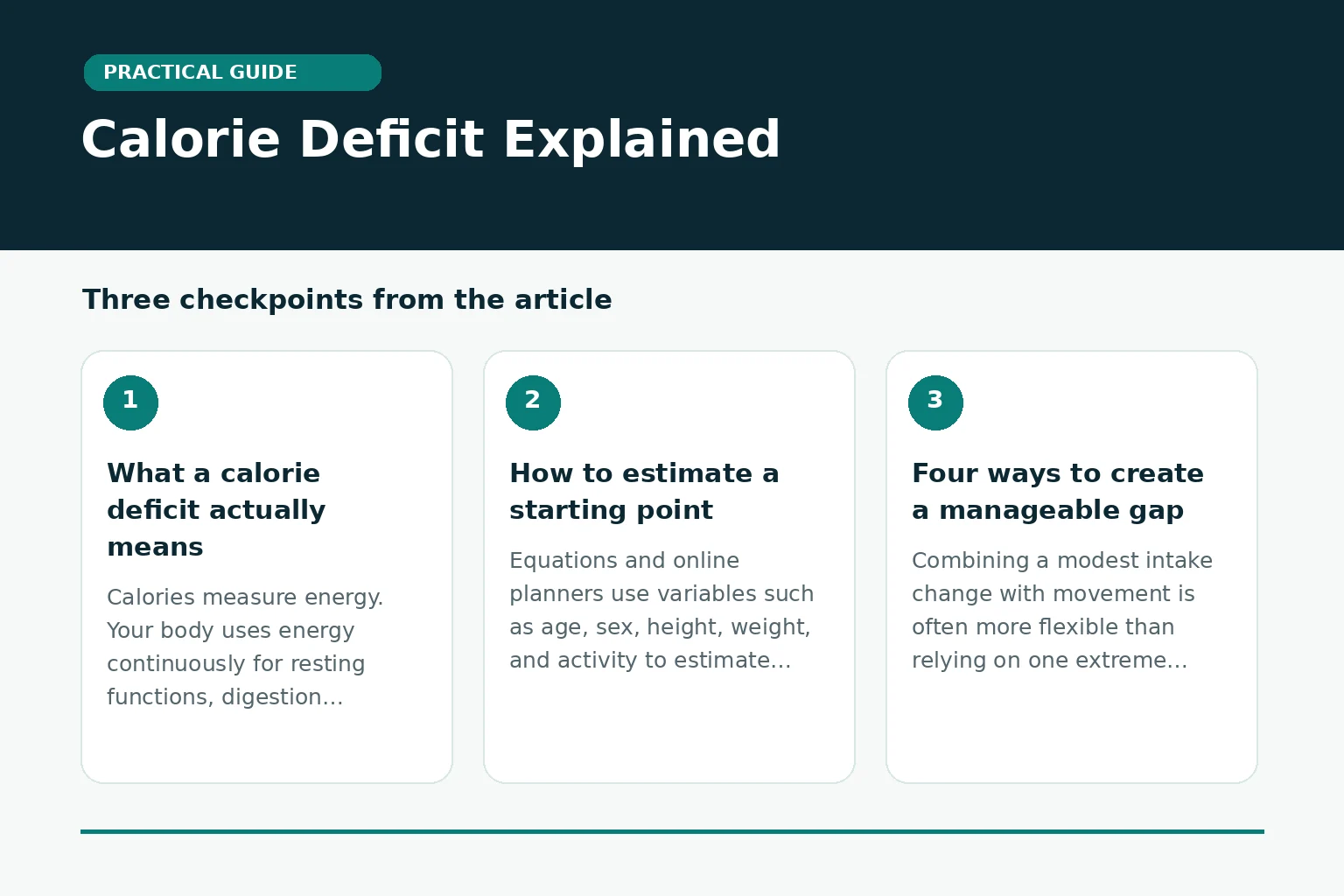
What a calorie deficit actually means
Calories measure energy. Your body uses energy continuously for resting functions, digestion, temperature regulation, daily movement, and exercise. If intake averages below expenditure, internal stores provide the difference. Over time, this can reduce body mass, including fat mass.
The key word is average. One meal above estimated needs does not erase progress, and one low-calorie day does not establish a meaningful deficit. The relevant pattern develops across days and weeks.
A deficit is therefore not a feeling. Hunger, sweating, fatigue, or an empty stomach cannot quantify it. Nor can a single wearable reading. Only a sufficiently long outcome trend, interpreted alongside intake, activity, water variation, and health, can show whether the estimated plan is producing the intended change. The aim is a usable estimate that improves through observation, not mathematical certainty.
How to estimate a starting point
Equations and online planners use variables such as age, sex, height, weight, and activity to estimate energy needs. They cannot directly observe your non-exercise movement, metabolic response, tracking error, or future adherence. Use the result as a testable starting range.
The seven-day protein-forward meal plan shows how to turn this principle into meals while adjusting portions to your own needs.
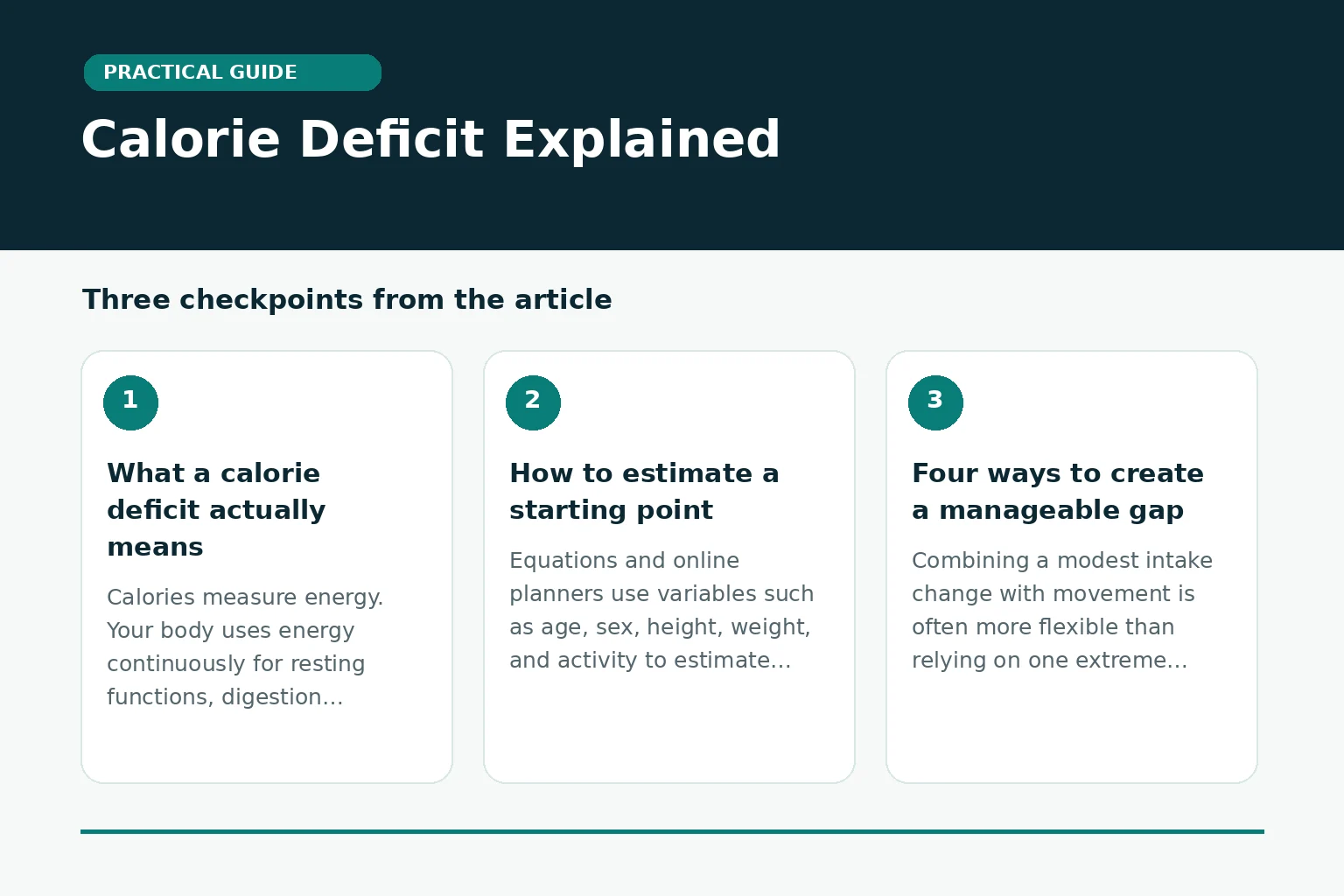
Four ways to create a manageable gap
Combining a modest intake change with movement is often more flexible than relying on one extreme lever.
How large should the deficit be?
There is no universal number that fits every body and medical context. Larger bodies may create a larger absolute gap than smaller bodies while losing at a similar relative pace. People with demanding training, pregnancy, adolescence, frailty, eating-disorder risk, or significant illness require different decisions.
A useful deficit allows adequate protein, micronutrients, fiber, sleep, daily function, and training. Persistent dizziness, faintness, binge episodes, severe fatigue, menstrual disruption, worsening mood, or inability to recover are not signs to push harder.
How to know whether it is working
- Weigh under comparable conditions and calculate a weekly average.
- Measure waist at the same landmark every one to four weeks.
- Record adherence, not merely intended calories.
- Note cycle phase, sodium, travel, illness, constipation, and hard training.
- Review at least several weeks before changing the plan unless safety requires earlier action.
If the trend is falling faster than intended and function is deteriorating, add energy or obtain professional guidance. If it is flat, look first for measurement and consistency gaps before assuming metabolic damage.
Common reasons the calculated deficit disappears
Cooking oil, dressings, alcohol, drinks, tasting while cooking, restaurant portions, and weekend meals can be missed. Package serving sizes may differ from what is eaten. Activity trackers can overestimate expenditure, and eating back every displayed exercise calorie can close the gap.
These are measurement problems, not moral failures. Use a short audit: weigh a few calorie-dense foods, check recipes, observe weekends, and compare the result. Intensive tracking is not appropriate for everyone; a structured plate or repeated meals may be safer and easier.
Why calories are necessary but not sufficient
Two diets with the same planned energy can differ in protein, fiber, food volume, vitamins, minerals, enjoyment, and satiety. A plan built mostly from small energy-dense foods may be technically possible but hard to sustain. Meal composition affects hunger and the spontaneous choices that follow.
Build meals around a protein source appropriate to your needs, vegetables or fruit, fiber-rich carbohydrate when suitable, and measured fats. This is a framework rather than a mandatory menu.
A two-week calibration example
Suppose a calculator estimates maintenance at 2,400 calories. The number is not a laboratory measurement, so immediately subtracting an extreme amount would create false precision. Instead, a person might make a moderate food change, maintain a realistic activity baseline, and collect fourteen days of morning weights. If the first week falls rapidly and the second stabilizes, some early change was probably water and digestive mass.
Next, compare weekly averages, hunger, sleep, training, and adherence. If the average is moving gradually and the plan feels sustainable, keep it unchanged. If there is no movement but several meals were unrecorded, first improve the measurement rather than cutting food again. If records are reliable and both weight and waist remain flat over several weeks, make one small adjustment—such as measuring cooking fat, replacing a regular caloric drink, or adding a repeatable walk.
If weight drops rapidly alongside weakness, persistent dizziness, loss of training performance, disturbed sleep, or recurrent overeating, the issue is not how to make the deficit larger. The issue is whether the current gap is appropriate and safe. Restore adequate intake and seek professional advice when symptoms or medical conditions warrant it.
Why maintenance periods can be useful
A planned period near estimated maintenance is not metabolic magic and does not guarantee easier future loss. It can still be useful when diet fatigue, travel, training demands, or repeated lapses make the current deficit hard to execute. The purpose is behavioral and practical: rehearse the habits needed after weight loss, reduce pressure, and collect data at a more stable intake.
Maintenance does not mean abandoning structure. Continue comparable weigh-ins, regular meals, movement, protein and fiber, and a response plan for normal fluctuations. When restarting a deficit, change only what the trend supports.
Can a fat burner create the deficit for you?
Some ingredients may modestly affect appetite or expenditure, but effects are often small, uncertain, temporary, or studied at doses that do not match the product. Stimulant side effects can also worsen sleep, anxiety, heart rate, or adherence. A supplement cannot make an unmeasured surplus behave like a sustained deficit.
Before using the affiliate product, read the independent Fat Burn Active evidence review and confirm exact amounts and total caffeine on the current label.
Frequently asked questions
Must I count calories?
No. Counting is one measurement tool. Portion structure, meal planning, lower-energy substitutions, and trend review can create a deficit without logging every item.
Can I be in a deficit without losing weight this week?
Yes. Water and digestive mass can temporarily conceal tissue change. Persistent flat trends deserve reassessment.
Does a deficit slow metabolism?
Expenditure usually decreases as body size falls, and adaptive responses can add to the change. It does not fall to zero or make energy balance stop applying.
Once the practical steps in Calorie Deficit Explained are working, decide whether an optional supplement adds enough value. Start with the Fat Burn Active review; if the formula and limitations are acceptable, see current availability and official ordering details. We may receive a commission.
Sources
- NIDDK Body Weight Planner
- NHS: Understanding Calories
- CDC: Steps for Losing Weight
- Dynamic model of adult weight change
Sources reviewed September 8, 2026. This article is general educational information, not medical advice, diagnosis, or treatment.