Set the plan before you shop
A “high-protein” label is not a license to eat too little or to ignore the rest of the diet. Weight loss still depends on an energy pattern you can sustain. Your calorie needs vary with body size, age, activity, health, and goals; the NIDDK Body Weight Planner can help estimate a starting point. If you need a therapeutic diet, have kidney disease, are pregnant, or have a history of disordered eating, ask a qualified clinician or dietitian to adapt the plan.
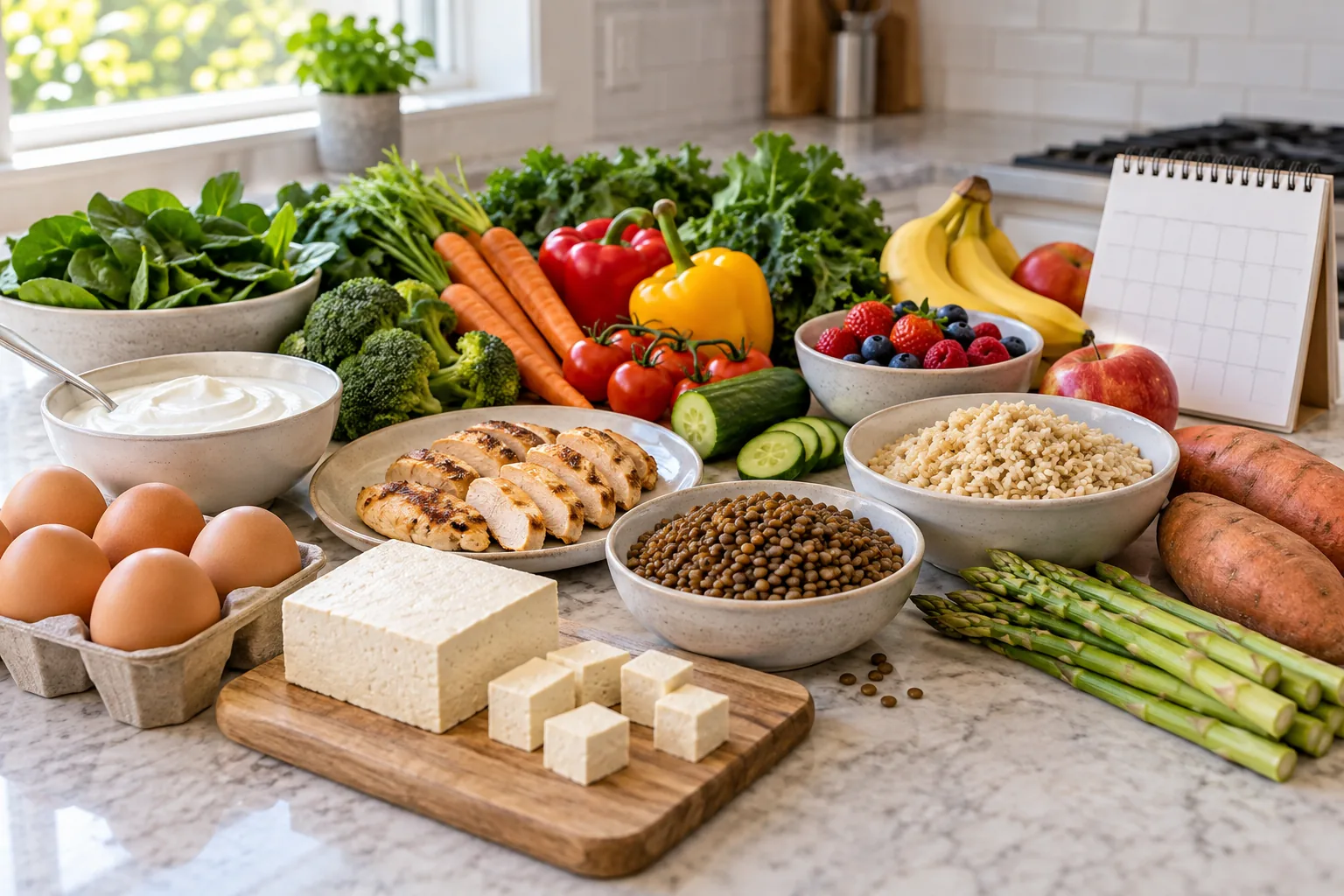
Decide which meal causes the most trouble. If lunch is the problem, spend your preparation time there; if evenings are unpredictable, keep a freezer dinner ready. For protein, think in food anchors rather than a universal gram target: eggs or yogurt at breakfast; beans, tofu, fish, or poultry at lunch; another suitable source at dinner. The exact amount depends on your total needs. A variety of sources also brings nutrients that a single shake or meat choice may not provide.
Seven days of flexible meals
This menu intentionally gives no daily calorie total. Yogurt brands, cooking oil, restaurant portions, sauces, and the amount of rice or bread can change the number substantially. If tracking is useful to you, enter your actual ingredients and serving sizes using labels and USDA FoodData Central. If tracking increases anxiety or rigid eating, use the meal pattern and work with a professional when appropriate.
The budget protein guide shows ways to build this rotation from affordable staples.
For the weekday lunch subset, see the five-workday meal-prep system with freezing and a midweek refresh.
Make the seven days truly usable by choosing your serving size before packing. A larger, active person might need more grains and protein than the pictured example; someone with a smaller appetite may take less and keep a snack available. Do not use this menu as an excuse to omit meals or chase the lowest possible number. The practical test is whether you can get through work, movement and family meals with adequate energy and manageable hunger.

A two-session preparation system
On the first cooking day, make one grain or potato base, one bean or lentil dish, two protein options and washed or cooked vegetables. Leave sauces separate so the same ingredients can become a bowl, wrap, soup or plate. Midweek, cook or thaw a second protein and refresh produce. A flexible plan lowers friction without requiring every meal to be decided on Sunday.
Food safety matters more than a perfect prep photograph. Refrigerate cooked perishable food promptly in shallow containers. FoodSafety.gov advises using refrigerated cooked leftovers within three to four days; freeze portions meant for later in the week. Reheat and handle foods according to safe-food guidance, and do not leave cooked meals at room temperature for a long workday.
Shopping list for one adaptable week
Buy a few overlapping ingredients rather than seven unrelated recipes: eggs; plain yogurt or a suitable fortified alternative; beans or lentils; tofu, fish, poultry, or another chosen protein; oats and a grain or potatoes; whole-grain bread or wraps; two or three vegetables that you will actually eat; fruit; and seasonings. Frozen vegetables and canned beans can reduce cost and waste. Check sodium and added ingredients where relevant, rinse beans if preferred, and buy quantities suited to the number of eaters.
The shopping list is a framework, not a prescription. Swap dairy for a suitable alternative, meat for tofu and pulses, rice for potatoes, or breakfast for leftovers. If a meal is not satisfying, add volume or an appropriate energy source instead of pretending a tiny portion is a complete lunch. Our meal-prep guide shows how to adapt the system to a difficult schedule.
If you cook for more than one person, make a common base and let each person choose the serving and additions they need. Keep a written inventory of the cooked components and their preparation dates. The simplest replacement for a missed prep session is a freezer portion, canned beans, microwaveable grain and frozen vegetables; it is still a meal, and it may prevent an expensive last-minute order.
How to adjust without losing the point
If you are unusually hungry, first check whether the deficit is too large or meals are missing a meaningful component. If the plan feels overly heavy, inspect sauces, oils, drinks, snacks and portions rather than cutting vegetables or protein blindly. Weight changes over a week are noisy because water and bowel contents change; do not declare success or failure from one weigh-in. Use a longer trend and how well you can follow the plan.
A high-protein meal plan does not replace strength activity, sleep or medical care. It also does not require supplements. If you later evaluate Fat Burn Active, read our independent product review after your food routine is in place. A stimulant-based product cannot substitute for a meal plan or make a calorie deficit automatic.
Frequently asked questions
Must I eat every snack listed?
No. Snacks are options for hunger, schedule, and nutritional needs. Their portions count toward the overall day.
Can I repeat the same breakfast all week?
Yes, if it suits you. Keep variety across the rest of your meals and make sure nutritional needs are met.
Can I use this as a precise 1,500-calorie plan?
No. It deliberately has no fixed daily total. Calculate with your own food labels and portions if a specific target is appropriate.
Sources
- NIDDK: Body Weight Planner
- NIDDK: Sustainable eating and activity
- USDA MyPlate: Vary protein foods
- USDA FoodData Central: Nutrient lookup
- FoodSafety.gov: Safe storage of cooked leftovers
- CDC: Planning healthier meals
Sources reviewed September 26, 2026. This sample plan is educational and is not a personalized medical diet.