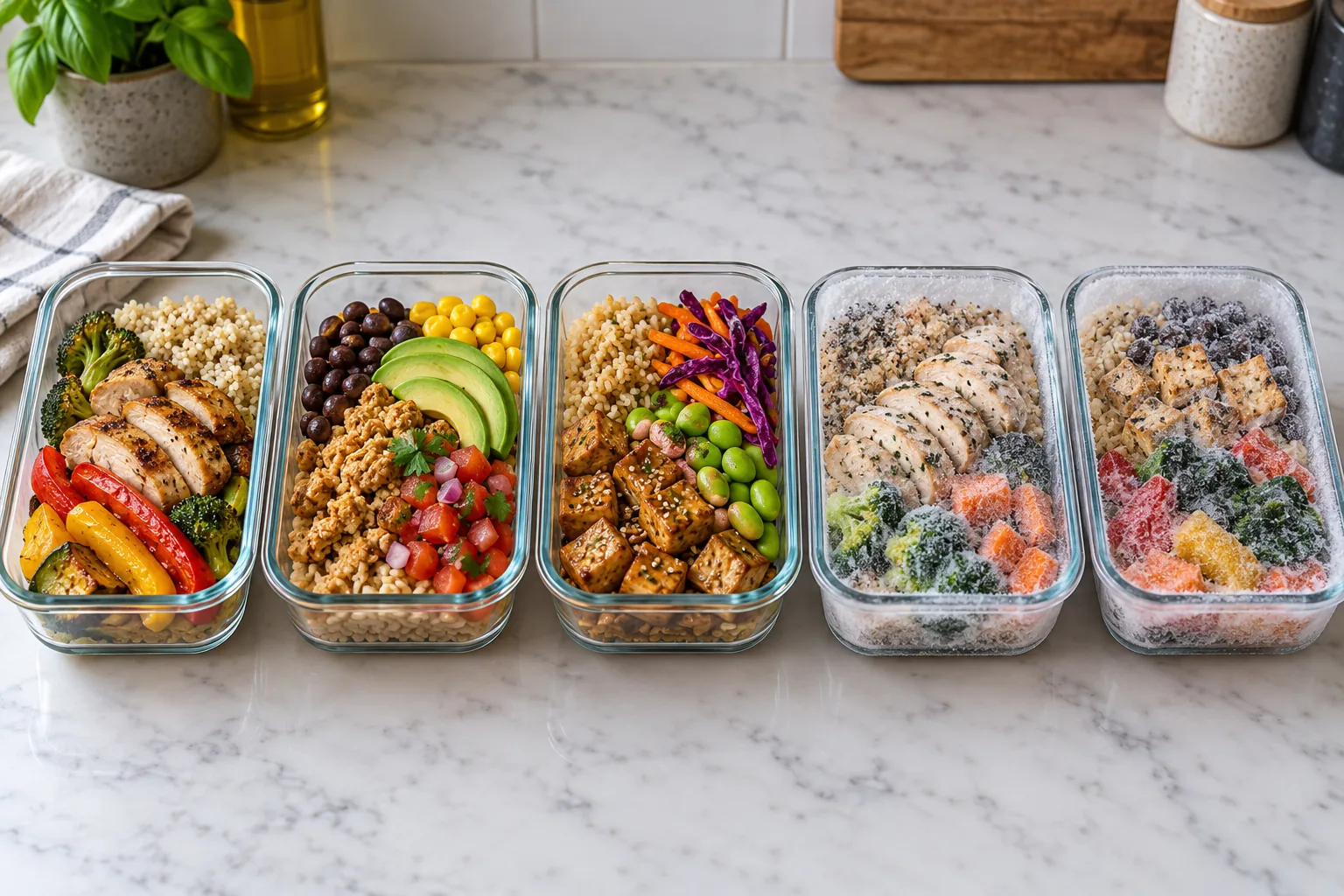
Why five identical boxes fail
Sunday meal prep looks efficient until Wednesday when the vegetables are soggy, the flavor is boring and a Friday fish lunch has spent too long in the fridge. Then takeout takes over. The aim is not to prove discipline by eating the same meal. It is to make a nutritious workday choice easy enough to repeat while respecting food safety.
A weight-loss meal prep system also cannot set one calorie number for everyone. Your energy needs, shift length and activity vary. If the lunch is tiny, you may buy snacks later; if it hides a large amount of oil and sauce, the label “meal prep” does not make it lower in calories. Keep a visible protein source, produce, a satisfying carbohydrate and measured flavor.
The two-session plan
First session: prepare components
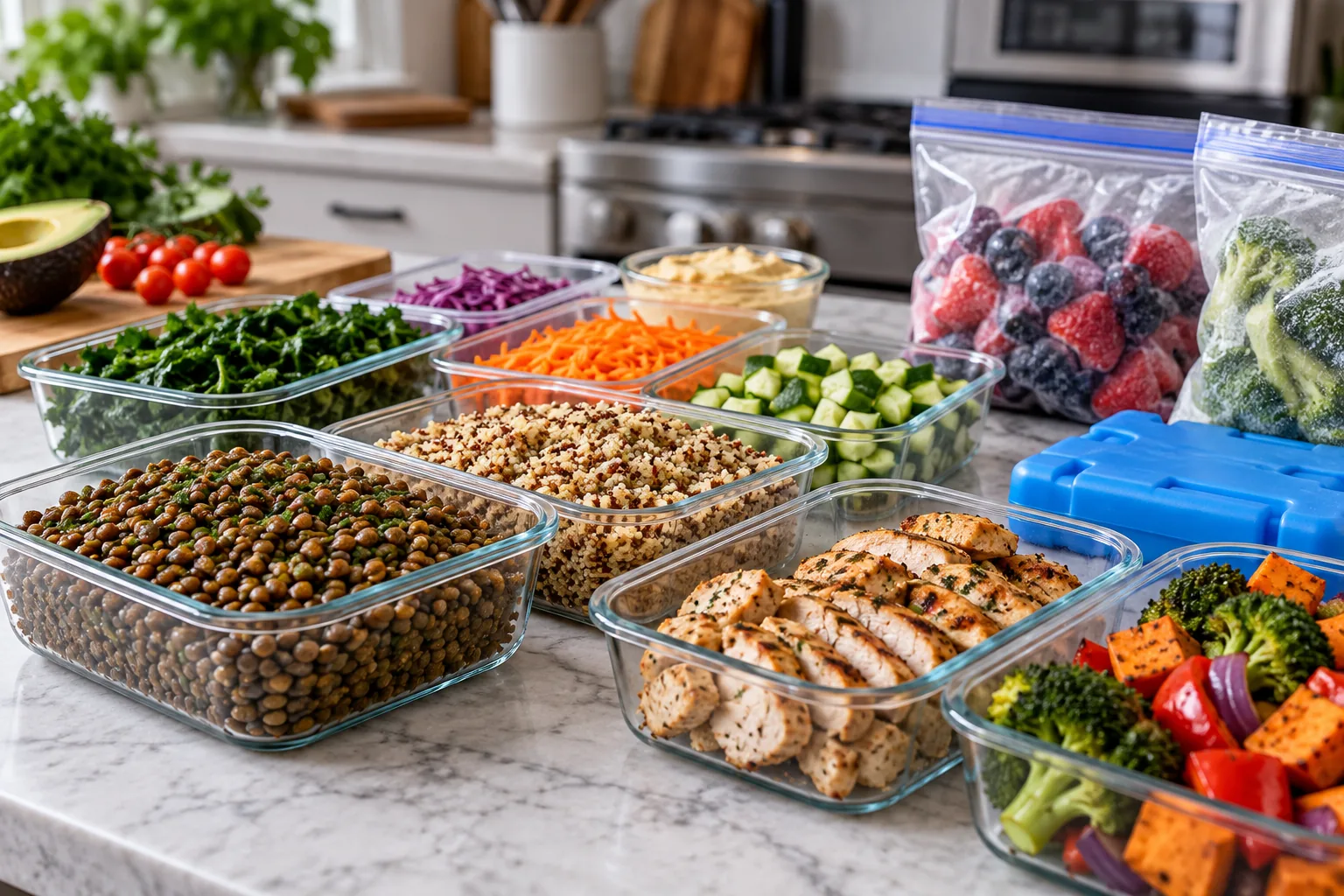
Cook one pot of beans or lentils, rice or potatoes, and one additional protein such as poultry, tofu or eggs. Wash or roast vegetables. Mix a yogurt, tomato or herb sauce and keep it separate. Portion perishable foods promptly into shallow containers and cool them according to FoodSafety.gov guidance. Date the containers rather than relying on memory.
Second session: refresh midweek
On Wednesday, thaw a frozen portion in the refrigerator and add fresh produce or cook one fast component. A 15-minute refresh can turn the same ingredients into a wrap, soup or grain bowl. If your schedule makes the second session impossible, plan all five lunches with later portions frozen immediately after safe cooling, plus a shelf-stable backup.
Five workdays from a small ingredient set
This is a rotation, not a fixed calorie plan. Brand, portion, sauce and oil make the energy total change. Check your own labels if tracking helps you, or use the plate structure and observe whether lunch carries you through the afternoon. The lunch satiety guide gives more ways to troubleshoot the meal.
The storage rule that changes the week
FoodSafety.gov says cooked leftovers are generally refrigerated for three to four days and should be frozen when they will not be eaten soon. Its cold-storage chart gives food-specific windows. A Sunday batch should not automatically become Friday lunch from the refrigerator. Freeze later portions promptly, thaw safely in the refrigerator, and reheat leftovers thoroughly according to food-safety guidance. Keep perishable food cold during the commute with an insulated bag and ice packs when a refrigerator is unavailable.
Separate sauces and crisp vegetables when texture matters. Never rely on appearance or smell alone to prove that an older meal is safe. Follow packaging instructions, especially for rice and animal foods, and avoid leaving a lunch box on a desk for hours. If you prepare for a person with elevated foodborne-illness risk, be especially careful with storage and reheating.
A short shopping list with substitutions
Choose two proteins: lentils and chicken, or beans and tofu, or another pair that fits your preferences. Add rice, potatoes or wraps; two durable vegetables such as cabbage and carrots; a frozen vegetable; fruit; and one sauce base. Buy quantities for the actual number of eaters. A small pantry kit of canned beans, fish if suitable, and a shelf-stable grain can rescue an unplanned overtime day.
If budget is tight, the low-cost protein guide shows how to compare usable servings rather than package prices. If you want a full week including breakfast and dinner, see the seven-day meal plan. These resources are meant to reduce friction, not create a perfect diet you cannot live with.
Portion for the day you actually have
Pack a meal that fits the gap between lunch and dinner. An early lunch followed by a late commute may need a planned snack. More demanding physical work may call for a larger starch or protein portion. When you compare your prepped lunch with the usual takeout, look at hunger, convenience, cost, nutrition and the full-day pattern, not only a single calorie tally.
Over two weeks, note which meals were eaten, wasted or replaced. If the same lunch stays uneaten, change its texture or seasoning. If snacks surge at 3 p.m., adjust the meal or schedule. A system succeeds by reducing decisions and waste, not by producing the most symmetrical containers for a photo.
Meal prep remains the foundation
Fat Burn Active cannot make an unsafe meal safe, replace protein or turn a tiny lunch into a satisfying one. If you later consider it as an optional addition to a workable weight-loss routine, examine its formula, evidence and cautions before deciding. The five-day system stands on its own.
When the plan falls apart on Thursday
If you forgot to thaw a frozen portion, do not leave it on a desk to speed the process. Use a safe thawing method or choose the pantry backup. If a container leaked or warmed during a long commute, follow food-safety guidance rather than hoping that reheating will fix mishandling. A flexible system should include a safe alternative for exactly these days.
Review whether your menu demanded too many dishes, too many fragile vegetables or a Sunday session that was unrealistic. Next week, cut preparation to one cooked base, one protein and a frozen vegetable. Keep flavors distinct with two sauces. Start with three prepped days and expand only when storage and appetite work reliably. The goal is a dependable lunch, not five meals made from scratch in one exhausting evening.
If colleagues order together, you can still join them occasionally. The prep lunch is a default, not a contract. Decide whether to save the container for another safe day or eat it before its storage window closes. Waste reduction and social flexibility make the routine easier to maintain.
Frequently asked questions
Can I refrigerate five cooked lunches from Sunday?
Do not assume so. Use the food-specific storage window; freeze meals for later in the week or cook again midweek.
Do I have to weigh each box?
No. If precise tracking is useful, use labels and portions. Otherwise build a complete plate and adjust based on hunger and the longer trend.
What if I have no microwave?
Pack a chilled wrap or bean bowl with safe cold storage, or use a suitable shelf-stable backup assembled when you eat.
Sources
- FoodSafety.gov: Cold food storage chart
- FoodSafety.gov: Four steps to food safety
- FoodSafety.gov: Leftovers and reheating
- CDC: Planning healthier meals
- NIDDK: Sustainable eating patterns
Sources reviewed September 27, 2026. Food safety requirements depend on ingredients, temperature and handling.