Why a healthy plate can still fail
A meal can contain nutritious foods and still be too small, too energy-dense, low in protein, or unsatisfying. A giant salad with little protein may lead to snacking an hour later. A grain bowl with free-poured oil, nuts, avocado, cheese, and dressing can exceed the intended energy intake while wearing a health halo.
The plate method solves part of the problem by making proportions visible. It cannot measure every mixed dish, restaurant meal, individual requirement, or calorie. Its power comes from consistency and feedback: build a reasonable plate, observe hunger and progress, then adjust one section.
The goal is a meal you can repeat, not a perfect photograph.
To expand the produce portion without making the meal sparse, use the high-volume meal formula.
Apply the same plate structure to five flexible under-600 dinner ideas using your own ingredient and portion values.
The four-part plate framework
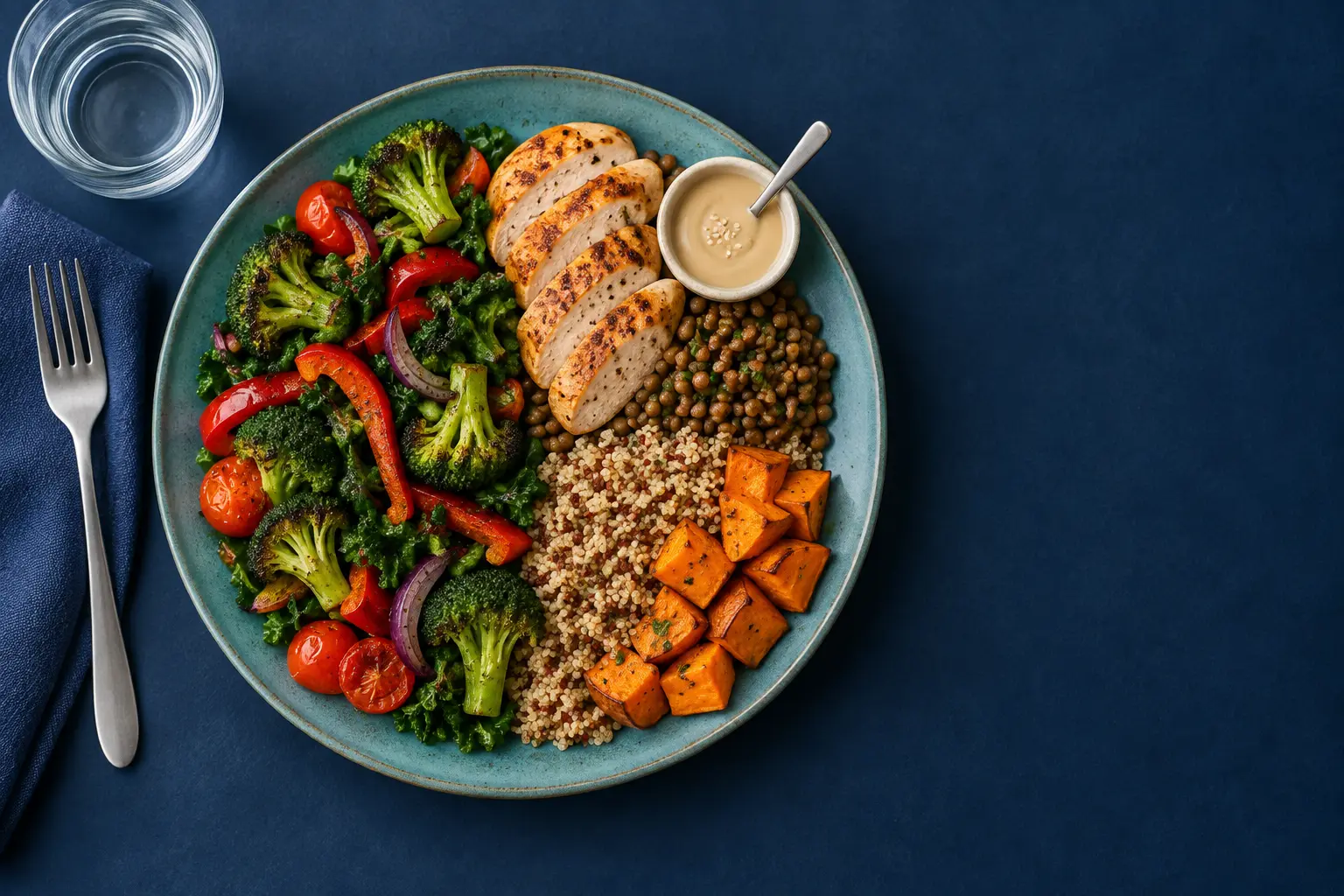
Beans can occupy both the protein and carbohydrate roles. Salmon supplies protein and fat. Foods do not need to live in only one box.
Build the plate in five steps
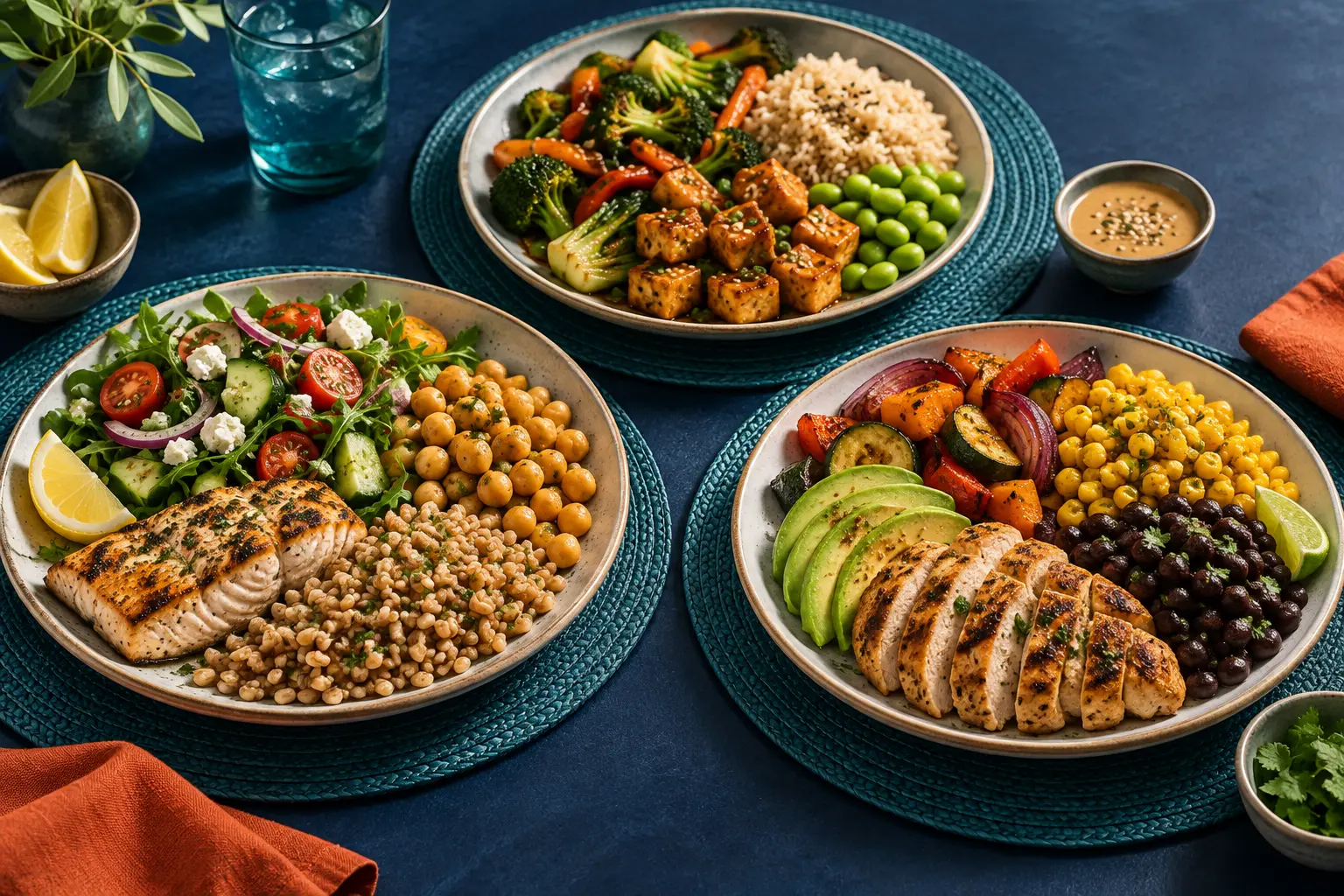
- Choose the vegetable or fruit anchor. Pick a form you actually enjoy—raw, roasted, steamed, frozen, canned, or in soup.
- Add the protein anchor. Use a portion appropriate to your needs and the rest of the day.
- Add a fiber-rich carbohydrate. Match it to activity, hunger, and cultural preferences.
- Make fats visible. Measure or plate oils, dressings, cheese, nuts, and spreads.
- Check satisfaction. Include flavor, temperature, texture, and a food you look forward to.
Water or another low-energy drink can accompany the meal. A dessert can fit deliberately; the framework is not a rule that every food must appear inside the main plate.
Use the method for mixed dishes
For soup, curry, chili, pasta, casserole, tacos, or sandwiches, think in ingredients rather than visible quarters. Ask: where is the protein, where is the plant volume, what is the main carbohydrate, and which fats or sauces are concentrated?
A chili can combine beans and lean meat with tomatoes and vegetables, served with a visible rice portion. Tacos can include protein, beans, cabbage, salsa, and measured cheese or avocado. Pasta can use vegetables and a protein source rather than relying on noodles and oil alone.
Do not rebuild traditional meals into unfamiliar diet food. Keep the dish recognizable and adjust the proportion or side.
Adapt the plate to different contexts
Calibrate the plate from two weeks of evidence
Photograph or briefly record one main meal each day. Rate hunger before, satisfaction after, and hunger two to four hours later. Track unplanned snacks, digestion, energy, training, and weekly average weight.
If you are hungry quickly, add protein, fiber-rich carbohydrate, vegetables, or enough fat depending on what is missing. If progress is flat despite consistency, measure the most energy-dense additions or reduce one portion. If loss is fast and function declines, add food.
Change one element at a time. Otherwise you cannot tell whether more protein, less oil, a larger lunch, or improved sleep solved the problem.
Common plate-method mistakes
Turning half the plate into a punishment salad: choose cooked vegetables, soup, fruit, or culturally familiar dishes. Counting beans twice but eating too little: combined foods still need adequate total energy. Ignoring beverages and cooking fats: the visible plate is not the whole intake.
Using the same plate for everyone: a tall athlete, older adult with low appetite, and sedentary person with diabetes may need different portions. Expecting spot reduction: no plate targets abdominal fat. Never including pleasure: a plan that creates constant deprivation is unlikely to remain stable.
Turn the plate into a shopping system
Choose two proteins, three vegetables or fruits, two fiber-rich carbohydrates, and two flavor or fat options for the week. Combine them into different meals. Frozen vegetables, canned beans, tinned fish, eggs, yogurt, and pre-cooked grains can reduce preparation burden.
Prepare components rather than five identical meals when repetition reduces enjoyment. Keep one emergency plate available for busy days. The system should survive work, weekends, and imperfect shopping—not only an ideal Sunday.
Where Fat Burn Active fits
This is a weak product match: the plate framework is the primary tool, and a supplement cannot make an unbalanced meal nutritionally complete. Fat Burn Active is optional and cannot replace an appropriate energy intake, adequate protein and fiber, dietary variety, activity, sleep, or medical care. A short-term change in alertness, appetite, warmth, heart rate, or sweating does not prove meaningful fat loss.
A supplement is not required to benefit from How to Build a Weight-Loss Plate. If your foundations are already in place, use the independent Fat Burn Active review to judge whether the formula has a useful optional role. If it fits your expectations and stimulant tolerance, check current product details and ordering terms. We may receive a commission.
Safety and individual context
A generic plate cannot account for food allergies, swallowing difficulty, pregnancy, frailty, bariatric surgery, diabetes treatment, kidney disease, gastrointestinal disorders, or clinician-directed restrictions. Adapt it with qualified guidance.
Pregnancy or breastfeeding, adolescence, frailty, eating-disorder recovery, diabetes medicines, and significant kidney, liver, cardiovascular, gastrointestinal, or endocrine disease require individualized nutrition advice. Seek assessment for rapid unintended weight change, fainting, persistent vomiting or diarrhea, marked weakness, excessive thirst or urination, severe abdominal symptoms, or a sudden appetite change. Do not alter prescribed treatment or use a supplement as a diagnostic test.
Frequently asked questions
Does half the plate always need to be vegetables?
No. It is a visual starting point. Appetite, activity, mixed dishes, culture, and medical needs can change the proportions.
Can you use the plate method without counting calories?
Yes. Use consistent portions and outcome trends. A short tracking audit can help if progress remains unclear.
Where do beans belong?
Beans provide both protein and carbohydrate plus fiber. They can fill part of either section depending on the rest of the meal.
Sources
- USDA MyPlate
- Harvard Healthy Eating Plate
- CDC: Healthy eating for a healthy weight
- NIDDK: Healthy eating and physical activity
Sources reviewed September 8, 2026. This article is general educational information, not medical advice, diagnosis, or treatment.