
Why chasing a high number can backfire
A person reads that fiber supports fullness and doubles bran, beans, and a powder in one day. Bloating, cramping, or constipation follows, so the entire idea is abandoned. Another person reaches a gram target through bars and isolated fibers while vegetables, fruit, legumes, and whole grains remain scarce.
Daily targets are population reference points. They do not guarantee weight loss, and more is not automatically better. The useful plan considers baseline intake, fiber type, total food, fluid, gastrointestinal history, medicines, and whether the changes displace less nutritious choices.
Fat loss still requires an energy pattern that can be sustained. Fiber may make that pattern easier and improve dietary quality, but it does not erase calories or compensate for an unworkable deficit.
Understand the official target framework
The Dietary Reference Intakes use an Adequate Intake of 14 g per 1,000 kcal. Common adult figures derived from that framework include 25 g/day for women aged 19–50 and 38 g/day for men aged 19–50, with lower figures after age 50. Pregnancy and breastfeeding have separate values.
These are total dietary fiber targets, not mandatory weight-loss prescriptions. Energy intake during dieting may be lower, but nutritional adequacy still matters. Using only “per 1,000 calories” can yield a low absolute number on a very-low-calorie diet; such diets require professional supervision rather than a home formula.
Food labels may distinguish dietary fiber and added isolated fibers. Physiological effects differ, so the total number alone cannot describe the quality of the pattern.
Find your baseline before setting the goal
Record three ordinary days, including a weekend day. Use reliable food labels or a reputable nutrient database. Do not estimate a salad as “high fiber” without checking ingredients and portion: lettuce may provide volume but less fiber than beans, berries, oats, or lentils.
Average the days and identify repeatable gaps. A breakfast without fruit or whole grains, a lunch without legumes or vegetables, or snacks built only around refined products offers an easy place to improve. Baseline data prevent the common mistake of adding fiber everywhere at once.
If tracking is mentally burdensome, count servings instead: a fruit, a vegetable serving, a legume serving, and a whole-grain choice across the day. The method can be approximate if it is consistent and tied to symptoms and outcomes.
Increase fiber in practical steps
- Week 1: add one tolerated source to the meal with the clearest gap.
- Week 2: repeat it consistently before adding another source.
- Week 3: improve variety across legumes, vegetables, fruit, and grains.
- Week 4: review the daily average, bowel pattern, fullness, and foods displaced.
A food step might be half a cup of beans, oats at breakfast, berries with yogurt, a pear as a snack, or a larger vegetable portion. Exact contributions vary; labels and nutrient databases are more reliable than viral charts.
Increase fluid appropriately, especially with bulking or gel-forming fibers, while following any clinician-directed fluid restriction. “Drink more water” is not universal advice for people with heart, kidney, or liver conditions.
Spread the target across the day
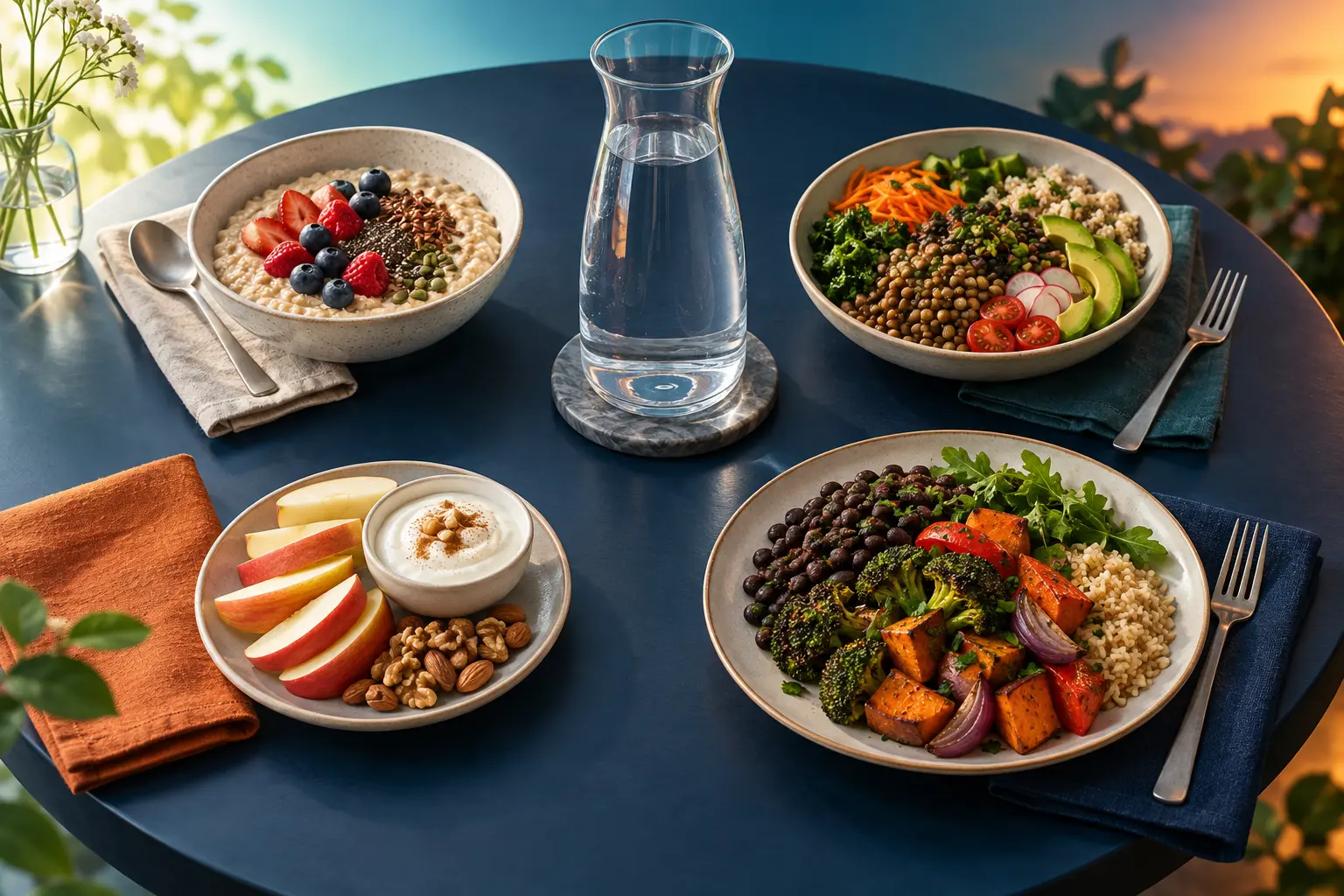
Concentrating nearly all fiber at dinner can cause discomfort and leaves earlier meals unchanged. A workable day might include oats and berries at breakfast, beans or whole grains with vegetables at lunch, fruit or nuts in a measured snack, and vegetables plus a fiber-rich carbohydrate at dinner.
Distribution is flexible. Some people tolerate cooked vegetables better than raw foods, canned rinsed legumes better than a large lentil meal, or sourdough whole-grain bread better than bran cereal. Preparation and portion can matter as much as the ingredient.
Pair fiber with protein and enough dietary fat for a satisfying meal. A large bowl of raw vegetables alone may create volume without lasting satisfaction.
Read fiber claims without being misled
Check grams per serving and the serving you actually eat. Then read the ingredient list. Added inulin, chicory-root fiber, resistant starch, psyllium, and other isolated fibers have different effects and tolerability. A product can be high in fiber while also high in added sugar, saturated fat, sodium, or calories.
Whole-grain wording also needs verification. Color does not prove a bread is whole grain. Look for whole-grain ingredients and compare the full Nutrition Facts panel. The best option is the one that improves the whole meal and can be repeated.
Use a four-part outcome review
If the gram target rises but none of these improves, reconsider the source and substitution. If symptoms worsen, step back to the last tolerated level rather than forcing the number.
Where Fat Burn Active fits
A weight-loss supplement is not required to reach a fiber target, and a product cannot borrow evidence from a fiber it does not contain at a relevant dose. Fat Burn Active is optional and cannot replace an appropriate energy intake, adequate protein and fiber, dietary variety, activity, sleep, or medical care. A short-term change in alertness, appetite, warmth, heart rate, or sweating does not prove meaningful fat loss.
A supplement is not required to benefit from Fiber for Weight Loss: Practical Daily Targets. If your foundations are already in place, use the independent Fat Burn Active review to judge whether the formula has a useful optional role. If it fits your expectations and stimulant tolerance, check current product details and ordering terms. We may receive a commission.
Safety and individual context
Increase fiber gradually. Bulking fibers can be unsafe with swallowing difficulty or intestinal narrowing and may affect medicine absorption. Persistent pain, vomiting, blood in stool, severe constipation, unexplained bowel change, or prior major gastrointestinal surgery warrants professional advice.
Pregnancy or breastfeeding, adolescence, frailty, eating-disorder recovery, diabetes medicines, and significant kidney, liver, cardiovascular, gastrointestinal, or endocrine disease require individualized nutrition advice. Seek assessment for rapid unintended weight change, fainting, persistent vomiting or diarrhea, marked weakness, excessive thirst or urination, severe abdominal symptoms, or a sudden appetite change. Do not alter prescribed treatment or use a supplement as a diagnostic test.
Frequently asked questions
Is 30 grams of fiber enough?
It may fit many adults, but age, sex, energy needs, current intake, and health affect the reference target and practical goal.
Should fiber increase during weight loss?
Often it can improve diet quality and fullness, but the right increase is gradual and based on tolerance—not a special fat-loss dose.
Can a supplement replace food fiber?
It can provide a specific fiber for a defined purpose, but it does not reproduce the full nutrient and food-matrix benefits of varied plants.
Sources
- Dietary Reference Intakes for fiber
- Dietary Guidelines for Americans
- USDA FoodData Central
- Review of dietary fiber and appetite
Sources reviewed September 8, 2026. This article is general educational information, not medical advice, diagnosis, or treatment.