Why a small “diet meal” often backfires
Imagine lunch as a tiny salad with a few chicken pieces. It may look disciplined, but it offers little food and sometimes too little energy to carry you to dinner. By midafternoon, snacks become more tempting. The opposite mistake is to make the salad enormous while leaving a large pour of dressing, cheese and nuts unmeasured. The plate grows, yet the calorie total barely changes or even rises.
High-volume eating is a tool for making a practical deficit more comfortable. Water and fiber in produce add bulk; CDC guidance specifically suggests replacing some higher-calorie ingredients with vegetables and fruit. That replacement matters. Adding a bowl of vegetables to an unchanged meal adds nutrients and food, but it does not necessarily lower the meal's energy. Fullness also depends on protein, texture, meal timing and individual appetite.
A four-part formula for a bigger plate
Start with the meal you actually eat. If your usual pasta is mostly noodles and creamy sauce, replace part of the noodles with vegetables and add a protein source. If your usual soup is only broth, add beans and a side that makes it a meal. The change should address both appetite and the full-day energy pattern.
Five meals with more food on the plate
Vegetable and bean soup with a side
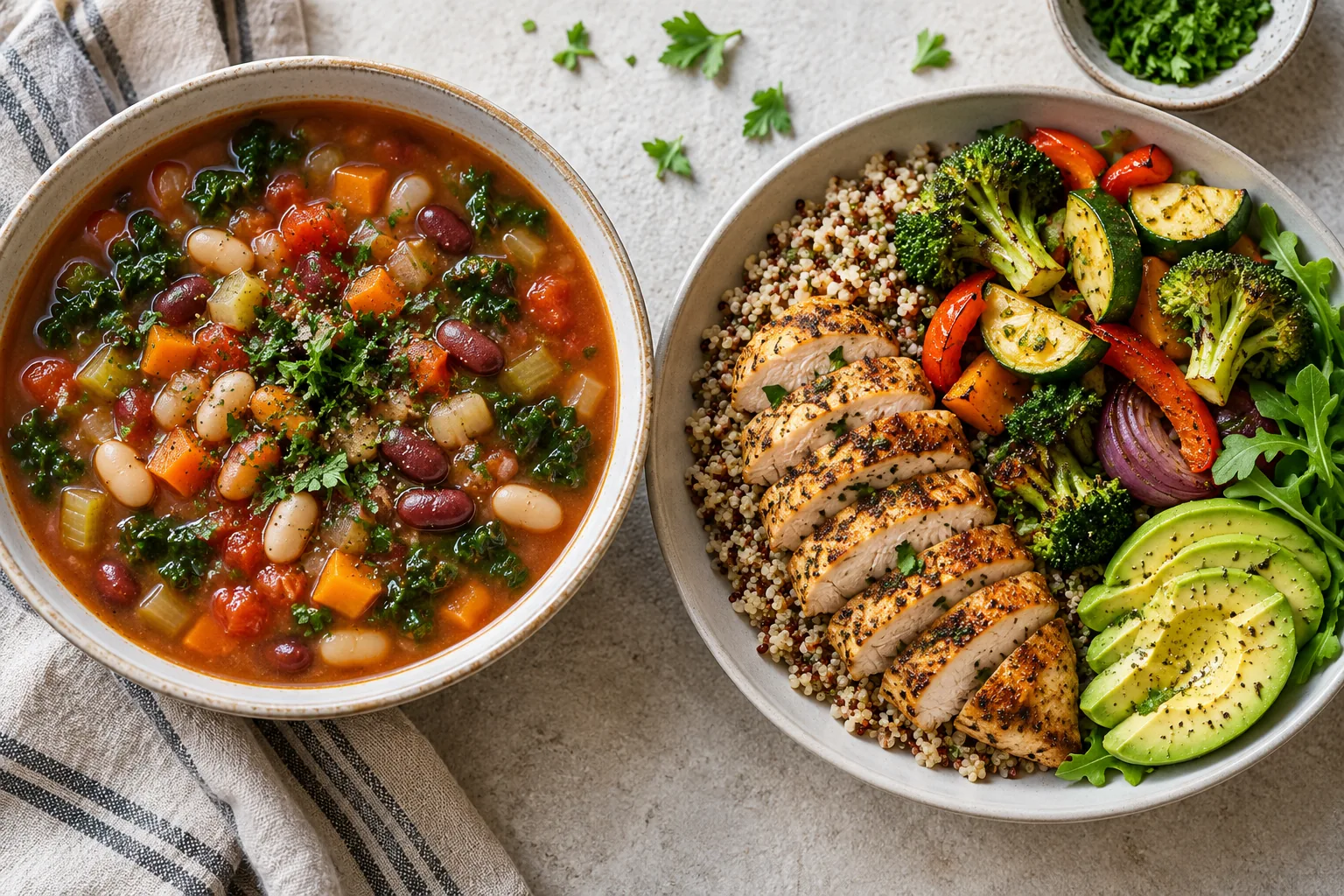
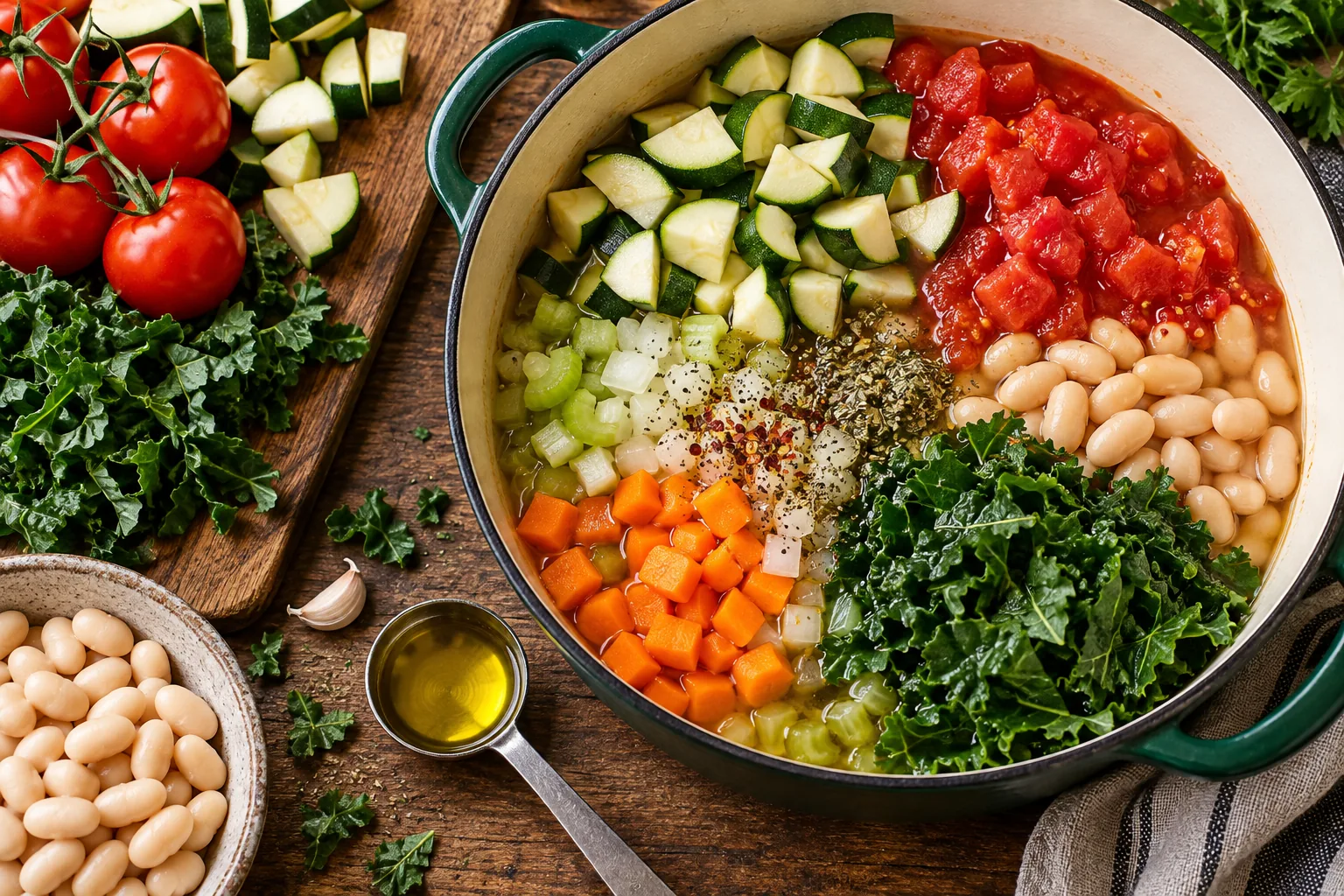
Simmer tomatoes, carrots, cabbage, greens and beans in broth. Add chicken or tofu if preferred, and serve with a small piece of whole-grain bread or a potato. A thin broth is not a complete meal merely because the bowl is large. Protein and useful energy make the soup more likely to last until the next eating occasion.
Sheet-pan dinner with a potato
Roast a tray of broccoli, peppers, zucchini and onions beside fish, poultry or tofu. Include a potato or another carbohydrate. Measure oil for the whole tray, then divide it across servings; a coating from a spray bottle and a generous pour are different recipes. Season generously so the vegetables remain appealing.
Grain bowl with half the base replaced
Use a smaller portion of rice than usual, then fill the freed space with cooked vegetables, beans and a protein source. Keep a flavorful dressing in a measured portion. This is a substitution experiment, not a ban on rice. If you are very active, the original grain portion may be appropriate; adjust based on hunger and your wider plan.
Egg or tofu skillet
Cook eggs or tofu with mushrooms, spinach, tomatoes and peppers. Serve with toast or potatoes. Vegetables contribute texture and a larger serving. If you cook with cheese or oil, include those ingredients in your estimate. A satisfying breakfast-for-dinner can be easier to repeat than an elaborate low-calorie recipe.
Fruit and yogurt bowl
Combine plain yogurt or a protein-rich alternative with a generous fruit portion and a modest amount of oats or crunchy topping. It can work as breakfast or a planned snack. A large bowl of fruit alone may not satisfy in the same way; nuts, granola and sweetened yogurt can also make a supposedly light bowl much more energy dense.
Check the trade, not just the plate size
Use package labels or USDA FoodData Central to estimate your current meal and the revised version. Count cooking oil, sauces, cheese, nuts and drinks. A bigger plate with fewer calories can happen when vegetables replace some of a higher-energy ingredient, but recipes differ widely. Do not copy a calorie number from a photograph or assume “healthy” ingredients have no energy.
For a useful trial, keep lunch timing and the rest of the day similar for several days. Compare comfortable fullness after the meal, time until next hunger, unplanned snacks and whether the meal tastes good enough to repeat. One low-hunger day does not prove weight loss; look at the longer trend and whether the change makes the overall plan easier.
Be careful with enormous portions if they cause gastrointestinal discomfort. Fiber-rich foods such as beans can be increased gradually with fluids as appropriate. If you experience persistent pain, unusual fullness or a history of disordered eating, individualized advice may matter more than a volume strategy.
Three mistakes that make volume eating less useful
- Removing every energy source. A mountain of vegetables with little protein or starch may postpone hunger only briefly. Add enough food to support your day.
- Ignoring dressings and toppings. Oil, nut butter, cheese and creamy sauces can be worthwhile but change the arithmetic quickly; portion them intentionally.
- Eating foods you dislike. An unpleasant giant salad is not sustainable. Try soup, roasted vegetables, fruit, potatoes or another preparation you enjoy.
Our volume-eating overview explains the broader approach. For a concrete workday application, use the high-protein lunch templates; for the recurring one-hour hunger problem, see the post-meal hunger guide.
Where a supplement fits
Food volume cannot be replaced by a capsule. Fat Burn Active is an optional product decision, not a mechanism for creating a larger, nourishing plate or a guaranteed calorie deficit. If you are evaluating it after establishing a workable eating pattern, the independent review discusses its listed ingredients, evidence limitations and stimulant cautions.
Adapt the idea to your kitchen
If raw salads do not appeal to you, try cooked vegetables in a stew, chili, pasta sauce or omelet. Frozen vegetables are convenient and often reduce waste. A large baked potato can be a satisfying base when paired with protein and vegetables; its toppings determine much of the final meal. If beans cause discomfort, start with smaller amounts or use other tolerated foods rather than forcing an enormous legume serving.
At a restaurant, ask for extra vegetables, take a portion of sauce on the side, and decide whether you want to save part of a very large entrée. You do not need to order the lowest-calorie item. Use the same question at home and away: does this plate provide enough food, protein, nutrition and pleasure to make the next meal manageable?
Frequently asked questions
Are all vegetables unlimited?
No food needs an unlimited label. Portions and preparation matter, especially oil, dressings and mixed dishes. Vegetables are useful for volume and nutrition, not a loophole in energy balance.
Should I replace all rice or pasta?
No. Start by replacing part only if the original meal leaves you hungry or exceeds your intended portion. Keep enough carbohydrate for satisfaction and activity.
Is a very large soup always filling?
No. Broth volume can be temporary; protein, legumes, potatoes or a suitable side can make it a more complete meal.
Sources
- CDC: Fruits, vegetables and meal volume
- NIDDK: Sustainable weight management
- USDA FoodData Central
- CDC: Healthier meals and snacks
- NIDDK: Portion sizes
Sources reviewed September 27, 2026. General educational information, not personalized medical advice.