This guide offers educational information. It does not diagnose a condition or establish supplement benefits.
Why a single-nutrient lunch often falls short
A small protein bar may provide protein but leave you wanting a full meal. A large bowl of plain vegetables may provide volume and some fiber but lack enough energy or protein to carry you through the afternoon. Pairing a useful protein source with fiber-rich foods and satisfying additions can make lunch more substantial. The CDC includes varied protein foods, fruits, vegetables and whole grains in healthy eating guidance. This is a framework, not a guarantee that any particular meal will quiet hunger for a set number of hours.
The general filling-meal guide covers overall meal construction. This article focuses on why protein and fiber are helpful partners, where the evidence is limited, and how to combine them using foods you already buy.
See the portable high-protein lunch examples for ways to combine these foods through a workday afternoon.
What research can and cannot show
Studies have tested protein-rich breakfasts, fiber-rich foods and some combinations under controlled conditions. A randomized breakfast study compared egg-based meals with differing protein and fiber content; another trial examined pea protein and hull fiber alone and together. Their results describe specific test foods, participants, meals and short-term appetite measures. They do not establish a universal ratio that guarantees long-term weight loss or that every food combining the two is superior.
A person’s hunger also responds to total energy, texture, meal timing, sleep and expectations. A useful interpretation is to try food combinations that make ordinary meals easier to sustain. Do not transfer the effect of one tested breakfast to a supplement drink with a different formula. Long-term weight management still depends on an adequate, repeatable eating pattern.
Build one satisfying breakfast
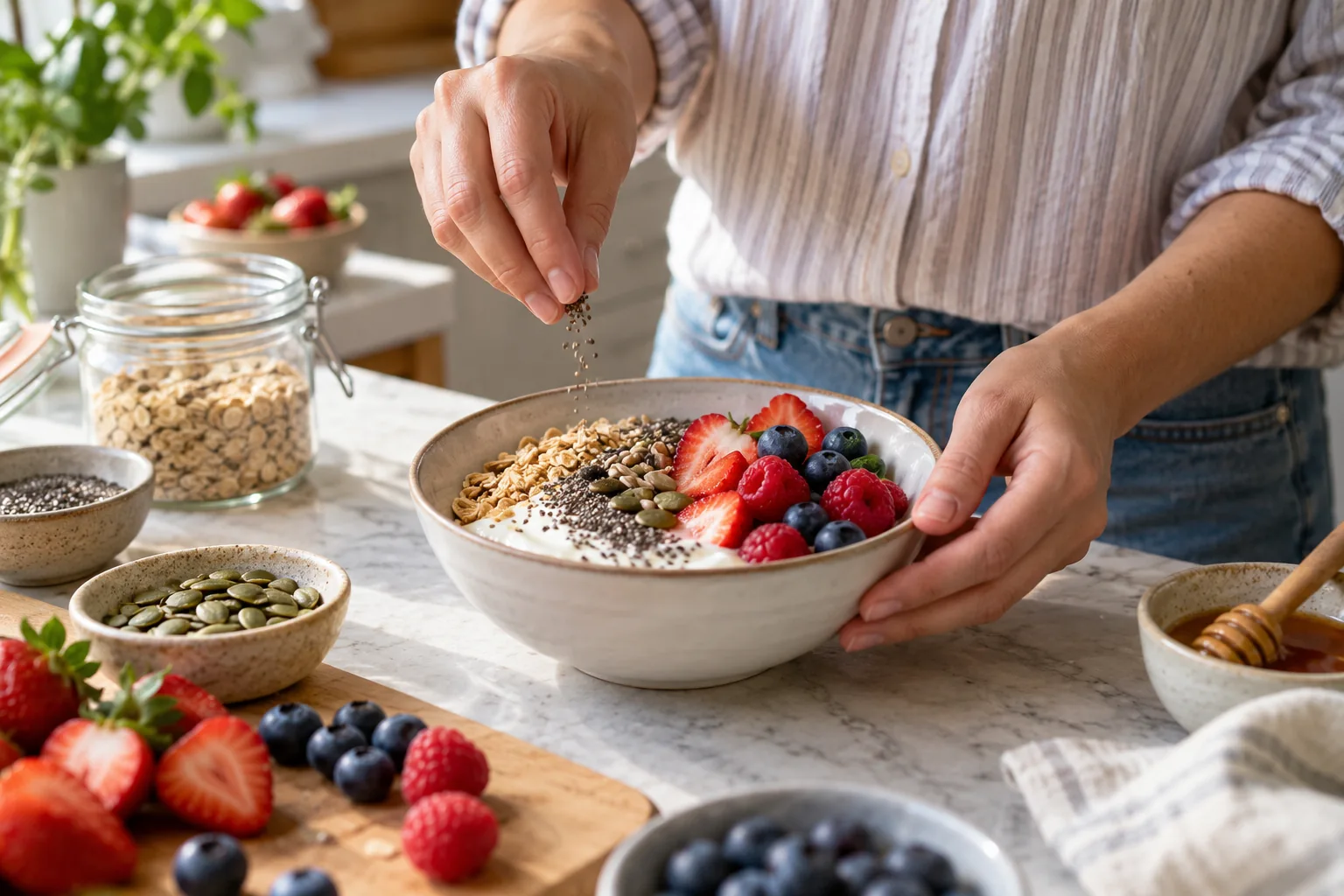
Try yogurt or a soy alternative with oats and berries, eggs with whole-grain toast and fruit, or beans on toast with a side of vegetables. These are examples, not required menus. If a bowl of oats alone leaves you hungry, a protein-containing topping may help; if eggs alone feel too small, adding fruit or a grain may improve satisfaction. Include an enjoyable taste and enough food for the hours until your next meal.
The high-protein breakfast guide offers other options. This page is about the pairing: the fiber-rich side adds a different property from the protein source. The best test is your appetite and energy on an ordinary morning, not a social-media chart assigning every ingredient a satiety score.
Make a lunch from familiar components
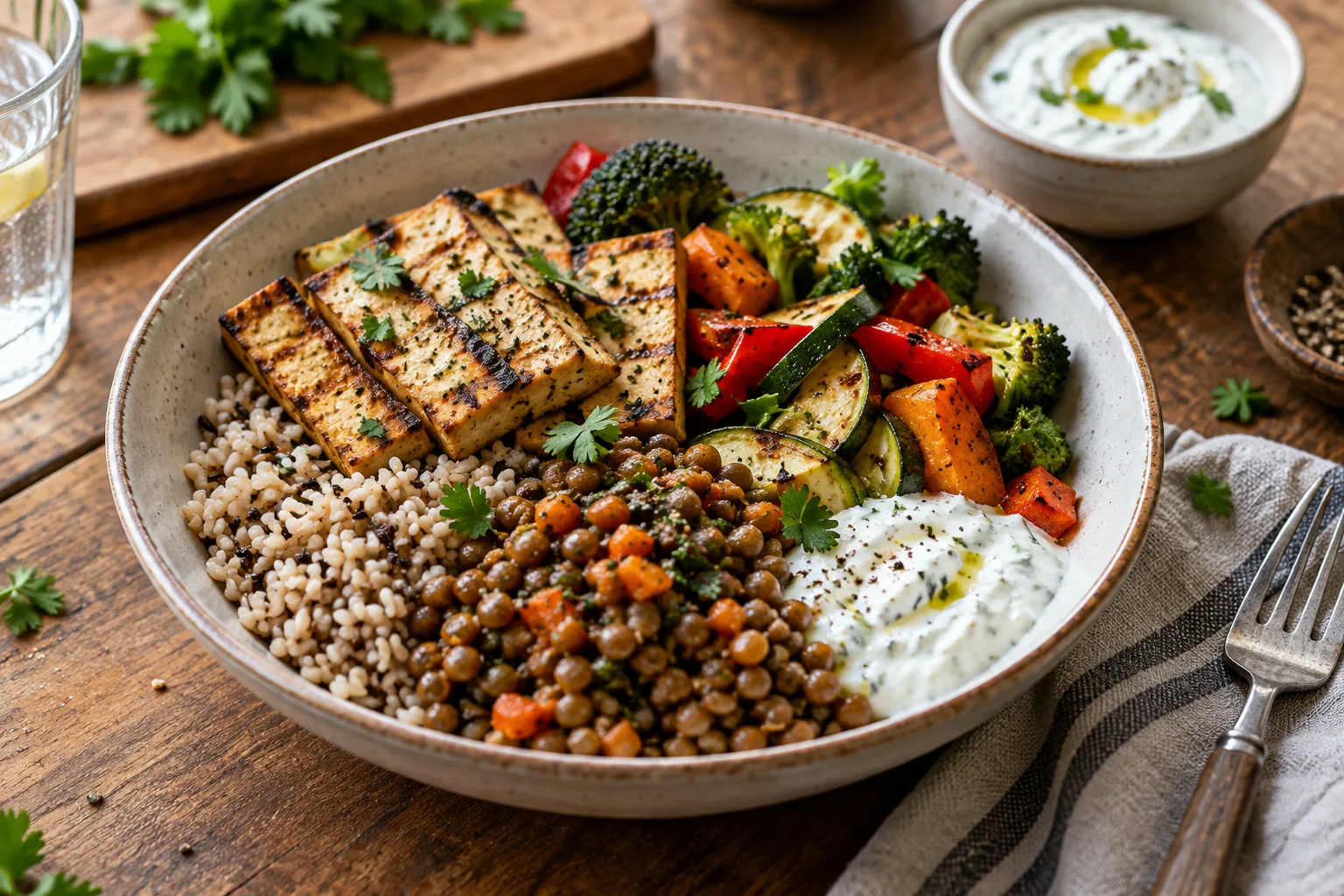
Combine beans or lentils with grain and vegetables; add fish, chicken, tofu or eggs where they fit. A bean-and-vegetable soup with bread can be another option. Beans provide both protein and fiber, but different foods vary in amounts and preparation. Add fats and seasonings to make the meal appealing rather than eating an austere plate you will abandon. The CDC notes that fruits and vegetables add water and fiber, which can help fullness, especially when they replace some higher-calorie ingredients.
If you are using a calorie target, consider the whole meal rather than reducing each component to the lowest possible amount. A meal can have the “right” nutrients and still be too small. If you are hungry an hour later, review how much you served before buying a special appetite product.
Avoid a fiber race
Increasing fiber sharply can cause uncomfortable bloating or other digestive symptoms. Choose an amount that agrees with you, vary sources and adjust gradually. Beans, oats, vegetables and fruit are convenient starting points; you do not need a specific powder. A protein target also need not dominate the whole meal. Food preferences, budget, allergies and medical conditions matter. Someone who has been advised to restrict certain nutrients needs personalized guidance.
The psyllium guide examines one supplement separately. For most everyday meals, start with regular foods you enjoy. Dietary adequacy and consistency matter more than maximizing a number on a package. If a food causes recurring discomfort, change the ingredient rather than forcing it for its fiber count.
Test the combination without overtracking
Pick one meal you eat several times a week. For a few days, note roughly when you ate, what the meal contained and when comfortable hunger returned. Try adding a protein source to a fiber-rich dish or a fiber-rich side to a protein-heavy meal. Keep the meal appealing and adjust total amount if needed. Do not expect a controlled experiment: sleep, stress and movement may change between days. The purpose is to notice a usable pattern.
If hunger remains intense, review the overall deficit and meal frequency, not only the grams of protein and fiber. The hunger troubleshooting guide offers a broader sequence. A good combination is one you can buy, prepare and eat with satisfaction next week too.
Keep product claims proportionate
Some supplements promise to “switch off hunger” with a small amount of fiber or an ingredient claimed to increase fullness. An acute appetite study of an ingredient does not establish sustained fat loss from the whole formula. NIH ODS describes limited weight-loss evidence for many supplements. Fat Burn Active needs its own finished-product outcome and safety assessment, not an inference from what a meal containing protein and fiber can do.
If independently considering the product, read the full review. The direct action here is to improve the meal that regularly leaves you hungry. Ordinary foods can supply both protein and fiber without implying that a capsule makes an inadequate lunch adequate.
A practical workday comparison
Imagine that your usual lunch is a small bowl of rice and a few vegetables. You eat it quickly and look for snacks soon afterward. Adding beans, tofu or another protein source and enough vegetables could make the meal more substantial. If it still leaves you hungry, increase the portion or add another satisfying component instead of searching for a perfect gram ratio. Compare a few ordinary workdays rather than relying on one unusually busy afternoon. You may discover that timing matters as much as ingredients. The purpose is to find a repeatable lunch that fits your budget and leaves you able to focus on work. A combination is only useful if the meal is actually enough for you.
Choose the next useful step today
Check the current package, ingredients, serving directions, your other caffeine sources, and relevant health conditions. For an evidence-based starting point, read the full Fat Burn Active review. If this product still fits your circumstances, you can inspect its current offer. We may earn a commission if you buy through that link. Choosing no supplement is equally reasonable when the evidence or safety questions do not support a purchase.
Frequently asked questions
Do protein and fiber guarantee fullness?
No. Total food, texture, timing and individual response also matter.
Do I need a special ratio?
No validated universal protein-to-fiber ratio is required for an ordinary meal.
Can beans count for both?
Yes. Beans can contribute protein and fiber; build a complete meal around your preferences.
Sources
- CDC: Healthy Eating Guidance
- CDC: Produce and Fullness
- Egg Breakfast Protein and Fiber Trial
- Pea Protein and Fiber Trial
- NIDDK: Eating and Activity
- NIH ODS: Weight-Loss Supplements
Reviewed against the sources listed above. Educational information only; not medical advice.