This guide offers educational information. It does not diagnose a condition or establish supplement benefits.
The same nutrients can feel like different meals
A whole apple, apple purée and juice may contain related ingredients but create different eating experiences. One is chewed, one is spooned and one is drunk. A controlled experiment comparing forms of fruit found that whole fruit increased satiety and affected later intake differently under its test conditions. That does not make purée or juice inherently unhealthy; it shows why nutrients alone do not predict the experience of eating. Preparation, portion and what else is on the plate matter.
This guide focuses on texture and oral processing. The solid food versus shakes guide addresses the wider meal-format decision. Texture offers another question to ask when a meal disappears quickly and leaves you looking for more.
Chewing and eating rate are related
Some food textures require more chewing, smaller bites or a slower pace. Research has tested matched hard and soft versions of foods and observed changes in eating rate and intake. A randomized trial examined texture-based differences in eating rate under controlled conditions. These are useful mechanistic findings, but a texture effect in one test food does not guarantee that crunching carrots will prevent weight regain or that everyone must eat at the same speed.
If you normally finish lunch at your desk in a few minutes, a meal with components you chew may make the eating experience more noticeable. That could mean whole fruit alongside yogurt or a grain bowl with vegetables. Keep the meal adequate; slowing a tiny meal does not make it substantial.
Mix textures rather than making everything crunchy
A good meal can include a soft bean stew, crisp vegetables, tender protein and bread. Texture variety may make food more enjoyable and provide a natural pause between bites. If raw vegetables are uncomfortable, cooked versions can be easier. Someone with dental, swallowing or digestive problems may need softer foods and professional advice; a general recommendation to chew more should never override a medically appropriate texture modification.
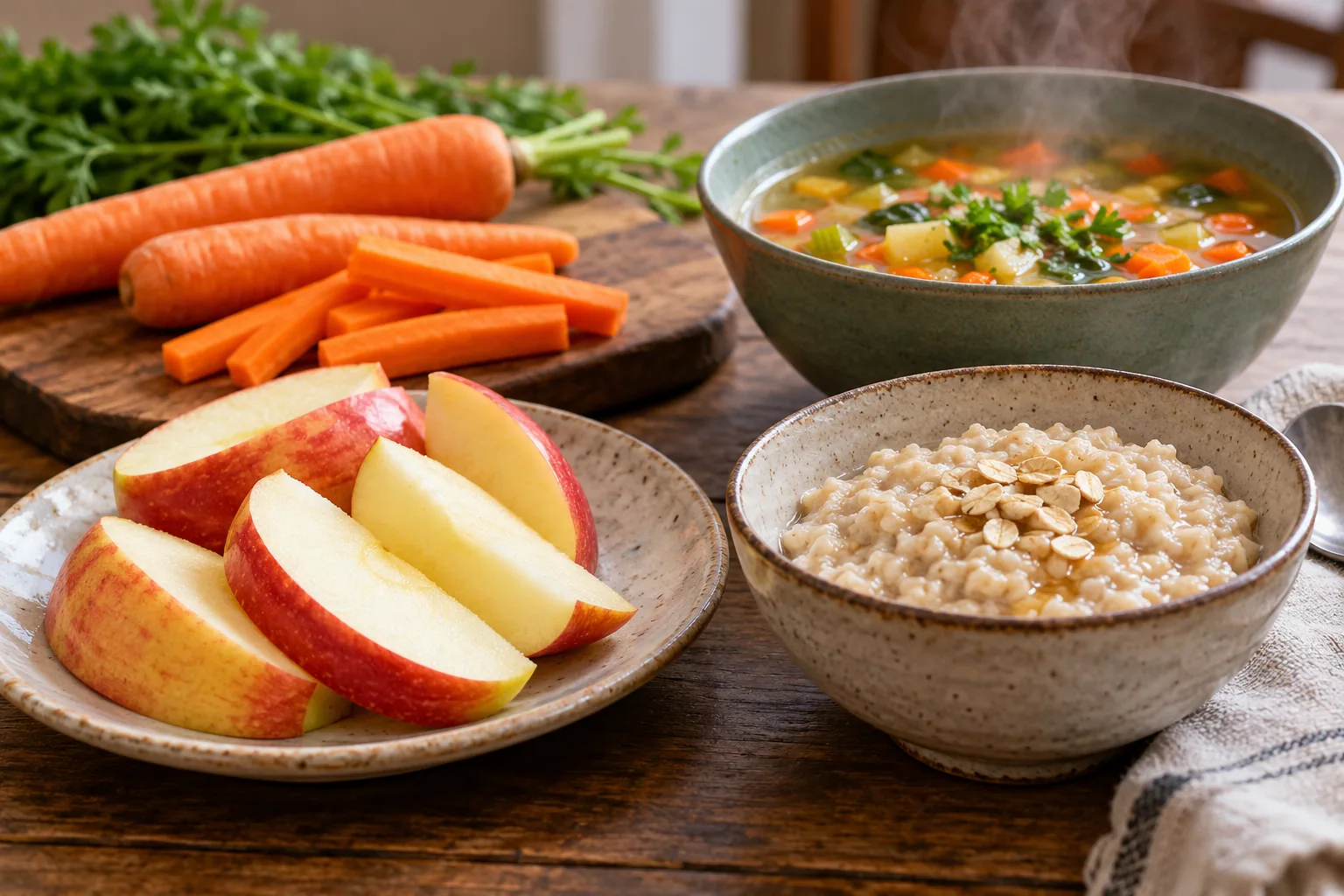
Think about foods you already like. Add apple pieces to oatmeal, a side salad to a soup if it suits you, or beans and vegetables to rice. These changes can also alter fiber, volume and flavor, so you cannot credit any benefit to texture alone. It is one part of meal design.
Do not confuse texture with food quality
A crisp snack may be energy dense, while a soft yogurt can be nutritious and filling. Cooking vegetables until tender does not erase their value. Texture is not a ranking of good and bad foods. A meal’s energy density, protein, fiber, taste and amount all interact with how long it takes to eat. Published trials on texture and energy density show that changing both can affect intake; separating their contributions takes careful study.
If a product claims “slow chewing equals fat loss,” ask about long-term human outcomes. An acute reduction in intake at one meal is not proof that a person maintains weight loss. The practical test is whether a change makes ordinary eating more satisfying without creating inconvenience or discomfort.
Try one texture adjustment
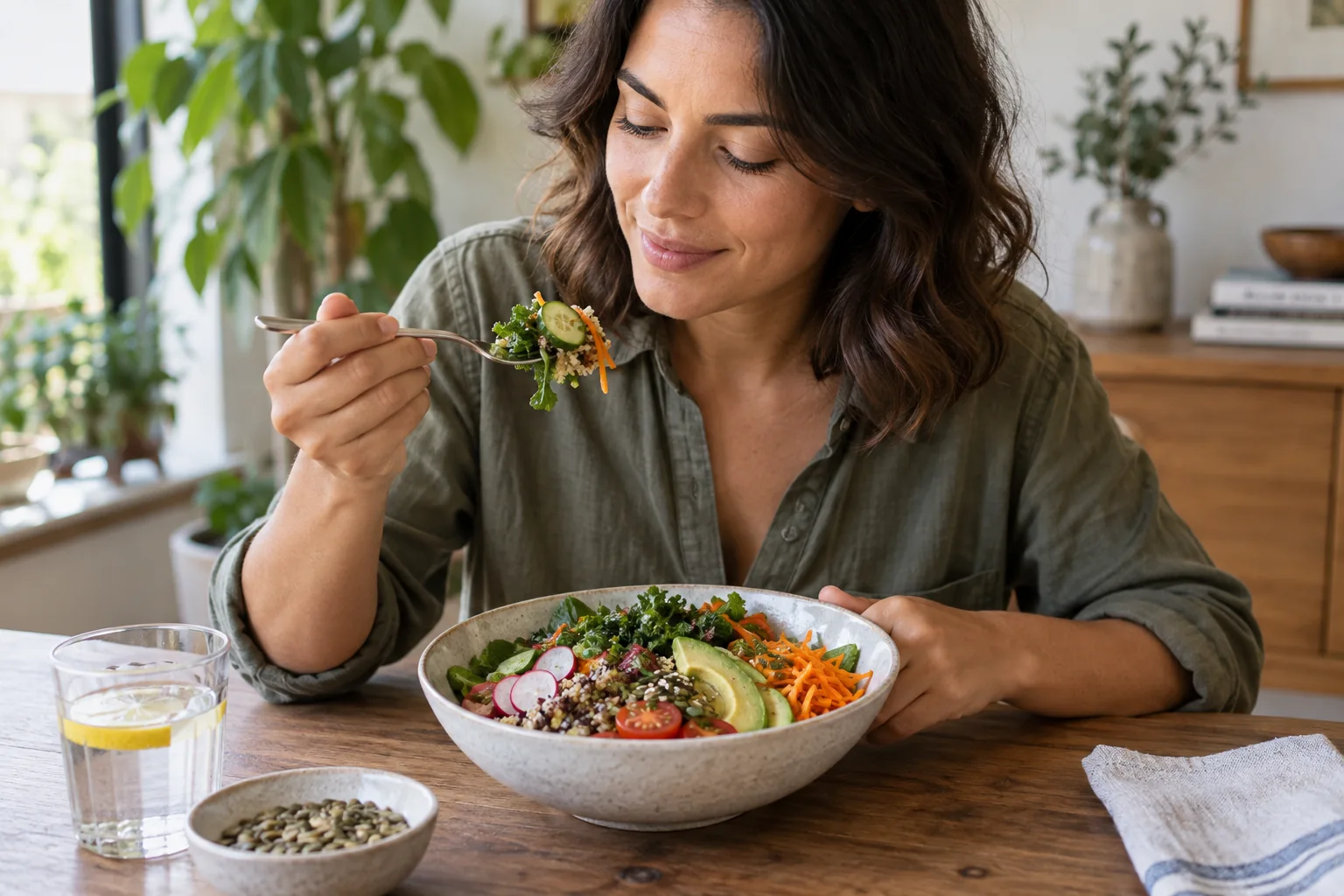
Choose a meal you regularly eat quickly. Add a component you enjoy chewing, such as fruit pieces, cooked vegetables with some bite or a whole-grain side. Put the meal down occasionally if you want to notice when comfortably full, but do not force a timer or a specified number of chews. Repeat the meal a few times and ask whether it remains convenient and satisfying. If it feels like unnecessary work, abandon the change.
The filling-meal guide gives other options if the issue is simply not enough food. Texture will not overcome a severe calorie deficit, prolonged sleep loss or a health problem causing hunger.
Respect individual access and needs
People who eat on short breaks, wear dental appliances, manage swallowing difficulties or rely on blended foods may have limited options. A soft meal can still include protein, fiber and sufficient energy. If swallowing food is painful, coughing occurs with meals or texture changes are required for health reasons, consult a qualified professional. Do not use a weight-loss article as therapy for swallowing problems.
Food enjoyment matters. A smoothie can be a useful snack; a soup can be a nourishing lunch. No one needs to avoid them because a laboratory comparison favored a solid fruit in one setting. Choose food forms that suit your health, budget and time.
A capsule cannot replace an adequate meal
Claims that a fat burner “mimics satiety” should be supported by finished-product studies on meaningful outcomes, not simply the observation that chewing influences an eating rate. NIH ODS describes limited weight-loss evidence for many supplements. Fat Burn Active’s formula has its own evidence and safety questions, unrelated to whether you enjoy crunchy or soft meals.
If you are considering it independently, use the full review. For the current question, notice whether a meal’s texture helps you enjoy it and recognize satisfaction. Combine that observation with adequate food and a realistic eating schedule.
When texture and portion change together
Suppose one lunch is a blended vegetable soup and another is a bowl containing vegetables, beans and bread. The second involves more chewing, but it may also contain more protein, fiber and total energy. If it satisfies you longer, you cannot say texture alone caused the difference. To learn something useful for your own routine, compare a small change: add pieces of vegetables or beans to a familiar soup while keeping the rest of the meal broadly similar. Notice whether the added texture helps you enjoy the food and eat at a comfortable pace. If a softer meal is easier or safer for you, there is no need to force a harder texture. Enough nourishment remains the priority, with eating pleasure and safety close behind in every meal choice.
Choose the next useful step today
Check the current package, ingredients, serving directions, your other caffeine sources, and relevant health conditions. For an evidence-based starting point, read the full Fat Burn Active review. If this product still fits your circumstances, you can inspect its current offer. We may earn a commission if you buy through that link. Choosing no supplement is equally reasonable when the evidence or safety questions do not support a purchase.
Frequently asked questions
Does chewing more cause weight loss?
A slower eating rate can affect an individual meal, but it does not guarantee long-term loss.
Are soft foods less healthy?
No. Nutrition, adequacy and individual needs are separate from texture.
Must I eat raw vegetables?
No. Cooked foods and softer textures can also fit satisfying meals.
Practical decision checkpoint
Test texture with comparable meals: a whole fruit beside a blended drink, or a chewable meal beside a soft option. Note pace, satisfaction, and later hunger without assuming every person responds alike. Texture is one practical design choice among portions, protein, fiber, and preferences.
Sources
- Different Forms of Fruit Trial
- Texture and Eating Rate Study
- Hard versus Soft Foods Experiment
- Energy Density and Texture Trial
- CDC: Healthy Eating Guidance
- NIH ODS: Weight-Loss Supplements
Reviewed against the sources listed above. Educational information only; not medical advice.