
The four-anchor meal builder
There is no universal plate percentage. Someone training hard, an older adult with low appetite, and a person managing gastrointestinal symptoms may need different volumes and textures.
Troubleshoot why the meal failed
If hunger returns in an hour, check whether the meal was mostly liquid, very small, low in protein, low in fiber, or missing enough energy. If the stomach feels full but cravings persist, the meal may lack flavor, texture, or an expected carbohydrate. If fullness is uncomfortable, reduce bulky raw foods and use cooked options rather than forcing volume.
Example: upgrade without doubling calories
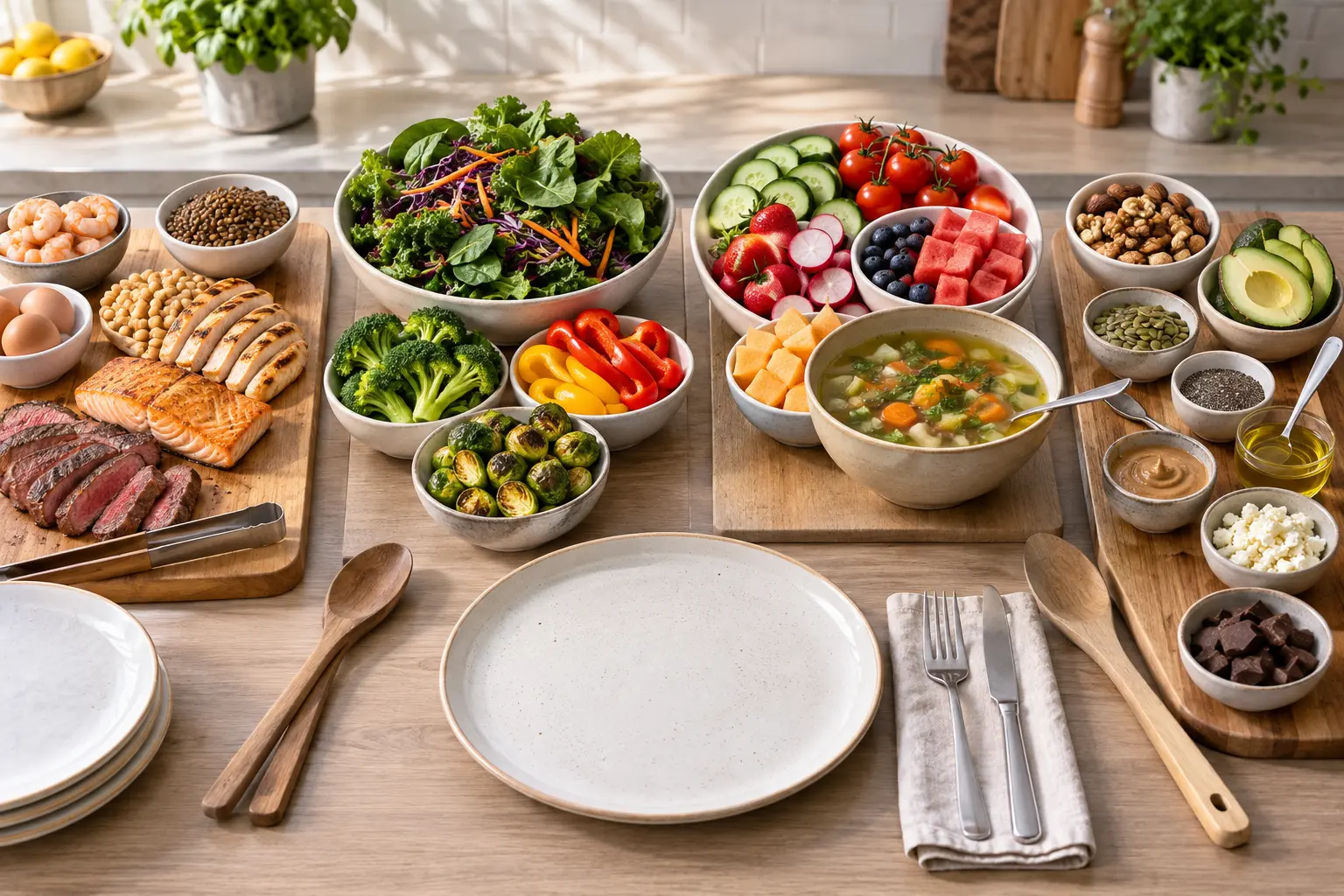
Leo’s lunch is crackers and a sweet coffee. He replaces part of the crackers with chicken and beans, adds vegetables and fruit, keeps a portion of crackers for crunch, and drinks water. The result supplies protein, fiber, volume, and enjoyment. He tests afternoon hunger rather than assuming the “healthier” label guarantees success.
Use a seven-day appetite audit
Use a seven-day appetite audit before changing the plan. Record meal time, hunger before and after, the specific food wanted, sleep, stress, activity, caffeine, and whether the meal was planned. Keep the notes brief. The purpose is to find a repeated pressure point, not to create perfect calorie records.
- Name the signal. Physical hunger usually builds and accepts several foods; a craving is more specific; loss-of-control eating involves difficulty stopping.
- Check the previous six hours. Look for a missed meal, low-protein or low-fiber meal, long gap, hard training, alcohol, stress, or poor sleep.
- Check the environment. Visibility, convenience, portion size, screens, work cues, and social context can outweigh good intentions.
- Choose one test. Add a planned snack, improve one meal, move caffeine earlier, protect sleep, or change food access.
- Review the right outcome. Compare hunger, unplanned eating, energy, symptoms, and multiweek weight trends when weight change is the goal.
Do not compensate for a difficult eating episode with fasting, dehydration, punishment exercise, or extra capsules. Return to the next normal meal. If detailed tracking increases anxiety or food preoccupation, use a simple meal template and seek eating-disorder-informed support when appropriate.
Know when hunger needs clinical context
Persistent extreme hunger, unexplained weight change, excessive thirst or urination, major fatigue, new digestive symptoms, or appetite change after a medicine deserves medical assessment. Frequent binge episodes, secrecy, severe restriction, purging, or marked distress needs qualified care rather than stronger appetite suppression. Pregnancy, adolescence, frailty, diabetes treatment, and an eating-disorder history require individualized guidance.
Interpret the result without overclaiming
Appetite ratings are useful but subjective. A lower score for two hours does not establish lower daily intake, better nutrition, or fat loss. Decide the time horizon before testing: one meal can answer a short-term fullness question; several comparable weeks are needed to evaluate adherence and body-weight trend.
Compare like with like. Menstrual timing, sleep loss, hard exercise, restaurant meals, alcohol, constipation, sodium, and carbohydrate changes can alter hunger or scale weight. Change one variable at a time so a result remains interpretable. Keep a strategy only if it supports adequate nutrition, function, sleep, and a routine that can survive ordinary life.
A practical example
Jordan reports “constant hunger” but the audit shows coffee for breakfast, a small salad at lunch, then intense evening eating. The first experiment is not a lower calorie target. Jordan adds a protein- and fiber-containing breakfast, makes lunch substantial, and plates an afternoon snack. After a week, evening urgency falls. The result does not prove a hormone was fixed; it shows that the earlier meal pattern was a useful lever.
If the same experiment produces no change, review whether the dominant cause is different: inadequate sleep, a medicine, stress, a very aggressive deficit, or a medical condition. Cause matching prevents an endless stack of generic diet tricks.
Build a week that supports satiety
Design the week before the hungriest moment arrives. Choose two breakfasts and lunches that are easy to repeat, three dinners that can be assembled from familiar foods, and one planned snack for the longest meal gap. Keep backup protein, fruit, vegetables, whole-grain or legume options available. Convenience is part of the system: frozen produce, canned beans or fish, yogurt, eggs, microwave grains, and prepared vegetables can be useful.
At each meal, pause twice. Before eating, ask whether the signal is physical hunger, a specific craving, routine, or emotion. Halfway through, notice comfort, enjoyment, and whether the next bites still add value. This is not a command to stop early. It slows the automatic sequence long enough to make a deliberate choice.
Plan for predictable disruption
Restaurant meals, travel, night shifts, celebrations, and hard training do not require a perfect diet. Decide the anchor that remains: a protein-containing meal before an event, water and food during a long shift, a packed snack, or the next normal breakfast after a late dinner. A flexible plan prevents one unusual meal from becoming a weekend of compensation and rebound hunger.
Review the plan weekly, not emotionally after each meal. Keep changes that reduce food preoccupation and support energy, digestion, training, and sleep. If weight loss is appropriate, use a moderate multiweek trend rather than trying to make hunger disappear. Maintenance also needs a plan: retain the meals and routines that worked, allow intake to rise toward current needs, and respond to a small trend change without returning to severe restriction.
Where Fat Burn Active fits
Fat Burn Active is optional. A stimulant may change alertness or appetite briefly, but that does not prove meaningful or durable fat loss. It cannot create a filling meal, correct severe restriction, treat binge eating, normalize ghrelin, or replace medical assessment. Sleep disruption, anxiety, palpitations, higher blood pressure, headache, nausea, or rebound hunger can make the larger plan worse.
Before considering it, total caffeine from coffee, tea, energy drinks, pre-workout, medicines, and every supplement. Review the current label, exact amounts, warnings, health history, and interactions with a pharmacist or clinician when relevant. Do not exceed the label or use a supplement to skip necessary meals.
A supplement is not required to benefit from How to Build a More Filling Meal. If your foundations are already in place, use the independent Fat Burn Active review to judge whether the formula has a useful optional role. If it fits your expectations and stimulant tolerance, check current product details and ordering terms. We may receive a commission.
Frequently asked questions
Must every meal contain meat?
No. Dairy, eggs, soy foods, beans, lentils, and combinations of plant foods can contribute protein.
Does fat make a meal filling?
It can add satisfaction and slow eating, but it is energy dense, so portion and context matter.
Are smoothies as filling as solid meals?
Often less so for some people; test texture, chewing, protein, fiber, and the complete portion.
Sources
- Dietary Guidelines for Americans
- Harvard Healthy Eating Plate
- Dietary fiber and appetite review
- Protein and satiety review
- Energy density and weight management
Sources reviewed September 17, 2026. This article is general educational information, not medical advice, diagnosis, or treatment.