This guide offers educational information. It does not diagnose a condition or establish supplement benefits.
Why the smallest plate is not always the easiest
A tiny snack can have fewer calories than a substantial lunch yet leave you ravenous an hour later. For weight management, the useful question is whether a meal gives you enough satisfaction to continue your day without recurring hunger and compensatory eating. “Satiety per calorie” expresses that practical comparison. It does not mean you should maximize volume at every meal or rank foods from virtuous to forbidden. A satisfying portion still needs enough energy and nutrients for you.
This page compares meals as a decision framework. The energy-density guide explains calories per amount of food. Volume contributes to this discussion, but satiety depends on more than volume alone.
The bigger-plate meal examples put this comparison into practical food combinations.
For a practical workday application, compare the five protein-forward lunch templates and their afternoon hunger checks.
Food volume is one part of the equation
Water-rich fruit, vegetables and soups may provide a substantial amount of food for less energy than a small portion of a richer item. CDC advice specifically describes using vegetables and fruit to replace some higher-calorie ingredients; adding them on top may not reduce a meal’s energy. Research on lower-energy-density foods, including a first-course salad experiment, shows effects in studied meal conditions. Those findings do not guarantee that any salad is filling or that every low-density meal causes long-term fat loss.
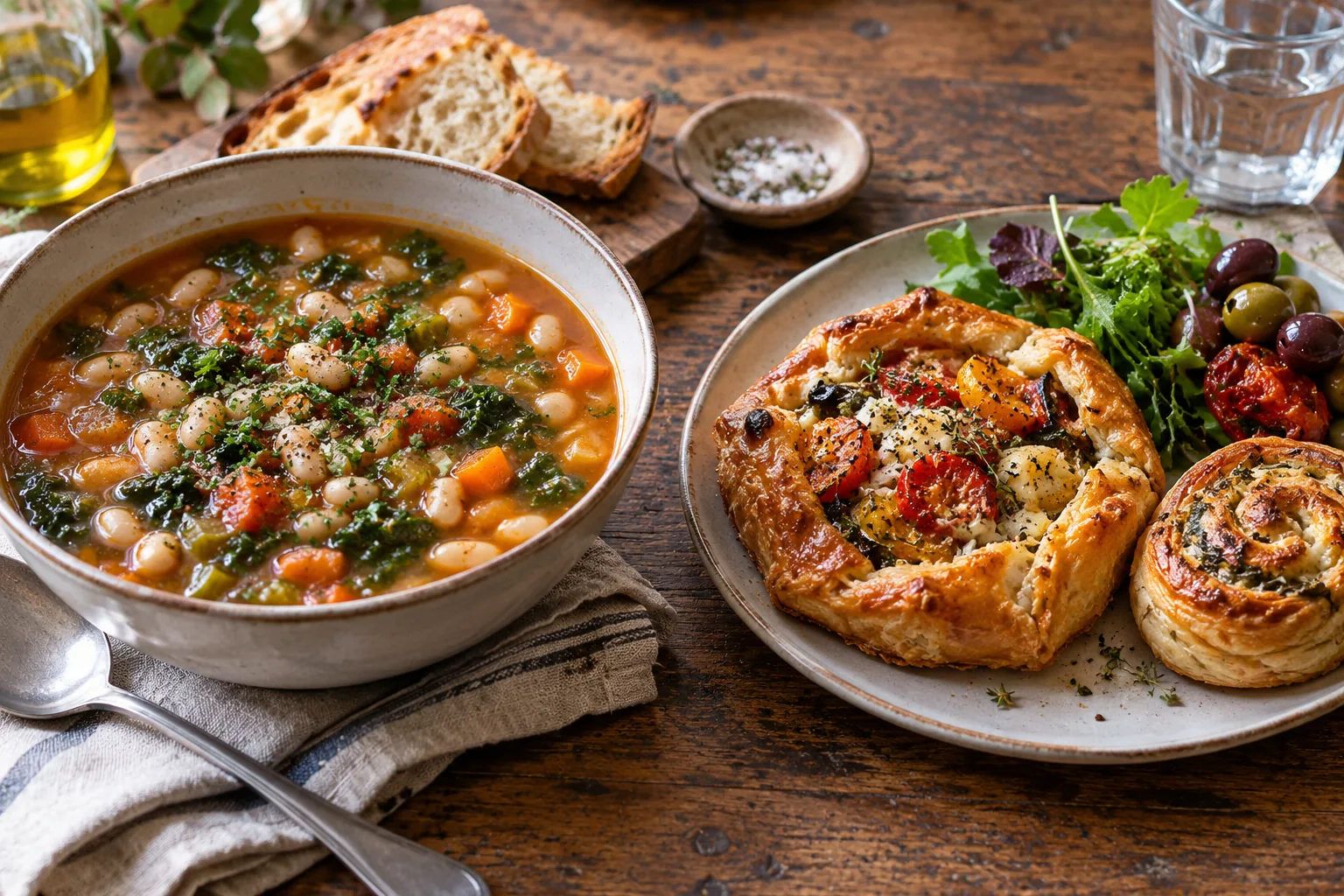
Soup with beans and bread could keep one person comfortably fed; a thin broth might not. Check the whole dish for protein, fiber, flavor and useful energy. A large serving of food you dislike is not a practical strategy simply because a chart ranks it highly.
Compare complete meals, not isolated ingredients
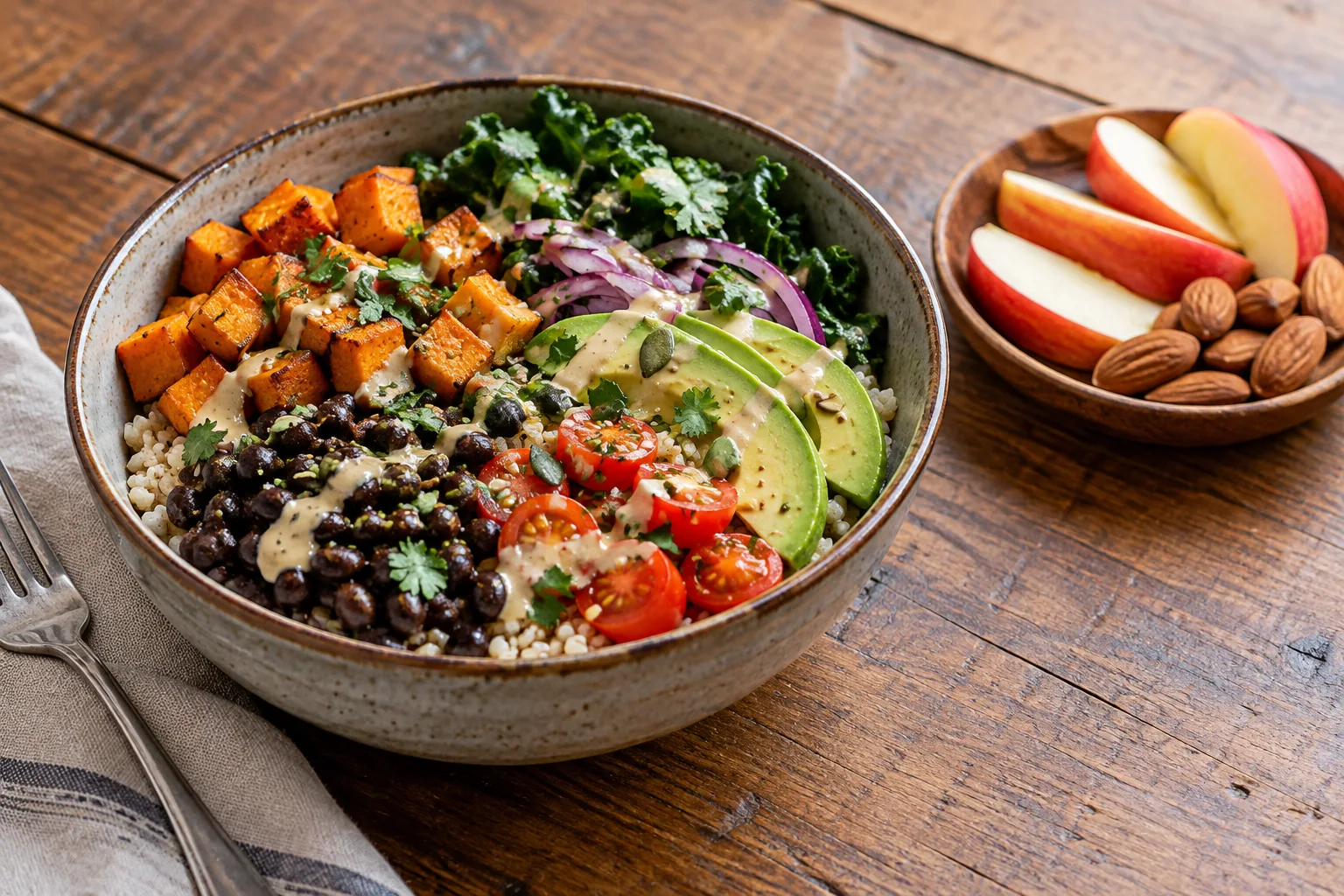
Consider two lunches: a pastry with a sweet drink, and a bean-and-vegetable bowl with grain and a flavorful topping. Without exact recipes, you cannot reliably state which has fewer calories. What you can compare is how each feels over the next several hours and whether one helps you reach dinner without intense hunger. The richer meal may be a welcome occasional choice; the bowl may be easier as a repeat lunch. Neither becomes a moral category.
The protein and fiber guide describes components you can combine. Keep fats you enjoy in amounts that suit the meal. A rule to eliminate every energy-dense ingredient can leave food unsatisfying and make the plan harder to maintain.
Avoid false precision in a satiety score
Hunger ratings change with sleep, activity, stress, medication and what you ate earlier. A food tested in a controlled study may perform differently in your kitchen. There is no reliable smartphone number that tells every person exactly how full a meal will feel for the next four hours. Reviews of dietary energy density discuss food-intake regulation, but the average response in research is not a personal guarantee.
Use a simple comparison instead: after a familiar meal, were you comfortably full, was energy adequate and did you enjoy it? If you log calories, keep uncertainty visible for restaurant food. If tracking is stressful, the framework can work without numbers. A consistent meal experience is often more useful than an impressive-sounding index.
Modify one recurring meal
Choose a meal that regularly leaves you hungry. You might replace a small sugary drink with fruit, add vegetables to a grain dish while keeping the protein, or make a snack into a real lunch with yogurt, oats and berries. The key is to substitute thoughtfully, not just pile foods on top and assume the energy total fell. After several repeats, notice whether you are less preoccupied with the next meal. If not, perhaps the portion is simply too small or the eating schedule does not suit you.
This is practical iteration, not a research trial. The portion versus serving guide can help read packaged food amounts, but your satisfaction remains an important part of the decision.
Do not turn the idea into endless restriction
A person who is already hungry much of the day may need more food, not more clever low-energy swaps. A calorie deficit should not require constant discomfort. If large salads leave you cold and searching for snacks, a more substantial meal may be appropriate. Medical conditions, pregnancy, medication and eating-disorder history can also make generic deficit advice unsuitable. Seek individualized guidance where needed.
An enjoyable dessert or restaurant dinner can fit a longer pattern even if it would score poorly on a simplified fullness calculation. Use the framework where it helps everyday decisions and set it aside when it turns eating into a competition for the lowest number. A sustainable plan needs pleasure and adequacy too.
Supplements are not meal substitutes
No capsule makes a low-satiety meal more nutritious or guarantees lasting weight loss. NIH ODS cautions that many weight-loss supplement claims have limited human evidence. A marketed appetite ingredient may show an acute effect without demonstrating a clinically useful outcome for the finished formula. Fat Burn Active should be evaluated as a separate product with its current label and warnings, rather than as a shortcut to a score called “satiety per calorie.”
The full review provides that separate evidence discussion. For the next meal, compare food combinations you actually enjoy and can repeat. The useful result is a routine that leaves you fed and able to live your day.
A lunch comparison without a scoreboard
Imagine that you have twenty minutes for lunch. A small pastry feels convenient but leaves you hungry before the next break. A bowl of bean soup, bread and fruit takes no longer to buy and keeps you satisfied until dinner. This observation makes the second option useful as a frequent choice, without declaring the pastry forbidden. A different person might need a larger soup or prefer another meal entirely. Repeat the comparison under normal conditions and consider cost, flavor and convenience alongside energy intake. If a lower-energy meal merely sends you back for snacks, its apparent advantage may disappear in the wider day. Satiety is lived across meals, not captured by a single number on a menu.
Choose the next useful step today
Check the current package, ingredients, serving directions, your other caffeine sources, and relevant health conditions. For an evidence-based starting point, read the full Fat Burn Active review. If this product still fits your circumstances, you can inspect its current offer. We may earn a commission if you buy through that link. Choosing no supplement is equally reasonable when the evidence or safety questions do not support a purchase.
Frequently asked questions
Is satiety per calorie a measurable personal score?
It is a practical comparison, not a validated universal number for every person and meal.
Are low-calorie foods always more filling?
No. Protein, fiber, energy adequacy and individual response also matter.
Should I avoid energy-dense foods?
No. They can be part of satisfying meals in amounts that suit you.
Sources
- CDC: Produce and Fullness
- Lower-Energy-Density Salad Experiment
- Dietary Energy Density Research Review
- CDC: Healthy Eating Guidance
- NIDDK: Eating and Activity
- NIH ODS: Weight-Loss Supplements
Reviewed against the sources listed above. Educational information only; not medical advice.