This guide offers educational information; it does not prescribe an individual diet or establish supplement benefits.
A label does not decide your meal
The FDA sets rules for serving information on packaged foods. The amount printed at the top of a Nutrition Facts panel reflects a standardized reference based on typical consumption, not an instruction to eat exactly that much. NIDDK defines a portion as how much food you decide to eat at a time. If your portion is larger or smaller, the nutrient information changes accordingly. A restaurant portion may have no relationship to the size printed on a retail package.
The portion-control guide covers how to build portions within an overall eating plan. This page answers the label question: why the two numbers differ and how to avoid misunderstanding a packaged food. You do not need to judge your appetite by whether it matches the manufacturer’s serving description.
Use the whole package as a simple example
Suppose a package says four servings and lists 150 calories per serving. Eating half the package would correspond to two labeled servings and about 300 calories; eating all of it would correspond to four servings and about 600 calories. This is label arithmetic, not a recommendation about how much someone should eat. Real packages differ, so read the specific one you have. If a package provides a second column for the whole container, use it rather than doing math from memory.
Be especially careful with foods that look like a single portion but contain several servings. The reverse is possible too: a container may contain a portion that is too small for your needs when eaten alone. Add the rest of the meal before deciding whether it was adequate.
Compare amounts on a common basis
If two products list very different serving weights, a quick comparison of per-serving calories can mislead. Check the grams or another matching quantity and compare amounts you might actually eat. For a beverage, note the volume of the container. For cereal, the number of cups can differ even when gram weights are similar because foods pack differently. For chips or nuts, a “handful” can vary greatly by person and day.
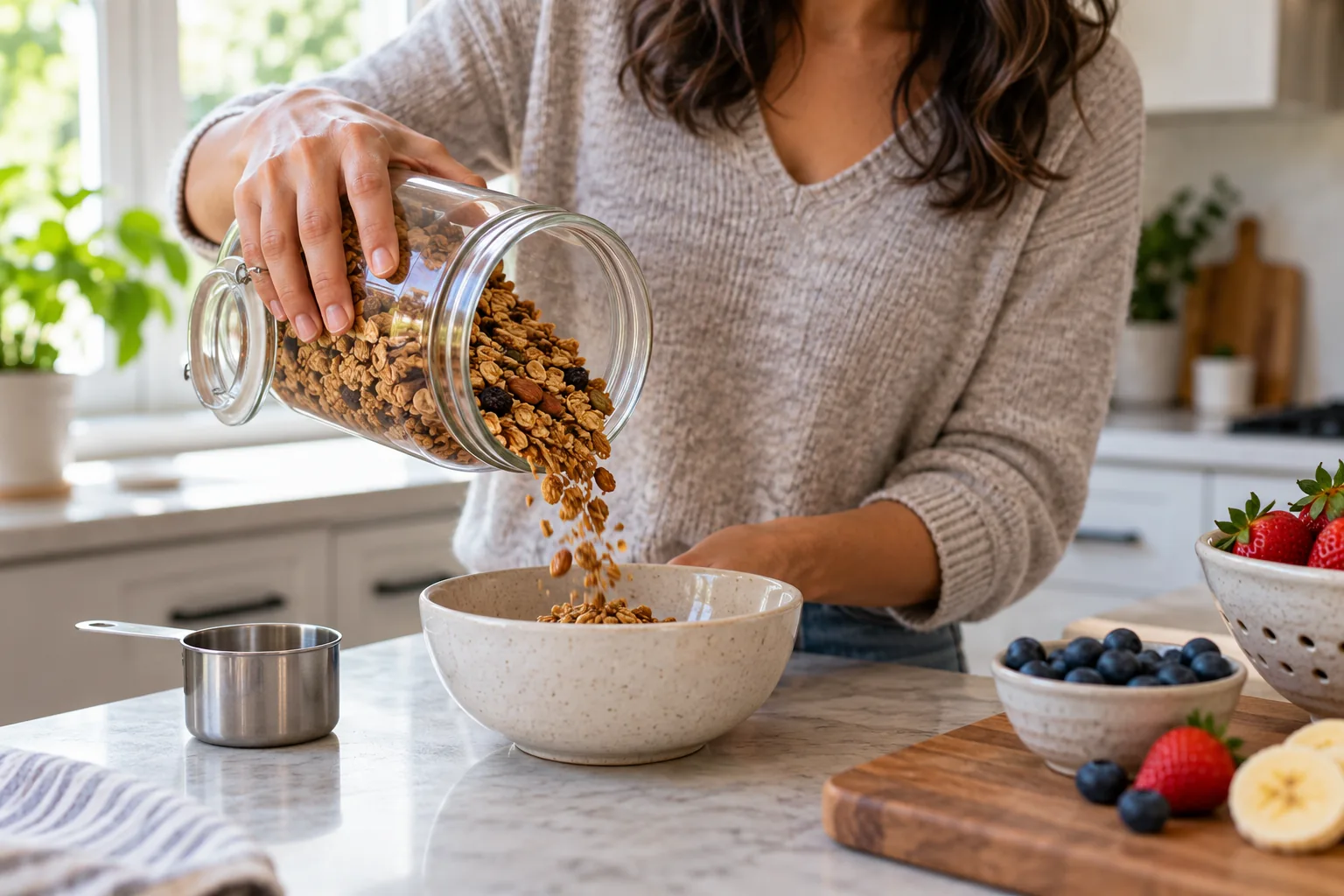
You can use a measuring cup once to learn what a usual bowl contains, without committing to weighing every meal forever. The Nutrition Facts walkthrough shows which other numbers to compare. The point is to make the label usable, not to turn meals into repeated tests.
Your chosen portion can be larger for good reasons
A person who has just exercised, missed an earlier meal or needs a more substantial lunch may choose a portion larger than the label’s reference. The food is not automatically “bad” because its chosen amount exceeds one serving. Equally, a small amount of a richer food might be enough alongside other items. Appetite, medical needs and the whole day matter. Nutrition information can help, but it does not know your context.
If you are trying to lose weight, consider whether the meal leaves you satisfied. Cutting every portion to an arbitrary label amount may create hunger and lead to later eating that you did not plan. Build a meal you could repeat. A useful adjustment may be adding fiber-rich foods or protein, or serving a calorie-dense addition with more intention.
Restaurant and shared-food portions
A restaurant plate may be larger than what you would serve yourself at home, but there is no universal restaurant multiplier. Preparation, sauces and sides can change energy content even when a plate looks familiar. You may share an item, take leftovers, or eat the whole meal if that fits the occasion and your hunger. Decide what serves you rather than assuming the venue sets your target.
The eating-out guide offers a menu strategy. At home, sharing a large bag while watching a movie can make portions hard to notice. Put some food in a bowl if you want a clearer reference; you can still take more. These cues improve awareness without turning the package into a set of rules.
A fast check at home
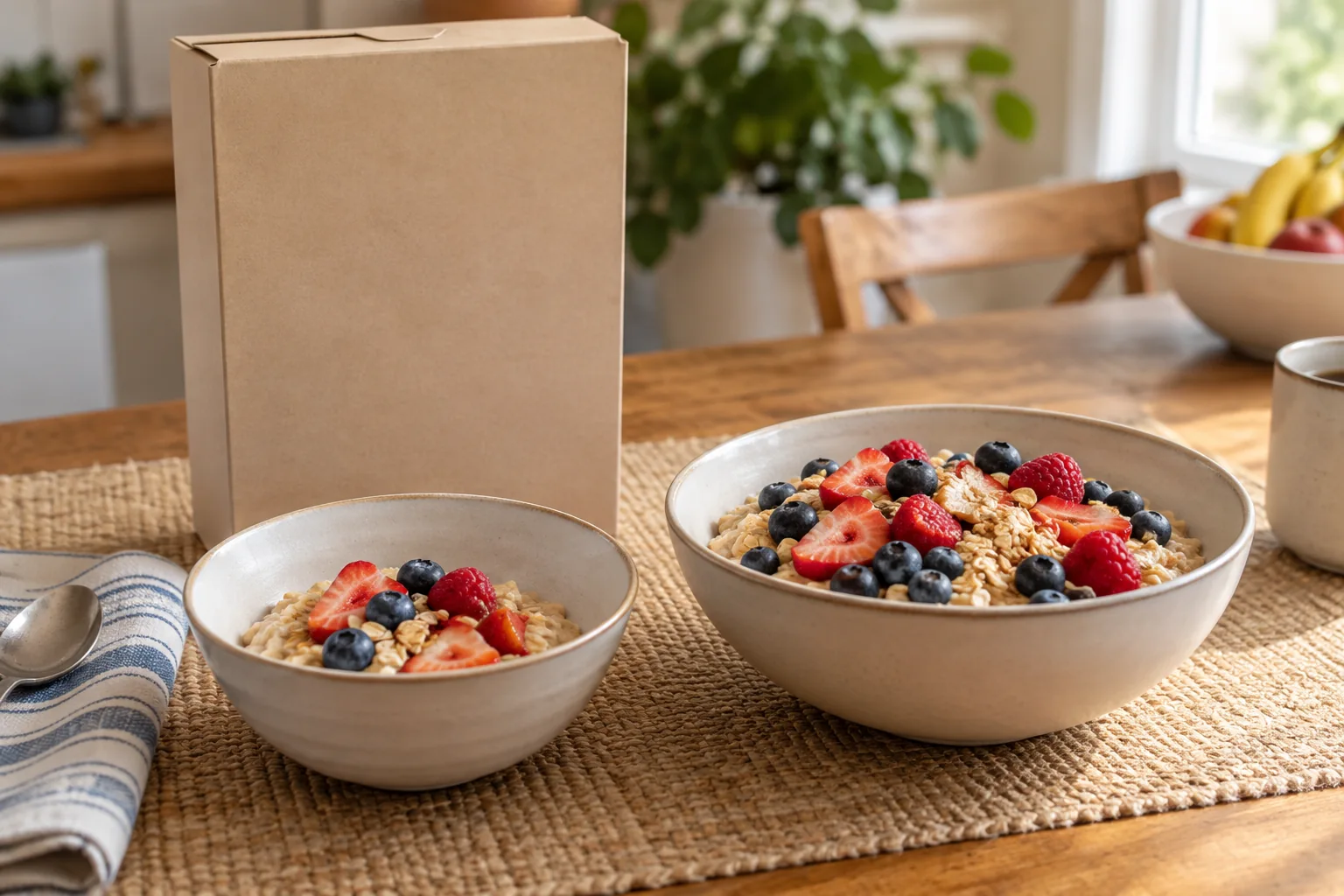
Choose one food you eat often. Read the serving size and number of servings per container, then compare them with your ordinary amount. Ask whether the usual amount makes sense as part of the meal and whether additions change the total. For instance, breakfast cereal with milk, fruit and nuts is not represented by the cereal box alone. If the portion is routinely larger than you imagined, adjust only if it makes the meal more suitable.
Avoid interpreting one change as a plateau diagnosis. The portion drift guide looks at gradual change over months; this page is about decoding a label today. If tracking food is distressing, a clinician or dietitian can help with a less numerical approach.
Why supplements are a separate question
A supplement serving on a Supplement Facts panel describes the product’s directions and amounts, not a portion of a nourishing meal. Do not take extra capsules because you ate a larger dinner. NIH ODS notes that weight-loss supplements often have limited efficacy evidence and potential safety concerns. Fat Burn Active’s ingredient list does not convert label arithmetic into a reliable fat-loss effect.
If you are assessing that product, consult its current label and the independent review. For food, start with the simple distinction: the package lists a reference serving; you decide your portion according to your appetite, needs and the rest of your meal.
A bowl is a choice, not a label mistake
Imagine filling a cereal bowl as you usually do, then discovering that it contains about two labeled servings. You have learned something useful about how to read the box. You have not discovered that breakfast was “wrong.” Count any milk, yogurt, fruit or nuts if you are estimating the whole meal, and ask whether the amount leaves you satisfied. You could keep it, change the balance of ingredients or choose a different bowl. The serving number makes the comparison possible; your needs and routine determine what you do with the information.
Choose the next useful step today
Check the current package, ingredients, serving directions, your other caffeine sources, and relevant health conditions. For an evidence-based starting point, read the full Fat Burn Active review. If this product still fits your circumstances, you can inspect its current offer. We may earn a commission if you buy through that link. Choosing no supplement is equally reasonable when the evidence or safety questions do not support a purchase.
Frequently asked questions
Can my portion exceed one serving?
Yes. A serving is a labeling reference, while your actual portion depends on context.
Do calories refer to the entire package?
Only if the label says so; check servings per container and any per-container column.
Should I measure every portion?
No. A temporary check can teach you what a usual serving looks like without permanent tracking.
Sources
- NIDDK: Food Portions
- FDA: How to Use the Nutrition Facts Label
- FDA: Serving Sizes
- CDC: Nutrition Facts Label
- NIDDK: Eating and Activity
- NIH ODS: Weight-Loss Supplements
Reviewed against the sources listed above. Educational information only; not medical advice.