This guide concerns practical decisions about supplement use. It does not establish that a fat burner treats a medical condition or produces weight loss.
Why a familiar meal can change
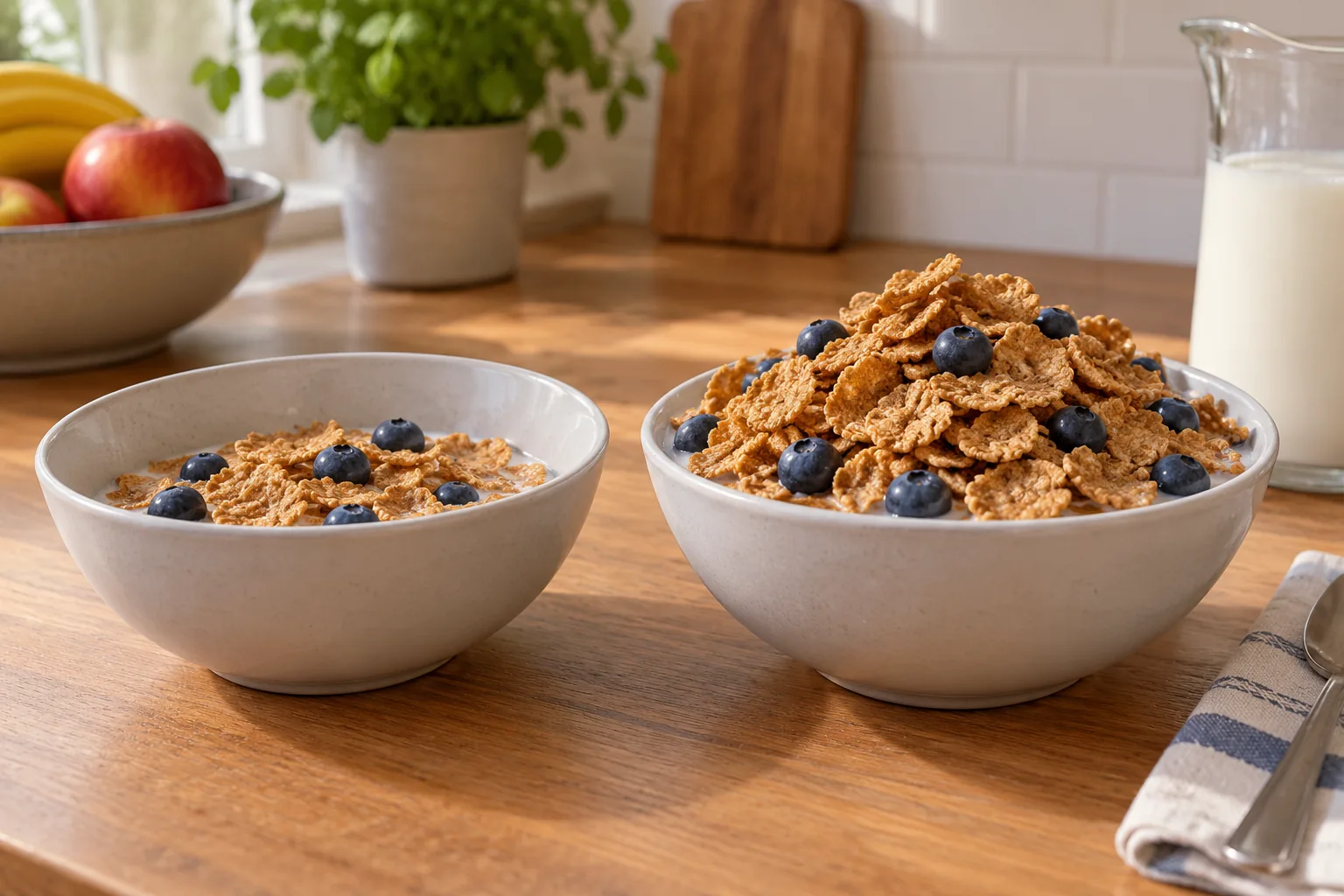
The bowl may look the same, but its contents can slowly increase as a routine becomes automatic. A few extra spoonfuls of cereal, a wider spread of nut butter, or a larger evening snack can go unnoticed because you are not comparing today’s portion with the one you originally planned. That is common and does not mean you have failed. It simply means a portion estimate has become a habit rather than a fresh observation.
NIDDK distinguishes a serving size shown on a label from the portion you choose to eat. The two may differ. Reading “one serving” on a package does not describe your actual bowl, and a restaurant’s plate size does not determine your individual need. Start with the meals you repeat most often, because those give you the best chance to spot a pattern. The general portion-control guide explains basic serving choices; this page examines gradual drift over months.
A plateau has more than one possible cause
If the scale has stopped moving, portion growth is one hypothesis, not an automatic verdict. Water changes, reduced activity, changes in sleep, medication, and the natural slowing of weight loss as body size changes may also matter. NIDDK explains that energy needs tend to decline at a lower body weight. A plan that created a deficit earlier can become closer to maintenance even if portions have not changed. Conversely, a single flat week can hide progress under normal variability.
Review a meaningful trend before changing food intake. Ask whether your routine actually changed, how often larger portions appear, and whether hunger has increased. Do not respond to uncertainty by drastically cutting meals. The long-term energy-balance guide helps place a plateau in context. You want to find a useful adjustment, not convict a particular food.
Check three repeat portions
Choose three foods or additions you use frequently, such as breakfast cereal, cooking oil, and a desk snack. On one ordinary day, serve them as usual and compare the amount with the package’s stated serving or with your previous routine. A measuring cup can provide a one-time reference if you have one; there is no requirement to weigh everything indefinitely. Note how much food you actually want and whether the meal is satisfying. Underestimating a pour matters, but so does eating too little and becoming very hungry later.
Pay attention to additions: dressings, sauces, nuts, butter, sugar in drinks, and second servings. These foods can fit a healthy pattern; the question is whether the amount is intentional. A food log can help some people, while for others it creates stress. If tracking is unsuitable, a photo of an ordinary plate or a consistent serving utensil may be enough to recalibrate without obsessive counting.
Adjust without shrinking the whole meal
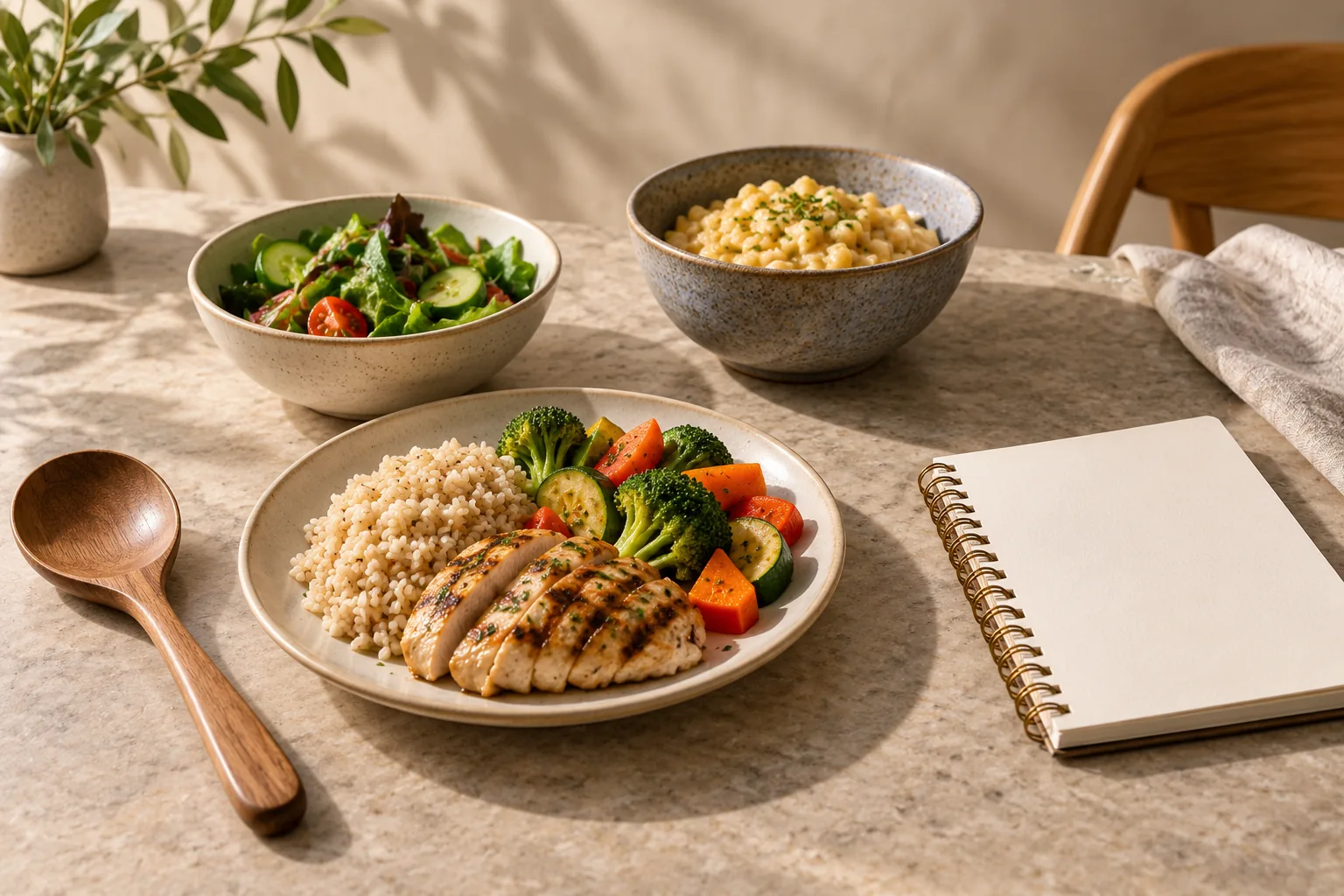
If the main plate has quietly grown, one option is to keep its satisfying components and change the balance. Add vegetables, fruit, or another lower-energy-density food where appropriate, while retaining protein-containing foods and an enjoyable carbohydrate source. The CDC says fruits and vegetables can reduce the total energy of a meal when they replace some higher-calorie ingredients; merely adding them on top of the same meal may not reduce intake.
You may instead choose a smaller amount of a high-calorie addition while keeping the meal appealing. A slightly different bowl or serving spoon can act as a reference, but no dish is a magic weight-loss tool. Test a change that still leaves you comfortably fed. If you repeatedly need large servings because earlier meals are too small, fix meal adequacy first. The goal is a repeatable portion, not an unnecessarily small one.
Run a two-week check
For two weeks, focus on one meal you can control. Note the portion cue, how hungry you were, whether you had seconds, and whether the meal kept you satisfied. Keep the other parts of your routine as stable as practical. This does not create a controlled scientific experiment, but it can reveal whether a modest change makes life easier. Compare your longer trend rather than expecting the scale to respond the next morning.
If the adjustment increases cravings, fatigue, or a sense of restriction, change the plan. If the plateau persists, review activity, sleep, health context, and the adequacy of your original goal with a qualified professional if needed. NIDDK’s portion advice is about choosing an amount suitable for you, not copying a celebrity’s plate. A useful recalibration should improve clarity without making food a constant calculation.
Do not turn a supplement into a portion tool
Fat Burn Active’s formula is not a measuring cup and has not been shown to correct serving-size drift. NIH ODS notes that evidence for many weight-loss supplement ingredients is limited. If a product claims to “erase” a larger portion, require a finished-product study measuring meaningful longer-term outcomes rather than a short thermogenesis experiment. A stimulant sensation is not proof that the meal no longer counts.
If you want to assess the product separately, read the full review and current package warnings. Start with the meal you actually eat and one practical adjustment. A simpler routine can be more valuable than adding another ingredient while the underlying serving pattern remains unclear.
A common breakfast comparison
Imagine the same bowl filled with cereal each morning. Over months, the cereal rises higher, milk becomes a larger pour, and a second piece of fruit or topping appears. The meal can still be nutritious and satisfying; the point is that its energy content changed without a conscious decision. Compare a typical serving today with what you actually intended at the start, including toppings and drink. If it is larger and you remain satisfied with a modest adjustment, test that. If the extra amount reflects real hunger, reconsider the whole day’s meals instead of automatically removing it. One breakfast cannot diagnose a plateau, but a repeated pattern is a useful place to investigate.
Choose the next useful step today
Check the current package, ingredients, serving directions, your other caffeine sources, and relevant health conditions. For an evidence-based starting point, read the full Fat Burn Active review. If this product still fits your circumstances, you can inspect its current offer. We may earn a commission if you buy through that link. Choosing no supplement is equally reasonable when the evidence or safety questions do not support a purchase.
Frequently asked questions
Does a plateau always mean my portions grew?
No. Portions are one possibility; energy needs, activity, fluid changes, and health factors also matter.
Must I weigh all my food forever?
No. A short comparison of repeat servings can clarify a habit without permanent exact tracking.
Should I eliminate high-calorie additions?
Not necessarily. Check how much you use and whether it fits a satisfying, sustainable meal.
Sources
- NIDDK: Food Portions
- NIDDK: Eating and Activity
- CDC: Fruits and Vegetables for Healthy Weight
- NIDDK: Body Weight Planner
- Review of Food Position and Choice
- NIH ODS: Weight-Loss Supplements
Reviewed against the sources listed above. Educational information only; not medical advice.