This guide concerns practical decisions about supplement use. It does not establish that a fat burner treats a medical condition or produces weight loss.
Accept that the estimate is an estimate
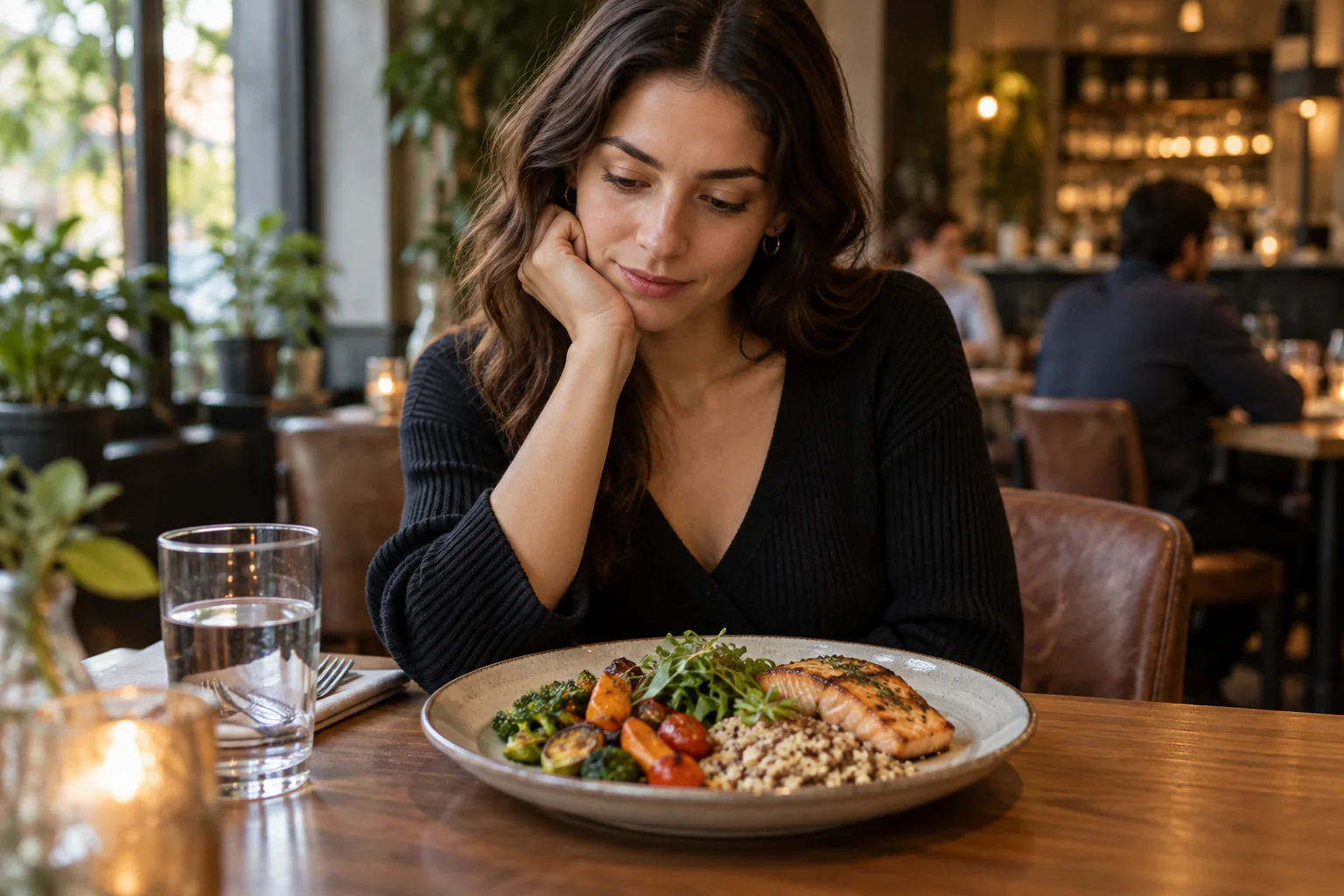
A restaurant plate has no visible calorie counter. Cooking oil, sauces, portion size, and recipe changes can make two similar-looking meals quite different. Even a photo cannot reveal the depth or full ingredients of a dish. If you log a meal to an exact single calorie, the apparent precision exceeds the information you have. A useful estimate identifies what you know, what you assume, and how confident you are. The goal is a decision aid, not a forensic reconstruction of lunch.
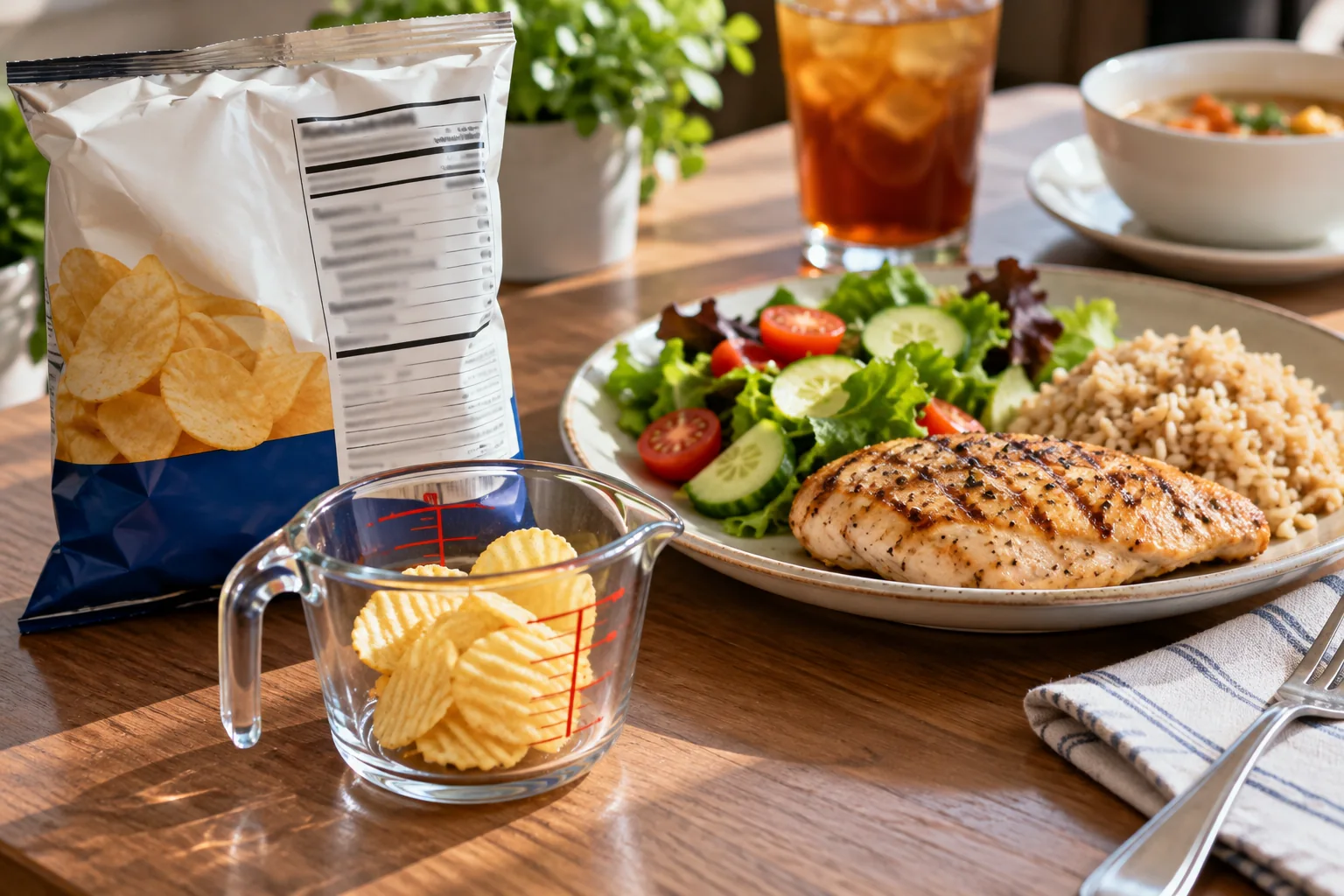
NIDDK distinguishes the portion you eat from a label’s serving size and recommends using nutrition labels where available. That is a reliable starting point for packaged foods, but a restaurant portion may not match a package. The portion-control guide helps identify amounts; here the focus is combining imperfect information when you cannot put the food on a kitchen scale.
Start with the strongest reference
If a packaged component has a Nutrition Facts panel, read the serving size and count the amount you actually ate. A package with multiple servings is not automatically one portion. For an unlabeled food you eat often, compare it with a similar version prepared at home or a known serving from a reputable database. You can use cups, pieces, or a familiar container to estimate volume, but remember that a cup of one food weighs differently from a cup of another.
At a restaurant, check whether the establishment offers nutrition information for the exact menu item. If not, use the item’s components as a rough framework: protein-containing food, grain or starch, vegetables, sauce, cooking fat, and beverages. Do not borrow a calorie figure from an unrelated restaurant and present it as exact. Keep the estimate broad enough to reflect uncertainty.
Look for additions that are easy to miss
A sandwich’s bread and filling are visible; mayonnaise, butter, extra cheese, dressing, or a sweetened drink may be less memorable. Estimate the full meal rather than the most prominent ingredient. Nuts and oils can provide useful nutrients, but small volumes can carry meaningful energy. A salad is not automatically low calorie if its preparation includes large quantities of rich dressing. Likewise, a plate of pasta can vary widely by sauce and serving size.
If you are reviewing a repeated meal, a one-time measurement at home can give you a reference for future unweighed occasions. It does not need to become permanent surveillance. People differ in whether tracking helps or increases distress. If numbers undermine your relationship with food, use meal structure and professional support rather than forcing exact logs. The kitchen setup guide offers a non-numeric route to making routine meals easier.
Use a range instead of a fake exact total
For an unfamiliar dish, record a plausible low and high estimate if that helps you think clearly. The range should widen when preparation is unknown and narrow when a measured recipe or label is available. This is a conceptual method; there is no universal percentage to add to every restaurant entry. If uncertainty spans a large amount, the precise total may not be worth chasing. Focus on the next choice you can control, such as a repeatable lunch or a beverage preference.
Avoid treating an estimated deficit as a mathematical certainty. NIDDK’s Body Weight Planner uses personal inputs and changing needs over time, but actual intake and expenditure are still imperfectly measured. A single restaurant estimate cannot prove whether body fat changed that day. Compare longer patterns and adjust only when enough information accumulates.
A simple worked example without invented calories
Suppose lunch is a grain bowl with chicken or tofu, vegetables, dressing, and a drink. Start with any labeled components and the menu description. Estimate the grain serving from its visible volume, ask whether the protein is fried or grilled, and note dressing on the side versus mixed in. Add the drink separately. Mark the dressing and preparation as uncertain rather than writing a spurious exact number. A photo can help you remember the meal but does not measure hidden oil.
The next time you order, you may choose the same dish so the comparison is more consistent. If it does not fit how you feel or your overall plan, change the meal. Do not skip dinner to “make up” for a number you cannot verify. One approximate meal fits inside a longer eating pattern.
Do not buy certainty from a supplement
A fat-burner advertisement might pair a precise claim about energy expenditure with vague food estimates and promise it will close the gap. Such a calculation is not evidence that the finished formula produces meaningful weight loss. NIH ODS notes limited evidence for many supplements and the difficulty of transferring ingredient research to mixtures. Fat Burn Active’s published panel provides some ingredient amounts; it does not turn an uncertain restaurant meal into an exact ledger.
Read the product review if considering it separately. The better immediate tool is a realistic estimate with a clear uncertainty label. If repeated tracking becomes distressing or leads to compensatory restriction, seek individualized guidance rather than pursuing greater numerical detail.
A repeatable reference is better than a perfect guess
If you eat the same cafeteria lunch regularly, note its usual plate, serving utensil, main components, and sauces. Compare later meals against that baseline instead of rebuilding a calorie calculation from scratch each day. When the portion changes, record the change in ordinary terms, such as an extra scoop of rice or a different dressing. The reference will still be approximate, but it can reveal a trend more reliably than an exact-looking app entry for an unrelated dish.
Restaurant menus and food databases often describe standardized preparations that may not match what arrived at your table. Use them as context, not proof. If you need precise nutritional management for a medical condition, get individualized advice; casual visual estimation may be insufficient.
Choose the next useful step today
Check the current package, ingredients, serving directions, your other caffeine sources, and relevant health conditions. For an evidence-based starting point, read the full Fat Burn Active review. If this product still fits your circumstances, you can inspect its current offer. We may earn a commission if you buy through that link. Choosing no supplement is equally reasonable when the evidence or safety questions do not support a purchase.
Frequently asked questions
Can I calculate a restaurant meal exactly from a photo?
No. Hidden oil, sauces, and three-dimensional portion size make a photo-based number uncertain.
Is a label serving the same as my portion?
Not necessarily. Compare the listed serving size with the amount you actually ate.
Should I skip a meal if my estimate is high?
No. Return to your normal, adequately nourishing plan rather than compensating for an uncertain figure.
Sources
- NIDDK: Food Portions and Serving Sizes
- FDA: Using Nutrition Facts
- NIDDK: Body Weight Planner
- NIDDK: Eating and Activity
- Review: Dietary Intake Measurement Limits
- NIH ODS: Weight-Loss Supplements
Reviewed against the sources listed above. Educational information only; not medical advice.