This guide concerns practical decisions about supplement use. It does not establish that a fat burner treats a medical condition or produces weight loss.
Why a large plate can fit a smaller energy total
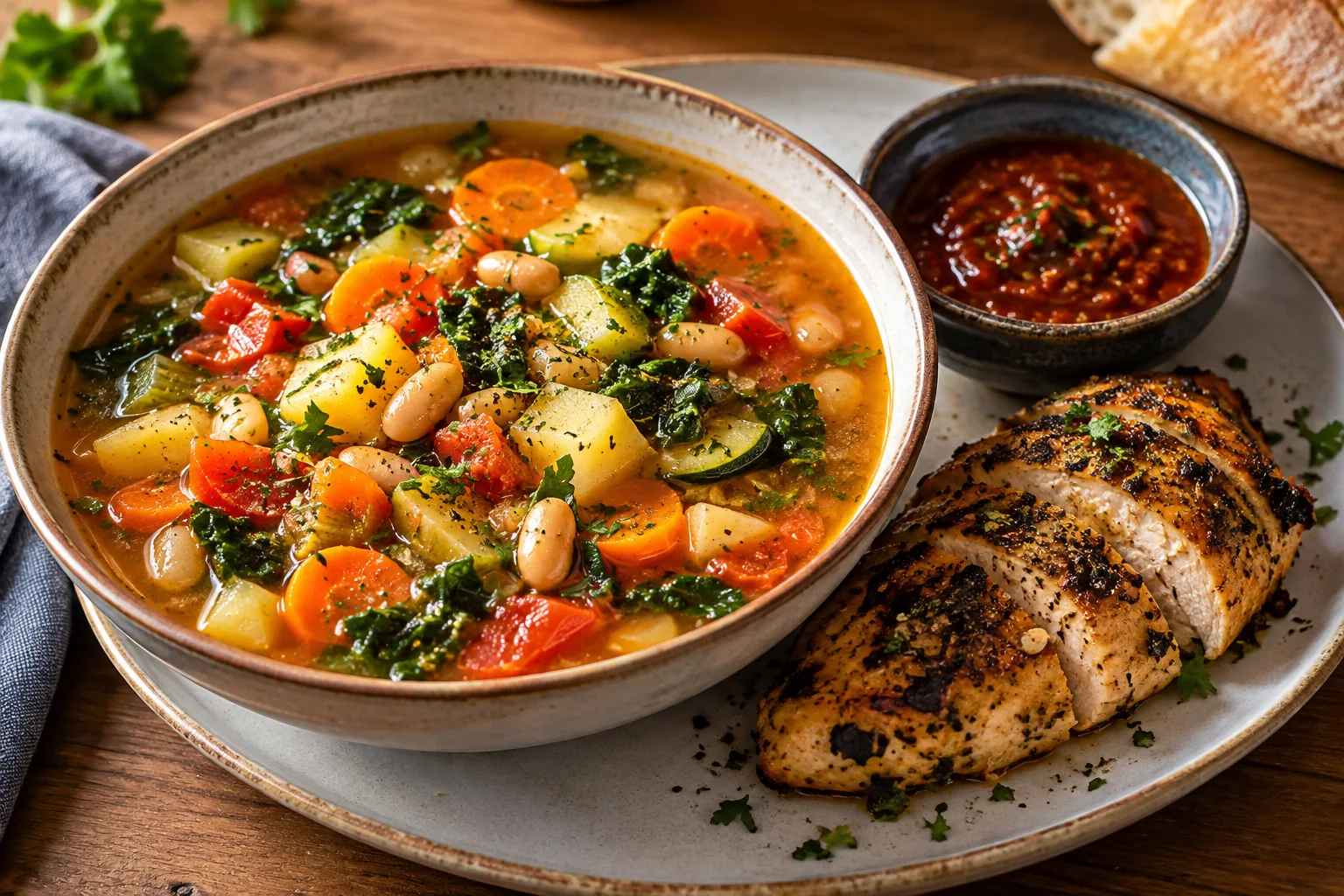
Two meals can fill a similar plate and deliver different amounts of energy. A vegetable soup, fruit, and lean protein-containing food may occupy more volume than a small pastry and oil-rich topping while providing fewer calories. Energy density describes that relationship: energy divided by food amount, often expressed per gram. It is a property of the food as prepared, not a moral score. Mayo Clinic explains that lower-energy-density foods can help some people feel fuller on fewer calories.
The strategy works best when the replacement still satisfies you. A huge bowl of raw lettuce without enough substance may leave you hungry later. A cooked dish with beans, vegetables, grains, and a flavorful addition can be more practical. Ask which part of a meal you can swap or expand rather than simply adding another plate. The portion guide addresses amount; this page explains why the volume of that amount can differ.
Water and fiber help with volume
Vegetables and fruits often contain substantial water and fiber, so they can add bulk with relatively fewer calories per bite. The CDC advises replacing some higher-calorie ingredients with vegetables or fruit to lower a meal’s total energy without necessarily reducing the amount of food. “Replacing” is the key word: putting fruit on top of an unchanged dessert may add nutrition, but it does not automatically lower the dessert’s calories.
Try adding vegetables to a soup or pasta sauce while using less of a calorie-dense sauce, or pairing a sandwich with fruit instead of another packaged side. Frozen and canned produce can be useful if fresh food is expensive or inconvenient; check additions and choose what you will actually eat. Fiber tolerance varies, so increase intake gradually if that suits you. You need no single “superfood” to apply this principle.
Energy density is not nutrient quality
A food can be high in energy density and still contribute valuable nutrients. Nuts, seeds, olive oil, and avocado are examples of foods people may reasonably include in a balanced eating pattern. Likewise, a low-calorie product is not automatically nutritionally complete or satisfying. Energy density answers how much energy fits in an amount; nutrient density asks what vitamins, minerals, protein, and other nutrients the food contributes. Keep those questions separate.
Use small amounts of flavorful dense foods to make a meal enjoyable rather than banning them. A spoonful of dressing or a handful of nuts can be intentional, while pouring them without noticing may change the meal’s energy total. The goal is a meal that fits your appetite, budget, and health needs. If a medical condition requires a specific diet or you need more energy, a low-energy-density emphasis may be inappropriate without individualized advice.
Four practical swaps
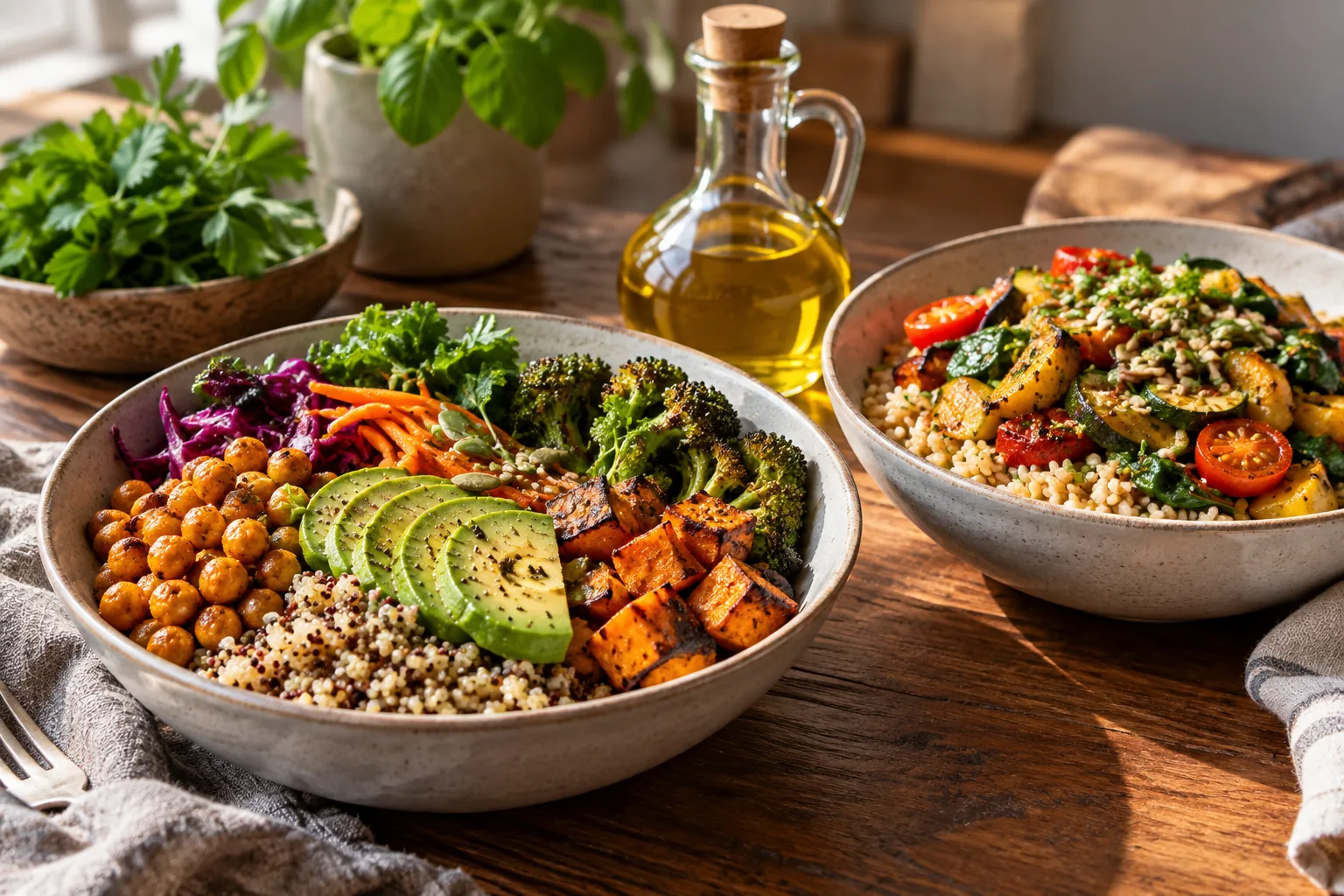
For breakfast, consider fruit alongside a satisfying protein-containing food rather than simply choosing the lowest-calorie item. At lunch, add vegetables or beans to a soup and reduce an ingredient that makes it very energy dense if that suits your taste. At dinner, mix vegetables into a grain dish while keeping an appropriate portion of protein and fat. For dessert, a smaller portion of a favorite food with fruit may be more satisfying than forbidding the favorite entirely.
These are examples, not prescriptive menus. The dietary-energy-density research by Rolls and colleagues found that replacing higher-density foods with lower-density alternatives can reduce intake in studied settings. It does not prove that every swap causes long-term weight loss for every person. Test whether the meal actually satisfies you and remains convenient on a workday. If it does not, revise the composition rather than forcing a larger volume of food you dislike.
Watch the hidden additions
A vegetable-based meal can become energy dense when substantial oil, cheese, nuts, creamy sauce, or sugary drinks are added. Those ingredients may be welcome and need not disappear, but their amount changes the calculation. If you are comparing two recipes, consider the complete serving, not just the vegetables photographed on top. The calorie density of a restaurant meal can be hard to judge when preparation and oils are unknown.
There is no need to measure every gram. Start by identifying one easy replacement or one addition you can serve intentionally. NIDDK’s portion guidance distinguishes what a label calls a serving from what you choose to eat. Combine that awareness with volume to build a meal you enjoy. A plate that looks “large” may be appropriate; a tiny, rich plate may also fit. Judge the whole pattern rather than appearances alone.
Where a fat burner does not help
No capsule can turn oil into a lower-energy-density ingredient or make a meal more filling. NIH ODS reports limited evidence of meaningful effects from many marketed weight-loss supplements. Fat Burn Active should be judged by its full formula and safety information, not presented as a substitute for a satisfying meal. An ingredient-level thermogenic theory does not establish better appetite control from the finished product.
If you are curious about the product, read the complete review after choosing a food approach that works for you. Lower energy density is a flexible tool rather than a requirement to eat mountains of produce. Use it where it improves your meals, and leave it aside where it makes them less suitable.
Compare the whole dish, not isolated foods
Consider two lunches: a rich pastry with a sweet drink, and a substantial bean-and-vegetable soup with bread and a flavorful topping. Their actual energy content depends on ingredients and portions, so appearances alone cannot prove which has fewer calories. The example illustrates a method: evaluate volume, water, fiber, protein, fats, and additions together. A soup may offer more food volume for similar or less energy, yet a small soup without enough substance may not sustain you. If you choose a lower-density option, check whether you remain comfortably full through the afternoon. You are designing a satisfying meal, not winning a contest to eat the lowest-density ingredient.
Choose the next useful step today
Check the current package, ingredients, serving directions, your other caffeine sources, and relevant health conditions. For an evidence-based starting point, read the full Fat Burn Active review. If this product still fits your circumstances, you can inspect its current offer. We may earn a commission if you buy through that link. Choosing no supplement is equally reasonable when the evidence or safety questions do not support a purchase.
Frequently asked questions
Does low energy density mean low nutrition?
No. Energy and nutrient density answer different questions; a balanced meal can contain both lower- and higher-energy-density foods.
Will adding vegetables always lower meal calories?
No. Replacing some higher-calorie ingredients can lower the total; adding vegetables on top may increase it.
Do I need to avoid nuts and oils?
No. They can fit a balanced meal; serve amounts intentionally because they are energy dense.
Sources
- Mayo Clinic: Energy Density
- CDC: Fruit and Vegetable Substitution
- Dietary Energy Density Research Review
- NIDDK: Food Portions
- NIDDK: Eating and Activity
- NIH ODS: Weight-Loss Supplements
Reviewed against the sources listed above. Educational information only; not medical advice.