This guide concerns practical decisions about supplement use. It does not establish that a fat burner treats a medical condition or produces weight loss.
Begin with the difficult moment, not a makeover
Picture arriving home hungry with only a few minutes before dinner. If the ingredients for a planned meal require washing, chopping, and a long search, a ready-to-eat alternative becomes attractive. That is an environmental problem rather than a personal defect. NIDDK advises making an action plan and anticipating obstacles when changing habits. A kitchen can support that plan by lowering the effort for useful choices, but it cannot guarantee weight loss on its own.
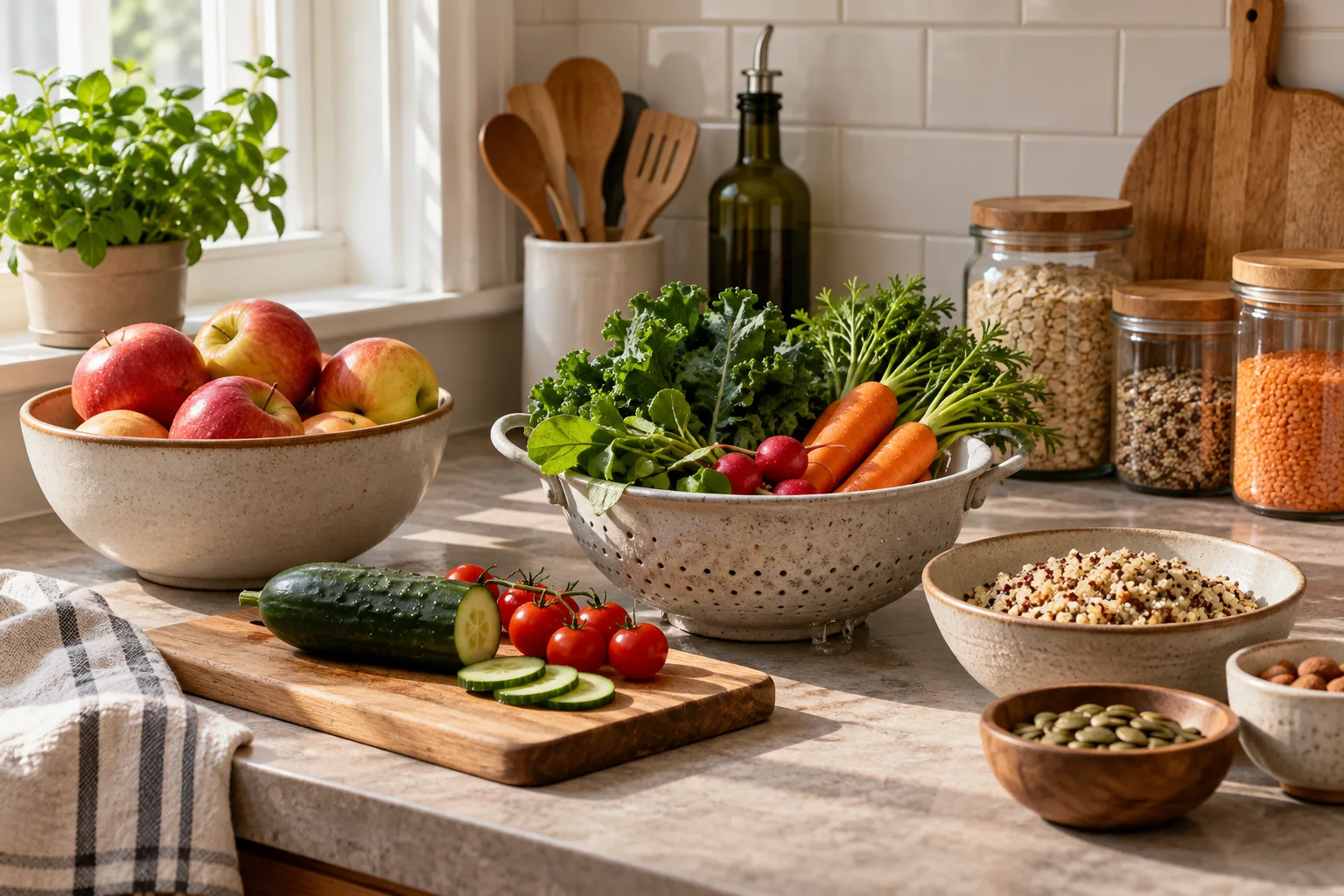
Walk through a typical evening: which door do you open first, what is already edible, and where does a snack get eaten? Fix the highest-friction point before reorganizing every cupboard. One washed fruit bowl, a visible container of cooked beans, or a planned leftover may be more helpful than color-coded jars. Household members may have different needs, so the goal is a workable shared space rather than strict control of what others can eat.
Make a ready meal visible
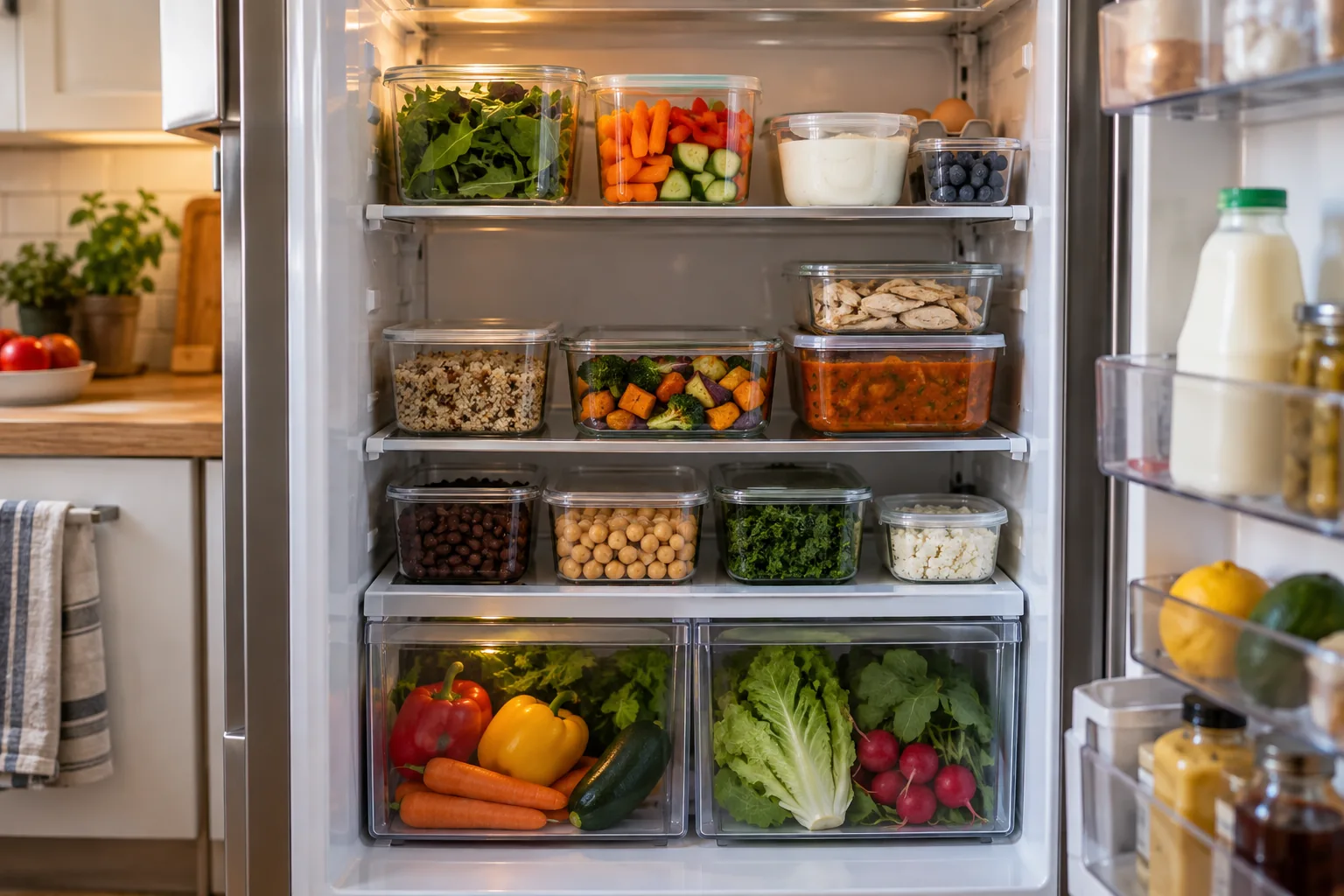
Use one refrigerator shelf for components you can turn into a meal quickly: washed vegetables, a protein option you enjoy, a grain or other carbohydrate, and a flavorful addition. Examples include leftover chicken or tofu with microwaveable grains and vegetables, or beans with tortillas and salad. The exact combination can reflect budget, culture, and dietary needs. The CDC recommends stocking nutritious snacks and serving a planned amount in a bowl or container, a useful principle for meals too.
Place items you need to use soon where you can see them, provided they remain stored safely. Keep a backup of frozen vegetables or shelf-stable beans for the night a shopping plan fails. A “healthy” food that you dislike or cannot prepare when tired will not help much. If you do not control a whole kitchen, start with one drawer, basket, or shelf. This is different from batch meal prep: the emphasis here is making the next decision easier in the physical space.
Arrange snacks without turning them into forbidden food
Visibility and convenience can influence eating, though the magnitude of an individual kitchen change is uncertain. A small office-candy study found proximity affected candy intake; it does not prove that moving a home snack guarantees weight change. You can use the idea modestly: place fruit or prepared yogurt where you see it, and put tempting bulk packages in a less automatic location. A portion can still be served when you choose it. This respects a household where others want the same foods.
Keep serving bowls and reusable containers easy to reach. If you want chips or dessert, put the amount you intend to enjoy on a plate, sit down, and notice it. Eating directly from a large package can make the amount less clear. There is no moral rank attached to these foods, and a planned treat does not ruin a week. For a deeper discussion of noticing intake, see our snack options and the related mindful-snacking guide linked below.
Give the work area a job
Clear enough counter space to wash produce or assemble a simple meal. Put the tools you actually use in the reachable places: knife, cutting board, pan, or microwave-safe container. A very small kitchen can still have a “two-minute meal” location. If preparation requires unpacking a stack of equipment, a good intention has extra steps. Start with a modest layout change and test it on an ordinary weekday rather than buying an expensive appliance.
Keep a brief list of two or three fallback dinners attached to your shopping list. Choose options that include foods you find filling and affordable. NIDDK describes weight management as a combination of eating habits, activity, and sustained adjustments; a cabinet rearrangement is an aid to that process, not its whole mechanism. Ask whether the new arrangement saves time, reduces waste, and still works for other household members. If not, revise it rather than treating the first setup as a rule.
Run a seven-day kitchen experiment
Choose one change, such as moving a ready meal to the most visible shelf, preparing vegetables after shopping, or using a bowl for snacks. For seven days, note when you used the new setup and when it failed. Record the obstacle in a neutral way: no food left, too little time, unappealing option, or a schedule disruption. These observations give more useful information than judging yourself after one evening. If the change helps, keep it; if not, swap one part.
Avoid treating a seven-day experiment as a clinical test of weight loss. Body weight fluctuates with fluid and other factors, and a small layout change can support behavior without producing a measurable short-term result. What matters initially is whether the desired meal becomes more feasible. You can then connect the kitchen arrangement with shopping, portions, and a repeatable activity plan. NIDDK encourages gradual changes and support when barriers appear.
Where a supplement fits in this picture
A fat burner cannot prepare dinner, make a grocery list, or solve an empty fridge. NIH ODS says many weight-loss supplements have limited evidence of meaningful benefit. If you are assessing Fat Burn Active, judge its finished formula separately from the kitchen plan; do not use an ingredient claim to substitute for a meal routine. The manufacturer lists several stimulants and other ingredients, so the current label and health context matter for any product decision.
Try the simplest space change before spending money on another tool. If an optional supplement still interests you, read our full Fat Burn Active review for its evidence limits and warnings. The objective is a kitchen that supports choices you actually want to make; no purchase is required to accomplish that.
Choose the next useful step today
Check the current package, ingredients, serving directions, your other caffeine sources, and relevant health conditions. For an evidence-based starting point, read the full Fat Burn Active review. If this product still fits your circumstances, you can inspect its current offer. We may earn a commission if you buy through that link. Choosing no supplement is equally reasonable when the evidence or safety questions do not support a purchase.
Frequently asked questions
Do I need to throw away all snack foods?
No. Make satisfying options easy to reach and decide intentionally when and how much of a favorite you want.
Is kitchen organization enough for weight loss?
No. It can support an eating plan, but it does not by itself establish a change in body weight.
What if I share the kitchen?
Start with a shelf or basket you can control and agree on practical storage rather than imposing a household ban.
Practical decision checkpoint
Place ingredients for the meals you actually plan to cook where they are easy to see. Keep convenient options for busy evenings, not just ideal recipes. A layout works when it removes one predictable obstacle—such as missing produce or an empty dinner plan—without requiring constant vigilance.
Sources
- NIDDK: Changing Your Habits
- NIDDK: Eating and Activity
- CDC: Healthier Meals and Snacks
- Office Candy Proximity Experiment
- Review of Food Position and Choice
- NIH ODS: Weight-Loss Supplements
Reviewed against the sources listed above. Educational information only; not medical advice.