
This guide concerns practical decisions about supplement use. It does not establish that a fat burner treats a medical condition or produces weight loss.
Find the workday bottleneck
Healthy eating at work is often framed as a list of “approved” snacks. The more useful question is when your plan stops being practical. Does lunch disappear under meetings? Is there no refrigerator? Do you eat at a desk without noticing the meal? Does a vending machine become the only available food after a long shift? A solution for one of these problems may do nothing for another. NIDDK advises planning for barriers as part of changing habits.
Map the next three workdays without self-criticism. Note the earliest possible lunch, the likely late-lunch scenario, food storage, and how you get home. If you already have a satisfactory cafeteria choice, there may be no need to pack every meal. If your schedule is unpredictable, a backup matters more than an elaborate recipe. This page is about food decisions inside the workplace; meal prep covers preparing food in batches.
Choose a lunch path you can repeat
A lunch should be satisfying enough to support the afternoon. A practical pattern includes a protein-containing food, fruit or vegetables, a carbohydrate source you enjoy, and an amount that fits your hunger and goals. Examples might be a bean-and-chicken bowl, a tofu and grain wrap, or leftovers from dinner. None is mandatory. The CDC recommends keeping nutritious meal and snack options available at home or work, which is easier when the food is affordable and convenient for you.
If you buy lunch, scan the available menu in advance or identify two ordinary choices rather than improvising while very hungry. If you pack, consider food safety and whether a fridge or insulated bag is available. Keep the plan flexible enough to survive a forgotten container. A sandwich and fruit from a nearby shop may be more workable than an idealized packed meal you never have time to make.
Build a fallback for a delayed break
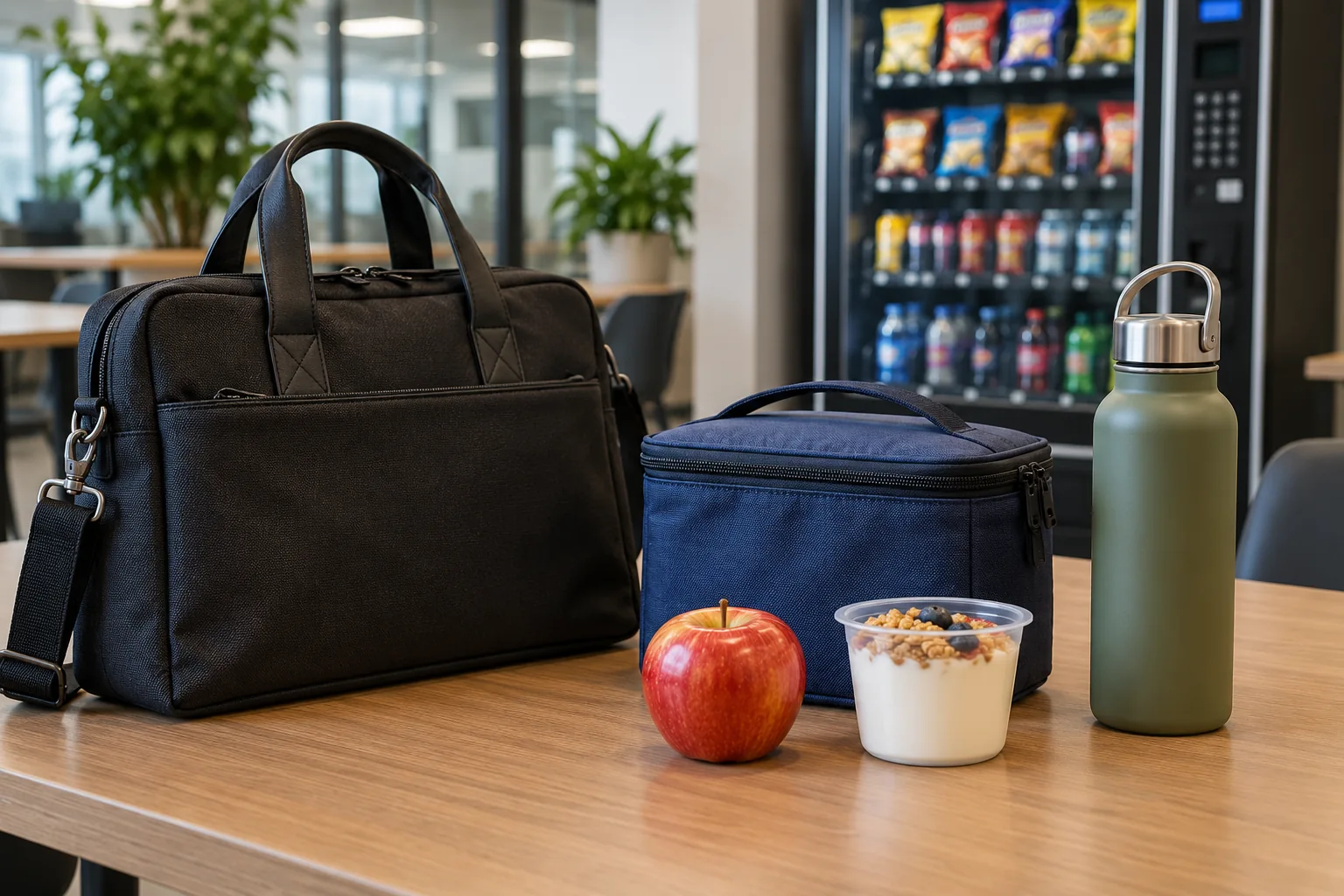
An unexpected meeting can turn lunch into a late-afternoon scramble. Keep an appropriate shelf-stable or safely stored backup, such as nuts with fruit, a sealed bean snack, or another food that fits your preferences and allergies. The aim is to bridge genuine hunger, not to force yourself to eat on a clock or to replace a full meal with a token bite. For a long shift, identify where you can obtain a real meal if the planned lunch disappears.
Do not mistake a snack plan for constant grazing. The CDC suggests putting a planned amount into a bowl or container rather than eating directly from a large package. You can apply that at a desk, but you can also simply take a break and eat what you brought. An unplanned pastry is not a failure; a repeatable fallback reduces how often one disruption dictates the whole day.
Handle office cues without social rules
Free snacks, birthday cake, and coffee-shop runs are ordinary parts of work for many people. An office candy experiment found that a nearer, more visible dish was associated with more consumption in that setting; it cannot tell you exactly how much you personally will eat. Decide before the moment whether you want a treat, and if you do, enjoy an amount that fits your day. Moving your own desk snack out of arm’s reach may reduce automatic eating without judging colleagues.
You do not need to explain your weight goal to coworkers or police a shared table. A polite “not now” is enough, as is choosing to join in. Work stress and fatigue can also change hunger. If your plan repeatedly depends on enduring intense hunger, review meal timing and adequacy instead of blaming lack of willpower. See stress-eating triggers for a distinct emotional-eating discussion.
Make the break usable
Where possible, step away from the screen while eating, even for a short period. Experimental research on distracted eating suggests attention can affect intake, though a phone-free lunch is not a guaranteed weight-loss intervention. A real break may also let you notice whether you are satisfied before returning to work. If your job has tightly constrained breaks, adapt to the access you have; there is no benefit in giving yourself another impossible rule.
Keep water nearby if that makes drinking easier, and consider the amount of caloric drinks or specialty coffees you add over a shift. The bigger picture remains a sustainable eating pattern rather than one lunch trick. NIDDK notes that work schedules and support influence whether a weight-management program is practical. If an employer controls the food environment, you can request workable options or storage, but this article does not assume you have that power.
A two-week workday test
Choose one lunch path, one backup, and a simple trigger for using each. “If the noon meeting runs long, I will eat my packed lunch at the next break” is more actionable than “I will eat healthier.” At the end of two weeks, assess what you actually used, what was left over, and whether you felt satisfied. Change one part at a time. An approach that works on an ordinary Tuesday is better than a perfect plan for a rare calm day.
Weight-loss supplements do not resolve a missing break or lack of food. If you are considering Fat Burn Active, examine its caffeine sources and finished-product evidence separately. A stimulant may mask tiredness or affect sleep without making a workplace routine more nutritious. The full review helps evaluate the product after your food options are workable.
If work offers few choices
Some jobs have fixed breaks, no nearby shop, or a shared kitchen that cannot store everyone’s food. In that case, a lunch plan is less useful than a realistic one: identify what can be kept safely, what can be bought nearby, and who controls the break schedule. A small change may prevent the afternoon becoming an emergency. If the constraints are structural, discuss options with your employer when possible; the burden does not belong entirely to individual willpower.
Choose the next useful step today
Check the current package, ingredients, serving directions, your other caffeine sources, and relevant health conditions. For an evidence-based starting point, read the full Fat Burn Active review. If this product still fits your circumstances, you can inspect its current offer. We may earn a commission if you buy through that link. Choosing no supplement is equally reasonable when the evidence or safety questions do not support a purchase.
Frequently asked questions
What if I cannot refrigerate lunch?
Choose foods that remain safe in your available storage or use an insulated bag; adapt the plan to your workplace.
Must I refuse every office treat?
No. Decide deliberately whether and how much you want rather than treating a treat as a failed day.
Can a fat burner replace a missed lunch?
No. A supplement does not provide a balanced meal or solve a break and access problem.
Sources
- NIDDK: Changing Your Habits
- NIDDK: Eating and Activity
- CDC: Healthier Meals and Snacks
- CDC: Food Service Guidelines
- Office Candy Proximity Experiment
- Review of Attention and Eating
Reviewed against the sources listed above. Educational information only; not medical advice.