This guide concerns practical decisions about supplement use. It does not establish that a fat burner treats a medical condition or produces weight loss.
First separate hunger from autopilot
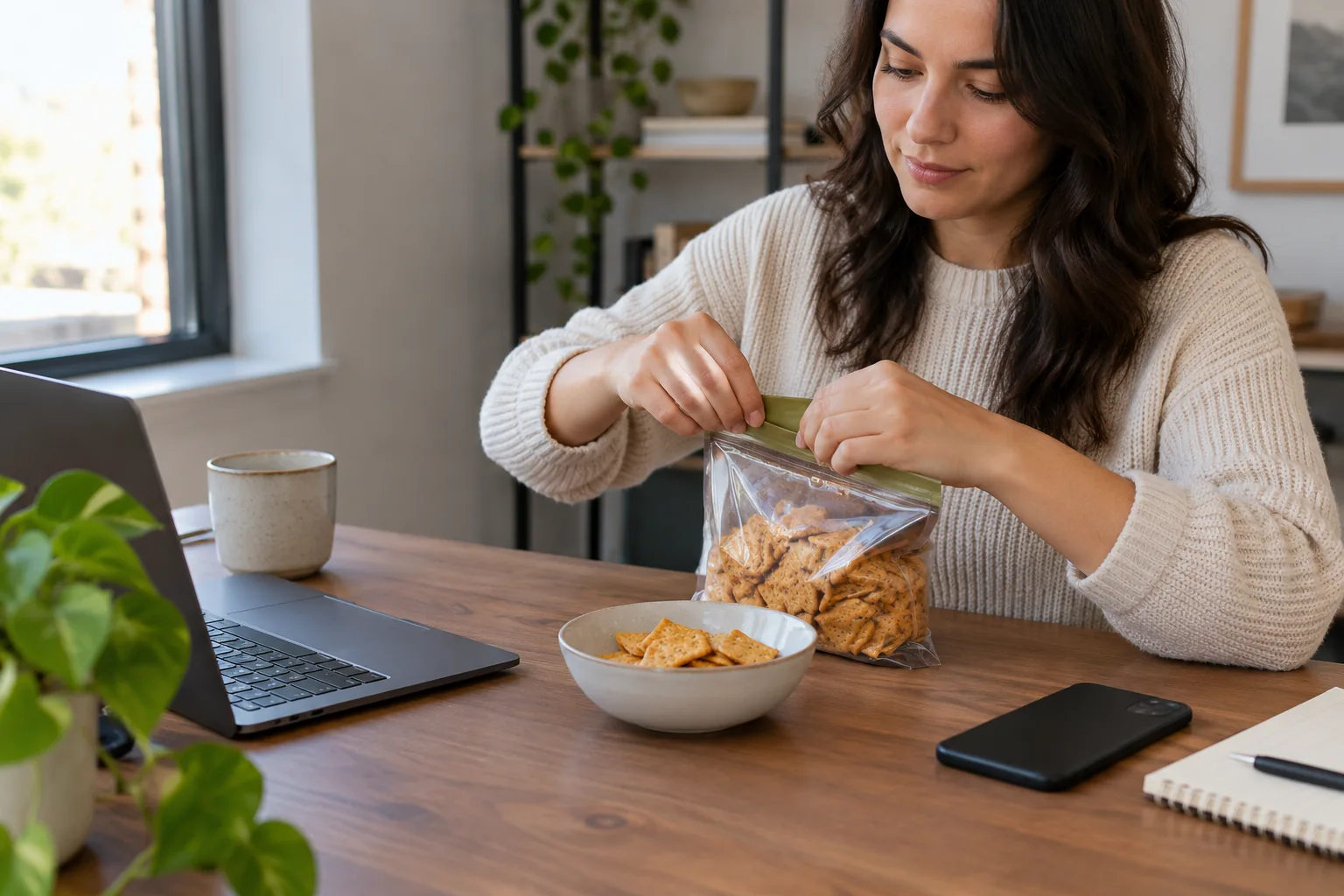
A snack between meals can be useful when you are hungry and need food. “Mindless snacking” describes a different experience: reaching into a package during work, a show, or a commute and losing track of what or how much you ate. Treat the term as a cue to investigate, not an accusation. If lunch was too small or delayed, the answer may be a more satisfying meal rather than resisting a legitimate need to eat.
Choose one recurring setting. Is the snack next to the laptop? Do you eat when a video starts, regardless of hunger? Is a family-size package opened each evening? Notice the sequence for a few days without trying to fix all eating at once. NIDDK recommends monitoring habits and barriers while making changes. Your useful observation may be that the cue is a deadline, a remote control, or simply too long between meals.
What attention research can and cannot say
A systematic review of experimental studies found that watching television while eating can increase intake in those settings. Other studies on attention and eating also suggest effects on later intake and memory of food. Experimental averages do not predict what one person will do at every meal, and a screen-free rule is not a proven weight-loss treatment. The practical point is to make the portion visible and give yourself a chance to notice satisfaction.
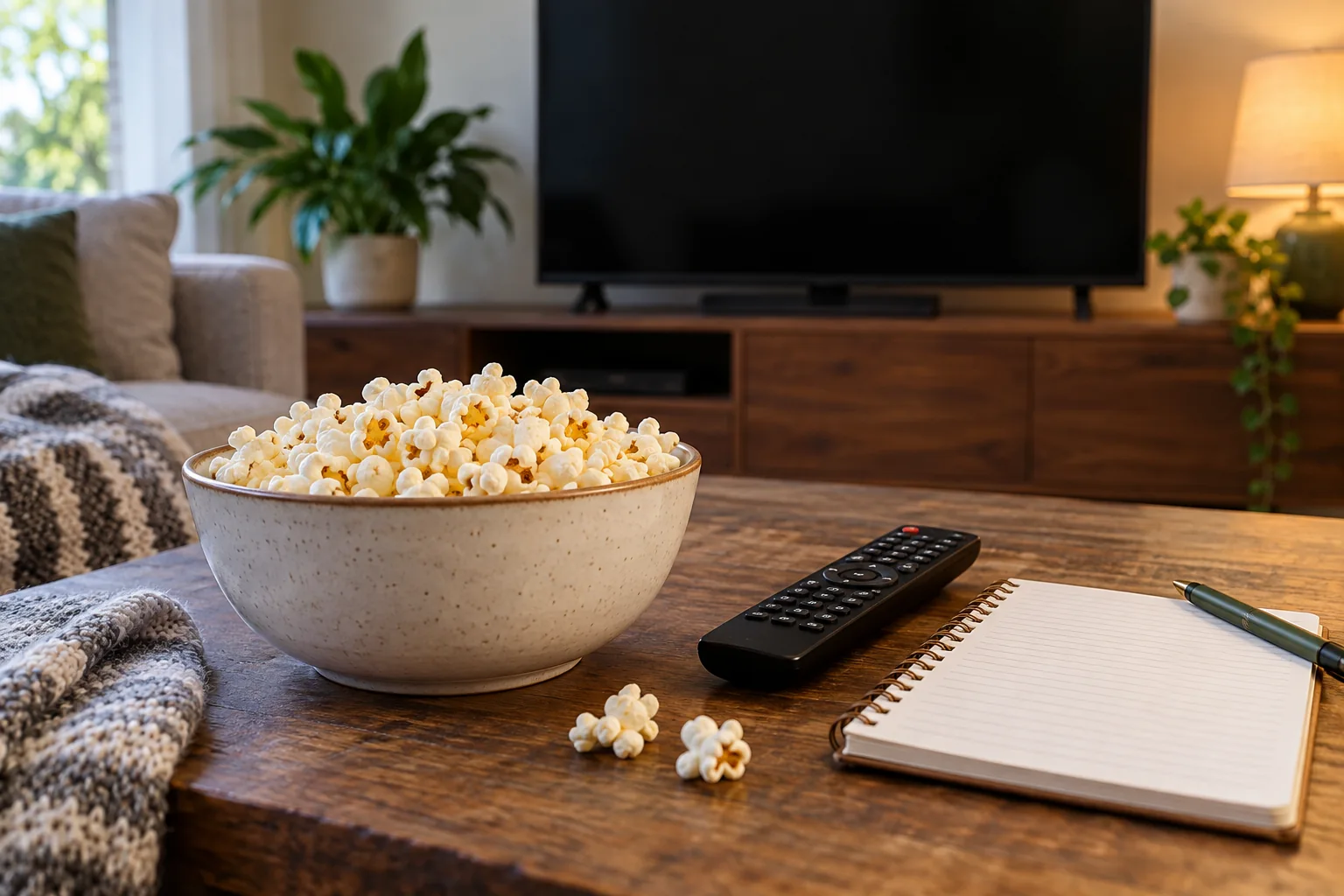
If you cannot leave your workstation, pause for a minute and put food on a plate instead of eating straight from the package. If you are watching a film, serve a portion before sitting down. Neither step requires perfect mindfulness. You are changing the format of a choice that otherwise happens repeatedly without a clear beginning or end.
Change the cue and the container
CDC guidance suggests putting the amount you intend to eat into a bowl or container rather than eating from a larger package. Keep a water glass or another non-food option on the desk if you tend to reach for something just to interrupt a task. Move bulk snacks outside arm’s reach while keeping food available when you actually want it. An office-candy study found proximity affected consumption in its limited experimental setting; a desk rearrangement is a practical test, not a guaranteed calorie reduction.
Do not create a kitchen where every enjoyable food requires a battle. A clear serving ritual often works better than hiding a food and then feeling deprived. If you want another portion after finishing the first, you can choose one consciously. The benefit is awareness, not an obligation to stop eating at an arbitrary number.
Make meals do their share
Persistent afternoon grazing may be information about breakfast or lunch. Look at meal timing and whether meals include enough satisfying foods. A planned snack can bridge a long interval; for example, fruit with yogurt or crackers with a protein-containing food, depending on preference and access. The healthy snack guide discusses options; this page concerns the circumstances around eating, not a ranking of snack foods.
If you frequently feel hungry immediately after eating, review the meal and schedule before layering on willpower tricks. Sleep loss, stress, and medication may also matter. No simple pause technique should be used to ignore persistent hunger or medical symptoms. If episodes involve a loss of control and substantial distress, seek a qualified clinician rather than treating the issue as a productivity hack.
Try a one-week observation experiment
For seven days, choose one place where automatic snacking happens. Record the cue, whether you were hungry, and whether you served the food intentionally. Then test one response: move the package, use a bowl, take a short break, or plan a more substantial afternoon meal. At the end of the week, compare whether the change made life easier. If it created more food preoccupation, revise it. A small experiment is about learning a pattern, not proving your character.
Avoid turning every bite into a spreadsheet. Some people find tracking useful, while others find it burdensome or harmful. A brief note can be enough. Choose measures that reflect the actual problem: fewer forgotten handfuls, more satisfying meals, or less stress. Body weight is influenced by many factors and cannot validate a one-week snack experiment in isolation.
Do supplements solve automatic eating?
A stimulant product may change alertness or appetite perceptions, but that does not mean it fixes eating while distracted. NIH ODS says the evidence for many weight-loss supplements is limited, especially for mixtures. Fat Burn Active contains several ingredients whose effects cannot simply be added together into a claim about your snacking habits. Review its current label and cautions if you are considering it for a separate reason.
If the real obstacle is a laptop-side package, move the package and make eating an explicit break first. You can review the full product evidence later without assuming a purchase is the answer. A deliberate snack can fit a weight-management plan; automatic repetition is the part worth examining.
A short pause that does not fight hunger
When you notice a reach toward the package, ask a neutral question: “Am I hungry, looking for a break, or simply following the usual cue?” If you are hungry, eat a snack or meal that satisfies you. If you need a pause from work, take one if you can. If you choose the snack anyway, place it on a plate and enjoy it. This is a decision point, not a test you can fail.
The pause should not become a demand to delay food indefinitely or drink water whenever hungry. People with medication-related appetite changes, long shifts, or an eating-disorder history may need a different approach. If every snack decision feels distressing, seek individualized support. The goal is less automatic repetition and a calmer, more accurate response to your needs.
Choose the next useful step today
Check the current package, ingredients, serving directions, your other caffeine sources, and relevant health conditions. For an evidence-based starting point, read the full Fat Burn Active review. If this product still fits your circumstances, you can inspect its current offer. We may earn a commission if you buy through that link. Choosing no supplement is equally reasonable when the evidence or safety questions do not support a purchase.
Frequently asked questions
Are snacks bad for weight loss?
No. A planned snack can answer real hunger; the issue here is repeated eating without noticing or intending it.
Do I need to eat every meal without a screen?
No universal rule applies. Try making a portion visible and notice whether distraction changes your intake.
Will an appetite supplement fix mindless snacking?
There is no direct evidence that this finished supplement solves distracted eating.
Sources
- CDC: Meals and Snacks
- NIDDK: Changing Habits
- Television and Food Intake Meta-analysis
- Attention and Food Intake Review
- Office Candy Proximity Experiment
- NIDDK: Loss-of-Control Eating
Reviewed against the sources listed above. Educational information only; not medical advice.