This guide offers educational information; it does not prescribe an individual diet or establish supplement benefits.
The menu is not a laboratory report
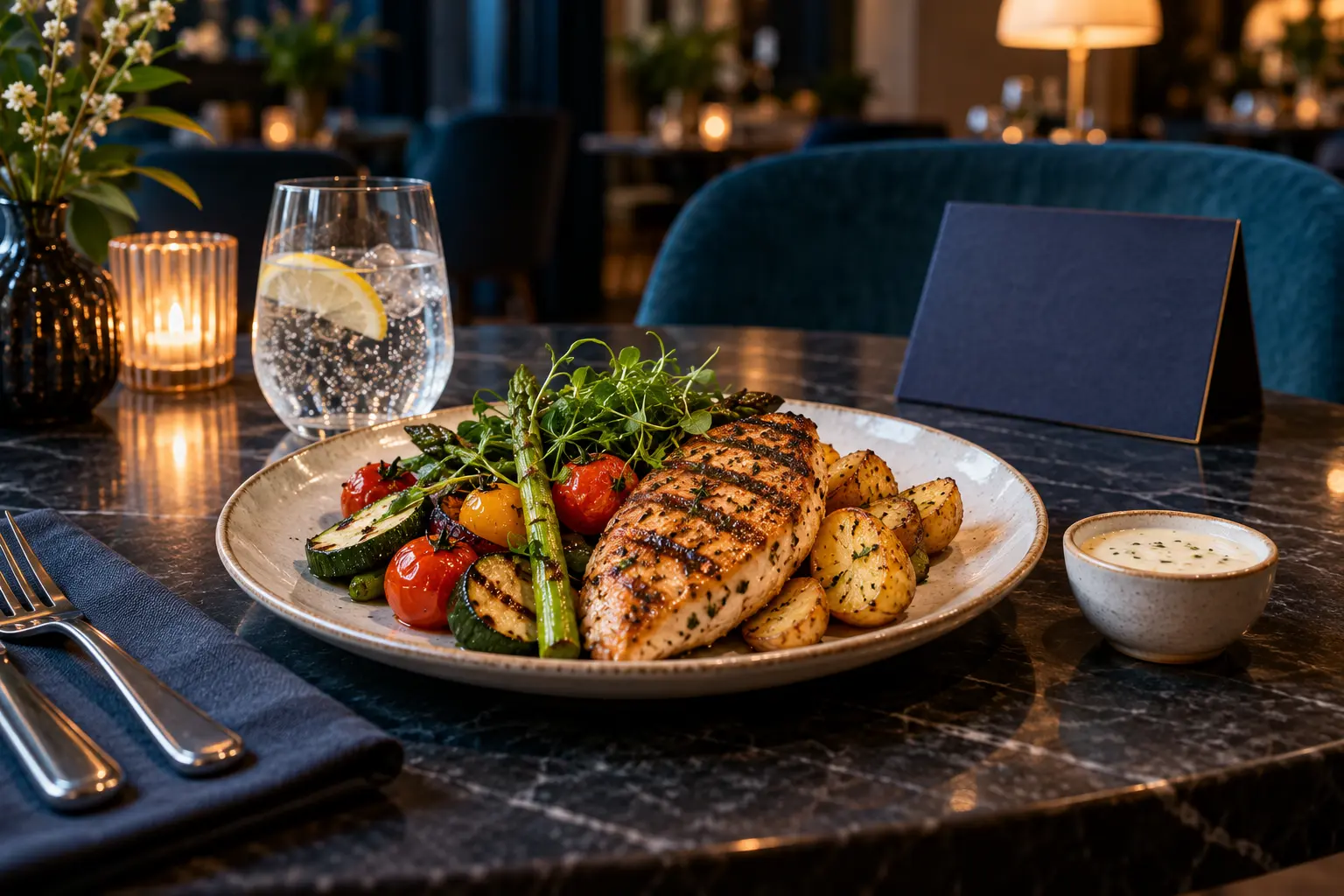
Restaurant meals differ in portion size, cooking fat, sauces and drinks. A dish that looks similar to one you make at home may contain more or less energy; a photograph cannot reveal exactly how it was prepared. In the United States, FDA menu-labeling rules apply to covered chain restaurants, but a posted calorie number still describes a standardized item rather than every plate. Use available information as a guide, not a demand for numerical precision.
This page focuses on decisions during a restaurant visit. The unweighed-food guide discusses broader estimation. Neither requires you to turn dinner with friends into a calculation contest. Decide what kind of meal you are having before scanning every entry on the menu.
Choose what matters most about the meal
An ordinary weekday lunch may call for something filling and convenient. A birthday dinner may be primarily about company and a dish you love. There is room for both in a longer-term pattern. When the occasion matters, choose an item you will enjoy and decide whether extras such as bread, a starter, alcohol or dessert add value. You need not order all of them automatically, nor ban them all.
NIDDK distinguishes the portion you choose from a label’s serving size. The same principle applies to restaurant plates: the venue sets what it serves, but you may eat a comfortable amount and take leftovers. The portion and serving guide explains the distinction without assigning a moral value to a larger meal.
Use a three-decision menu scan
First, find a main dish with a satisfying protein source and foods you enjoy. Second, check the likely additions: oil-rich sauce, cheese, dressings, sides and beverages. Third, choose one practical adjustment if needed, such as sauce on the side, a different side, sharing an appetizer or saving part for later. You do not need to make all three adjustments. The smallest change that protects both enjoyment and your routine is often enough.
If no nutritional data are available, judge the complete plate rather than assuming a salad is low calorie or pasta is automatically excessive. A salad with generous dressing and fried toppings may differ greatly from its name. A pasta dish with vegetables and protein can fit the occasion. The useful question is what you will actually eat and how satisfied you will feel afterward.
When a portion is larger than expected
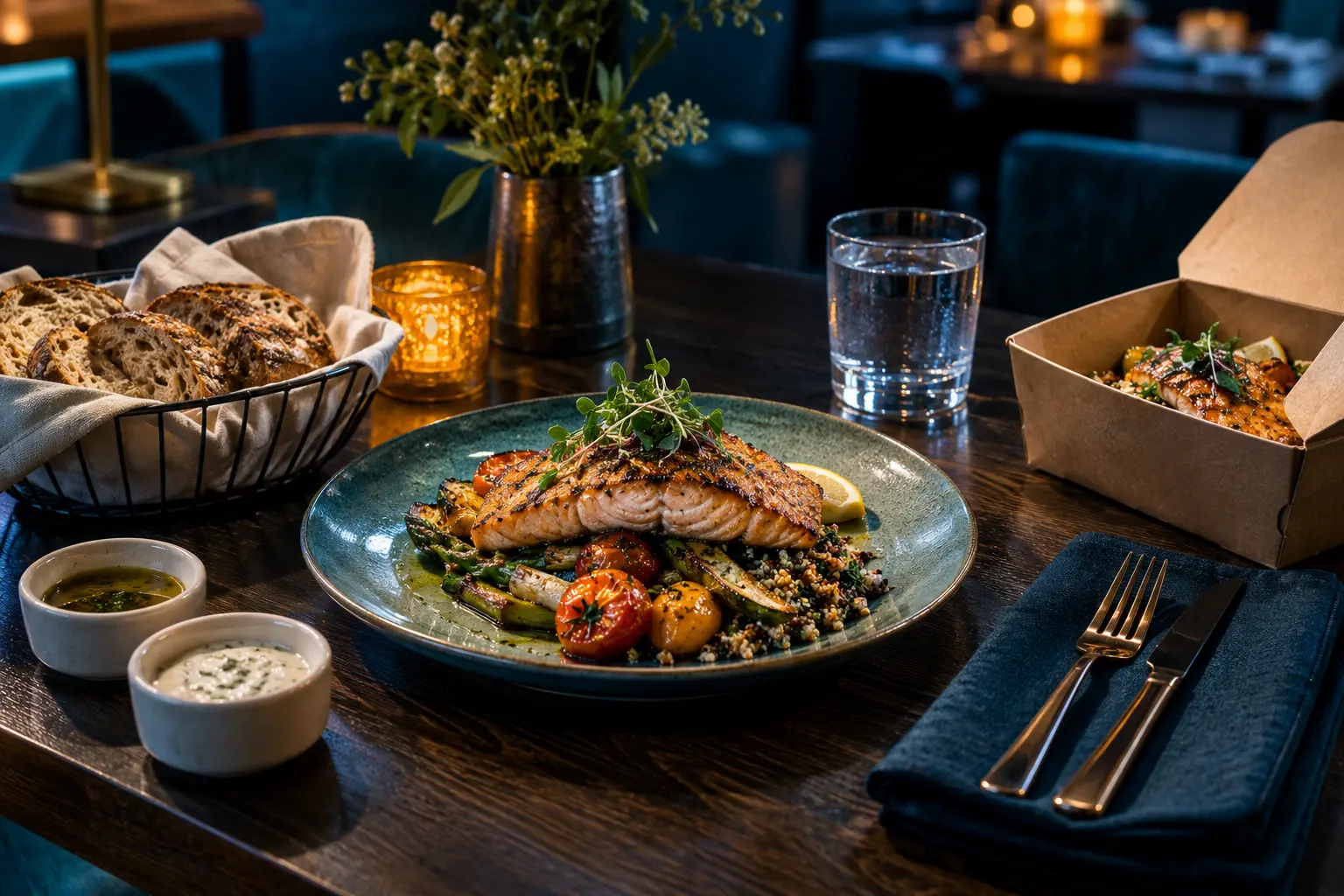
Pause halfway through and notice whether you want the rest now. If you are comfortably full, request a takeaway box where practical. If you are hungry, eat more. Splitting a main course can work if both people want it, but it should not become a rule that you must halve every restaurant meal. A very small lunch can leave you looking for food all afternoon, especially after a busy morning.
Restaurant portions vary widely, so visual rules such as “always eat half” do not replace attention to your hunger and the whole day. The portion-control guide covers home habits; a restaurant visit may need a simpler decision. A satisfying meal can be both enjoyable and deliberate.
Plan around frequent meals out
If you buy lunch near work several times a week, identify two or three orders you like that keep you comfortably fed. Note which additions appear automatically and whether a particular meal leaves you hungry later. This small “usual orders” list reduces repeated decisions without locking you into one dish. Include a flexible option for days when you want something different. Budget and time matter as much as a perfect nutrient profile.
The CDC recommends varied healthy eating patterns rather than a restaurant ban. If several meals are prepared by others, consider foods you can control at home, such as breakfast or a packed snack. Do not make the restaurant order carry your entire nutrition plan. A workable week includes imperfect meals.
Do not overinterpret tomorrow’s scale
A meal high in salt or carbohydrate, a later dinner and a different amount of food in the digestive tract can all affect the next morning’s weight. A rapid change does not directly reveal body-fat change from one meal. Resume your ordinary eating and activity routine rather than skipping meals as punishment. The daily fluctuations guide explains why a longer trend is more useful.
If the meal exceeded your rough expectation, note what made it satisfying or less useful and move on. You can order differently next time without declaring the evening a failure. A restaurant strategy should make social life easier to sustain, not create a new weekly cycle of restriction and compensation.
Keep supplements out of the restaurant arithmetic
A weight-loss supplement is not a credit against a large meal. NIH ODS notes limited evidence for many marketed products and potential safety concerns. Fat Burn Active’s ingredients do not establish that its complete formula cancels food intake or changes the caloric content of a restaurant order. Check its current warnings if you are considering it independently; adding stimulants to an evening out may also affect sleep for some people.
The full review discusses that separate purchase decision. For dinner, choose a meal you can enjoy and an ordinary next day you can repeat. That is a more useful plan than trying to offset a plate with a capsule.
A real-world order to test
Suppose you often buy lunch at a café. You like a sandwich with a side and a sweet drink, but the afternoon feels sluggish. For a week, keep the sandwich and try a different drink or side that you also enjoy. Notice whether you remain satisfied and whether you are less hungry later. If the new combination leaves you wanting more food, adjust again. The test is a practical restaurant routine, not a controlled experiment or a promise of a specific scale result. Small choices become useful when they fit ordinary workdays.
Choose the next useful step today
Check the current package, ingredients, serving directions, your other caffeine sources, and relevant health conditions. For an evidence-based starting point, read the full Fat Burn Active review. If this product still fits your circumstances, you can inspect its current offer. We may earn a commission if you buy through that link. Choosing no supplement is equally reasonable when the evidence or safety questions do not support a purchase.
Frequently asked questions
Can I eat out and still lose weight?
Yes. An occasional meal or a repeat restaurant routine can fit an overall plan.
Should I always eat half my entrée?
No. Portions and needs vary; decide based on the meal and your hunger.
Does a higher weight the next morning prove fat gain?
No. Fluid and meal mass can move the scale quickly.
Practical decision checkpoint
Choose the main tradeoff before opening the menu: portion, side dish, drink, or dessert. Eat a satisfying meal and return to the usual routine afterward. The point is to make restaurants predictable enough that one outing does not trigger a compensating cycle of restriction and overeating.
Sources
- FDA: Menu Labeling Requirements
- NIDDK: Food Portions
- CDC: Healthy Eating
- Portion Size and Food Intake Review
- NIDDK: Eating and Activity
- NIH ODS: Weight-Loss Supplements
Reviewed against the sources listed above. Educational information only; not medical advice.