This guide offers educational information; it does not prescribe an individual diet or establish supplement benefits.
Begin with the next three meals, not a perfect pantry
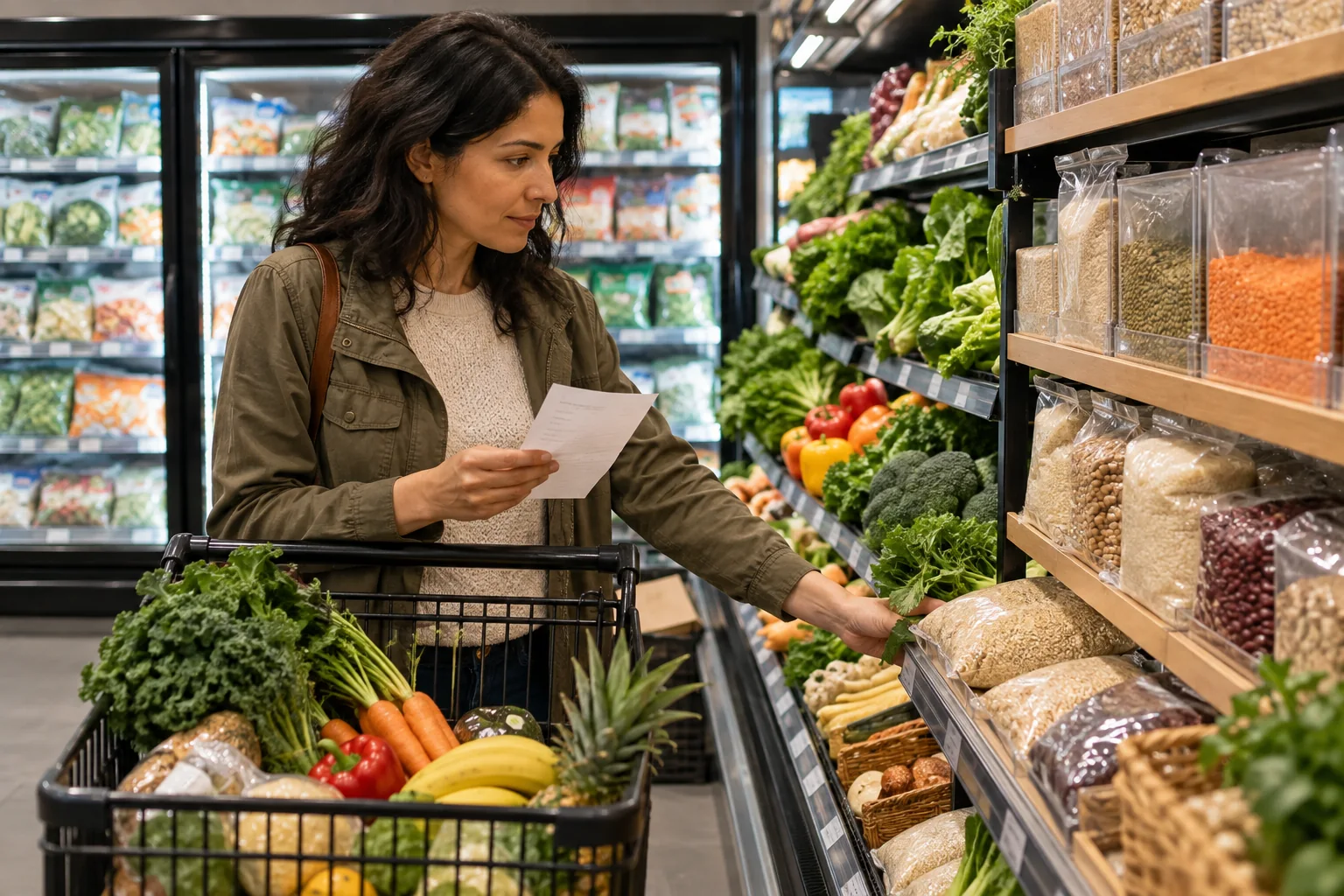
A long aspirational shopping list can waste money if the food goes unused. Choose three breakfasts, lunches or dinners you already know how to make. List their shared ingredients and one backup meal for a rushed day. Then check what is already at home. A short plan lowers the chance of buying duplicate perishables or relying on takeaway because the ingredients do not form a meal. CDC guidance suggests planning meals and using a list to help with cost and healthy eating.
This is a planning guide, not a prescribed calorie menu. The meal-prep guide addresses how to cook ahead. Here the goal is to leave the store with useful combinations and enough food to avoid an overly restrictive week.
Choose protein foods you can prepare
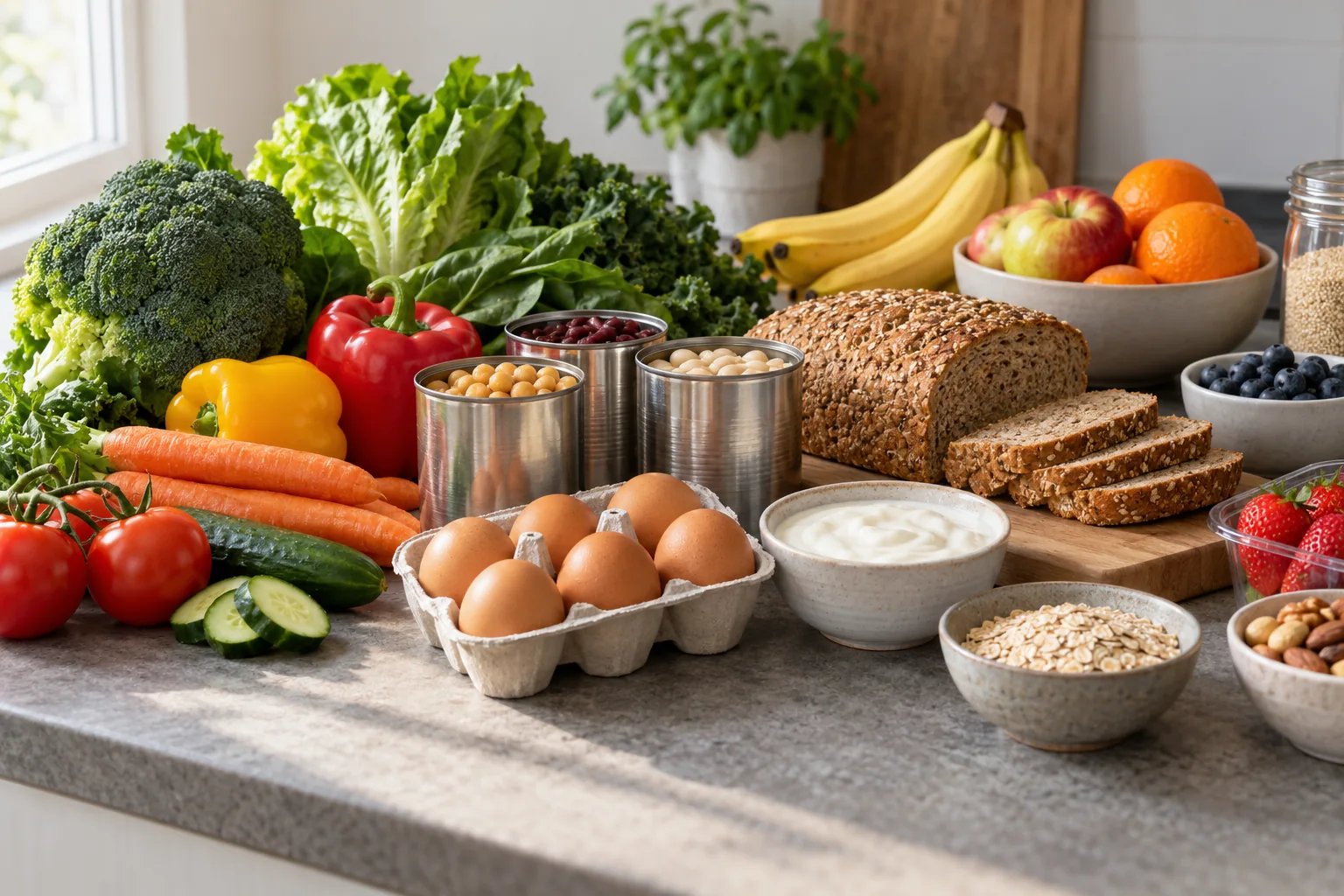
Depending on preferences, buy eggs, fish, chicken, tofu, yogurt, beans or lentils. Frozen and canned versions can be convenient, and shelf-stable beans make a quick backup. Include amounts that match the meals you planned, not a generic quantity from a fitness influencer. The CDC lists a variety of protein foods as part of healthy eating patterns. No single protein source is required for weight loss.
Imagine a week with a yogurt breakfast, bean-and-grain lunch and a tofu or chicken dinner. The foods can be swapped based on price and availability. If you live alone, consider smaller packs or freezing portions. If you cook for others, use components everyone can share and adjust your own plate as needed.
Include produce in forms you will use
Fresh fruit, frozen vegetables and canned produce can all contribute to meals. Select what you actually like and can store safely. A bag of frozen vegetables can help on days when fresh produce runs out. Check canned additions if sodium or added sugar is relevant to your health, but do not assume canned food is automatically unsuitable. The CDC notes that the water and fiber in fruits and vegetables can help people feel full.
Choose ingredients with several uses: carrots for a soup and snack, berries for yogurt, greens for a bowl or sandwich. If your budget is tight, compare cost per usable amount and food waste. A low-cost vegetable you eat is more helpful than a fashionable ingredient left to spoil.
Add fiber-rich staples and enjoyable fats
Oats, whole-grain bread, potatoes, rice, pasta, beans and lentils can form satisfying meals. Higher-fiber options may help some people with fullness, but individual tolerance varies. Healthy fats such as oils, nuts or seeds add flavor and energy; serve them intentionally rather than treating them as forbidden. A meal built only from vegetables may leave you hungry, while a meal of grain, protein, produce and some fat can be easier to repeat.
Check the foods you already eat. A practical list could contain ordinary bread and fruit rather than expensive specialty products. If a food requires a complicated recipe you never make, leave it for another week. Weight management depends on the overall pattern, not whether every item in the basket carries a health claim.
Use labels where a comparison helps
For two similar packaged foods, read servings per container, serving size and the nutrients relevant to your choice. The FDA Nutrition Facts guide explains how to compare the amount you actually eat rather than the printed serving alone. A “low-calorie” label may describe a tiny portion that does not satisfy you. You might value more fiber in bread, less added sugar in yogurt, or a lower-sodium canned option if advised medically.
The label walkthrough explains the details. Do not spend the entire shop comparing every number; the list’s job is to support adequate meals. Fresh foods without labels can still fit the same plan.
Build a backup shelf for difficult days
Choose two or three combinations you can assemble quickly: canned beans with rice and frozen vegetables, eggs with toast and fruit, or yogurt with oats and berries. A backup meal prevents a stressful day from turning into skipped food followed by intense evening hunger. Keep ingredients safe and within your storage space. If a ready-made meal helps, read its label and add a fruit or vegetable where useful.
The cheapest option is not always the one with the lowest shelf price. Consider how many portions you will use and whether leftovers will be eaten. CDC’s budget guidance recommends list-based shopping and frozen or canned choices when helpful. Convenience can be a legitimate part of a sustainable plan.
Do a five-minute checkout review
Before paying, look at the basket: can you assemble several complete meals? Is there enough food for hungry days? Are the most perishable ingredients likely to be used soon? Have you included a food you genuinely enjoy? Remove impulse extras only if they do not serve the plan; there is no need to ban treats. A rigid list can be as impractical as no list at all.
Fat Burn Active is not a grocery staple or a substitute for meals. If you are researching supplements separately, NIH ODS advises caution about limited weight-loss evidence and safety; the full review offers product context. The useful purchase today is the food that makes next week’s meals possible.
An example list that can change with the season
For three simple dinners, someone might buy eggs or tofu, canned beans, rice, frozen vegetables, fresh fruit, yogurt and a flavoring they like. Breakfast could use yogurt and fruit, lunch leftovers from dinner, and an emergency meal from beans and frozen vegetables. Someone else may prefer fish, potatoes and a different vegetable. The quantities depend on household size, storage and appetite, so a fixed printable list is only a starting point. Before adding more items, ask which planned meal each food will support and whether it will be used before spoiling. Keep one shelf-stable backup for an unexpectedly busy day.
Choose the next useful step today
Check the current package, ingredients, serving directions, your other caffeine sources, and relevant health conditions. For an evidence-based starting point, read the full Fat Burn Active review. If this product still fits your circumstances, you can inspect its current offer. We may earn a commission if you buy through that link. Choosing no supplement is equally reasonable when the evidence or safety questions do not support a purchase.
Frequently asked questions
Do I need special diet foods?
No. Ordinary foods can form satisfying, balanced meals.
Are frozen vegetables acceptable?
Yes. They can be a convenient and affordable way to include produce.
What if I have very little time to cook?
Choose quick combinations and a couple of safe backup meals that fit your schedule.
Practical decision checkpoint
Build the list from two or three meals you will actually make, then include ingredients for one quick fallback. Check what is already in the kitchen. A useful list reduces last-minute decisions; it need not contain special “fat-burning” foods or exclude every convenience item.
Sources
- CDC: Healthy Eating on a Budget
- CDC: Meals and Snacks
- CDC: Healthy Eating Guidance
- CDC: Produce and Fullness
- FDA: Nutrition Facts Label
- NIH ODS: Weight-Loss Supplements
Reviewed against the sources listed above. Educational information only; not medical advice.