
This guide offers educational information; it does not prescribe an individual diet or establish supplement benefits.
Read the top of the panel before any large number
The serving size describes the amount on which the rest of the Nutrition Facts information is based. It is not a recommendation for how much you personally should eat. A package can contain more than one serving. If you eat the whole package, calculate the information for the amount eaten rather than copying the per-serving calories into a food log. The FDA explains that serving sizes generally reflect amounts people typically consume, but your portion may be different.
This page helps you compare packaged foods; the serving versus portion guide explains the difference with everyday examples. Read both before deciding that “one container” equals “one serving.” A larger package does not automatically mean you should eat all or none of it.
Use calories as information, not the whole decision
The calories line reports energy for the labeled serving. A product with fewer calories per serving may still be a poor comparison if its serving is much smaller than the other product’s. Put both foods on a comparable amount, such as a similar number of grams or the portion you would actually eat. Then ask how the food fits into a satisfying meal. Your body’s energy needs depend on your size, activity and health context; a label cannot set your personal daily target.
Consider a small snack bar and a bowl of yogurt with fruit. The higher number on one package cannot tell you which will satisfy you longer. Compare the total meal, not one marketing claim on the front. The calorie estimation guide helps when precise portions are unavailable.
Check fiber, protein and the food as prepared
Protein and dietary fiber can matter for the satisfaction and nutritional quality of a meal. The label tells you how much a packaged food contains per serving; it cannot promise that a particular product will eliminate hunger. Look at the food in context: cereal may be eaten with milk and fruit, while soup may be paired with bread. The meal’s ingredients and total amount matter more than one nutrient highlighted in a colored badge.
The CDC recommends a variety of vegetables, fruits, whole grains and protein foods. A label can support that pattern when comparing, for instance, two similar breads or yogurts. It should not replace fresh foods simply because they lack a panel. Use the information to make a choice you can repeat and enjoy.
Understand added sugars and the percent Daily Value
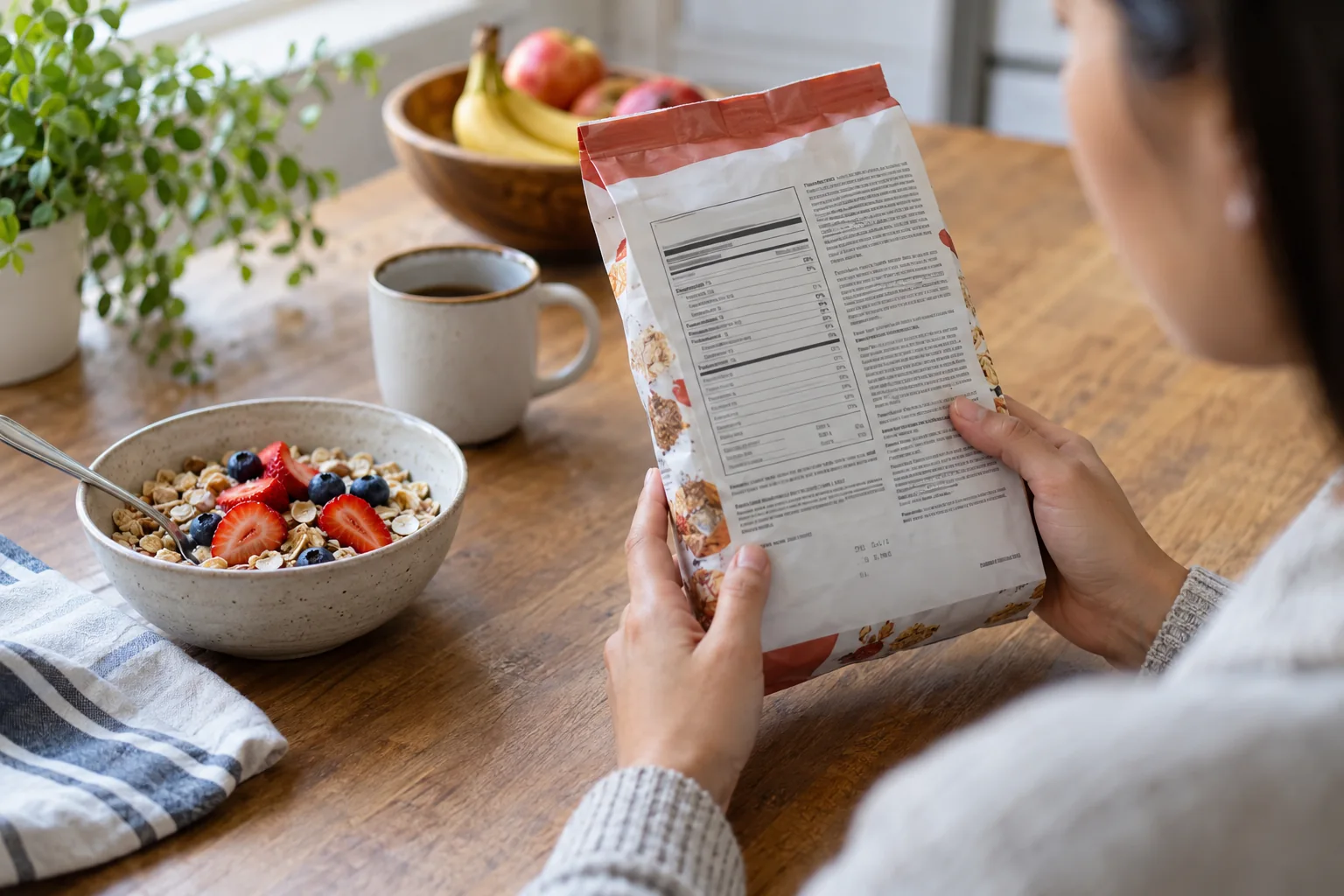
“Total sugars” includes naturally occurring and added sugars, while the “Includes Added Sugars” line reports the added part. FDA guidance explains the distinction. The percent Daily Value, or %DV, shows how much a serving contributes to a general daily reference amount for a nutrient. FDA uses 5% DV or less as a low amount and 20% DV or more as a high amount. Those are quick comparison cues, not your individual medical targets.
When choosing between similar products, you might prefer more fiber or less added sugar or sodium according to your needs. Do not treat an isolated high or low %DV as a diagnosis. Someone with a condition requiring tailored nutrient limits should follow their healthcare team’s guidance. Check the serving before applying any percent to your actual portion.
Look beyond front-of-pack phrases
“High protein,” “natural” and “fit” can draw attention without telling you what the full meal supplies. Flip the package over, read the serving size and compare the actual nutrient amounts. Two items with similar marketing may differ substantially in portions or added sugars. Ingredients can also explain what a product contains, but the Nutrition Facts panel is the quickest starting point for a numerical comparison.
Do not expect a single “good” score from the panel. Nuts can be calorie dense and useful in a meal; a low-calorie sweetened product may not keep you satisfied. Compare like with like, and avoid imposing a rule that every food must be low in every nutrient. This is a decision aid for your grocery trip, not a grading system for your character.
Try a three-step aisle comparison
Imagine comparing two breakfast cereals. First, read servings per container and the gram amount per serving. Second, compare calories, fiber and added sugars for the amount you would realistically eat. Third, consider what you will add, such as yogurt, fruit or milk, and whether the final breakfast will satisfy you. If the cereal you like contains less fiber, you could add fruit or choose another fiber source elsewhere in the day. There is more than one sensible answer.
For a packaged meal, remember sauces, beverages and side dishes. The label may describe the unprepared product, not everything on the plate. Write a quick note of what mattered to you rather than memorizing every column. The aim is a faster, more informed choice next time.
Keep supplements and foods in separate categories
Supplement Facts panels and Nutrition Facts panels serve different purposes. A weight-loss supplement listing an ingredient is not evidence that a complete product helps people lose weight. NIH ODS finds limited support for many weight-loss supplement claims. Fat Burn Active should be evaluated through its actual ingredient amounts, directions, warnings and relevant studies, rather than placed beside breakfast cereal as a food choice.
If you are independently considering it, read the full review. The useful next step for the grocery aisle is simpler: compare the amount you will eat, the nutrients that matter for your circumstances and whether the food fits a satisfying pattern. You can make that decision without buying a supplement.
A label comparison worth remembering
A product can appear lower in calories simply because its printed serving is smaller. If you would eat twice that amount, use twice the per-serving information when comparing it with a second product. Then consider whether the meal will satisfy you and what else you will eat with it. Use the label to make comparable amounts visible and support an everyday choice.
Choose the next useful step today
Check the current package, ingredients, serving directions, your other caffeine sources, and relevant health conditions. For an evidence-based starting point, read the full Fat Burn Active review. If this product still fits your circumstances, you can inspect its current offer. We may earn a commission if you buy through that link. Choosing no supplement is equally reasonable when the evidence or safety questions do not support a purchase.
Frequently asked questions
Is a serving size the amount I should eat?
No. It is the reference amount for information on the label, not a personal prescription.
Should I always choose the lowest-calorie food?
No. Consider your actual portion, nutrients, satisfaction and overall eating pattern.
What does 20% DV mean?
It is a high contribution per labeled serving to a general Daily Value, not a personalized daily target.
Sources
- FDA: How to Use the Nutrition Facts Label
- FDA: Added Sugars on Labels
- FDA: Daily Value
- NIDDK: Food Portions
- CDC: Nutrition Facts and Health
- NIH ODS: Weight-Loss Supplements
Reviewed against the sources listed above. Educational information only; not medical advice.