Why a “healthy” lunch sometimes fails by 3 p.m.
A side salad with a few chicken strips may sound like a weight-loss lunch, but it may simply be too small. A large smoothie can be quick yet lack the chewable food you find satisfying. A restaurant bowl may contain plenty of calories but little protein or produce relative to its size. When hunger returns, the problem is not automatically weak willpower; the meal structure or your schedule may need an adjustment.
Protein has evidence for short-term appetite effects, but long-term results vary. Fiber and vegetables can add volume, while grains, potatoes or beans can make lunch feel like an actual meal. The amount of fat and sauce matters too: too little may make a meal joyless, while a large pour can change its energy without making it more satisfying. There is no single lunch macro formula that guarantees several hours without hunger.
Use a four-part lunch formula
For people who are very active, a single small wrap may not be enough. For a sedentary day, a very large restaurant bowl may be more than needed. Adjust the size rather than declaring whole grains or fats “bad.” If you track calories, enter the actual recipe; food labels and USDA FoodData Central are better than guessing by appearance.
Five lunch templates that travel well
Chicken or tofu grain bowl
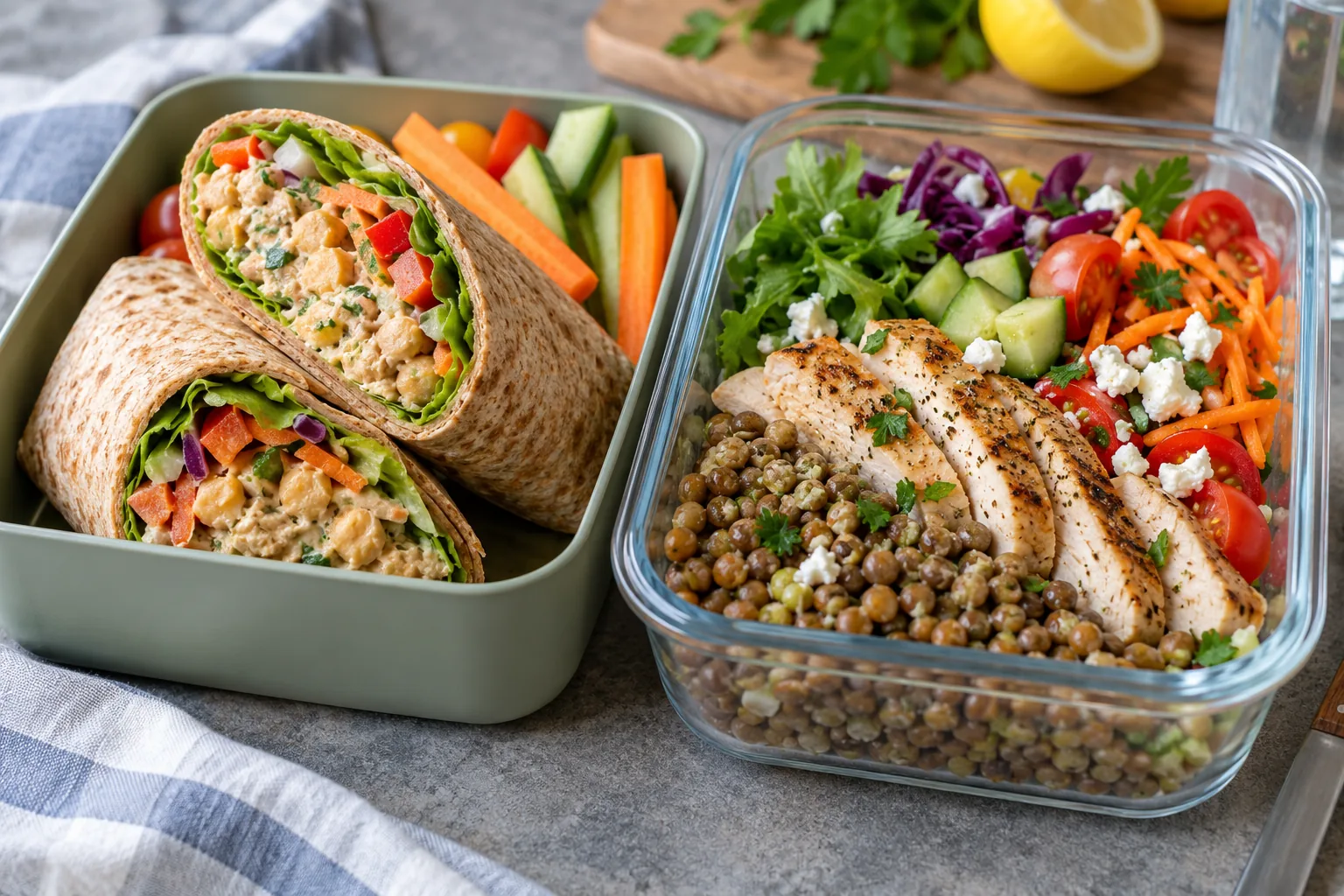
Combine a cooked protein, rice or quinoa, a generous serving of vegetables and lemon-yogurt dressing. Keep dressing separate until eating. Add beans for variety or replace the grain with potatoes. The bowl works from leftovers, but avoid holding cooked food unrefrigerated through the afternoon.
Tuna or chickpea wrap
Mix tuna with yogurt and herbs, or mash chickpeas with lemon and a little olive oil. Add crunchy cucumber, cabbage or carrots to a whole-grain wrap. Chickpeas provide fiber but a chickpea wrap may have a different protein amount from tuna; add tofu, egg or another protein if needed. Check mayonnaise and tortilla labels when energy intake matters.
Lentil soup plus a protein side
A substantial lentil soup with vegetables can be an easy packed lunch. Add plain yogurt, a boiled egg, edamame, or a suitable sandwich if soup alone does not carry you to dinner. Broth-heavy soup with only a spoon of lentils is different from a hearty legume meal. Use the bowl's actual contents to judge it.
Salmon or bean salad with bread
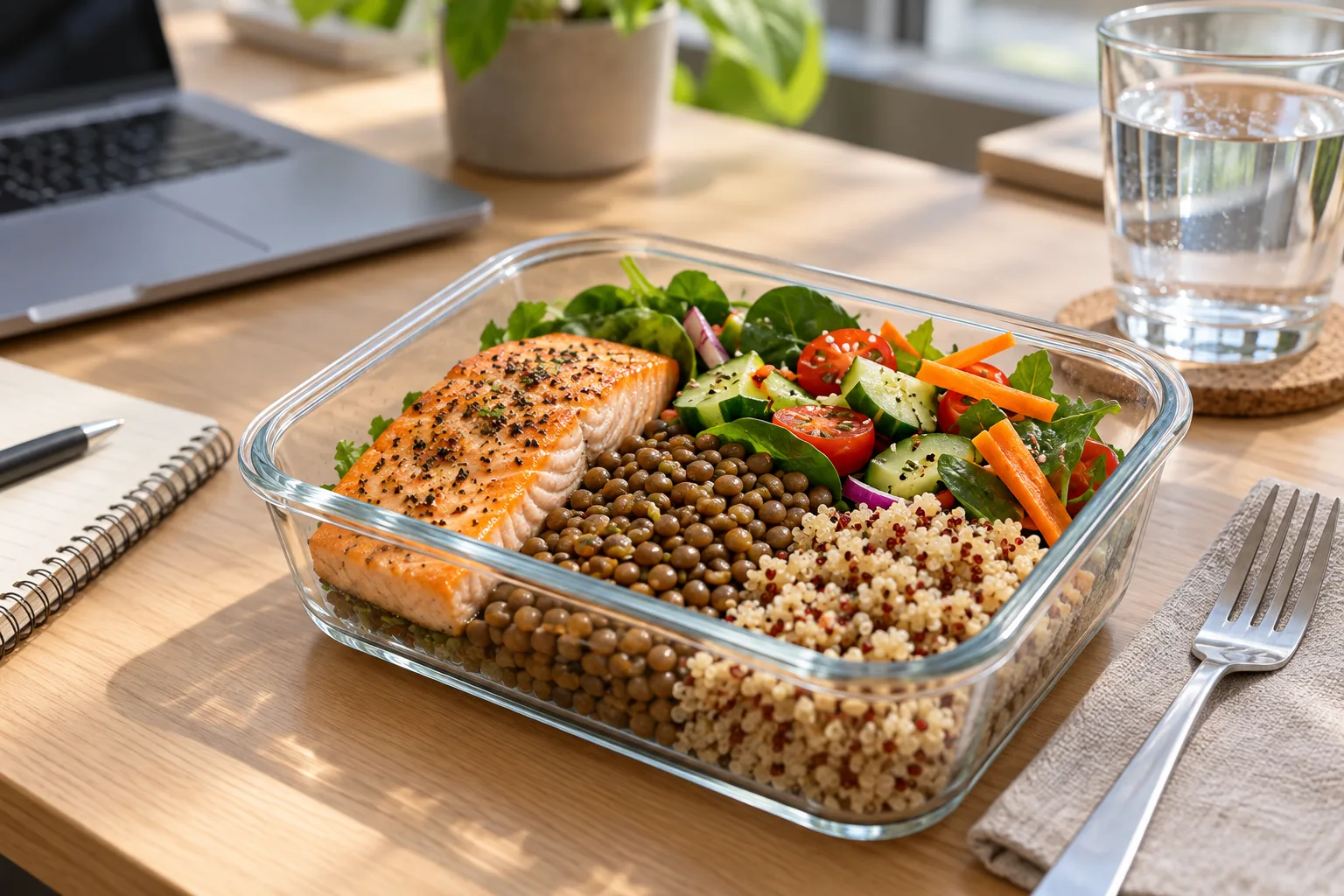
Build around salmon or beans, leaves and vegetables, and a slice of whole-grain bread or a potato. Nuts, oil and dressing add flavor but should be portioned deliberately. If you prefer a warm lunch, heat the protein and grain and add greens afterward. A salad is not required to be cold or tiny.
Leftover dinner in a lunch box
Pack last night's chicken, tofu, beans or fish with vegetables and a carbohydrate portion. This may be the easiest option because it requires no second recipe. Prepare an extra serving intentionally rather than hoping leftovers appear. Refrigerate promptly and follow safe storage and reheating guidance.
Troubleshoot the afternoon, not just lunch
For four workdays, note when you eat lunch, when hunger starts, and what happens between. If lunch is at 11 a.m. and dinner at 7 p.m., expecting one meal to cover eight hours may be unrealistic. Add a planned snack or move the meal later if possible. If lunch is large but you still want sweets at the same meeting each day, examine the cue and whether you need a break rather than automatically adding more food.
Compare two similar days after changing one part: add more vegetables and a meaningful protein serving, swap a refined side for beans or whole grains, or make the meal large enough. Keep your overall energy needs in view. You are looking for fewer unplanned snacks and easier adherence, not a promise that appetite disappears. If hunger is persistent across all meals, see our diet-hunger troubleshooting guide.
Also record the lunch-to-dinner gap and what the snack actually contains. A fruit with yogurt or a bean-based snack may solve a scheduling gap better than an ever-larger lunch. If you work shifts, label “afternoon” by the hours after your meal rather than the clock. This makes your observations comparable across days and helps you distinguish a portion problem from a long, unavoidable gap.
For a no-microwave workplace, assemble a chilled bean and grain bowl or a wrap from shelf-stable components and a safely stored protein source. A soup thermos works when you can pack it at an appropriate temperature and eat promptly. Keep crunchy produce and sauces separate until serving so texture remains pleasant; a meal you dislike often ends with an unplanned replacement.
Make the packed lunch safe and realistic
Use an insulated bag and cold packs when refrigeration is unavailable for perishable foods. Promptly refrigerate cooked leftovers and use them within the safe storage window. FoodSafety.gov advises three to four days for refrigerated cooked leftovers; freeze later portions. Avoid preparing an entire week of cooked fish on Sunday for Friday lunch. A lunch plan that ignores storage conditions is not practical.
Start with two lunches you already like, prepare the ingredients for both, and alternate them. That small rotation is easier to maintain than an ambitious set of unfamiliar recipes. If you buy lunch, apply the same four-part check to the menu and consider keeping part for later when the served portion is large.
A supplement is not a substitute for lunch. If you are exploring Fat Burn Active for a wider weight-loss plan, examine the product review and stimulant cautions separately. There is no defensible reason to replace a filling meal with a capsule.
Frequently asked questions
How much protein should lunch contain?
There is no universal lunch number. Your daily needs, body size, health, activity and other meals determine what is appropriate.
Is a salad enough?
It can be, if it contains adequate protein and energy as well as produce. A plate of leaves with a little dressing may not be enough.
Should I avoid an afternoon snack?
No. A planned snack can be useful when the lunch-to-dinner gap is long, especially if it prevents desperate grazing.
Sources
- NIDDK: Sustainable eating and activity
- Kohanmoo et al.: Protein and appetite meta-analysis
- CDC: Vegetables, fruits, and meal volume
- CDC: Planning meals and snacks
- FoodSafety.gov: Leftover storage
- USDA FoodData Central
Sources reviewed September 26, 2026. Educational information, not an individualized diet prescription.