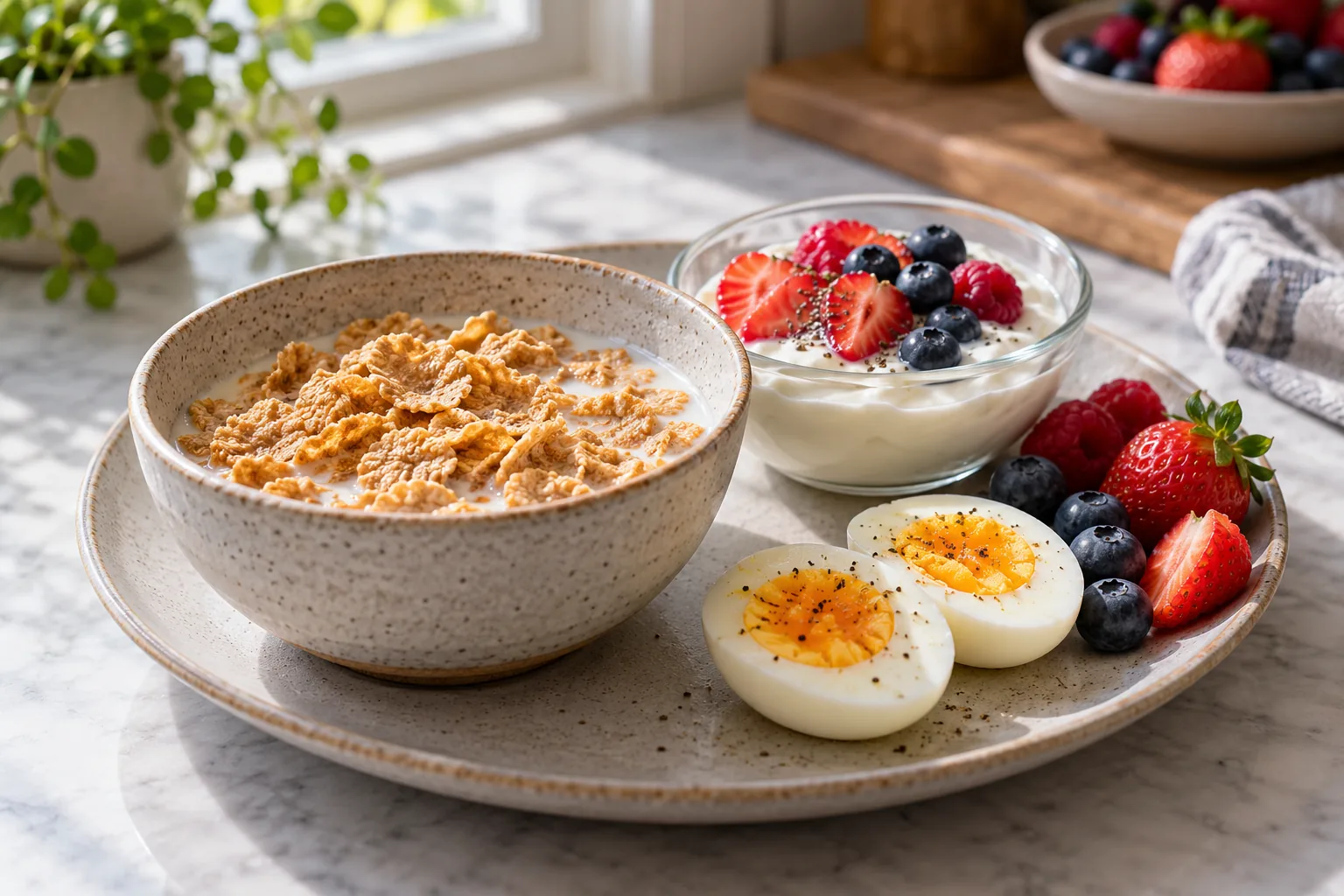
Start with the meal you actually ate
A bowl of cereal can look like breakfast, but the amount poured, the milk, and what follows matter more than the label “breakfast.” A small meal may simply not supply enough energy for a long morning. A sweet coffee may add energy without the food volume you expected. Conversely, a large meal can still leave you wanting something sweet because dessert is part of your routine. Neither observation proves a hormone problem.
Write down one ordinary example: what you ate, approximately how much, when you finished, and what you felt at 30, 60, and 120 minutes. Include drinks, sauces, cooking oil, and the snack you reached for. You do not need a perfect calorie count. You need enough detail to notice whether the same type of meal repeatedly leaves you searching for food.
Four common reasons hunger returns quickly
A meal that is too small for the day
People sometimes cut breakfast or lunch so sharply that hunger returns before the next planned meal. A calorie deficit is an overall pattern, not a rule that every plate must be tiny. If your morning meal is mostly coffee and a piece of fruit, adding a substantial protein food and a whole-grain or starchy component may work better than trying to ignore hunger until lunch. The right portion depends on your size, activity, preferences, and the rest of the day.
Little protein, fiber, or chewable volume
Protein can improve short-term fullness in some studies, but the effect is not identical for every person or meal. Fiber-rich foods and vegetables can add structure and volume. The practical test is to compare two meals you would actually eat: cereal alone versus cereal with plain yogurt and fruit; toast alone versus eggs, beans, and vegetables on toast. Keep the total meal appropriate for your needs instead of piling additions onto an already sufficient breakfast. A meta-analysis found protein's acute appetite effects more consistently than long-term effects, so do not treat one high-protein meal as a weight-loss guarantee.
Eating fast or drinking the meal
A smoothie, sweetened coffee, or snack bar can be convenient, yet it is easy to finish while distracted. Slowing down creates a chance to notice whether the meal was enough, although chewing longer is not a magic fat-loss mechanism. If you often eat standing up, try plating the food and sitting for the first ten minutes. Keep a satisfying chewable component such as fruit, vegetables, oats, or a sandwich rather than assuming a drink will hold you as well as a meal.
Sleep, stress, habits, and timing
Poor sleep, stress, a long gap since the previous meal, or an intense workout can change how strongly you notice hunger. A familiar cue can do the same: finishing lunch at your desk and seeing sweets every day may trigger a desire for dessert without a new energy need. This does not make the feeling imaginary. It means the solution may involve sleep opportunity, a planned afternoon snack, or changing the cue as well as food composition.
A three-day meal audit you can actually use
- Choose the meal after which hunger returns most often. Record three ordinary days, not a staged “perfect” menu.
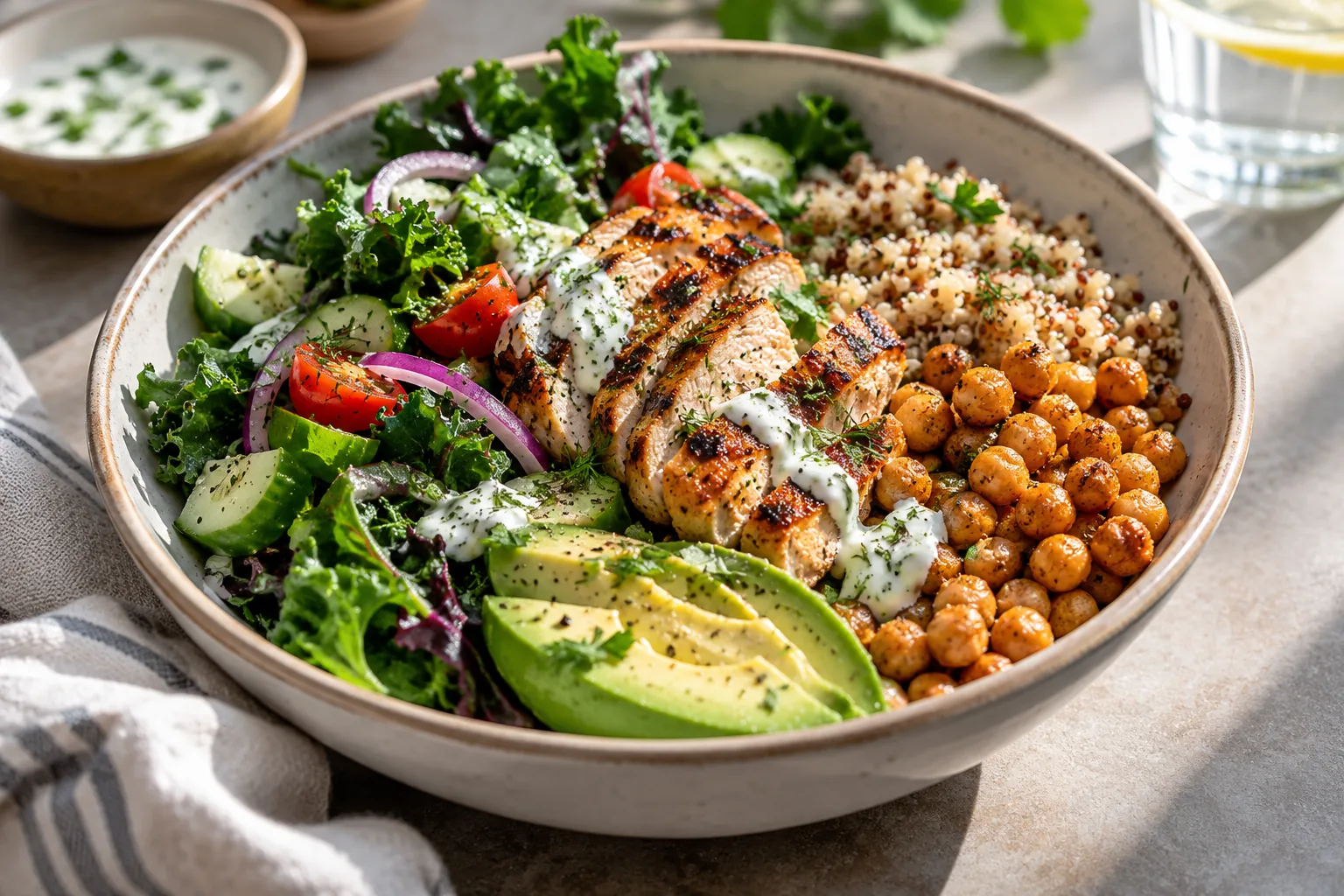
- For each meal, note a protein source, fruit or vegetables, a fiber-rich carbohydrate if appropriate, and added fats or sauces. Check whether the portion was enough to carry you to the next meal.
- Rate hunger just before eating and about one and two hours afterward on a simple 0–10 scale. Note sleep, activity, stress, and any planned snack.
- Change one feature for three more comparable days: perhaps add yogurt and berries to breakfast, beans to lunch, or a larger serving of vegetables and protein to dinner.
- Compare satisfaction and the later snack pattern. Keep the change only if the complete day becomes easier and nutrition remains adequate.
If hunger appears at predictable times despite a balanced meal, a planned snack is not a defeat. Fruit with yogurt, a small sandwich, or vegetables with hummus may fit better than waiting until you are ravenous. It is also reasonable to eat another meal earlier if your schedule permits. The goal is a sustainable pattern, not the longest possible interval between meals.
Physical hunger or a specific craving?
Physical hunger often makes several foods appealing and may come with an empty-stomach feeling or fading concentration. A craving may be narrowly focused on one taste or occur at the same place and time regardless of the last meal. These are clues, not diagnostic tests. If you are unsure, pause for a few minutes, drink if thirsty, and ask whether a normal meal or snack sounds useful. If it does, eat. If only one treat sounds appealing, you can still choose to have it; the useful question is whether it fits your overall pattern and whether another need, such as a break, is being overlooked.
Do not turn this distinction into a rule for denying food. Persistent hunger, especially during a large calorie deficit, may signal that the plan is too aggressive. Our guide to hunger during dieting covers that broader issue. This page addresses the shorter interval after a specific meal.
When to seek help rather than adjust a recipe
New or unusually intense hunger accompanied by excessive thirst, frequent urination, unexplained weight change, shakiness, faintness, or other concerning symptoms should be discussed with a healthcare professional. Medicines, diabetes-related concerns, pregnancy, and eating-disorder history can change the right approach. Do not respond to those patterns by layering stimulant supplements over a meal problem.
Where a supplement fits, if at all
Food structure comes first. A supplement cannot make an undersized meal complete, fix sleep, or determine whether a craving is habitual. If you later compare Fat Burn Active, start with its ingredient and safety review, including the stimulant load and the difference between ingredient studies and finished-product evidence. It is an optional purchasing decision, not a treatment for recurrent hunger.
Frequently asked questions
Does hunger after an hour mean I have a fast metabolism?
No. One hunger episode cannot establish metabolic rate. Compare portion size, meal composition, schedule, and the repeated pattern first.
Should I add protein powder to every meal?
No. Ordinary foods such as eggs, dairy, beans, tofu, fish, and poultry can supply protein. Powders are a convenience option, not a requirement.
Is a snack between meals bad for weight loss?
No. A planned snack can fit a calorie deficit if the overall eating pattern is workable and nourishing.
Sources
- NIDDK: Eating and physical activity to lose or maintain weight
- Kohanmoo et al.: Protein intake and appetite meta-analysis
- Akhlaghi: Dietary fiber and appetite overview
- CDC: Healthier meals and snacks
- USDA FoodData Central: Food nutrient data
Sources reviewed September 26, 2026. Educational information; it does not diagnose or treat a medical condition.