
This question is about hunger—not a clock-based fat-loss promise
A meal-timing study may measure glucose, hormones, appetite ratings, energy expenditure, or body weight. Those outcomes are related but not interchangeable. Eating earlier can shift hunger for some people, yet a lower afternoon rating does not guarantee a spontaneous calorie deficit. Conversely, a later first meal can feel comfortable for someone who is not hungry in the morning.
This page focuses on appetite distribution. Our separate guide to meal timing and weight loss addresses body-weight outcomes. Keeping those intentions separate prevents an acute appetite result from being marketed as automatic fat loss.
Why the clock can influence appetite
Hunger reflects more than an empty stomach. Circadian signals, learned meal times, sleep-wake timing, gastric emptying, food reward, activity, and the size and composition of earlier meals can all contribute. Repeating lunch at noon may produce anticipatory hunger near noon; changing the routine can initially feel uncomfortable before the pattern adapts.
Protein, fiber, food volume, energy density, and texture often matter as much as the hour. A small sweet breakfast and a substantial protein-rich breakfast are not fair tests of “breakfast.” A late dinner after an underfed day differs from the same dinner after adequate meals.
If the gap is only an hour, the post-meal hunger guide helps separate meal size, food composition and other possible causes.
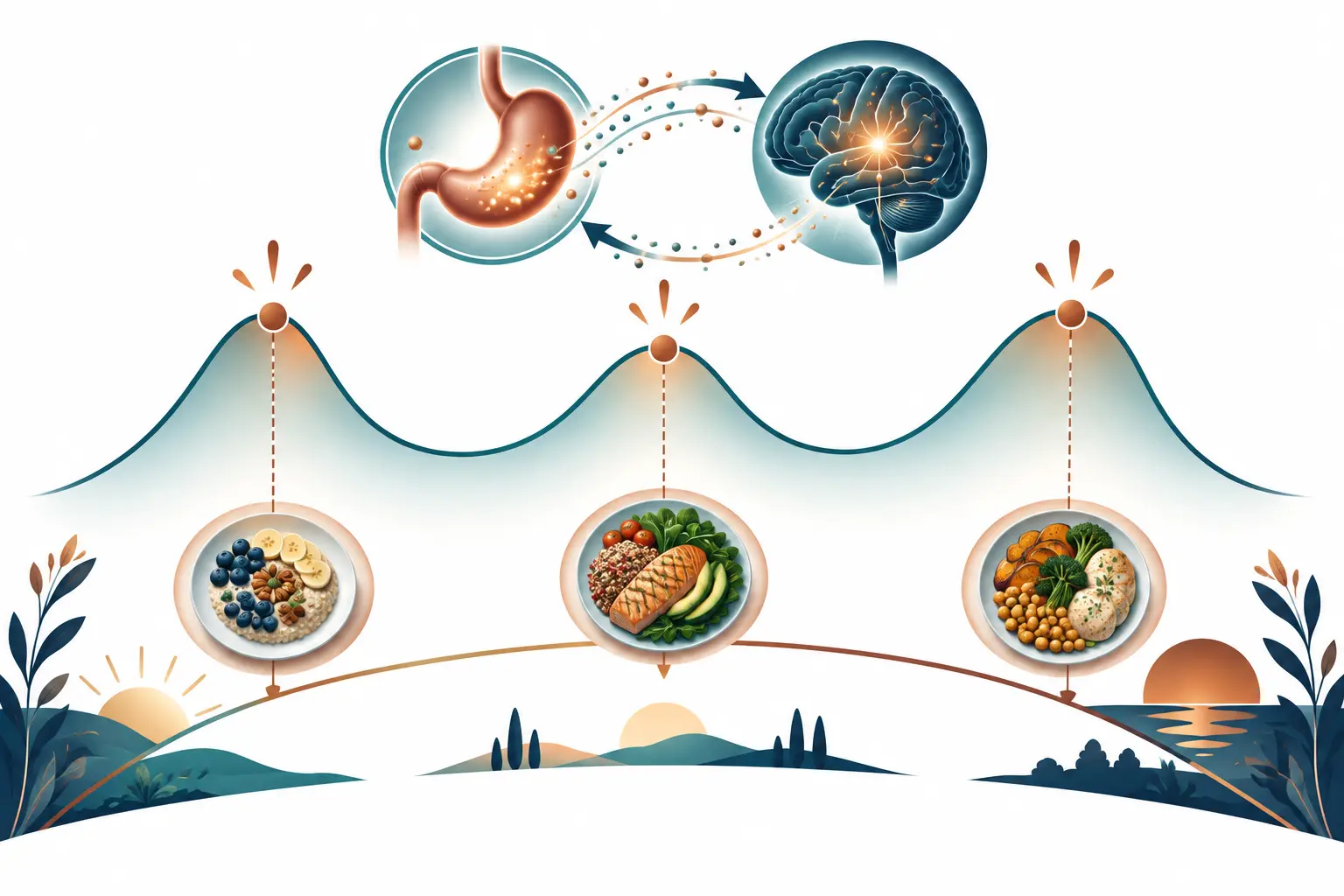
Meal spacing: neither constant grazing nor heroic gaps
Short gaps can create continuous exposure to food cues and make portions difficult to distinguish. Very long gaps can produce intense hunger and fast, less deliberate eating. Neither pattern is inherently wrong; the useful spacing is the one that supports complete meals, nutrition, work, training, and control.
Start with clear eating occasions. Many adults prefer three meals, while others need one planned snack because of a long shift, training, medication, or smaller tolerated meals. Avoid adding snacks by rule. Give each one a defined job and check whether it reduces later overeating rather than merely adding energy.
The two-week hunger-window experiment
- Map three days. Rate hunger from 0 to 10 before meals and two hours afterward; record sleep, meal time, and unplanned eating.
- Circle one repeated problem window. Choose late morning, mid-afternoon, post-work, or late evening.
- Change one upstream variable. Move the previous meal by 30–60 minutes, strengthen it with protein and fiber, or add one planned snack.
- Hold the rest steady. Do not simultaneously cut calories, start fasting, and add hard training.
- Review the complete day. Compare hunger, intake, concentration, training, digestion, and sleep after seven to fourteen ordinary days.
Example: the 4 p.m. vending-machine pattern
Leah eats a light salad at noon and becomes intensely hungry at 4 p.m. She first blames “low willpower” and considers skipping dinner. Instead, she adds a clear protein source, beans, and a measured dressing to lunch while keeping its time unchanged. Her afternoon hunger falls, showing that composition—not necessarily timing—was the first lever.
If hunger remained high, the next controlled test would be moving lunch later or planning a snack such as yogurt and fruit. She would judge the change by afternoon control and the full day's intake, not tomorrow morning's scale.
Earlier eating may help some people, but context decides
Controlled research on earlier time-restricted eating suggests appetite can change even when weight loss is not the immediate explanation. Yet protocols are often tightly supervised, short, and unlike family or shift-work schedules. An early final meal can reduce evening opportunities to eat, but it may also clash with social life or produce bedtime hunger.
A later schedule is not automatically harmful if it supports adequate nutrition and controlled intake. Shift workers need strategies anchored to wake time, sleep opportunity, and safe work rather than generic instructions to stop eating at 7 p.m.
Guardrails against rigid timing
Do not delay food through dizziness, medication-related risk, or a demanding session merely to protect a fasting window. Diabetes medicines, pregnancy, gastrointestinal disease, eating-disorder history, and some athletic goals require individualized advice. Children and adolescents should not receive adult fasting rules from a weight-loss page.
If timing creates preoccupation, repeated rebound eating, social isolation, or worsening sleep, loosen the rule. A schedule is successful when it reduces friction and supports the wider plan—not when it wins a streak counter.
Review the result without creating another rigid rule
Separate timing from total energy when reading your result. Moving dinner earlier may remove a snack because the kitchen closes sooner, but it can also move the same food into dinner. Both are legitimate outcomes; only the first changes intake. Likewise, a shorter eating window can reduce decisions for one person and compress large meals into an uncomfortable period for another.
Use a simple decision rule after the experiment. Keep the schedule if average hunger is manageable, meals remain nutritionally complete, unplanned eating falls, and sleep and training are at least as good. Revise it if one hunger window worsens. Abandon it if it produces repeated loss of control, symptoms, or social disruption. Timing earns its place through function, not through a fashionable label.
Write the chosen schedule as a range rather than a deadline: for example, lunch between noon and 1 p.m. and a snack only when the afternoon gap requires it. Ranges tolerate meetings and travel. Reassess after schedule, training, medication, or sleep changes instead of defending a pattern that no longer serves its original purpose.
Where Fat Burn Active fits
Fat Burn Active is optional and cannot repair a meal pattern that repeatedly leaves you hungry. A stimulant sensation or temporary appetite change is not proof of fat loss, and ingredient studies do not establish the effect of a finished multi-ingredient product. Protect food quality, sleep, movement, and an appropriate calorie target first. Never use a capsule to postpone food when genuine hunger is repeatedly disrupting the plan.
Treat Fat Burn Active as an optional addition, not a substitute for How Meal Timing Affects Hunger. Review its listed ingredients and limitations in our product analysis. If the evidence, warnings, and cost fit your decision, verify the current formula and purchase options. We may earn a commission.
Frequently asked questions
Should hunger be eliminated during weight loss?
No. Mild hunger before a meal can be normal. The concern is persistent, intense, or disruptive hunger that repeatedly defeats the plan or accompanies dizziness, weakness, loss-of-control eating, or inadequate nutrition.
Does one difficult day prove the schedule is wrong?
No. Compare several ordinary days and include sleep, activity, meal composition, stress, and menstrual-cycle context where relevant.
Should I copy another person's meal times?
Not automatically. Work hours, medication, training, culture, family meals, and appetite differ. Test a schedule against your complete day.
When is professional help appropriate?
Seek qualified help for recurrent binge episodes, purging, severe restriction, fainting, rapid unexplained appetite change, pregnancy-specific needs, diabetes medication questions, or a distressing relationship with food.
Sources
- Early Time-Restricted Feeding and Appetite
- Early Time-Restricted Feeding Trial
- Meal Timing and Anthropometric Outcomes Review
- NIDDK: Choosing a Safe and Successful Weight-Loss Program
Sources reviewed September 14, 2026. This article is general educational information, not medical advice, diagnosis, or treatment.