Why the 400-calorie label can mislead
Breakfast has to work within your full day. For some people, a smaller first meal is convenient and leaves room for a larger lunch. For others, 400 calories is too little for their appetite or activity and leads to grazing an hour later. Weight loss is not caused by a special breakfast threshold. What matters is a sustainable overall eating pattern with adequate nutrition, sleep and activity. If you skip breakfast and feel fine, there is no need to add one only because a list of recipes says so.
Numbers on recipe sites usually assume particular brands, serving sizes and cooking methods. A tablespoon of nut butter rather than a heaped spoon, plain yogurt rather than sweetened, and a spray or measured teaspoon of oil rather than a generous pour can change the calculation. For a reliable estimate, read each package and use USDA FoodData Central for foods without labels. Treat the examples below as ingredient blueprints, not laboratory-tested calorie totals.
Five fast breakfast blueprints
1. Yogurt, berries and oats
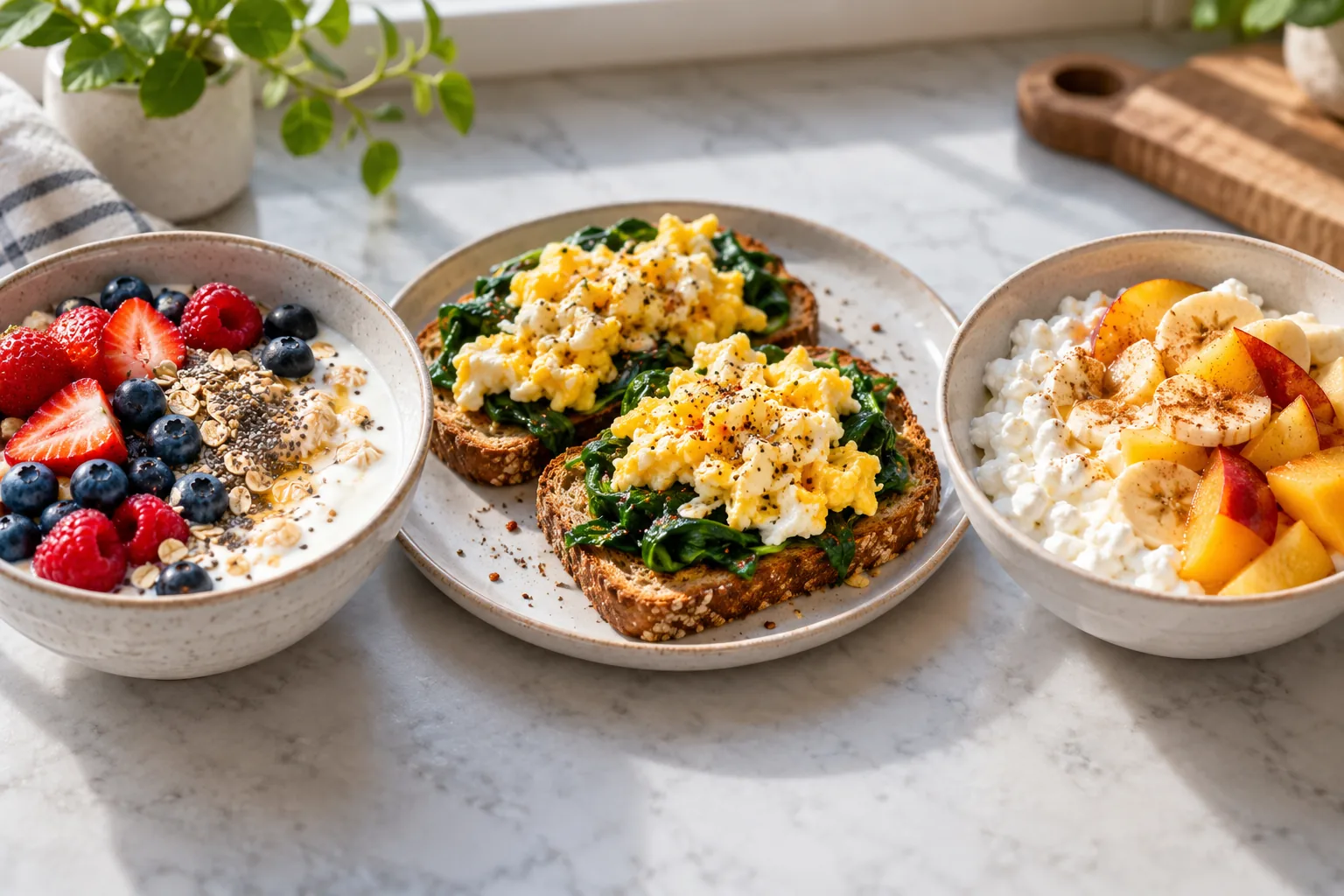
Start with a single serving of plain Greek yogurt or a protein-rich soy alternative. Add berries and a measured small portion of oats. Cinnamon or a little chopped nut can supply flavor and texture. Check your brand: yogurt protein and energy vary widely, and sweetened varieties may use much of the budget before toppings. If you need a larger meal, increase the yogurt or add a boiled egg rather than hiding hunger behind a strict number.
2. Egg and vegetable toast
Cook eggs with spinach, tomato, or mushrooms and place them on whole-grain toast. A nonstick pan can limit the amount of oil needed; measure oil if you use it. One egg with extra egg whites is an option for more protein at a similar energy budget, but whole eggs fit too. If vegetables taste bland, add herbs, salsa, pepper, or a small amount of cheese after checking the portion.
3. Cottage cheese and fruit bowl
Use a portion of cottage cheese, sliced peach or berries, and a few seeds or crunchy cereal. Choose a variety you enjoy and check sodium if that matters to you. This is a five-minute meal with no cooking. A large handful of granola can quietly change the calorie total; use a spoon or read the label rather than guessing. If dairy is not suitable, choose a protein-rich substitute instead of assuming any plant yogurt has the same protein.
4. Tofu scramble wrap
Warm crumbled tofu with turmeric, pepper, mushrooms and spinach. Put it in a small tortilla with salsa. The tortilla, oil and tofu quantity determine the final energy value, so check those first. Leftover vegetables make this a useful batch-cook breakfast. If you want a heartier wrap, let the number go above 400 and adjust the rest of the day as appropriate; the recipe is a tool, not a test of discipline.
5. Overnight oats with a protein anchor
Mix a measured portion of oats with plain yogurt or milk, refrigerate overnight, and add fruit in the morning. The protein source matters: oats and almond milk alone may not provide the same protein as yogurt, dairy milk, or fortified soy milk. A scoop of powder is optional and may change texture and calories. Check food labels and use a container sized for the intended serving, not a giant jar that turns one portion into two.
Make a real under-400 calculation
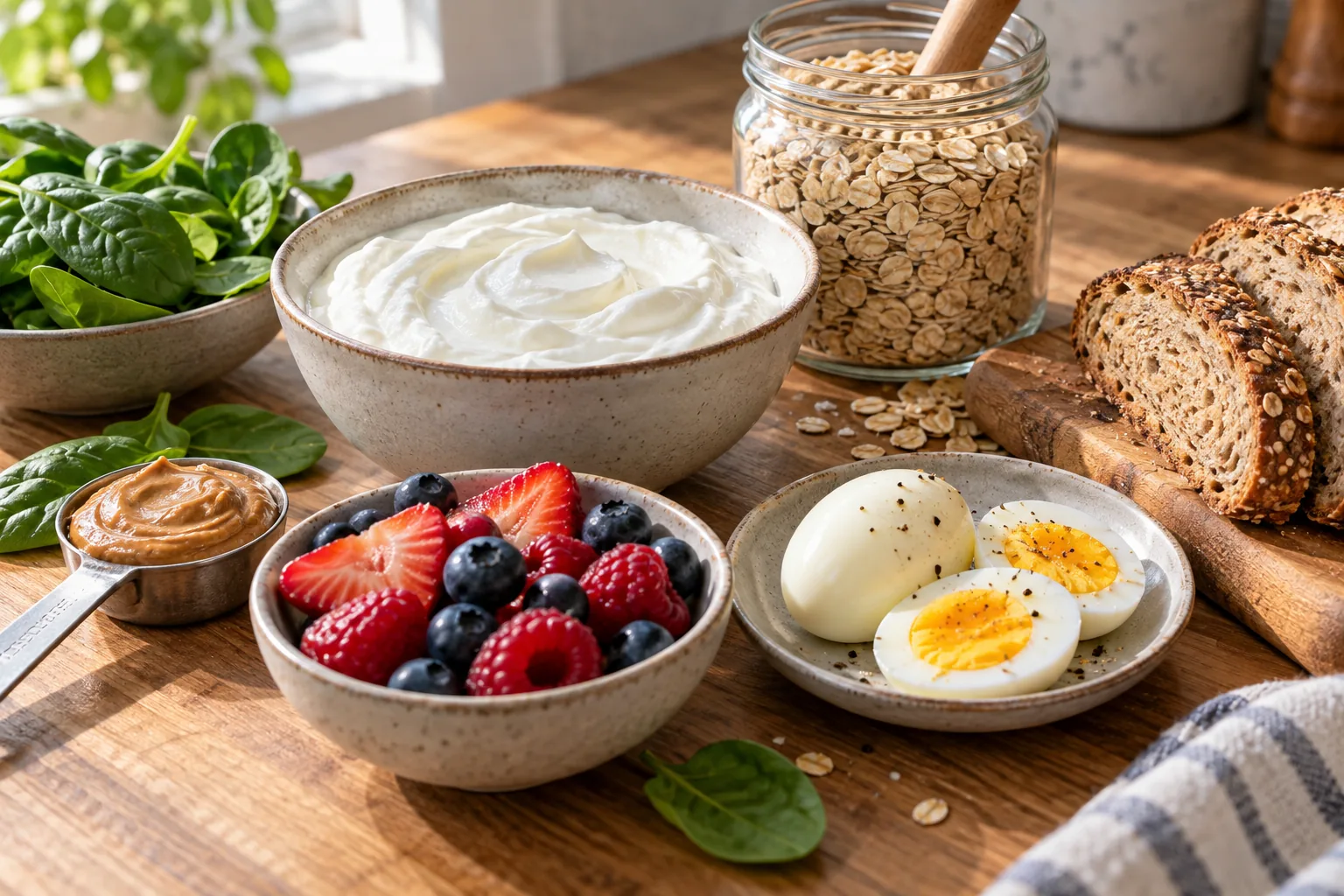
- Write down the exact brand and serving of every ingredient, including oil, dressing, milk, sweeteners, nut butter and drinks.
- Read the calories per serving on each package; for fresh food, consult a nutrient database and weigh or estimate a realistic portion.
- Add the values for the entire plate. Do not subtract an arbitrary amount because the meal is “healthy” or “high protein.”
- If the total is above 400, decide whether the larger meal is actually appropriate for you. If the 400 target matters, reduce an energy-dense extra while keeping the food satisfying.
For example, the same yogurt bowl may fit under the cap with plain yogurt, berries and a little oats, but exceed it with sweetened yogurt, granola, a large nut portion and a latte. This is a portion comparison, not a ban on nuts or coffee. The label of the exact product is more useful than a generic number copied from someone else's recipe.
Here is a calculation with illustrative label values only: yogurt 140 calories, berries 45, oats 110, and seeds 55 sum to 350. A 90-calorie sweetened drink would move that breakfast to 440. Your products may differ, so the example demonstrates the addition, not the nutrient value of every yogurt or berry serving. If your verified sum is 405, a modest adjustment may fit the headline; if the smaller serving would leave you hungry, choose the larger breakfast.
Batch the work for busy mornings. Wash fruit once, put oats in portioned containers and keep a protein food ready in the fridge. Heat the egg or tofu option thoroughly, then add vegetables or fruit just before eating. A five-minute breakfast you actually prepare has more value than an elaborate low-calorie recipe you abandon on the second day.
What if you are hungry before lunch?
Do not respond by cutting breakfast again. Compare your meal with the high-protein breakfast guide and ask whether it had enough protein, fiber and total food for your morning. You may prefer a 450- or 500-calorie breakfast and a different allocation later. Another option is a planned snack rather than unplanned grazing. A controlled trial found a protein-rich breakfast improved reported satiety but did not necessarily reduce total daily energy intake; treat your own pattern as the test.
Morning exercise, early work, medication, and individual appetite can shift the answer. If your schedule is irregular, a portable yogurt, egg sandwich or tofu wrap may be more useful than a perfect recipe that you never make. Repeating one breakfast you enjoy is fine if the rest of your eating pattern supplies variety.
Supplements do not replace breakfast
Fat Burn Active cannot turn a low-nutrient breakfast into a balanced meal or guarantee less hunger. If you are considering it for your broader weight-loss plan, examine the product's evidence and stimulant cautions after food and routine are addressed. A meal you can repeat is the primary decision here.
Frequently asked questions
Is 400 calories the best breakfast for weight loss?
No. It is a recipe constraint, not a universal recommendation. Daily needs and preferred meal distribution differ.
Must breakfast contain 30 grams of protein?
No fixed amount suits everyone. Distribute protein across your day according to your needs and food preferences.
Can coffee count as breakfast?
Coffee may fit alongside breakfast, but it does not supply the range of nutrients a balanced meal provides. Count milk, syrups and other additions if you track energy.
Sources
- USDA FoodData Central: Nutrient data
- NIDDK: Portion and serving sizes
- Controlled breakfast trial: Satiety and daily energy intake
- CDC: Healthier meals and snacks
- NIDDK: Sustainable weight-management eating
Sources reviewed September 26, 2026. Calorie values depend on your actual ingredients and portions; this is general educational information.