
Appetite control is different from boosting metabolism
Eating breakfast does not switch on a dormant metabolism. Food has a thermic effect whenever it is eaten, and randomized evidence does not support prescribing breakfast to everyone as an automatic weight-loss strategy. Our guide Does Eating Breakfast Boost Metabolism? examines that claim directly.
Here the outcome is practical: does a planned morning meal reduce disruptive hunger or unplanned intake later? A person can benefit on that measure without breakfast having a special fat-burning property. Another can skip comfortably and still meet energy, protein, fiber, and micronutrient needs.
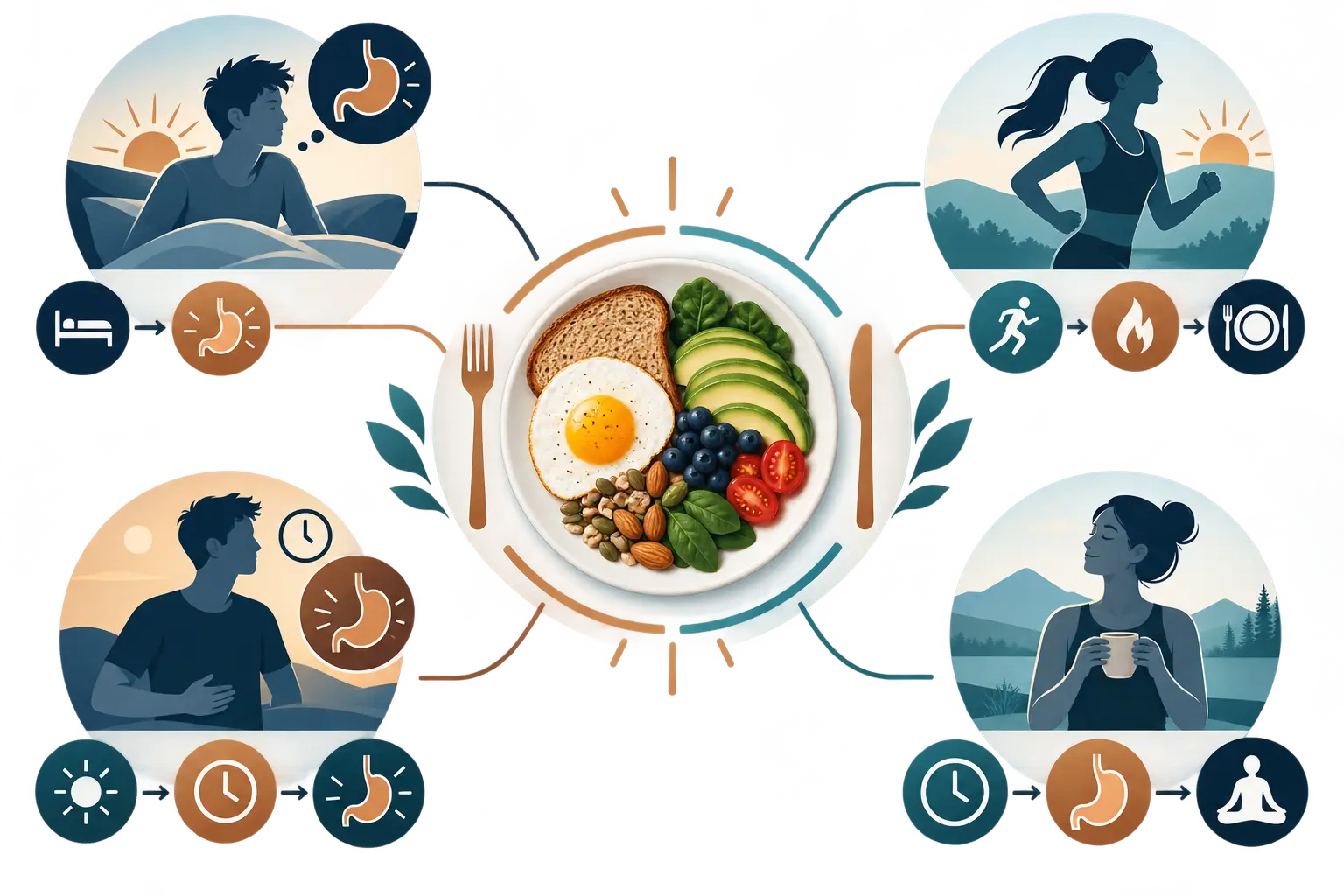
Four profiles that may benefit
These are reasons to test breakfast, not proof it will reduce daily intake. The meal still has to replace later food or improve control enough to justify its energy.
If a smaller morning meal suits your schedule, try the five under-400 breakfast structures while judging fullness across the day.
Who may not need breakfast
Someone who has little morning hunger, works well before the first meal, and does not compensate later may prefer to eat at midday. Forcing breakfast can create an extra eating occasion rather than solving a problem. Cultural patterns and shift work also make “morning” an unreliable universal label.
Do not interpret comfort with delayed eating as moral superiority. Likewise, waking hungry is not metabolic damage. The relevant comparison includes nutrition, symptoms, concentration, exercise, and the entire day's intake.
Build a breakfast that can actually test satiety
A pastry or sweet drink alone provides a different test from a meal containing protein, fiber-rich carbohydrate, fruit or vegetables, and an appropriate amount of fat. Options include yogurt with oats and berries, eggs with whole-grain toast and fruit, tofu with vegetables and rice, or beans with a culturally familiar staple.
Choose a portion that addresses hunger without becoming an automatic feast. Liquid-only meals may be less satisfying for some people. If time is the barrier, prepare a repeatable option rather than relying on an ideal recipe that appears only on weekends.
A fair two-week breakfast crossover
- Week A: eat the same balanced breakfast within a consistent period after waking.
- Week B: delay the first meal while keeping sleep, lunch quality, caffeine, and training as comparable as practical.
- Record: hunger at 10 a.m. and 4 p.m., unplanned snacks, concentration, workout quality, and daily intake.
- Compare: use medians or typical days, not one celebration or sleepless night.
- Choose: retain breakfast only if its benefit survives ordinary workdays and does not simply add calories.
Example: breakfast helps, but not for the advertised reason
Omar skips breakfast to save calories, then buys a large snack during a stressful commute and arrives at lunch ravenous. He tests Greek yogurt, fruit, and oats prepared the night before. The meal does not accelerate his metabolism; it creates a reliable stopping point and reduces the emergency purchase.
His colleague is not hungry until 11 a.m. and eats a satisfying early lunch without later compensation. Adding the same breakfast makes her uncomfortable and increases daily intake. Both results can be valid because the baseline problems differ.
Situations that need individual advice
People using insulin or medicines that can cause low blood glucose should not change meal timing without appropriate clinical guidance. Pregnancy, morning nausea, gastrointestinal disease, eating-disorder history, and high-volume athletic training can also change the decision. Medication instructions take priority over an online fasting routine.
Persistent morning nausea, unexplained appetite loss, fainting, or recurrent loss-of-control eating deserves assessment. Breakfast is a meal option, not a treatment for every cause of appetite dysregulation.
Review the result without creating another rigid rule
Interpret appetite ratings alongside behavior. Feeling slightly less hungry at lunch matters only if it improves choices, portions, comfort, or concentration. A breakfast that suppresses hunger because it is extremely large may not improve the day's energy balance. Conversely, a modest breakfast can be valuable even when lunch size is unchanged if it supports safe medication use or training.
Keep caffeine stable during the crossover. Coffee can alter appetite temporarily, and sweetened coffee may function as part of breakfast even when the person reports “skipping.” Record liquid calories, commute snacks, and bites while preparing food. At the end, classify the result as helpful, neutral, or costly. Helpful means the meal solves a named problem. Neutral means the day is similar and preference can decide. Costly means it adds discomfort, effort, or intake without a meaningful benefit.
Re-test when circumstances change. A schedule that works during remote work may fail during early shifts, pregnancy, endurance training, or a period of poor sleep. Breakfast is a flexible tool, not an identity.
Before deciding, check diet quality as well as appetite. Removing breakfast may also remove fruit, whole grains, dairy or fortified alternatives, while adding it may improve those foods without changing later intake. Those nutritional effects matter even when the scale is unchanged. Build the final choice around foods you can afford and prepare repeatedly. A breakfast plan that depends on a long recipe, specialty ingredients, or an early alarm may fail because of logistics rather than physiology. Keep a portable backup for rushed mornings and avoid treating an occasional skipped meal as a broken program.
Where Fat Burn Active fits
Fat Burn Active is optional and cannot repair a meal pattern that repeatedly leaves you hungry. A stimulant sensation or temporary appetite change is not proof of fat loss, and ingredient studies do not establish the effect of a finished multi-ingredient product. Protect food quality, sleep, movement, and an appropriate calorie target first. Never use a capsule to postpone food when genuine hunger is repeatedly disrupting the plan.
A supplement is not required to benefit from Breakfast and Appetite Control: Who May Benefit?. If your foundations are already in place, use the independent Fat Burn Active review to judge whether the formula has a useful optional role. If it fits your expectations and stimulant tolerance, check current product details and ordering terms. We may receive a commission.
Frequently asked questions
Should hunger be eliminated during weight loss?
No. Mild hunger before a meal can be normal. The concern is persistent, intense, or disruptive hunger that repeatedly defeats the plan or accompanies dizziness, weakness, loss-of-control eating, or inadequate nutrition.
Does one difficult day prove the schedule is wrong?
No. Compare several ordinary days and include sleep, activity, meal composition, stress, and menstrual-cycle context where relevant.
Should I copy another person's meal times?
Not automatically. Work hours, medication, training, culture, family meals, and appetite differ. Test a schedule against your complete day.
When is professional help appropriate?
Seek qualified help for recurrent binge episodes, purging, severe restriction, fainting, rapid unexplained appetite change, pregnancy-specific needs, diabetes medication questions, or a distressing relationship with food.
Sources
- Breakfast and Weight Change: Systematic Review
- Bath Breakfast Project
- Breakfast, Energy Balance and Health Review
- Dietary Guidelines for Americans
Sources reviewed September 14, 2026. This article is general educational information, not medical advice, diagnosis, or treatment.