
The thermic effect follows food, not a magic clock
Digesting, absorbing and processing food requires energy. Protein generally has a higher thermic effect than carbohydrate or fat. If total calories and macronutrients are the same, dividing them into breakfast versus later meals mainly shifts when this cost occurs rather than creating extra energy from nothing.
Acute studies may detect different glucose, activity or substrate responses in the morning. Those outcomes do not automatically prove greater long-term fat loss.
What randomized evidence says
A systematic review of randomized trials found that recommending breakfast was not a reliable weight-loss strategy and that breakfast groups often consumed more total daily energy. Trials were generally short and varied, so the conclusion is not that breakfast causes weight gain. It shows that a universal metabolic benefit is unsupported.
Observational studies linking breakfast with lower weight can be confounded by sleep, smoking, activity and overall diet quality.
When breakfast may help
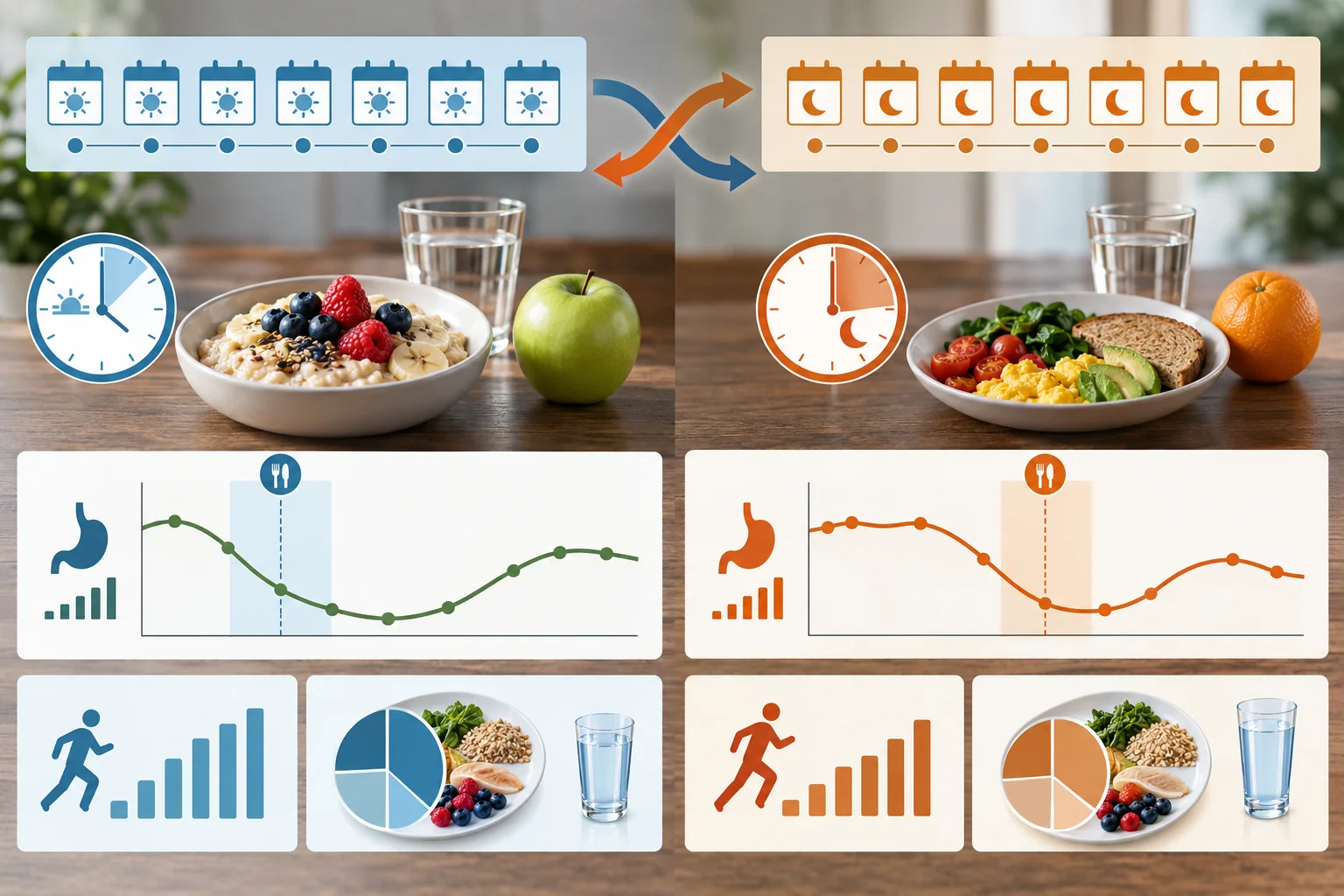
Breakfast may suit someone who wakes hungry, trains early, needs medication with food, or tends to overeat later after skipping. A meal with protein, fiber-rich carbohydrate, fruit or vegetables and an appropriate fat portion can provide better satisfaction than a pastry and sweet drink.
Skipping may suit someone without morning hunger who still meets nutrition needs and does not compensate later. Diabetes medicines, pregnancy, eating-disorder history and other conditions require individualized timing.
Run a breakfast crossover
For one week, use a consistent balanced breakfast; for another comparable week, delay the first meal while keeping total food quality and sleep similar. Track hunger, afternoon snacking, training, concentration and daily intake. The winning pattern is the one that improves the complete day—not the one marketed as a metabolic reset.
How to measure a metabolism claim
Separate resting metabolic rate from total daily energy expenditure. Resting expenditure covers basic functions under standardized rest; total expenditure also includes food processing, planned exercise and all other movement. A wearable estimate is not a metabolic-chamber measurement, and a calculator prediction is not an individual diagnosis.
Ask whether a study adjusted for body size and composition, whether participants were losing weight or weight-stable, and whether the outcome was measured or estimated. A statistically detectable difference may be too small to explain a large weight change. Associations cannot prove that changing one behavior will cause the same result.
For a practical review, track comparable weekly weight averages, waist, intake, steps or active time, training, sleep and hunger for two to four weeks. If several measures remain flat, change one controllable input. Do not infer “metabolic damage” from a few scale readings obscured by water, glycogen or digestion.
Put the size of an effect in context
A daily difference only becomes meaningful after it is compared with measurement error and real-world behavior. Food labels permit rounding, home portions drift, restaurant recipes vary and wearable calorie estimates can be substantially wrong for an individual. A claimed 30- or 50-calorie metabolic advantage can therefore be smaller than the uncertainty in one snack or serving. That does not make physiology irrelevant; it means the decision should reflect scale.
Translate a proposed mechanism into an outcome question: did participants actually expend more energy across the full day, eat less over time, preserve lean tissue or lose more fat than the comparison group? Then check duration. A response measured for three hours after one meal cannot establish a six-month weight result. Also distinguish relative figures from absolute ones: a large percentage change in a small component of expenditure may still be a small number of calories.
Individual variation is expected. Starting body size, sex, age, lean mass, recent dieting, sleep, temperature, medicines and measurement conditions can all influence results. A group average is a useful estimate, not a promise. If your observed trend differs, first verify the observation under consistent conditions instead of assuming you are metabolically exceptional.
A decision rule for the next four weeks
Begin with a baseline week rather than an immediate cut. Record morning weights under similar conditions, calculate a seven-day average, note waist once, and capture ordinary meals without trying to impress the log. Keep a realistic step or movement target and repeatable training schedule. In weeks two through four, hold the main plan steady enough to learn from it.
At the review, ask three questions. Is the weight or waist trend moving? Was the plan followed often enough to test it? Did hunger, sleep, mood or performance deteriorate? If progress and wellbeing are acceptable, continue. If adherence was inconsistent, simplify the plan. If adherence was consistent and the trend is flat, adjust one lever modestly—such as a recurring calorie source or daily walking—and reassess. Large simultaneous changes hide which lever worked and increase the risk of an unsustainable response.
What to do instead of chasing a metabolic hack
Use a sustainable energy deficit, protein-rich meals, fiber-rich foods, resistance training and regular movement appropriate to your health. Protect sleep and preserve activities you can repeat after the diet. These actions influence intake, expenditure, function and adherence even when they do not create a dramatic resting-metabolism boost.
Pregnancy, adolescence, frailty, eating-disorder history, thyroid symptoms, diabetes treatment, unexplained fatigue or rapid weight change require individualized advice. Seek urgent care for chest pain, fainting, severe breathlessness or other alarming symptoms rather than increasing exercise or stimulants.
Keep a decision record
Document the reason for each adjustment and the date it begins. A short decision log prevents normal daily noise from triggering repeated cuts, preserves useful comparisons and makes the next review more informative. Record outcomes as ranges and trends rather than declaring success or failure from one day.
Where Fat Burn Active fits
Fat Burn Active directions may mention use before a meal, but that does not make breakfast metabolically mandatory. Fat Burn Active is optional. Its current official page lists at least 120 mg caffeine per serving from caffeine anhydrous and guarana, unquantified additional green-tea caffeine, and bitter-orange extract standardized to 6 mg synephrine. Feeling warmer or more alert is not a measurement of resting metabolism or long-term fat loss.
Once the practical steps in Does Eating Breakfast Boost Metabolism? are working, decide whether an optional supplement adds enough value. Start with the Fat Burn Active review; if the formula and limitations are acceptable, see current availability and official ordering details. We may receive a commission.
Frequently asked questions
Can metabolism be permanently boosted?
No food, meal schedule or legal supplement has been shown to create a large permanent metabolic increase. Body composition and activity matter, but effects must be kept in scale.
Does a plateau prove slow metabolism?
No. First confirm the trend, intake, movement and fluid-related scale noise.
When should I seek medical advice?
Ask a clinician about persistent unusual fatigue, cold intolerance, major menstrual changes, rapid unexplained weight change or medicine concerns.
Sources
- Breakfast and weight change: systematic review
- Bath Breakfast Project
- CDC: Healthy Eating
- NIH ODS: Weight-Loss Supplements
Sources reviewed September 13, 2026. This article is general educational information, not medical advice, diagnosis, or treatment.