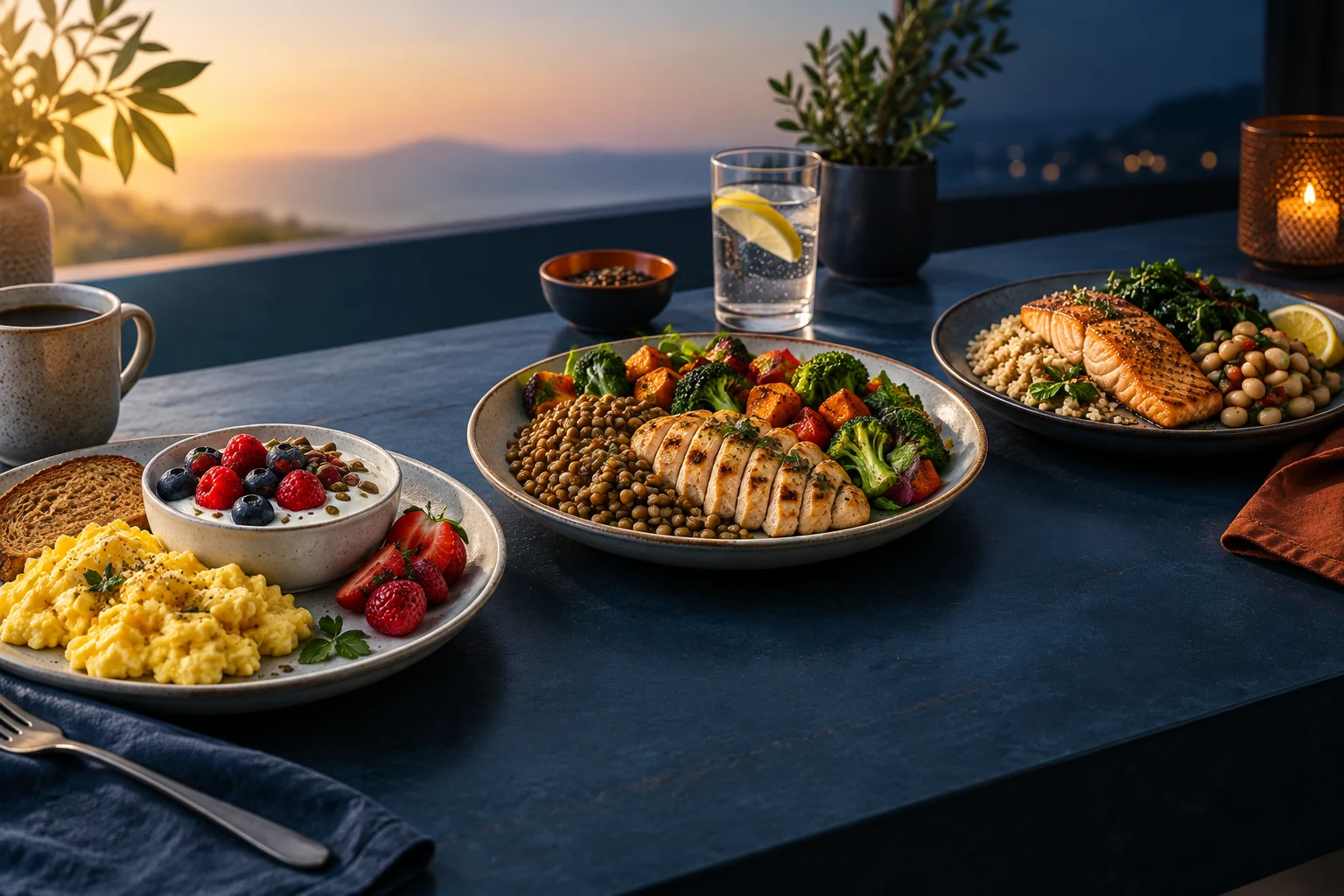
Why the breakfast-versus-dinner debate is too simple
A breakfast trial can show greater fullness under controlled conditions without proving that everyone should move dinner protein to the morning. Small samples, short interventions, fixed menus, different protein doses, and subjective appetite ratings limit broad conclusions. People also differ in wake time, work, culture, gastrointestinal comfort, and exercise schedule.
Skipping breakfast is not automatically harmful, and eating dinner is not automatically fattening. Problems arise when the pattern produces excessive hunger, low diet quality, poor sleep, or an energy intake that exceeds needs. The useful comparison must hold calories and daily protein reasonably steady.
If breakfast protein is simply added to an unchanged dinner and snacks, any appetite benefit may be offset by the added calories. A fair test redistributes or replaces food.
What controlled evidence suggests
In a small controlled feeding trial during energy restriction, extra protein at breakfast produced greater reported fullness than extra protein at dinner. That is an interesting signal, not a universal verdict. The study involved nine men and short trial periods, so it cannot establish long-term weight-loss superiority for every population.
Other meal-timing research often examines total calories, breakfast consumption, or time-restricted eating rather than protein placement alone. These questions should not be merged. Earlier energy intake may help some people, but adherence and total intake remain decisive.
The evidence supports a reasonable experiment: when daytime hunger is a barrier, move a meaningful portion of protein earlier and measure what happens.
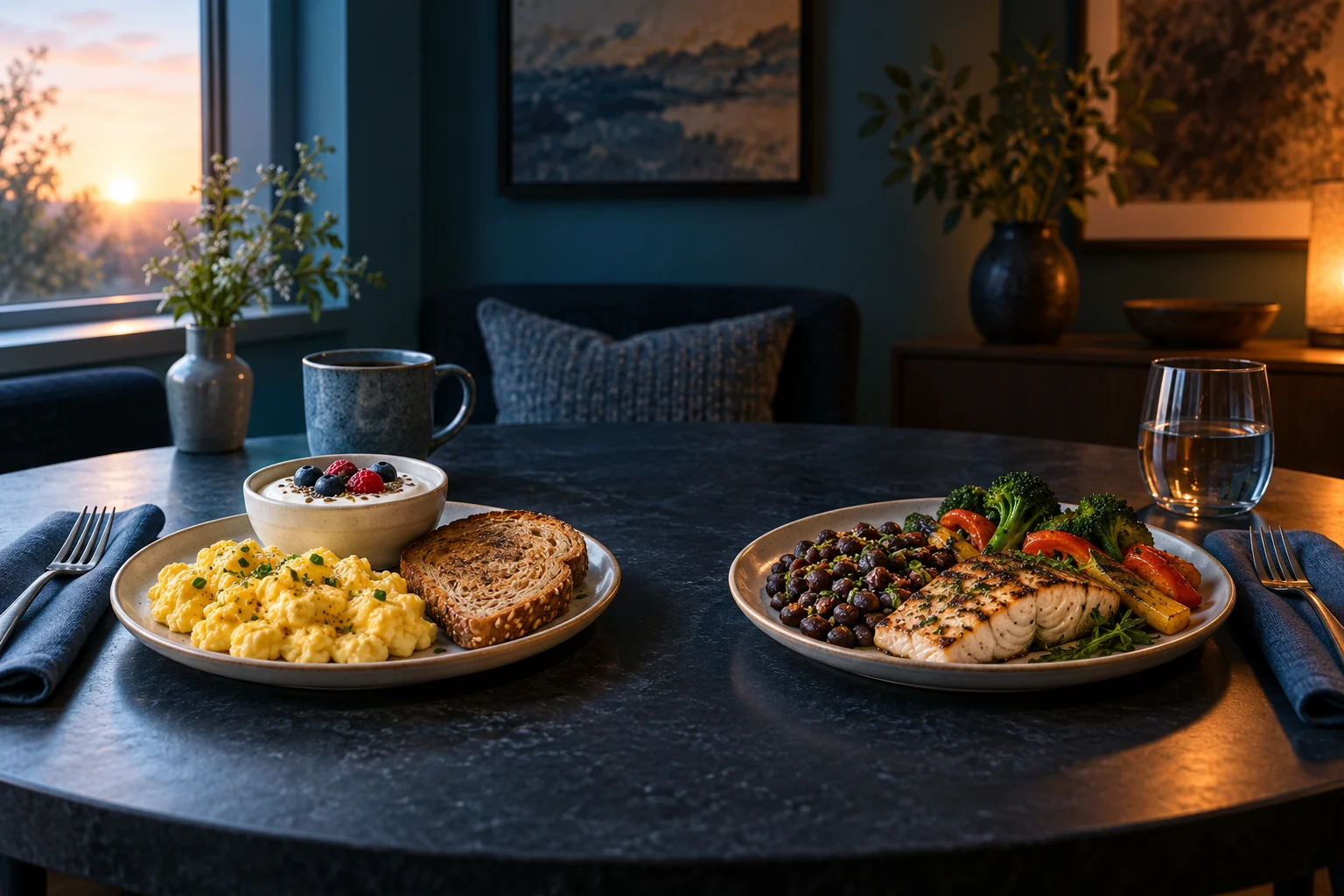
When breakfast protein is the better tool
Breakfast is a strong candidate when a pastry, sweet drink, or no meal is followed by intense hunger, office snacking, or a very large lunch. Practical anchors include eggs with vegetables, Greek yogurt with berries, cottage cheese and fruit, tofu scramble, beans, fish, or leftovers from dinner.
Build a complete meal rather than consuming isolated protein. Add fiber-rich carbohydrate or produce and enough fat for satisfaction. A shake alone may be convenient, but a chewable mixed meal can provide more volume and sensory exposure.
People who are not hungry early can start smaller or place the first meal later. Nausea from forcing breakfast is not a sign of dietary success.
When dinner deserves priority
Dinner matters when evening hunger, family meals, post-training recovery, or nighttime grazing is the main difficulty. A clear protein source plus vegetables, a suitable carbohydrate, and measured fat can make the meal more satisfying than a tiny “diet dinner” followed by repeated snacks.
Late eating may aggravate reflux or disturb sleep for some people, especially with very large, rich meals. Adjust size and timing to symptoms rather than blaming protein itself. People who train in the evening may reasonably place a substantial share of protein at dinner.
Do not reduce dinner protein so aggressively that total intake falls below an appropriate range. Redistribution should improve the whole day, not move the problem.
Three workable patterns
None is inherently superior. The right pattern meets daily needs, supports the schedule, controls hunger, and avoids accidental calorie additions.
Compare equal-energy patterns. For one week keep a familiar distribution; the next week move part of dinner protein and calories to breakfast. Record unplanned snacks, satisfaction, reflux, training, and bedtime hunger. A mixed result is valid: moderate protein at both meals may beat either extreme.
Keep the comparison honest
Use the same daily protein and approximately the same calories in both patterns. Otherwise, a larger breakfast may appear better because it simply contains more food. Include drinks, cooking fats, sauces, and snacks. Compare meals you would realistically repeat, not a plain shake against a restaurant dinner.
Morning appetite can adapt gradually, so do not judge a new breakfast from one day. Conversely, do not force food through persistent nausea. The useful outcome is not only fullness immediately after eating. Look at concentration, later grazing, lunch size, evening hunger, sleep comfort, total intake, and the effort required to maintain the pattern.
Use the result, not the diet label
If breakfast protein reduces uncontrolled snacking while calories stay stable, keep it. If a substantial dinner supports evening training and prevents grazing without disturbing sleep, keep that instead. When both work, choose the pattern that fits family meals, work, culture, and cost.
Do not describe a neutral response as failure. It may show that protein timing was never the main constraint. The next investigation could be total energy, fiber, sleep, stress, food availability, or the size of the calorie deficit. Change one variable at a time so the result remains interpretable.
Use a controlled two-week experiment
- Record three ordinary days before changing anything.
- Choose one recurring meal or snack where the question actually matters.
- Change only the protein amount, timing, or format being tested.
- Keep daily calories, activity, and sleep reasonably consistent.
- Rate hunger before the next meal, digestion, satisfaction, training, and convenience.
- Compare weekly average weight and waist, not one scale reading.
Write down what the new choice replaced. If it simply adds calories to an unchanged day, the test cannot show whether protein improved the weight-loss plan. Keep the change only when it solves a practical problem without creating a larger one.
Where Fat Burn Active fits
The direct solution is meal redistribution; a thermogenic cannot compensate for an unbalanced breakfast or dinner.
Fat Burn Active is an optional stimulant-oriented thermogenic supplement. It does not provide dietary protein, replace a meal, correct an amino-acid gap, or override energy balance. A temporary change in alertness, appetite, warmth, sweating, or heart rate does not prove fat loss, and evidence for an isolated ingredient is not proof for the finished formula at the amount sold.
A supplement is not required to benefit from Protein at Breakfast vs Dinner: Which Is Better?. If your foundations are already in place, use the independent Fat Burn Active review to judge whether the formula has a useful optional role. If it fits your expectations and stimulant tolerance, check current product details and ordering terms. We may receive a commission.
Safety and individual context
Persistent loss of appetite, severe reflux, recurrent night eating with distress, hypoglycemia, or dietary restriction linked to an eating disorder deserves professional assessment rather than stricter timing.
Pregnancy or breastfeeding, adolescence, frailty, eating-disorder recovery, diabetes treatment, and significant kidney, liver, cardiovascular, gastrointestinal, or metabolic disease require individualized advice. Seek care for rapid unintended weight change, swelling, persistent vomiting, fainting, marked weakness, major bowel changes, or symptoms suggesting allergy. Do not change prescribed treatment or use a supplement as a diagnostic test.
Frequently asked questions
Does breakfast protein burn more fat?
No. It may improve fullness or later choices for some people, but fat loss still depends on the sustained energy pattern.
Is eating protein late bad?
Not inherently. Meal size, reflux, sleep, total calories, and individual tolerance matter.
Should I split protein equally?
Not exactly. Avoiding an extreme dinner-heavy pattern may be useful, but meals can remain flexible.
Sources
- Breakfast protein and fullness trial
- Systematic review of meal timing outcomes
- ISSN position stand on nutrient timing
- Dietary Guidelines for Americans
Sources reviewed September 8, 2026. This article is general educational information, not medical advice, diagnosis, or treatment.