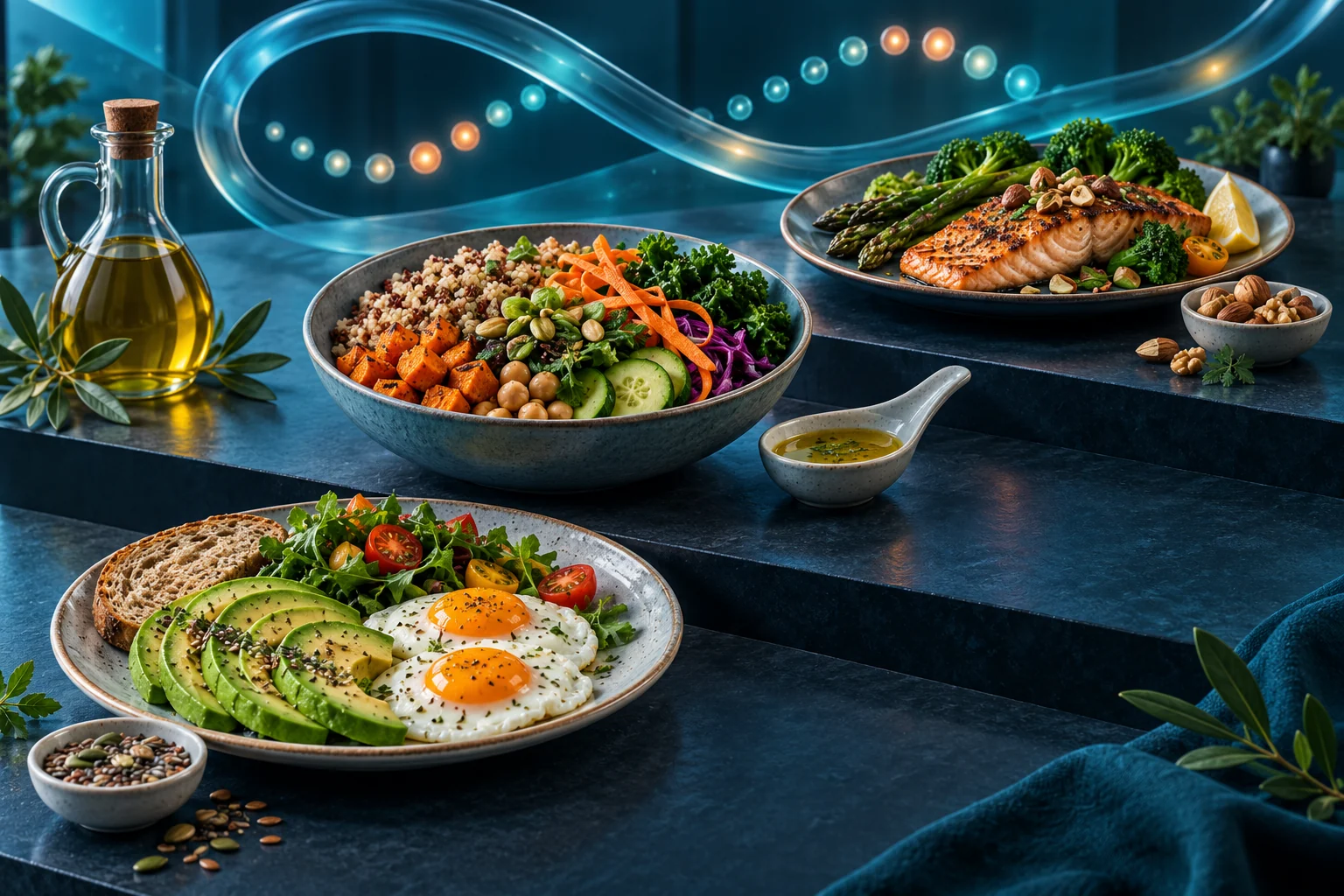
The clock can distract from the larger problem
Protein-timing advice often starts with precision: eat within thirty minutes, divide grams perfectly, or avoid protein late. That can feel scientific while leaving the decisive variables untouched. A person may time four servings exactly yet consume more energy than intended, miss fiber-rich foods, skip resistance training, or abandon the plan on weekends.
Timing is a distribution tool. It can support fullness, recovery, muscle-protein synthesis, convenience, and a more even meal pattern. It cannot make surplus calories disappear. The useful question is not “What is the perfect hour?” but “Which placement improves the whole day without adding a burden?”
Short laboratory studies also measure different outcomes from long-term weight loss. A rise in amino acids, a muscle-protein response, or a fullness rating after one meal is useful evidence, but none alone proves greater fat loss over months.
Use the right hierarchy of priorities
This order protects people from optimizing a minor variable while the basic plan remains unstable.
What even distribution actually means
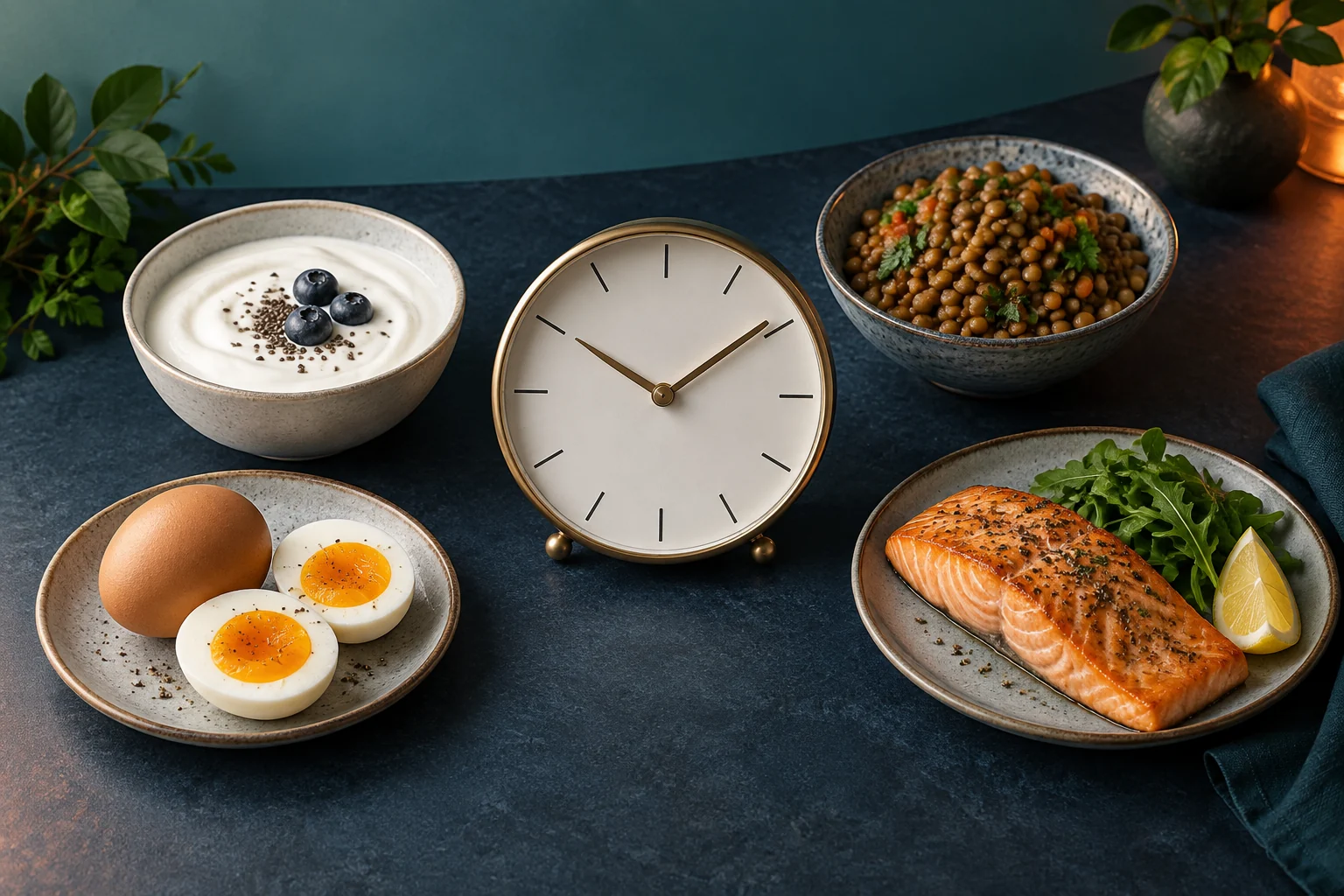
Even distribution does not require identical meals. It means avoiding a pattern in which breakfast and lunch contain almost no meaningful protein while dinner carries nearly the entire target. For many adults, two to four eating occasions with a recognizable protein source are easier than constant grazing.
A person targeting 100 grams might obtain roughly 25–35 grams at three meals plus smaller contributions elsewhere. Another person may prefer two larger meals and a snack. Age, body size, plant-versus-animal food choices, training, appetite, and medical needs change the useful amount. This example is not a prescription.
Count the complete meal. Grains, legumes, dairy, eggs, fish, meat, tofu, tempeh, and other foods all contribute. Combining sources across the day is usually more important than engineering a perfect amino-acid profile at every bite.
Protein around exercise: useful, not magical
Resistance exercise and protein work together to support muscle remodeling. Eating a protein-containing meal within several hours before or after training is practical for most recreational exercisers. If lunch was substantial and training begins later that afternoon, an emergency shake at the locker-room door is usually unnecessary.
Fast morning training, very long sessions, high-level sport, or long gaps between meals may justify more deliberate planning. The solution might be yogurt and fruit, eggs and toast, tofu with rice, a sandwich, milk, or a measured shake. Choose according to tolerance and the next meal.
Do not interpret post-workout hunger as proof that protein was insufficient. Training volume, sleep, hydration, total calories, carbohydrate availability, and expectations also affect appetite and recovery.
How timing can help indirectly
Protein at an underbuilt breakfast may delay early hunger. A planned afternoon protein-and-fiber snack may prevent uncontrolled takeaway ordering. A protein-containing dinner may improve satisfaction and preserve a normal evening. These are behavioral pathways: timing changes the next decision.
The opposite can occur. A shake added after a complete meal, a calorie-dense protein bar eaten without hunger, or four snacks taken to “stimulate metabolism” can close the intended deficit. Protein has a higher thermic effect than fat or carbohydrate, but it still supplies energy.
Track the substitution. Write what the new serving replaces, how hunger changes, and whether weekly intake becomes simpler. If nothing is displaced and progress stalls, the timing strategy may be extra food rather than a solution.
Plan for real-world schedule changes
Create a normal-day version and a disruption-day version. On ordinary days, meals may fall at familiar times. During travel, shift work, caregiving, or a late training session, use a portable option and protect the next complete meal rather than chasing exact hours.
A schedule based on events can be easier than one based on minutes: protein at the first substantial meal, after the work break, and around the evening meal. If a missed meal repeatedly causes extreme hunger, solve availability first. If a later meal feels comfortable and the day remains balanced, the clock alone is not a problem.
Reassess after schedule changes instead of assuming the same distribution will always be best.
Use a controlled two-week experiment
- Record three ordinary days before changing anything.
- Choose one recurring meal or snack where the question actually matters.
- Change only the protein amount, timing, or format being tested.
- Keep daily calories, activity, and sleep reasonably consistent.
- Rate hunger before the next meal, digestion, satisfaction, training, and convenience.
- Compare weekly average weight and waist, not one scale reading.
Write down what the new choice replaced. If it simply adds calories to an unchanged day, the test cannot show whether protein improved the weight-loss plan. Keep the change only when it solves a practical problem without creating a larger one.
Where Fat Burn Active fits
Protein timing should be solved with the daily food pattern; a thermogenic does not create or distribute dietary protein.
Fat Burn Active is an optional stimulant-oriented thermogenic supplement. It does not provide dietary protein, replace a meal, correct an amino-acid gap, or override energy balance. A temporary change in alertness, appetite, warmth, sweating, or heart rate does not prove fat loss, and evidence for an isolated ingredient is not proof for the finished formula at the amount sold.
Once the practical steps in Protein Timing for Weight Loss: Does It Matter? are working, decide whether an optional supplement adds enough value. Start with the Fat Burn Active review; if the formula and limitations are acceptable, see current availability and official ordering details. We may receive a commission.
Safety and individual context
People with kidney disease, liver disease, a prescribed protein restriction, swallowing problems, food allergy, or complex medication needs should not adopt a high-protein schedule from a generic calculator.
Pregnancy or breastfeeding, adolescence, frailty, eating-disorder recovery, diabetes treatment, and significant kidney, liver, cardiovascular, gastrointestinal, or metabolic disease require individualized advice. Seek care for rapid unintended weight change, swelling, persistent vomiting, fainting, marked weakness, major bowel changes, or symptoms suggesting allergy. Do not change prescribed treatment or use a supplement as a diagnostic test.
Frequently asked questions
Is there a 30-minute protein window?
No narrow deadline applies to most people. A protein-containing meal within a few hours around training is generally practical.
Is protein before bed good for weight loss?
It is neither required nor inherently harmful. It helps only when it fits daily needs, calories, comfort, and the eating pattern.
How many protein meals are best?
Often two to four eating occasions work well, but there is no universal number.
Sources
- ISSN position stand on nutrient timing
- ISSN position stand on protein and exercise
- Review of protein distribution and muscle outcomes
- Dietary Guidelines for Americans
Sources reviewed September 8, 2026. This article is general educational information, not medical advice, diagnosis, or treatment.