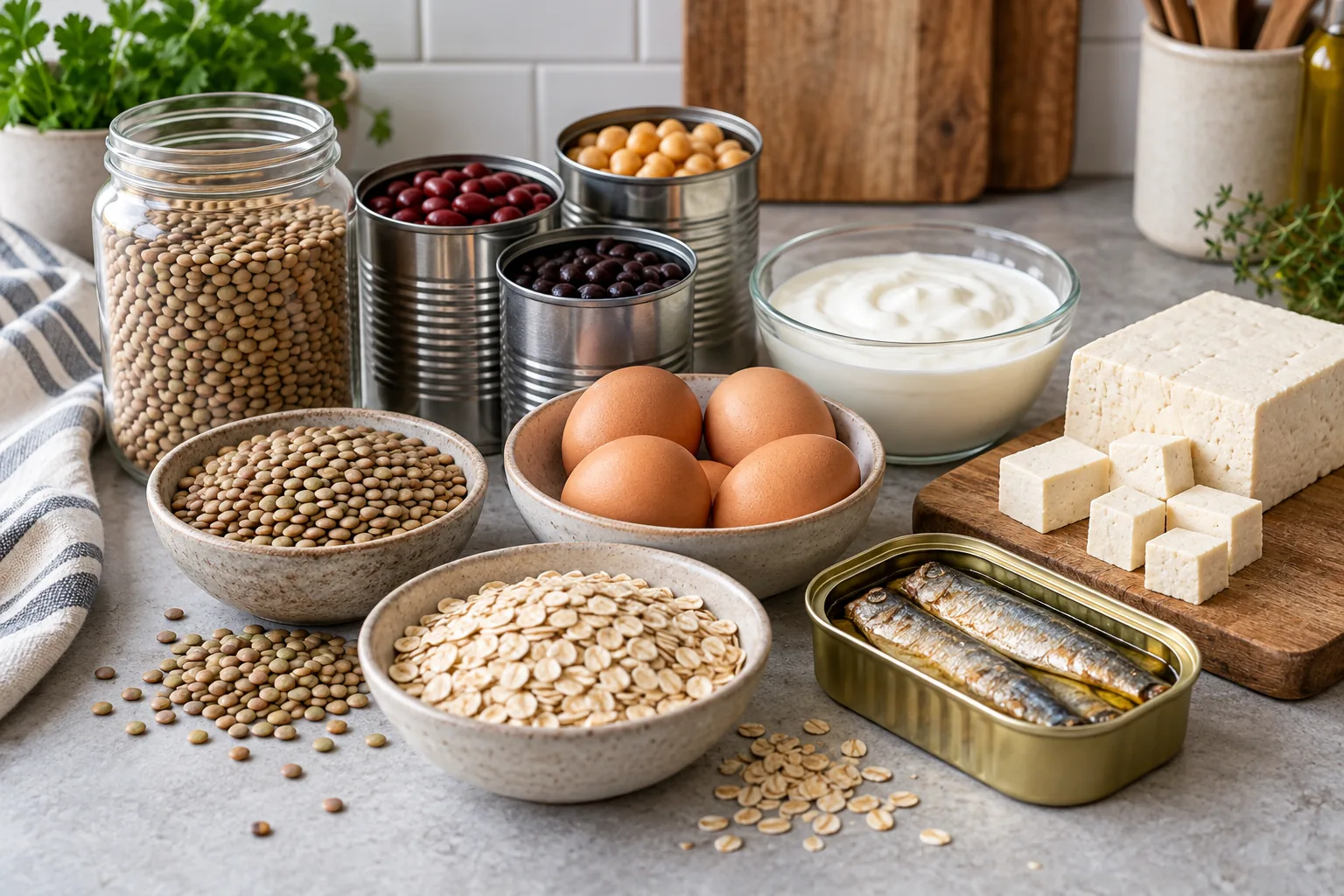
The expensive-protein trap
Search for high-protein foods and you may see a shopping basket full of powders, bars and specialty products. They can be convenient but are not required for weight loss. A low-cost bean and egg meal can be nutritious and satisfying; an expensive protein snack can still leave you hungry. The real challenge is reaching suitable protein intake while keeping the total diet affordable, varied and aligned with your energy needs.
Cost alone is not the full comparison. Dried beans require time and cooking fuel. Canned fish is convenient but may have a strong flavor or a sodium level worth checking. Yogurt prices and protein content vary by brand. A large bargain pack can become waste if it spoils. This guide uses a repeatable shopping method rather than pretending that one current national price applies to every grocery store.
Eight protein staples worth comparing
Beans and lentils
Dry legumes can be inexpensive per cooked serving, while canned versions save time. They bring fiber and can replace part of a meat portion in chili, soup or a grain bowl. Beans provide protein but not the same concentration per serving as chicken or tuna, so think of the whole meal. Rinse canned beans if you prefer less sodium and check the label.
Eggs
Eggs are flexible across breakfast, lunch and dinner: skillet with vegetables, boiled egg in a packed meal, or egg-and-bean bowl. Compare the price per egg with other protein foods rather than assuming eggs are always cheapest. If a health condition calls for a specific diet, follow individualized advice instead of a universal egg rule.
Plain yogurt and cottage cheese
Large tubs often cost less per serving than individual flavored cups, but compare protein on the label. Plain yogurt can become a savory sauce, breakfast base or snack with fruit. Cottage cheese is convenient where available; sodium and protein vary. Plant-based alternatives are not automatically protein-equivalent, so read their labels.
Tofu and tempeh
Tofu can stretch a stir-fry, soup or scramble; firm varieties usually work well in batch cooking. Tempeh is another option but may cost more in some markets. Compare pack size, drained weight and actual protein. A food that seems costly per package may produce several meals when paired with rice and vegetables.
Canned fish
Tuna, sardines and salmon can be shelf-stable protein anchors for sandwiches, pasta or salads. Compare price by drained weight, not just the can. Choose variety across protein sources; fish types differ in mercury considerations and sodium. FDA and EPA advice on choosing fish is especially relevant to pregnancy and children.
Frozen poultry or other sale proteins
Frozen chicken or another lean protein can be useful when bulk packs cost less and you have freezer space. Divide safely into portions before freezing. Trim and cooking losses affect the usable amount; the sticker price per pound is not the final meal cost. Avoid a bulk buy if you cannot store or prepare it within safe limits.
Milk and fortified soy beverages
These can contribute protein alongside oats, cereal or cooking. Unsweetened fortified soy milk may be a suitable option; almond or rice beverages generally have different protein values. Compare labels, volume you will actually use and whether the product fits dietary needs. Drinks alone do not replace a balanced meal.
Peanut butter and seeds
They are convenient and nutritious additions, but their main role is often flavor and fat rather than a concentrated low-calorie protein anchor. Use a deliberate portion and combine with yogurt, eggs, tofu or beans if the meal needs more protein. Calling every “protein” food interchangeable can hide large differences in energy per serving.
Calculate value without trusting a price list
At your own store, record shelf price, usable servings and protein per serving from the label or USDA FoodData Central. Divide package price by usable servings. For a rough protein comparison, divide price by total protein grams in the package and multiply by a reference amount such as 20 grams; use the result only alongside food quality, preparation time and preference. A dried legume may look best on paper but require soaking and cooking; ready-to-eat fish may save a busy workday.
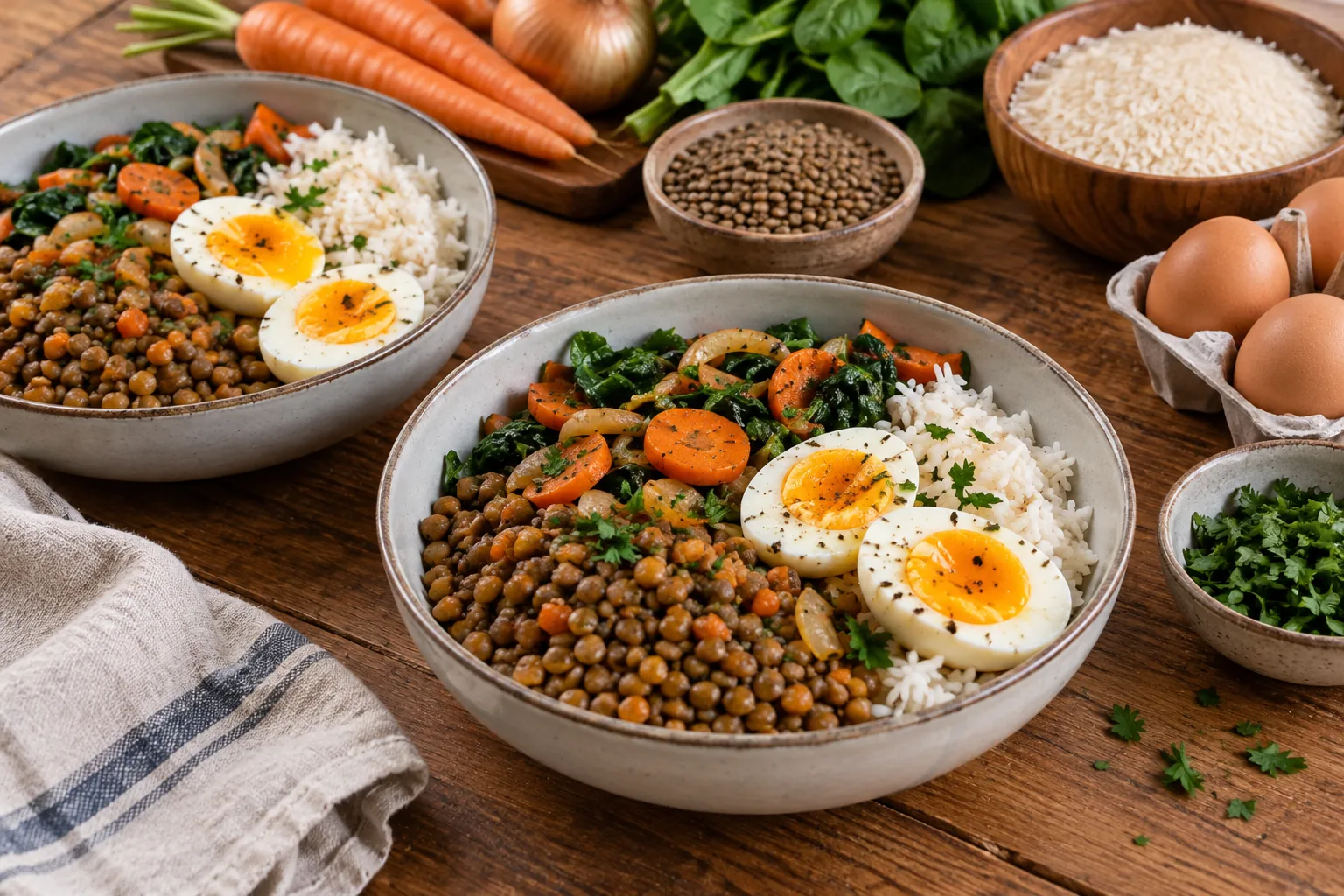
Compare whole meals too. A bean-and-rice bowl with vegetables and yogurt sauce may cost less than a bar plus a convenience-store sandwich while supplying more food. On the other hand, a specialty soy product is not necessarily cheaper than eggs in your location. No exact price claim stays valid across markets, sales and package sizes.
A practical low-cost shopping rotation
Pick two main protein anchors for the week, such as lentils and eggs, plus one convenience backup such as canned fish or tofu. Add frozen vegetables, an in-season fruit and rice, potatoes or oats. Cook a pot of lentils; use it in soup, a bowl and a pasta sauce. Boil eggs for a couple of days of lunches, and leave the backup sealed until needed.
If an individual protein need is uncertain, our protein-needs guide explains why a universal target is unhelpful. Our seven-day menu shows how to vary these foods. A calorie deficit still depends on the full eating pattern, not the price of the protein source.
Keep savings from becoming waste
Plan how you will store cooked food before buying in bulk. Refrigerate perishable foods promptly; freeze portions intended for later in the week. Check best-by guidance and package directions, and cook and reheat foods safely. Beans need proper preparation, especially dried kidney beans; follow reliable cooking guidance rather than tasting them undercooked.
Fat Burn Active is not an economical substitute for meals or protein. If you are weighing the cost of any optional supplement against food, examine the product review and evidence limits first. A purchase should not displace enough nutritious food to support the plan.
Compare two meals rather than two packages
Suppose one shelf offers a large bag of dried lentils and another offers individually wrapped protein bars. Do not compare the price tags alone. Calculate how many cooked lentil servings the bag yields, the time and ingredients needed to prepare them, and whether you will eat them in soup, chili or bowls. For the bars, check protein, energy, cost per bar and whether one replaces a meal or merely adds a snack.
A workable compromise might be a pot of lentils for home meals and one portable convenience option for a long shift. Food choice is constrained by time, equipment and storage as well as money. The best budget plan is not the mathematically lowest cost if it repeatedly leads to waste or expensive takeout.
Frequently asked questions
Are beans enough protein by themselves?
They contribute protein and fiber; whether they meet your needs depends on portion and the rest of the day. Combine varied sources.
Is protein powder necessary on a budget?
No. It can be convenient, but ordinary foods can meet protein needs. Compare cost per useful serving, not marketing claims.
Does the cheapest protein automatically help weight loss?
No. Meal size, overall energy, nutrition, appetite and repeatability still matter.
Sources
- USDA FoodData Central: Protein and nutrient values
- USDA MyPlate: Vary protein foods
- CDC: Plan healthier meals
- FoodSafety.gov: Cold food storage
- FDA: Advice about eating fish
Sources reviewed September 27, 2026. Local prices and product protein content require a fresh label and store check.