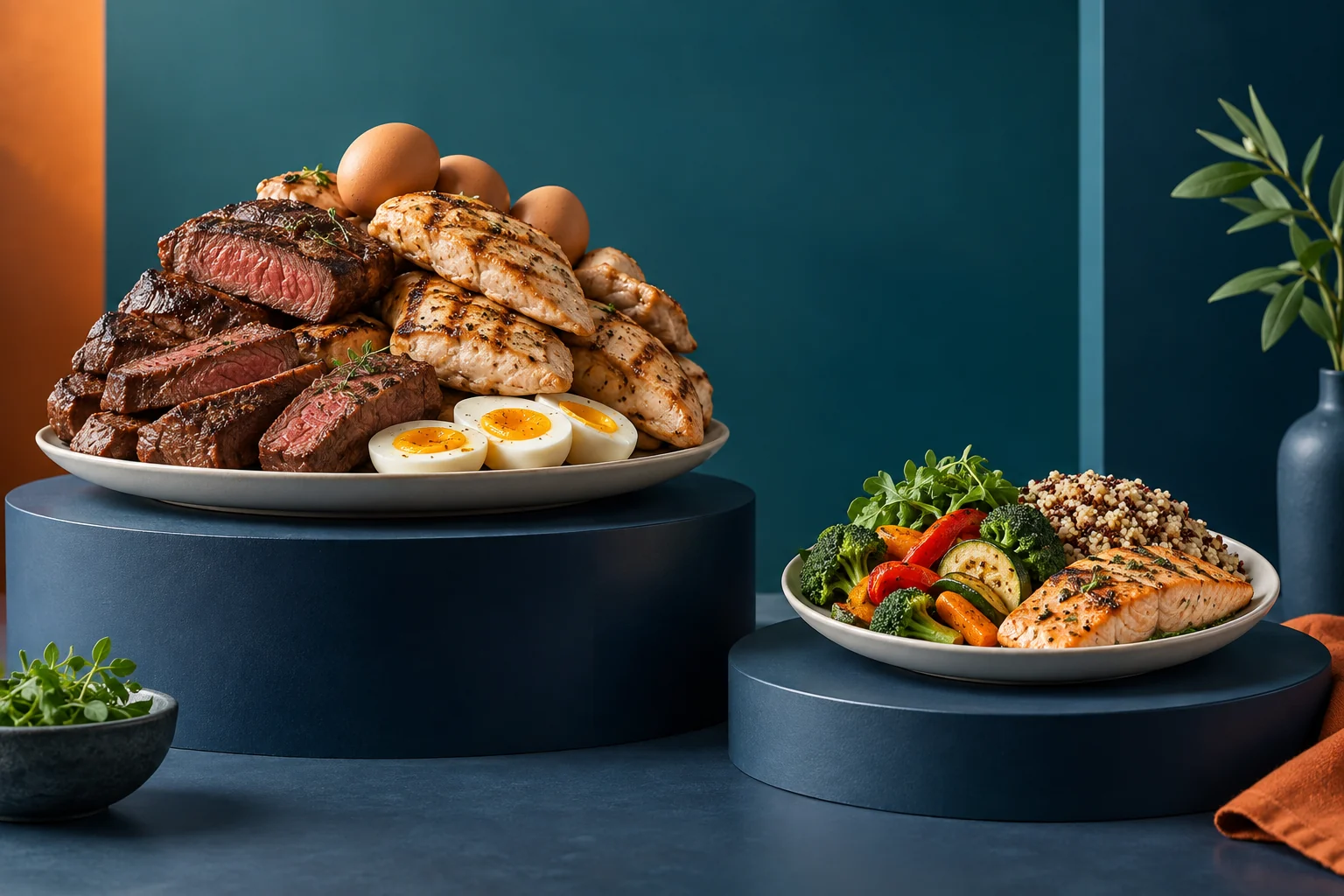
The protein halo hides ordinary calories
“High protein” is often interpreted as “safe to add.” A shake after breakfast, bar between meals, extra cheese at lunch, and larger meat portion at dinner can add substantial energy. If none replaces another food, the original deficit may vanish even though every choice looks fitness-oriented.
Tracking apps can reinforce the problem by turning grams into a score. Once an appropriate target is covered, more protein receives no automatic fat-loss bonus. Its higher thermic effect means digestion uses more energy than for fat, but not enough to cancel unlimited portions.
A plateau may also reflect water, bowel contents, menstrual-cycle changes, sodium, training inflammation, reduced movement, or inaccurate measurement. Diagnose the trend before blaming one nutrient.
Five ways more protein can work against the plan
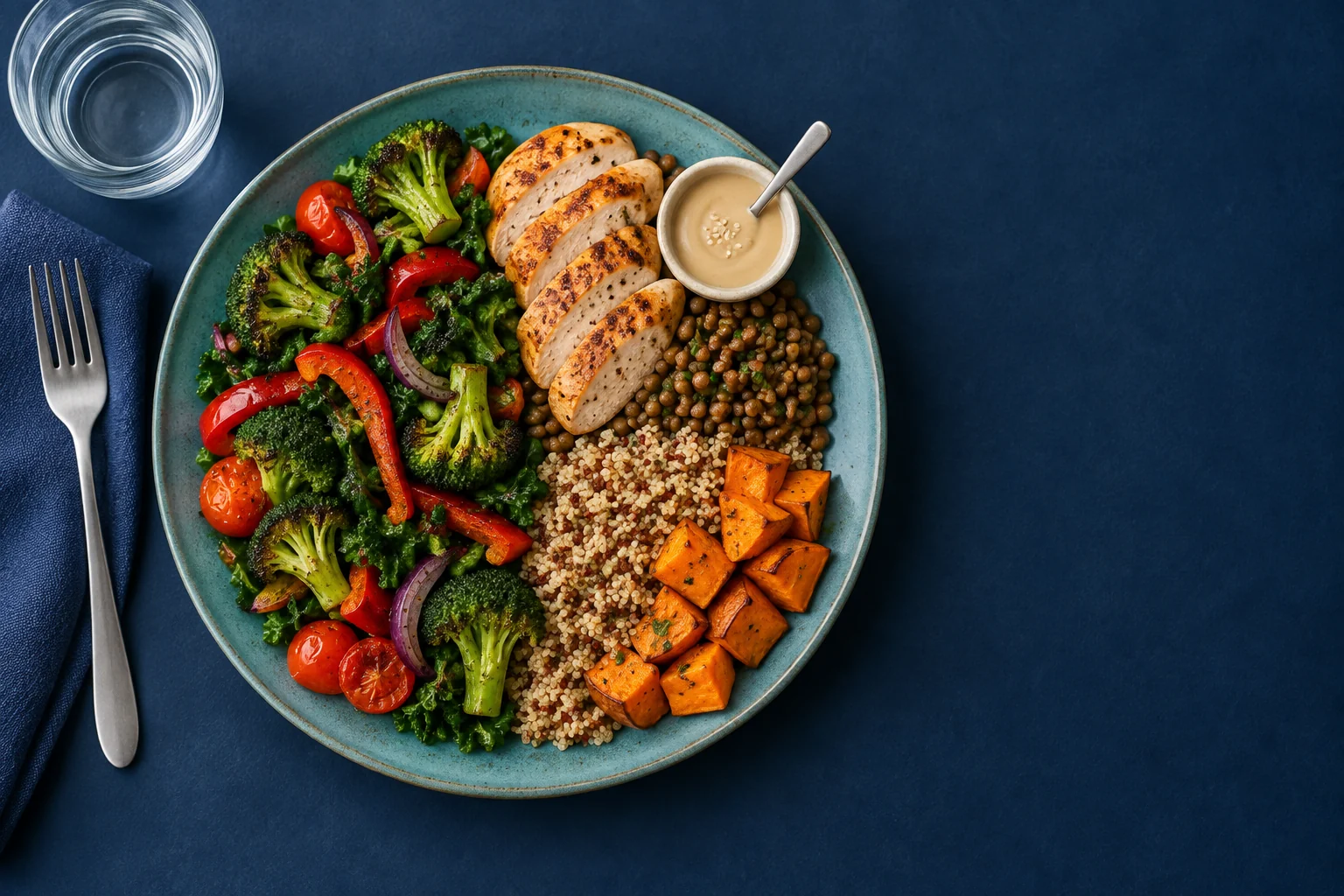
Audit protein without guessing
Record three weekdays and one weekend day. Weigh or measure uncertain, energy-dense items: powder scoops, bars, cheese, nuts, oils, dressings, meat portions, milk, and sweetened yogurt. Check whether database entries match cooked or raw weights and the actual product.
Mark every protein increase as a replacement or addition. Replacing a low-satiety pastry with yogurt and fruit may improve the day; adding a large shake after a complete meal may not. The label “protein” cannot answer that question.
Review weekly average weight and waist across at least two to four reasonably consistent weeks unless symptoms or rapid change require earlier action. A few stable days are not a true plateau.
Return to a defensible range
Many healthy dieting adults who train use a working range around 1.2–1.6 g/kg/day, while specialized athletic contexts may use more. Body size, reference weight, age, training, calorie deficit, and health matter. At higher body-fat levels, multiplying current weight by an athletic target can create an unnecessarily large number.
Do not cut to the minimum simply because progress pauses. First verify calories, measurement, adherence, movement, sleep, and the time window. The objective is adequate protein, not maximum protein.
Once the target is covered, spend remaining calories on vegetables, fruit, legumes, grains, and dietary fats appropriate to needs and preferences. This protects diet quality and training.
Food source changes the trade-off
A very lean protein food differs from a protein bar, cheese, fatty processed meat, or sweetened shake in protein density, fiber, saturated fat, sodium, volume, and enjoyment. This does not make one food universally good or bad; it changes the portion and role.
Use legumes, fish, eggs, lower-fat dairy, tofu, tempeh, poultry, lean meat, and other culturally suitable foods in varied combinations. Plant foods help restore fiber and variety. Processed meats should not become the default simply to raise a number.
A powder can be useful when convenience is the actual gap. Measure it and include the liquid and additions in the total. A smoothie with milk, fruit, oats, and nut butter is a meal-sized energy source, not “just protein.”
Troubleshoot the plateau in order
- Confirm that the plateau is a multi-week trend.
- Check protein additions and high-calorie accompaniments.
- Review weekends, drinks, restaurant meals, oils, and portions.
- Check whether movement fell as dieting continued.
- Assess hunger, sleep, training, medicines, and medical conditions.
- Make one modest adjustment and reassess.
Severe restriction is not a better diagnostic tool. It can increase hunger, reduce ordinary movement, damage training quality, and compromise lean tissue.
Signs the target is no longer helping
More protein is questionable when meals feel monotonous, constipation appears as fiber falls, training suffers because carbohydrate is squeezed out, food costs become unreasonable, or eating becomes ruled by a number. These signals do not prove protein itself caused the plateau, but they show the plan needs rebalancing.
Reduce the least useful addition first, not the most nutritious meal. A second shake or automatic bar is often easier to reassess than beans, yogurt, fish, or tofu within a balanced plate. Preserve a sufficient daily intake and resistance training while adjusting total energy modestly. If loss remains absent despite careful execution, review medical conditions and medicines with a qualified professional.
Use a controlled two-week experiment
- Record three ordinary days before changing anything.
- Choose one recurring meal or snack where the question actually matters.
- Change only the protein amount, timing, or format being tested.
- Keep daily calories, activity, and sleep reasonably consistent.
- Rate hunger before the next meal, digestion, satisfaction, training, and convenience.
- Compare weekly average weight and waist, not one scale reading.
Write down what the new choice replaced. If it simply adds calories to an unchanged day, the test cannot show whether protein improved the weight-loss plan. Keep the change only when it solves a practical problem without creating a larger one.
Where Fat Burn Active fits
Adding a stimulant to an energy intake that no longer creates a deficit does not correct the underlying arithmetic.
Fat Burn Active is an optional stimulant-oriented thermogenic supplement. It does not provide dietary protein, replace a meal, correct an amino-acid gap, or override energy balance. A temporary change in alertness, appetite, warmth, sweating, or heart rate does not prove fat loss, and evidence for an isolated ingredient is not proof for the finished formula at the amount sold.
Treat Fat Burn Active as an optional addition, not a substitute for Can Too Much Protein Slow Weight Loss?. Review its listed ingredients and limitations in our product analysis. If the evidence, warnings, and cost fit your decision, verify the current formula and purchase options. We may earn a commission.
Safety and individual context
Kidney disease can change protein needs substantially. People with diabetes, hypertension, gout, kidney stones, liver disease, pregnancy, or a prescribed diet should seek individualized guidance before a very-high-protein plan.
Pregnancy or breastfeeding, adolescence, frailty, eating-disorder recovery, diabetes treatment, and significant kidney, liver, cardiovascular, gastrointestinal, or metabolic disease require individualized advice. Seek care for rapid unintended weight change, swelling, persistent vomiting, fainting, marked weakness, major bowel changes, or symptoms suggesting allergy. Do not change prescribed treatment or use a supplement as a diagnostic test.
Frequently asked questions
Can protein turn into body fat?
Surplus energy from any macronutrient can contribute to fat gain; protein is not exempt from energy balance.
Is 200 grams too much?
The number cannot be judged without body size, health, training, calories, and reference weight.
Should I stop protein shakes?
Only if they do not solve a useful convenience or intake gap. Count them accurately and compare them with food.
Sources
- Dietary Reference Intakes for protein
- ISSN position stand on protein and exercise
- Review of protein in weight loss and maintenance
- National Kidney Foundation: CKD and protein
Sources reviewed September 8, 2026. This article is general educational information, not medical advice, diagnosis, or treatment.