
Judge the loaf, not the category
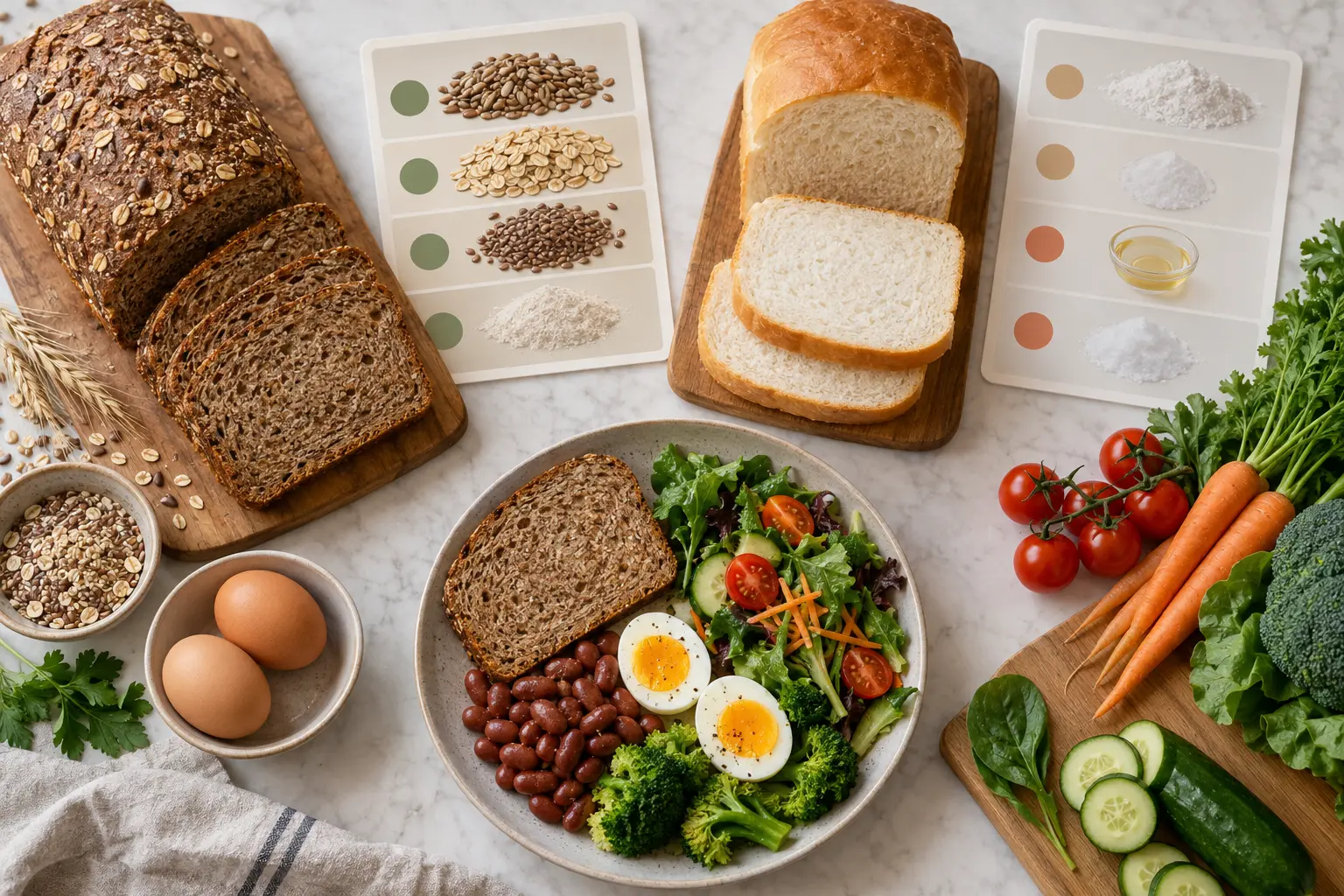
“Wheat,” “multigrain,” dark color, seeds on top, and sourdough do not automatically mean whole grain or high fiber. Check whether a whole grain is the first ingredient, compare fiber and sodium per realistic serving, and read serving size. Gluten-free bread is necessary for some people but is not automatically lower in energy or more filling.
People with celiac disease or wheat allergy need strict medical avoidance; others should not diagnose symptoms by removing bread and later reintroducing it without a plan.
Build a sandwich that behaves like a meal
Example: the bread was not the whole lunch
Sam blames two slices of bread, but the usual lunch also contains generous mayonnaise, cheese, processed meat, chips, and a sweet drink. Sam keeps the bread, adds lean protein and vegetables, measures the spread, and changes the drink. Hunger remains manageable and the meal better fits the weekly target without creating a forbidden food.
Use a four-week decision system
Use a four-week food-and-trend system instead of judging one ingredient from one weigh-in.
- Define the actual exposure. Record the food, drink, serving, frequency, recipe, accompaniments, and what it replaces. “Bread,” “dessert,” “sugar,” or “sweetener” is too vague for a useful conclusion.
- Measure the complete pattern. Use comparable morning weights and weekly averages when weighing is appropriate. Add waist every two to four weeks, hunger, sleep, digestion, training, steps, and adherence.
- Mark short-term modifiers. Note restaurant meals, sodium, carbohydrate changes, alcohol, menstrual timing, constipation, travel, and hard training. These can move water or digestive mass more quickly than fat changes.
- Change one lever. Adjust a portion, frequency, drink, meal pairing, or environment while holding the rest reasonably stable.
- Review after enough time. A meal can answer a fullness question. A multiweek pattern is needed to evaluate weight direction.
Do not compensate for a high reading or an unplanned dessert with fasting, dehydration, punishment exercise, or extra supplements. Return to normal meals and activity. If tracking increases anxiety, rigid rules, bingeing, or compensation, simplify the system and seek eating-disorder-informed support.
Separate nutritional value from weight mechanics
A food can fit an energy deficit without being the most nutrient-dense choice, and a nutritious food can still contribute substantial energy. Weight direction reflects the sustained pattern; health also reflects fiber, protein, fats, micronutrients, food processing, dental exposure, blood pressure, glycemic context, and individual medical needs. These are connected but not interchangeable questions.
People with diabetes treatment, kidney or heart disease, medically prescribed sodium limits, celiac disease, food allergy, pregnancy, frailty, or an eating-disorder history need individualized guidance. Sudden swelling, shortness of breath, rapid unexplained weight change, severe thirst or urination changes, fainting, or other concerning symptoms warrant medical assessment.
Turn flexibility into a repeatable week
Build the week before the difficult choice appears. Select repeatable breakfasts and lunches, plan dinners, identify restaurant occasions, and decide where bread, dessert, sweetened drinks, or substitutes genuinely add value. Keep backup protein, fruit, vegetables, whole grains or legumes available so a busy day does not turn one convenient food into the whole meal.
Use addition before prohibition. Pair bread with protein and produce. Eat dessert after a satisfying meal rather than after hours of restriction. Replace a frequent sugary drink with water or a lower-energy option when the tradeoff is useful. Keep sodium reasonably consistent during a scale experiment instead of trying to eliminate it. Consistency makes the result easier to interpret.
Use a repair rule
If the planned portion becomes larger, name what happened without moral language: hunger, easy access, stress, social pressure, distraction, or an unrealistic restriction. Return to the next ordinary meal. Change the earliest repeatable cause, such as eating lunch, buying individual portions, sharing dessert, ordering a smaller drink, or preparing food before a long shift.
Review the complete outcome weekly. A strategy is useful when it improves the intended variable without damaging nutrition, sleep, digestion, training, mood, or social life. Keep a flexible food because it makes the plan sustainable; change it when it repeatedly displaces satisfying meals or erases the intended deficit. Long-term maintenance should preserve this decision system rather than restoring a list of forbidden foods.
Read labels and substitutions correctly
Read the label as a measurement tool, not a score of whether the food is good or bad. Compare the listed serving with the amount actually eaten. For bread, count the slices and the fillings. For dessert, include toppings and the size served. For drinks, check the whole container rather than one nominal serving. For sodium, compare milligrams across products that would realistically replace each other. For sweeteners, identify the specific ingredient and any required warning.
Next, distinguish substitution from addition. Replacing a 150-calorie sugary drink with water changes intake if nothing else changes. Drinking the diet version alongside the original does not. Adding whole-grain bread to an already complete meal is different from replacing a refined snack. A “sugar-free” dessert can still contain substantial flour, fat, or energy. The direction of the trade—not the marketing label—determines what changed.
Set a decision rule before the experiment
Write what would count as useful: less afternoon hunger, fewer liquid calories, stable blood pressure readings, less food preoccupation, or an acceptable multiweek weight trend. Also write the downside that would end the test: digestive symptoms, worsening cravings, loss of dietary adequacy, insomnia from a caffeinated drink, or a pattern of compensatory restriction.
Do not infer a medical diagnosis from a response to one food. Bloating after bread is not proof of celiac disease; a scale increase after sodium is not proof of heart or kidney disease; fatigue after sweets is not a diabetes test. Use validated medical assessment for persistent or concerning symptoms. A food experiment can organize observations, but it cannot replace diagnosis.
Where Fat Burn Active fits
Fat Burn Active is optional. It cannot cancel bread, dessert, sodium, sugar, or calories; remove sodium-related water; make a restrictive diet sustainable; or turn a sweetener into a weight-loss treatment. Warmth, sweating, stimulation, or temporary appetite change does not prove fat loss.
Review the current label, total caffeine from every source, health history, medicines, sleep, anxiety, blood pressure, and heart rhythm. A product containing stimulants can make scale interpretation harder through sleep, appetite, fluid, or gastrointestinal effects. Never take extra capsules to compensate for food.
Once the practical steps in Can You Lose Weight While Eating Bread? are working, decide whether an optional supplement adds enough value. Start with the Fat Burn Active review; if the formula and limitations are acceptable, see current availability and official ordering details. We may receive a commission.
Frequently asked questions
Is whole-grain bread required?
No, but it often offers more fiber and nutrients. The full diet matters.
Does sourdough burn more fat?
No. Fermentation may affect taste and digestion, but it does not override energy balance.
How many slices can I eat?
There is no universal number; use the complete meal, hunger, needs, and trend.
Sources
- Dietary Guidelines for Americans
- FDA: Whole Grain Label Statements
- Whole grains and body weight meta-analysis
- Harvard Nutrition Source: Whole Grains
- NIDDK: Choosing a Safe Weight-Loss Program
Sources reviewed September 17, 2026. This article is general educational information, not medical advice, diagnosis, or treatment.