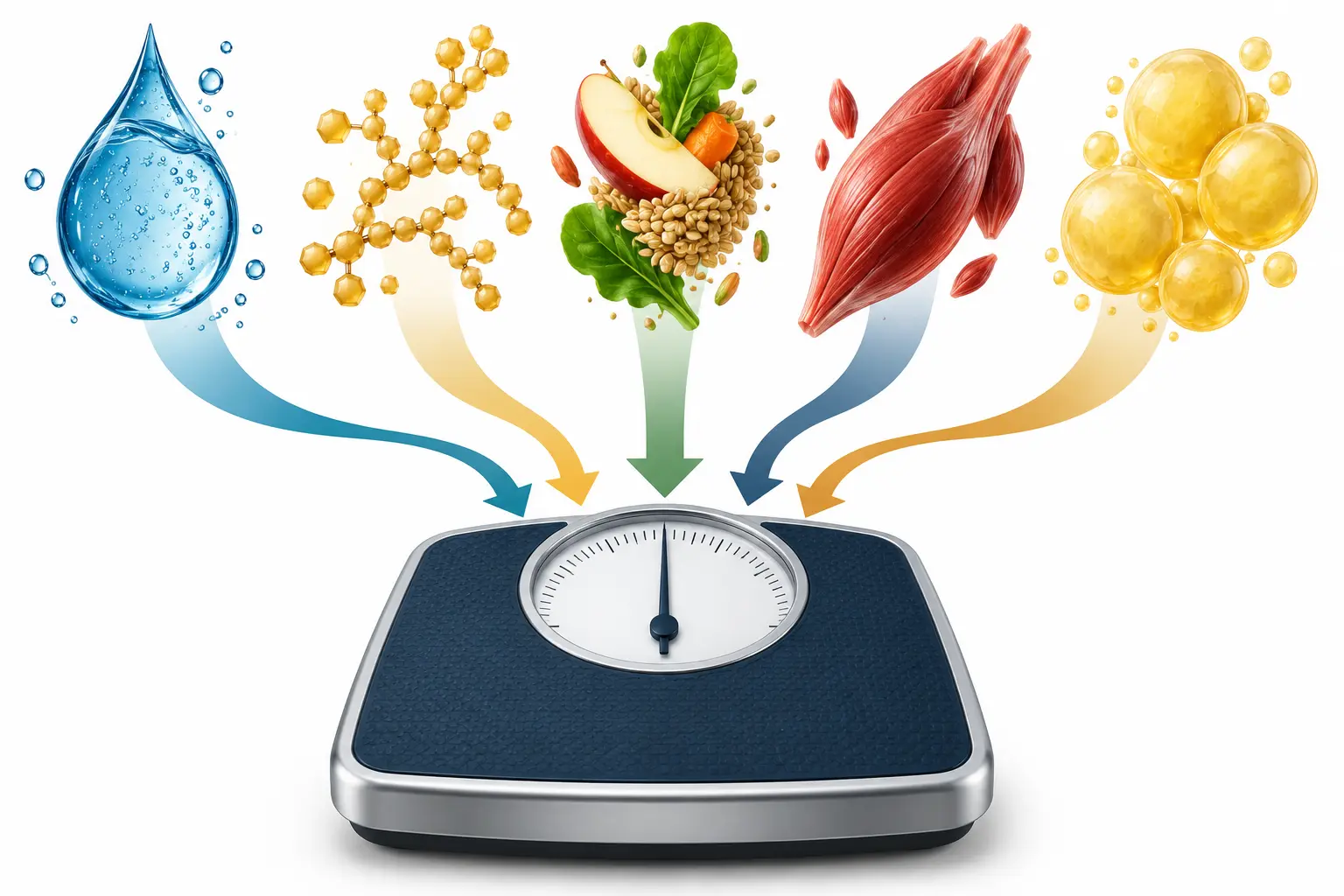
Five things that can make body weight fall
Use speed as a clue, not a diagnosis
Hours-to-days changes point first toward water and contents because substantial tissue change takes sustained energy imbalance. A lower-carbohydrate week may reduce glycogen and associated water. A low-residue day or bowel movement changes digestive mass. Dehydration after heat, vomiting, diarrhea, or deliberate fluid restriction can lower weight and harm health.
Some fat may be lost during the same period, but it is inaccurate to label every pound or kilogram as fat. Rapid regain after normal eating and hydration does not mean the same amount of fat instantly returned.

Why the composition of loss matters
Losing muscle can reduce strength, function, training capacity and the amount of metabolically active tissue. The goal of an intentional plan is therefore not the lowest possible number by the earliest date. It is to bias loss toward fat while maintaining nutrition, performance and adherence.
Risk rises with very aggressive restriction, insufficient protein, no resistance stimulus, inactivity, illness and some medications or conditions. Individual assessment matters for older adults and people already at risk of malnutrition or muscle loss.
A two-stage reality check
- Stage one—context: note diet changes, sodium, carbohydrate, fluids, bowel pattern, menstrual timing, illness, medicines and exercise.
- Stage two—trend: compare several weekly weight averages plus waist and performance.
If the first week drops quickly and later weeks slow, that does not prove the plan stopped working. The early water component may simply be over. If weight falls while waist and strength do not improve, investigate rather than assuming superior fat loss.
How to favor fat loss
Use a sustainable calorie deficit, progressive ability-appropriate resistance training, adequate protein and micronutrient-rich foods, daily movement, and sufficient recovery. Avoid sweating, sauna use, laxatives, diuretics, or dehydration as weight-loss strategies. Those methods can alter the number without delivering the intended tissue outcome.
When appetite, swallowing, illness, gastrointestinal symptoms or unexplained loss affects intake, seek clinical care. Unintentional weight loss requires a different evaluation from a planned reduction.
Example: five pounds is not one tissue
After a weekend of restaurant meals, Omar returns to lower-sodium home cooking and reduces carbohydrate portions. His weight falls sharply in four days. That direction may feel encouraging, but much of the speed is compatible with changing fluid, glycogen and digestive contents.
He continues the planned meals and training and evaluates the next three weekly averages, waist and strength. The later trend—not the dramatic opening drop—better answers whether body fat is changing.
A deeper check before changing the plan
Create a “source of change” worksheet for any unusually fast drop. List the previous seven days of carbohydrate and sodium intake, restaurant meals, alcohol, fluid intake, heat exposure, menstrual timing, bowel movements, illness, medicines, and new exercise. Mark which factors changed immediately before the scale moved. This does not calculate exact tissue loss, but it prevents an unsupported fat-only story.
Then compare the following fourteen to twenty-eight days. If weight continues to trend down under comparable conditions and waist decreases, fat loss becomes more plausible. If most weight returns after normal hydration and meals, the opening movement was dominated by reversible components. If weight keeps falling with weakness, poor intake, diarrhea, fever, or no intentional change, contact a clinician.
Do not respond to water regain by removing more water. Diuretics, laxatives, sauna use, sweat suits and fluid restriction can temporarily reduce mass while increasing risk. They also contaminate the measurement you were trying to understand. Hydrate according to personal medical guidance and let repeated ordinary mornings supply the data.
Use language that matches evidence. Say “weight decreased,” then separately describe what supports fat loss. This simple wording matters because it changes the next action. A mixed early drop calls for patience; a multi-week fat-loss trend calls for maintaining the system; declining performance or nutrition calls for protection. The scale is useful when it reports what it actually measures, not when it is asked to identify tissue.
The final interpretation rule
Record the interpretation beside the number: likely fluid-dominant, mixed, tissue trend, or unexplained. This prevents later memory from converting every successful-looking change into fat loss.
Use a four-signal decision system
Collect a rolling body-weight average, a repeatable waist measurement, performance or daily-function notes, and a short adherence record. Interpret them together every two to four weeks. A stable scale with a smaller waist and maintained strength suggests a different response from falling weight with worsening strength, fatigue, and unchanged waist.
Change one major variable at a time. If calories, training, sodium, carbohydrate, supplements, and measurement conditions all change together, the result cannot explain which action helped. Set the next review date before making an adjustment and use the least aggressive change that addresses the evidence.
Seek qualified care for rapid unexplained change, swelling, fainting, chest symptoms, serious weakness, persistent menstrual change, signs of an eating disorder, or symptoms suggesting an endocrine or other medical condition. Body-composition advice cannot diagnose the cause of a symptom.
Where Fat Burn Active fits
Fat Burn Active cannot reveal which tissue changed, target a chosen fat depot, or protect muscle simply because it changes appetite, alertness, or scale weight. Finished-product claims would require relevant trials on the complete formula with appropriate body-composition outcomes. Ingredient mechanisms are not product proof.
A supplement is not required to benefit from Can You Lose Weight Without Losing Fat?. If your foundations are already in place, use the independent Fat Burn Active review to judge whether the formula has a useful optional role. If it fits your expectations and stimulant tolerance, check current product details and ordering terms. We may receive a commission.
Frequently asked questions
Can a home scale tell whether I lost fat?
No. It measures total mass. Smart-scale body-fat estimates are influenced by hydration and prediction equations; standardized trends may help, but a single percentage is not proof.
Should I react to one fast weekly change?
Usually not. Check measurement conditions, hydration, sodium, carbohydrate intake, digestion, illness, and training before interpreting tissue change.
Does maintaining muscle prevent all lean-mass loss?
No method guarantees that. Resistance training, adequate protein and a sensible deficit can improve the odds, while individual response and measurement error remain.
When is professional measurement useful?
When the result would change clinical or training decisions. Even laboratory methods have assumptions, so use the same method and comparable conditions.
Sources
- NCBI Bookshelf: Body Fluid Physiology
- Preserving Healthy Muscle During Weight Loss
- Body-Composition Measurement Methods
- NIDDK: Choosing a Safe Weight-Loss Program
Sources reviewed September 14, 2026. This article is general educational information, not medical advice, diagnosis, or treatment.