Why the first week can look spectacular
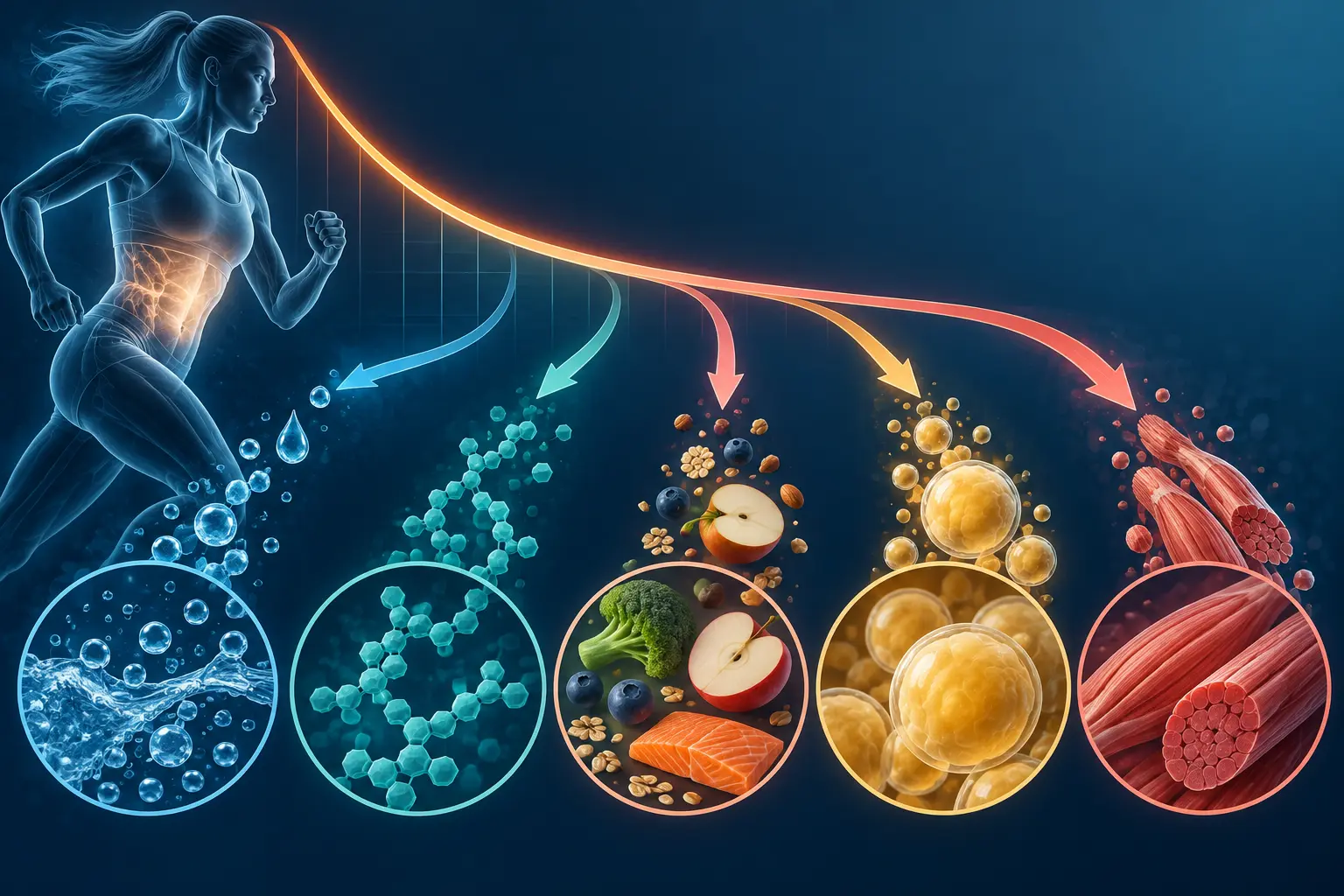
Reducing food volume lowers the mass moving through the digestive tract. Cutting carbohydrate reduces glycogen stores and associated water. Changes in sodium, alcohol, restaurant food, hydration and inflammation can move fluid. These processes happen faster than large changes in adipose tissue, so the early scale slope often exaggerates the ongoing fat-loss rate.
This does not make the early change fake. It makes it mixed. Problems arise when advertising labels the entire drop as fat or when a person tries to reproduce it through ever-harsher restriction.
Why lean tissue can join the loss
During an energy deficit the body must adapt. Without a sufficient resistance-training signal and appropriate protein, maintaining skeletal muscle becomes harder. Larger deficits, inactivity, poor sleep, illness and longer dieting can further challenge training and recovery.
Lean mass on a scan also contains water and glycogen; an early reduction does not equal the same amount of contractile muscle. Conversely, measurement uncertainty should not be used to dismiss steadily worsening strength and function.

The speed-quality tradeoff
A muscle-protection checklist
- Use progressive resistance work matched to ability.
- Distribute adequate protein-containing foods across the day.
- Avoid eliminating so many foods that micronutrient intake collapses.
- Protect sleep and schedule recovery between hard sessions.
- Keep daily movement without adding punishment exercise.
- Review strength, fatigue, hunger, waist and weight averages.
People with kidney disease, frailty, pregnancy, eating disorders, major illness or other complex needs require individualized nutrition and exercise guidance.
Do not chase the opening rate
When glycogen and water stabilize, the weekly change commonly slows. That is not automatically a plateau. Compare several weeks, verify adherence and keep measurement conditions consistent before reducing intake. Trying to recreate the first-week slope encourages dehydration or an unnecessarily large deficit.
A planned diet break or change in calories can also increase scale water without reversing an equal amount of fat loss. Explain the expected noise before the change so it does not trigger panic.
Example: a ten-day result with two stories
Leah loses weight quickly after removing takeout, reducing carbohydrate, and beginning daily exercise. Part of the change may reflect a real calorie deficit, while lower sodium, glycogen, digestive contents and sweat-related fluid shifts explain some of the speed.
By week three her lifts fall and sleep worsens. Instead of cutting further, she reduces training volume, restores a sustainable intake and monitors strength. The goal changes from preserving a headline pace to preserving useful tissue while fat loss continues.
A deeper check before changing the plan
Before starting, define a pace review rather than a pace promise. Record baseline weight averages, waist, two or three strength measures, sleep, hunger and normal activity. Review after two weeks for tolerability and after four weeks for direction. Medical treatment may require a different schedule set by the treating team.
If the average falls much faster than expected, ask four questions. Was carbohydrate or sodium reduced sharply? Did food volume or bowel pattern change? Is hydration normal? Are strength and daily function stable? The answers determine whether the response is mainly measurement context, an aggressive deficit, illness, medication effect, or a pattern needing assessment.
Protect training by keeping a small number of important movements and recording load, repetitions and effort. More exercise is not automatically better when recovery is failing. If performance falls across multiple sessions, consider energy intake, protein, sleep, illness and program volume before adding more cardio. A deload or smaller deficit may better support the intended tissue outcome.
After the rapid opening phase, recalculate expectations. The next month should not be judged against a water-heavy first week. Use waist and weight trends, the ability to complete training, hunger, mood and ordinary life. Rapid loss is sometimes medically supervised and appropriate, but “faster” is not a universal quality marker. The plan earns continuation when benefits, tolerability and clinical context support it—not when a headline number is preserved at any cost.
The final interpretation rule
A useful weekly note separates outcome from method: what the scale did, what the waist did, whether strength was preserved, how hungry and tired you felt, and which planned behaviors were completed. This makes a slower but higher-quality week visible instead of treating it as failure.
Use a four-signal decision system
Collect a rolling body-weight average, a repeatable waist measurement, performance or daily-function notes, and a short adherence record. Interpret them together every two to four weeks. A stable scale with a smaller waist and maintained strength suggests a different response from falling weight with worsening strength, fatigue, and unchanged waist.
Change one major variable at a time. If calories, training, sodium, carbohydrate, supplements, and measurement conditions all change together, the result cannot explain which action helped. Set the next review date before making an adjustment and use the least aggressive change that addresses the evidence.
Seek qualified care for rapid unexplained change, swelling, fainting, chest symptoms, serious weakness, persistent menstrual change, signs of an eating disorder, or symptoms suggesting an endocrine or other medical condition. Body-composition advice cannot diagnose the cause of a symptom.
Where Fat Burn Active fits
Fat Burn Active cannot reveal which tissue changed, target a chosen fat depot, or protect muscle simply because it changes appetite, alertness, or scale weight. Finished-product claims would require relevant trials on the complete formula with appropriate body-composition outcomes. Ingredient mechanisms are not product proof.
Once the practical steps in Why Rapid Weight Loss Often Includes Water and Muscle are working, decide whether an optional supplement adds enough value. Start with the Fat Burn Active review; if the formula and limitations are acceptable, see current availability and official ordering details. We may receive a commission.
Frequently asked questions
Can a home scale tell whether I lost fat?
No. It measures total mass. Smart-scale body-fat estimates are influenced by hydration and prediction equations; standardized trends may help, but a single percentage is not proof.
Should I react to one fast weekly change?
Usually not. Check measurement conditions, hydration, sodium, carbohydrate intake, digestion, illness, and training before interpreting tissue change.
Does maintaining muscle prevent all lean-mass loss?
No method guarantees that. Resistance training, adequate protein and a sensible deficit can improve the odds, while individual response and measurement error remain.
When is professional measurement useful?
When the result would change clinical or training decisions. Even laboratory methods have assumptions, so use the same method and comparable conditions.
Sources
- Rapid Versus Slow Weight Loss Trial
- Preserving Healthy Muscle During Weight Loss
- Weight-Loss Strategies and Skeletal Muscle Mass
- NIDDK: Safe and Successful Weight-Loss Programs
Sources reviewed September 14, 2026. This article is general educational information, not medical advice, diagnosis, or treatment.