Why fat is easy to under- or overcorrect
Because fat supplies nine calories per gram, removing oil, cheese, nuts, and sauces can reduce intake quickly. That success is sometimes converted into the claim that dietary fat makes people fat. Then meals become dry and unsatisfying, essential foods disappear, and a rigid low-fat plan is hard to maintain.
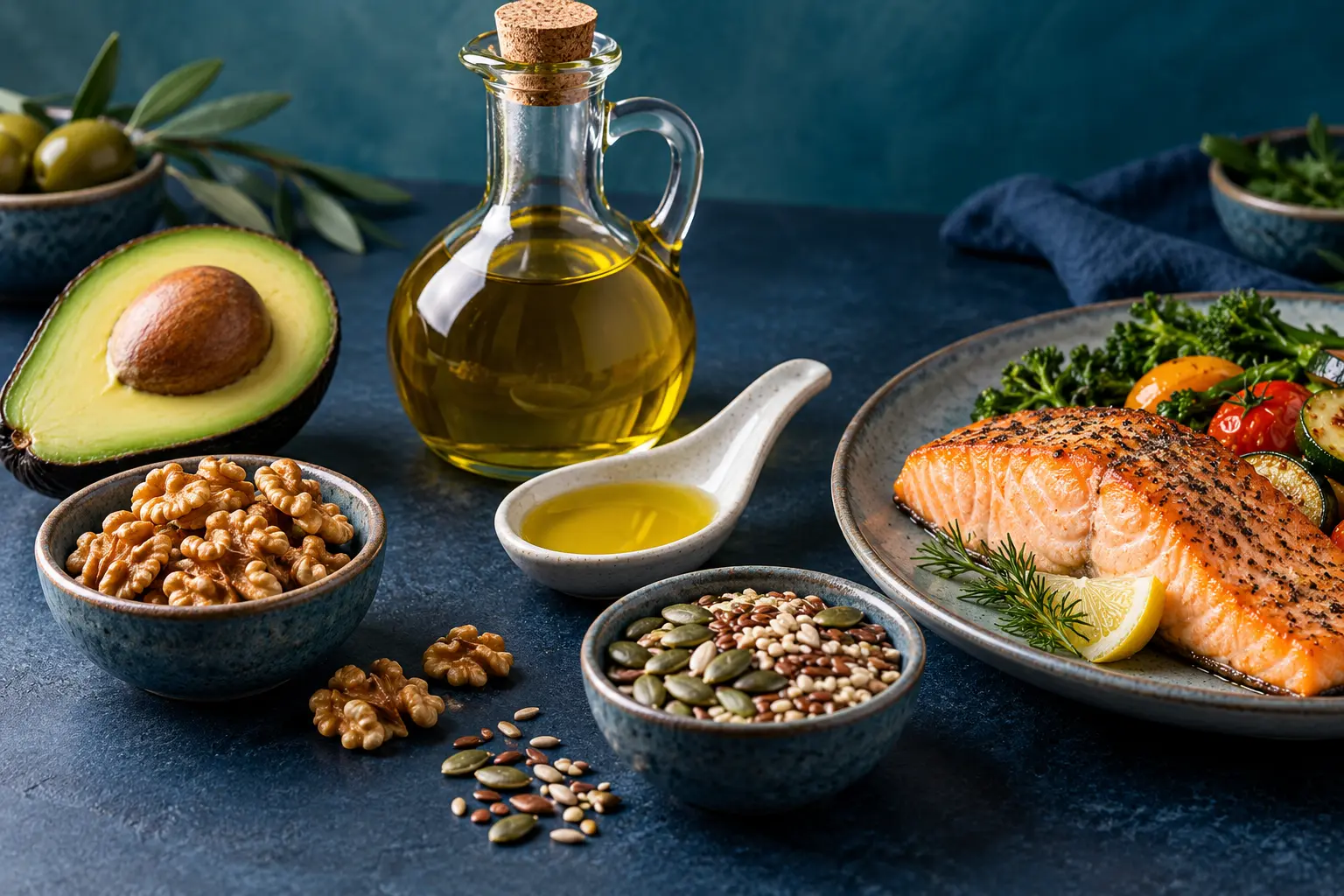
The reverse claim—that healthy fats do not count—creates another problem. Olive oil, avocado, nuts, seeds, and nut butter are nutritious but concentrated. Pouring oil freely or eating from a large bag can erase a modest deficit without much visual warning.
The solution is not fear or unlimited permission. It is choosing better sources, seeing the portion, and integrating fat into a balanced meal.
What dietary fat does
Fat provides essential linoleic and alpha-linolenic acids, contributes to cell structure and signaling, supports absorption of vitamins A, D, E, and K, and carries flavor and texture. Some foods that contain fat also supply protein, fiber, minerals, or omega-3 fatty acids.
Body fat and dietary fat are not identical concepts. After a meal, the body stores and oxidizes nutrients according to availability. Long-term fat-mass change reflects the net energy balance across time, not whether one meal contained olive oil.
Very-low-fat intake is not required for fat loss, while very-high-fat intake is not automatically more satiating or metabolically advantageous. The response depends on the whole dietary pattern.
Prioritize fat quality
Do not call one food good or bad based only on its dominant fatty acid. Portion, frequency, preparation, and what it replaces all matter.
Use ranges without worshipping percentages
U.S. guidance commonly places total fat at 20–35% of calories for adults, while saturated fat should be below 10% of calories. These ranges support planning but do not prescribe the perfect weight-loss ratio. A person can lose fat at different macronutrient distributions when the diet is adequate and sustainable.
Very low intakes can make meals unsatisfying or nutritionally narrow. High intakes can use the calorie budget quickly, leaving little room for protein, fiber-rich carbohydrate, and food volume. Choose a middle point that fits preferences and health, then evaluate outcomes.
People with high LDL cholesterol, very high triglycerides, gallbladder or pancreatic conditions, fat-malabsorption disorders, or therapeutic diets need individualized advice rather than a generic percentage.
Make invisible fats visible
Measure cooking oil for a week—not forever, but long enough to learn the pour. Plate nuts, seeds, cheese, dressing, and nut butter instead of eating from containers. Ask for restaurant sauces on the side when that improves control without ruining the meal.
Use fat where it changes satisfaction most. A measured dressing can make vegetables enjoyable; a few nuts can add texture; salmon can supply both protein and unsaturated fat. Adding oil automatically to foods that are already satisfying may offer little benefit.
Low-fat packaged products are not automatically lower in calories or more nutritious. Compare the full label, serving, added sugar, sodium, and how the food affects the meal.
Run a two-week fat-balance test
- Record oils, spreads, dressings, nuts, cheese, fried foods, and restaurant meals.
- Identify the largest invisible or automatic source.
- Measure or substitute that source while preserving meal satisfaction.
- Include a deliberate unsaturated-fat source where it improves the meal.
- Track hunger, enjoyment, digestion, and later snacking.
- Review weight, waist, and relevant clinical markers over an appropriate timeframe.
If calories fall but hunger rises sharply, the cut may be too aggressive or placed in the wrong meal. If satisfaction remains high and progress resumes, the change is useful.
Low-fat and low-carb patterns can both work
Trials do not show one macronutrient strategy wins for everyone. Low-fat diets may allow larger food volume when they emphasize vegetables, fruit, legumes, grains, and lean proteins. Lower-carbohydrate diets may improve appetite or glucose management for some people while using more fat. Food quality and adherence shape both.
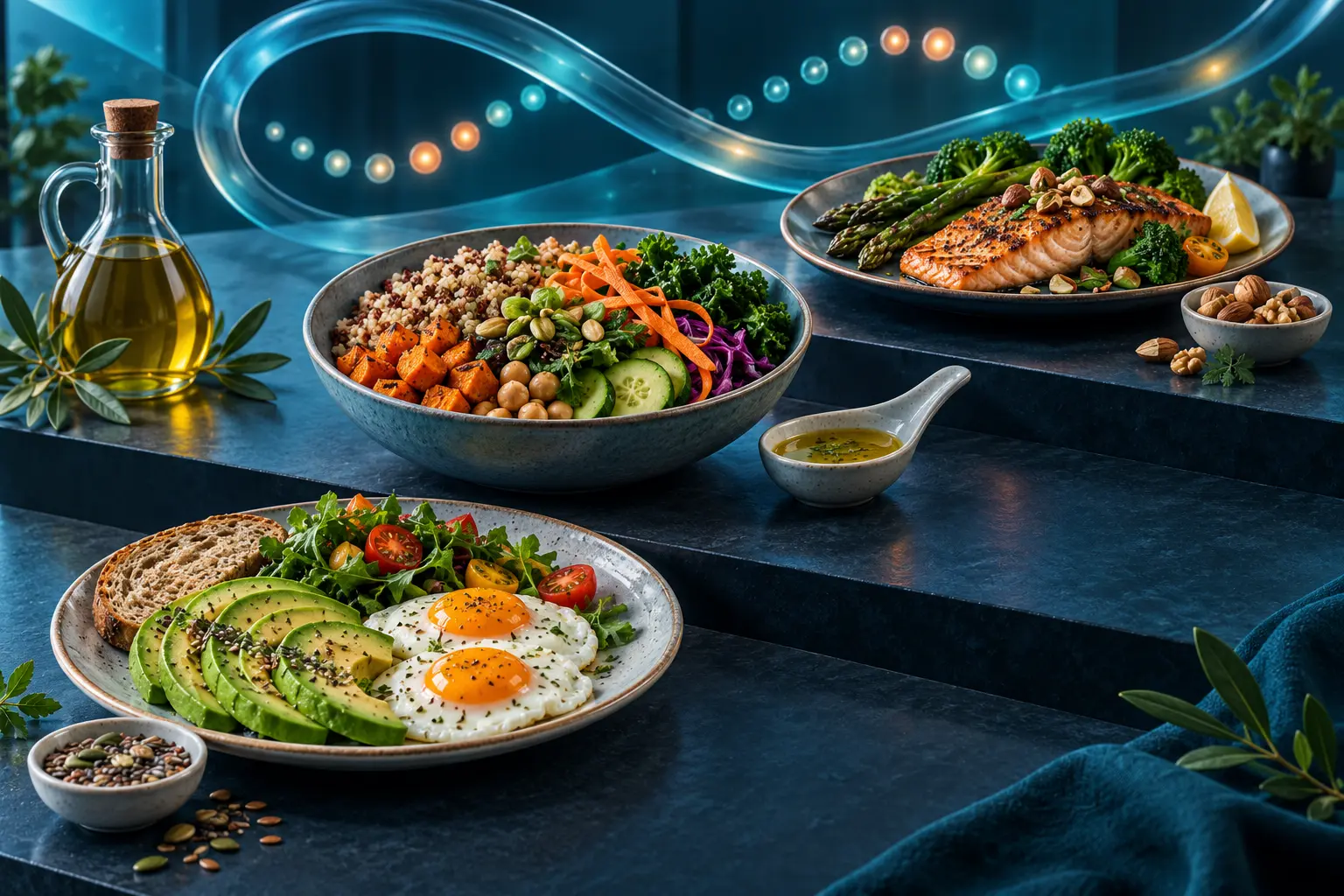
A healthy Mediterranean-style pattern illustrates that moderate fat intake can coexist with weight management when oils, nuts, fish, vegetables, legumes, and whole grains are used deliberately. The label matters less than the actual foods and portions.
Audit the source that replaced fat
When fat is reduced, manufacturers and home cooks may add refined starch, sugar, or larger portions to restore taste. When carbohydrate is reduced, saturated fat may rise. Compare the replacement rather than assuming that removing one nutrient improves the meal. A useful exchange lowers energy or improves food quality without creating greater hunger, poor training, digestive problems, or a lipid pattern that conflicts with clinical goals.
Where Fat Burn Active fits
A supplement cannot offset large unmeasured portions of energy-dense foods or replace the essential fats supplied by a balanced diet. Fat Burn Active is optional and cannot replace an appropriate energy intake, adequate protein and fiber, dietary variety, activity, sleep, or medical care. A short-term change in alertness, appetite, warmth, heart rate, or sweating does not prove meaningful fat loss.
Treat Fat Burn Active as an optional addition, not a substitute for Dietary Fat and Weight Loss: Finding the Right Balance. Review its listed ingredients and limitations in our product analysis. If the evidence, warnings, and cost fit your decision, verify the current formula and purchase options. We may earn a commission.
Safety and individual context
A large change in dietary fat may be unsuitable with gallbladder, pancreatic, liver, fat-malabsorption, lipid, or gastrointestinal conditions. Review symptoms, medicines, and laboratory goals with a qualified clinician.
Pregnancy or breastfeeding, adolescence, frailty, eating-disorder recovery, diabetes medicines, and significant kidney, liver, cardiovascular, gastrointestinal, or endocrine disease require individualized nutrition advice. Seek assessment for rapid unintended weight change, fainting, persistent vomiting or diarrhea, marked weakness, excessive thirst or urination, severe abdominal symptoms, or a sudden appetite change. Do not alter prescribed treatment or use a supplement as a diagnostic test.
Frequently asked questions
Does eating fat prevent body-fat loss?
No. Dietary fat can fit an energy deficit. Portions matter because fat is energy-dense.
How much fat should adults eat?
A common planning range is 20–35% of calories, but individual health, preferences, and total diet determine the useful point.
Are low-fat products better for weight loss?
Not automatically. Compare calories, serving size, sugar, sodium, ingredients, satisfaction, and the food being replaced.
Sources
- Dietary Guidelines for Americans
- WHO guideline on saturated and trans fats
- Systematic review of low-fat versus higher-fat diets
- Review of weight-loss diet strategies
Sources reviewed September 8, 2026. This article is general educational information, not medical advice, diagnosis, or treatment.