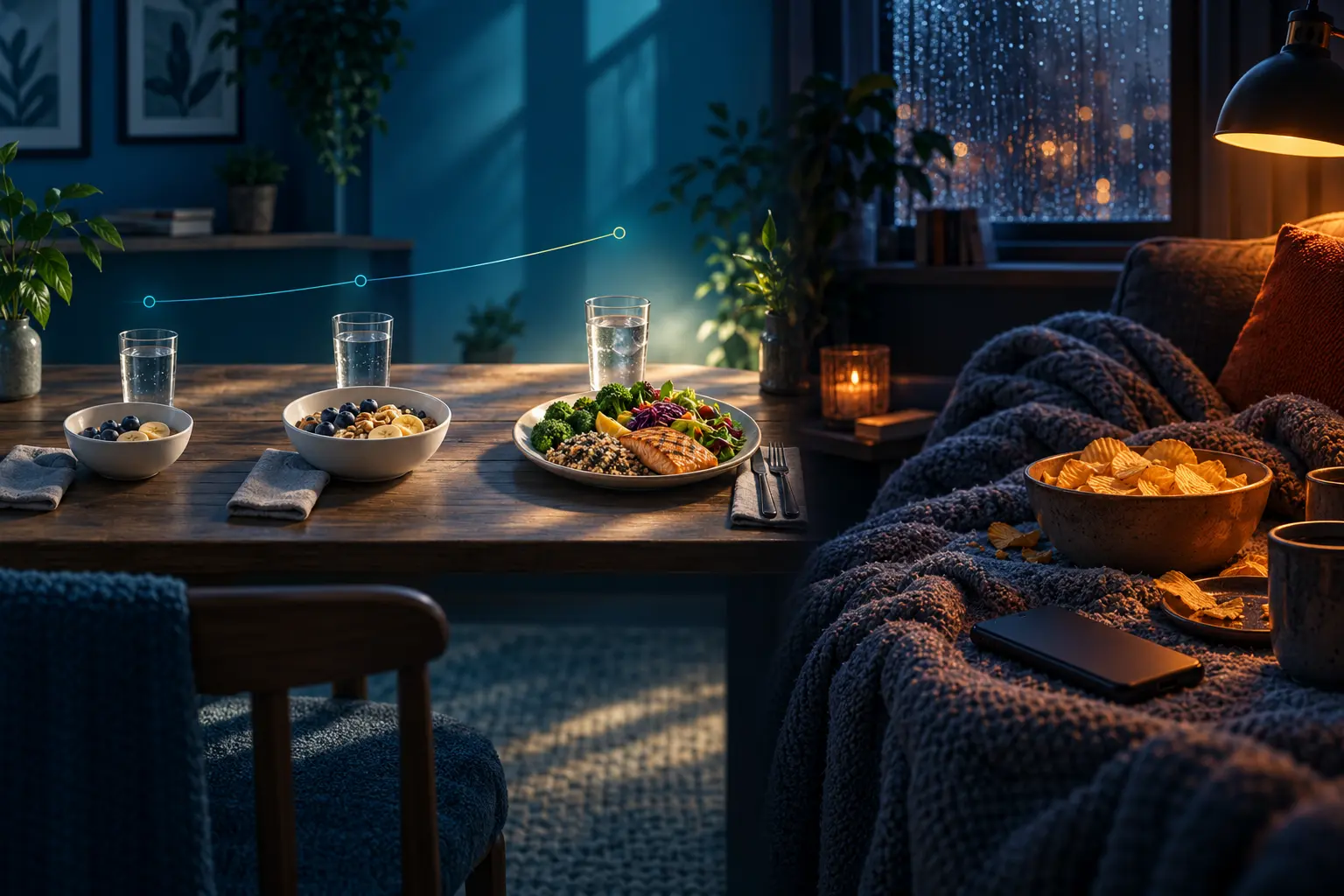
Why shame keeps the cycle alive
Emotional eating is often described as a failure of control. That framing misses its function. Food can provide pleasure, distraction, comfort, ritual, connection, and temporary relief. The problem develops when it becomes the only available response, produces distress or loss of control, or repeatedly conflicts with health and life goals.
Shame adds another difficult emotion, which can create another reason to eat. Compensating by skipping meals increases physical hunger, making the next episode more likely and harder to understand. A useful plan separates the trigger, the behavior, the short-term benefit, and the longer-term cost without moral language.
Physical hunger and emotional eating side by side
These clues are tendencies, not a test. Emotional eating can be slow and deliberate. Physical hunger can feel urgent after long restriction. Mixed episodes are common.

Map the complete trigger chain
Look beyond the emotion label. “Stress” may include a missed lunch, an argument, visible snacks, a delivery notification, exhaustion, and a learned evening routine. The more precisely you map the sequence, the more places you can intervene.
- Vulnerability: poor sleep, restriction, pain, alcohol, isolation, or an unusually demanding day.
- Prompt: a message, conflict, deadline, memory, celebration, boredom, or arriving home.
- Thought: “I deserve this,” “today is ruined,” or “food is the only thing that will help.”
- Action: ordering, grazing, eating secretly, or continuing past comfort.
- Consequence: short relief, discomfort, guilt, more restriction, or avoidance.
Change the earliest practical link. Preparing lunch may work better than fighting the urge at 10 p.m.
Create a coping menu that can compete with food
A coping list must match the need. Use connection for loneliness, a boundary or task plan for overwhelm, sensory comfort for agitation, rest for exhaustion, and celebration for positive emotion. Include two-minute, ten-minute, and longer options so the list works in real life.
Examples include messaging a trusted person, stepping outside, a short shower, paced breathing, music, writing the next practical action, moving to a public room, or going to bed. None is a universal replacement for eating. If you are also hungry, have the meal and use the emotional tool.
Keep an intentionally plated food option on the menu. The goal is flexible choice, not proving that you can refuse food. Eating for pleasure is a normal part of life; the concern is repeated distress and lack of alternatives.
Redesign the high-risk environment
Reduce friction for the response you want. Keep planned meals available, portion snack foods instead of eating from large packages, remove delivery-app prompts, and create an end-of-work transition that does not begin in the kitchen. If an item repeatedly triggers loss of control, change how and where it is bought without declaring it morally forbidden.
Social situations need a plan too. Decide how to eat before an event, include foods you enjoy, and avoid arriving extremely hungry. Afterward, return to normal meals. A single social meal does not require punishment.
If privacy fuels the pattern, eat seated and plated when practical. Visibility is not surveillance; it turns an automatic sequence into an observable choice.
Review an episode without punishment
Wait until the urgency settles, then reconstruct the episode in neutral terms. What had you eaten? What happened emotionally? What cue started the sequence? At what point was another option still realistic? What did the food provide for ten minutes, and what remained afterward?
Choose one change for next time: a larger lunch, a call after a difficult meeting, removing an app notification, buying a single portion, or asking for professional help. Progress can mean earlier awareness, a smaller amount, less secrecy, a shorter episode, or no compensation afterward. It does not require instant elimination.
When self-help should become supported care
Emotional eating exists on a spectrum. Qualified support is appropriate when episodes are frequent, highly distressing, associated with depression or anxiety, or involve a sense of loss of control. Binge-eating disorder and bulimia are clinical conditions, not severe versions of weak willpower.
Evidence-informed care may include cognitive behavioral approaches, interpersonal work, mindfulness-based strategies, nutritional rehabilitation, and treatment of coexisting conditions. The best approach depends on the person. A generic weight-loss supplement is not treatment for emotional eating.
Where Fat Burn Active fits
Emotional eating is a weak and potentially inappropriate product match. It requires adequate nutrition and coping support, not appetite suppression. Fat Burn Active is optional. It cannot correct an overly aggressive calorie deficit, replace filling meals, treat emotional eating, or guarantee appetite control or fat loss. Feeling less hungry or more stimulated for a few hours is not proof of meaningful body-fat change.
Once the practical steps in Physical Hunger vs Emotional Eating are working, decide whether an optional supplement adds enough value. Start with the Fat Burn Active review; if the formula and limitations are acceptable, see current availability and official ordering details. We may receive a commission.
When hunger needs professional attention
Persistent extreme hunger is not always a dieting problem. Seek qualified medical advice for a sudden unexplained appetite change, excessive thirst or urination, fainting, tremor, rapid unintended weight change, persistent diarrhea, marked weakness, menstrual disruption, or symptoms that began after a medicine change. Diabetes, thyroid disease, pregnancy, sleep disorders, gastrointestinal conditions, mental-health conditions, and some medicines can affect appetite.
Calorie restriction and appetite-focused supplements require individual guidance during pregnancy or breastfeeding, adolescence, frailty, eating-disorder recovery, and with significant cardiovascular, kidney, liver, gastrointestinal, endocrine, or psychiatric disease. Recurrent loss-of-control eating, compensatory restriction, purging, or intense fear around food deserves prompt support from a clinician experienced in eating disorders. This page is educational and cannot diagnose the cause of hunger or prescribe an intake target.
Frequently asked questions
Is emotional eating always unhealthy?
No. Food can be part of comfort and celebration. Concern rises when it is frequent, distressing, compulsive, or the only coping method.
Can emotional eating happen when physically hungry?
Yes. Under-eating can combine with stress or cues, so both adequate food and emotional support may be needed.
Should I compensate the next day?
No. Return to regular meals. Restriction can increase hunger and reinforce the cycle.
Sources
- Review: Emotional eating in healthy people and eating disorders
- Review: Emotional eating and health associations
- Systematic review of adult emotional-eating interventions
- NIMH: Eating disorders
Sources reviewed September 8, 2026. This article is general educational information, not medical advice, diagnosis, or treatment.