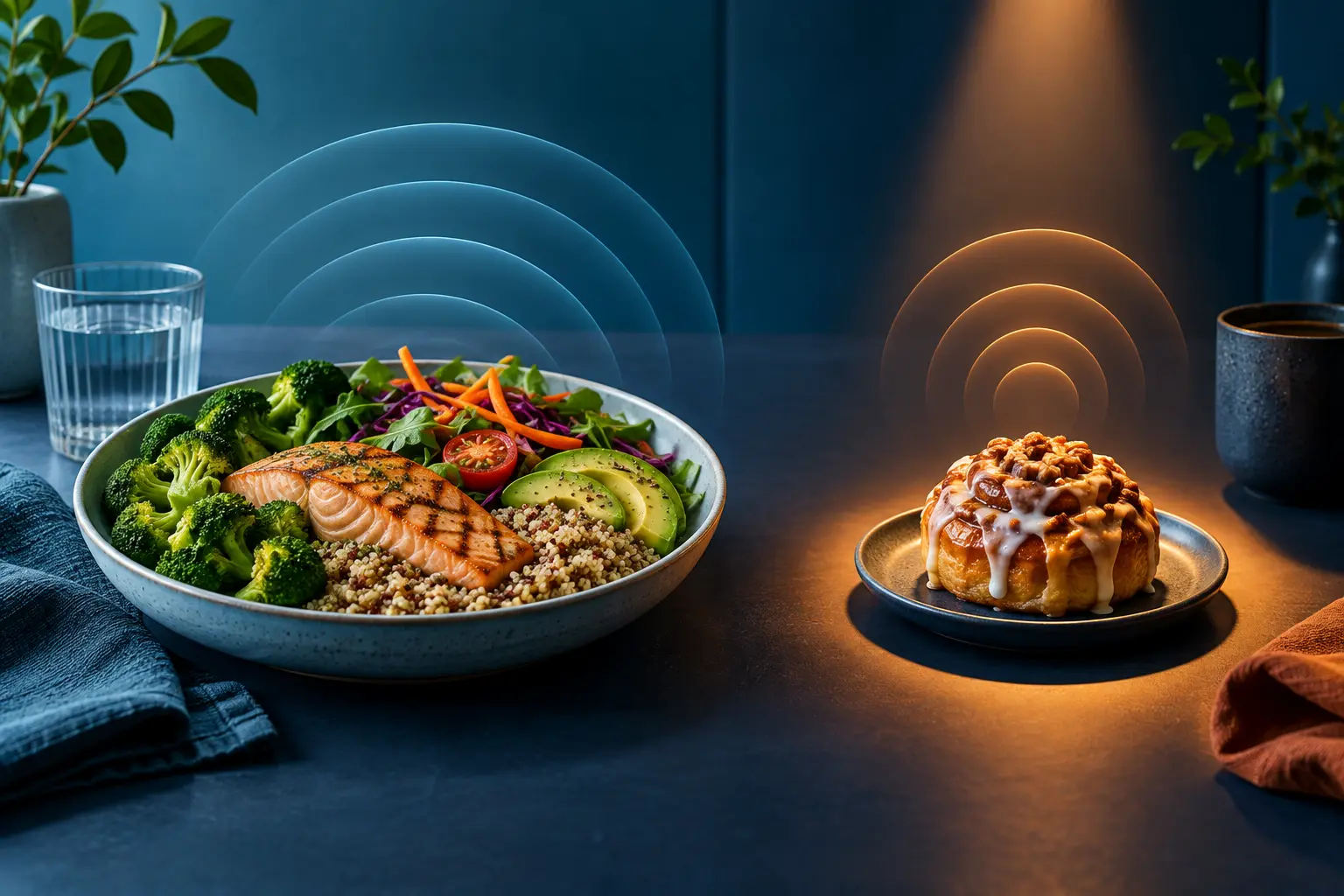
Why mislabeling the urge makes it stronger
Calling every desire “hunger” can turn a passing cue into repeated eating. Calling real hunger “just a craving” can lead to more restriction, stronger preoccupation, and a later rebound. The internet often offers a neat test—if you would not eat an apple, you are not hungry—but real appetite is not that tidy. People can be physically hungry and still prefer pizza; they can crave chocolate while also needing dinner.
The goal is not to win an argument with your body. It is to gather enough information to select a response. A nourishing meal solves under-fueling better than distraction. A change of environment may solve a cue-driven urge better than another meal. A planned serving can solve persistent deprivation better than an endless attempt to avoid the food.
The practical differences
None of these is a diagnostic rule. Hunger can arrive suddenly after a busy day, and cravings can build slowly. Use the pattern, not one clue.
For a specific evening pattern, use the after-dinner sweets guide to distinguish hunger, habit and enjoyment.
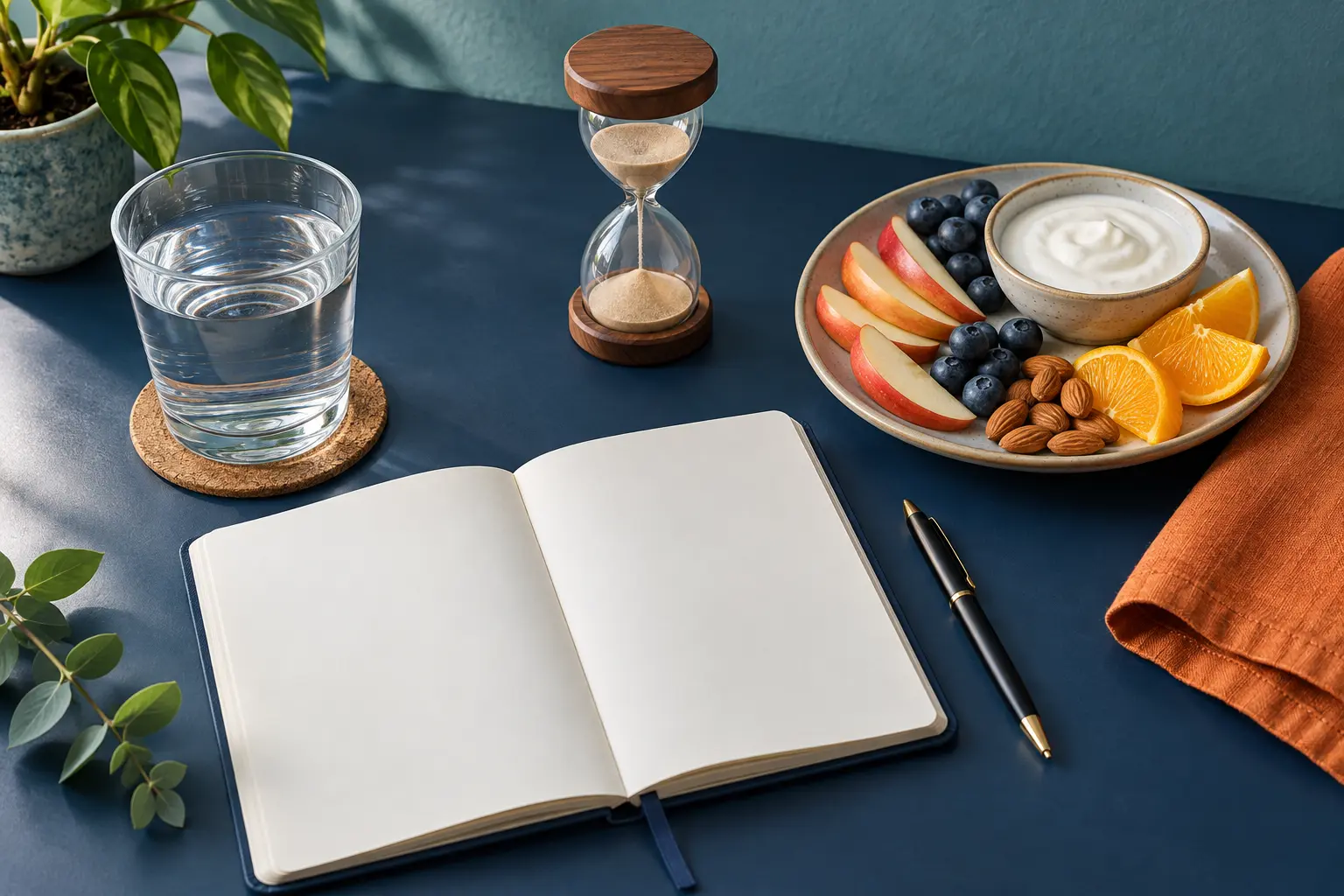
What research says about cravings
Food cravings are usually defined as intense desires for a particular food. Research distinguishes them from hunger through greater specificity and intensity, while also showing that deprivation, mood, cues, learning, and hunger can interact. Hunger can make food cues more powerful; it does not explain every craving.
Restriction matters. Forbidding a specific food can increase attention to it for some people, especially when the rule is rigid or the diet is nutritionally inadequate. Yet cravings are not proof of a nutrient deficiency. Wanting chocolate does not reliably diagnose magnesium deficiency, and wanting salty food does not automatically mean sodium is low.
Reward learning also matters. If television, finishing work, or entering the kitchen repeatedly precedes a snack, the context can trigger desire before physical hunger develops. Changing the sequence can weaken the automatic link.
A 90-second hunger-or-craving check
- Name the urge. What food or experience do you want, and how intense is it from 0 to 10?
- Check the timeline. When was the last substantial meal, and was it filling?
- Expand the menu. Would several foods help, or only one specific item?
- Scan the context. Notice smell, screen, stress, boredom, habit, alcohol, poor sleep, and availability.
- Choose a response. Eat a meal or snack for hunger; change the cue, meet the emotion, or choose a deliberate portion for a craving.
- Review afterward. Did the action improve hunger, satisfaction, emotion, or none of them?
The pause is for information, not forced delay. If you are clearly hungry, eat. Turning every appetite cue into a waiting exercise can become another form of restriction.
Match the tool to the driver
For physical hunger: choose an adequate meal or snack containing a suitable protein source, fiber-rich food, and enough energy. For a visual or habitual cue: close the delivery app, move the food out of sight, change rooms, or complete a different end-of-day ritual. For a sensory craving: decide whether a planned portion will be more satisfying than substitutes that lead to continued searching.
For restriction-driven cravings: review rules that label foods as forbidden and whether meals are too small. For sleep-related cravings: address the short night rather than designing another food rule. For emotion-linked cravings: identify the feeling and add a response that can realistically help—connection for loneliness, problem-solving for a practical worry, rest for exhaustion.
Build a craving plan before the next urge
Choose one recurring situation and write an if-then plan: “If I want sweets after dinner, I will first check whether dinner was adequate; then I will either eat a planned dessert at the table or close the kitchen and make tea.” The plan preserves choice while removing negotiation in the peak moment.
Track intensity before, immediately after, and 30 minutes after the response for one week. A walk may help boredom but not under-fueling. A full meal may resolve hunger but not loneliness. Your repeated data are more useful than a generic list of appetite hacks.
Do not compensate after eating a craved food by skipping the next meal. Compensation recreates biological pressure and can strengthen the cycle. Return to the normal plan at the next eating occasion.
When the distinction is not enough
Some episodes involve both hunger and emotion. Some people have weak, confusing, or delayed internal cues because of chronic dieting, medicines, stress, neurodivergence, illness, or eating-disorder history. In those cases, regular planned meals may be safer than waiting for a textbook hunger signal.
Recurrent binge episodes, secrecy, distress, or a feeling that eating cannot be stopped is not a simple craving-management problem. Evidence-based treatment may include psychological and nutritional care. Asking for help is a more accurate response than adding tighter rules.
Where Fat Burn Active fits
This intent is primarily behavioral and nutritional, so a supplement is not the direct answer to a cue-driven or emotional craving. Fat Burn Active is optional. It cannot correct an overly aggressive calorie deficit, replace filling meals, treat emotional eating, or guarantee appetite control or fat loss. Feeling less hungry or more stimulated for a few hours is not proof of meaningful body-fat change.
A supplement is not required to benefit from Hunger vs Cravings: How to Tell the Difference. If your foundations are already in place, use the independent Fat Burn Active review to judge whether the formula has a useful optional role. If it fits your expectations and stimulant tolerance, check current product details and ordering terms. We may receive a commission.
When hunger needs professional attention
Persistent extreme hunger is not always a dieting problem. Seek qualified medical advice for a sudden unexplained appetite change, excessive thirst or urination, fainting, tremor, rapid unintended weight change, persistent diarrhea, marked weakness, menstrual disruption, or symptoms that began after a medicine change. Diabetes, thyroid disease, pregnancy, sleep disorders, gastrointestinal conditions, mental-health conditions, and some medicines can affect appetite.
Calorie restriction and appetite-focused supplements require individual guidance during pregnancy or breastfeeding, adolescence, frailty, eating-disorder recovery, and with significant cardiovascular, kidney, liver, gastrointestinal, endocrine, or psychiatric disease. Recurrent loss-of-control eating, compensatory restriction, purging, or intense fear around food deserves prompt support from a clinician experienced in eating disorders. This page is educational and cannot diagnose the cause of hunger or prescribe an intake target.
Frequently asked questions
Can you be hungry and have a craving at the same time?
Yes. A long gap can create physical hunger while cues or preference make one food especially appealing.
Does drinking water prove whether it is hunger?
No. Water may address thirst or create a pause, but persistent hunger still deserves adequate food.
Should all cravings be resisted?
No. A deliberate portion may reduce preoccupation. The better question is whether the response is safe, satisfying, and consistent with the larger pattern.
Sources
- Review: Psychology of food cravings
- Harvard T.H. Chan School of Public Health: Cravings
- Experimental study of hunger, mood and food craving
- Review of emotional eating evidence
Sources reviewed September 8, 2026. This article is general educational information, not medical advice, diagnosis, or treatment.