
The nightly dessert loop can have several causes
You finish dinner, clear the plate and immediately think about cookies. Sometimes the meal was too small. Sometimes the television or kitchen routine has become a dessert signal. At other times, a long workday makes a familiar sweet taste feel comforting. These are different problems, so a single rule such as “drink water and ignore it” can miss the point.
Craving is a desire for a particular food; hunger is broader and often builds gradually. They can overlap. The fact that you ate dinner does not prove you had enough across the day. Nor does wanting chocolate prove a biological sugar deficiency. Research on sleep restriction finds more snack intake and stronger food reward in some controlled settings, but it does not identify the cause of any one person's evening craving.
Five checks before changing your dessert habit
1. Was the day underfed?
Skipping lunch or eating an intentionally tiny dinner can make sweet, convenient foods appealing later. Review the entire day rather than blaming the last bite of dinner. A dinner with protein, produce and enough starch or fat may be more satisfying than a plate designed only to stay under an arbitrary number. If you are on a calorie deficit, an overly aggressive target can make evening eating harder to manage.
2. Is dessert part of the script?
Maybe you always make tea, sit in the same chair and open a package. A repeated cue can prompt eating even when your stomach is comfortable. Try serving one intentional portion at the table, storing the rest out of immediate reach, or changing the routine for a few evenings. The goal is to regain choice, not to declare sweet foods forbidden.
3. Are you tired or stressed?
Sleep restriction can increase evening snack intake in experimental research. A small sleep-extension trial found reduced free-sugar intake, but neither finding guarantees that more sleep alone resolves cravings. If late nights are common, protect a realistic sleep opportunity and see whether the pattern changes. For stress, a pause, walk or conversation may help if you are seeking relief rather than food; none should replace food when you are truly hungry.
4. Are favorite foods banned?
Strict “never dessert” rules can turn an ordinary preference into an all-or-nothing test. If a moderate dessert fits your overall pattern, plan it openly. Eat it slowly and notice whether you enjoy it. If a planned portion repeatedly feels impossible, the issue may need more than portion advice, especially if guilt or loss of control is involved.
5. Could another factor matter?
Medication changes, blood glucose management, irregular shifts and other health contexts can influence eating. Do not diagnose a nutrient deficiency or disease from one craving. If thirst, frequent urination, marked appetite changes, low blood sugar symptoms, or other concerning signs accompany it, discuss those with a healthcare professional.
A seven-evening experiment that avoids food policing
Before reaching for dessert, note the time, your dinner components, hunger from 0 to 10, sleep the night before and what you want. Afterward note whether the food satisfied you and whether you felt physically hungry. Keep the notes brief. The purpose is to identify a pattern, not to count every thought or assign virtue to eating less.
On two or three evenings, make dinner a little more complete if it has been small. On others, keep dinner similar and change the cue: have dessert deliberately at the table, put packages away or move the evening activity. If sleep has been short, try a more consistent bedtime where possible. Compare what changed instead of stacking five rules at once.
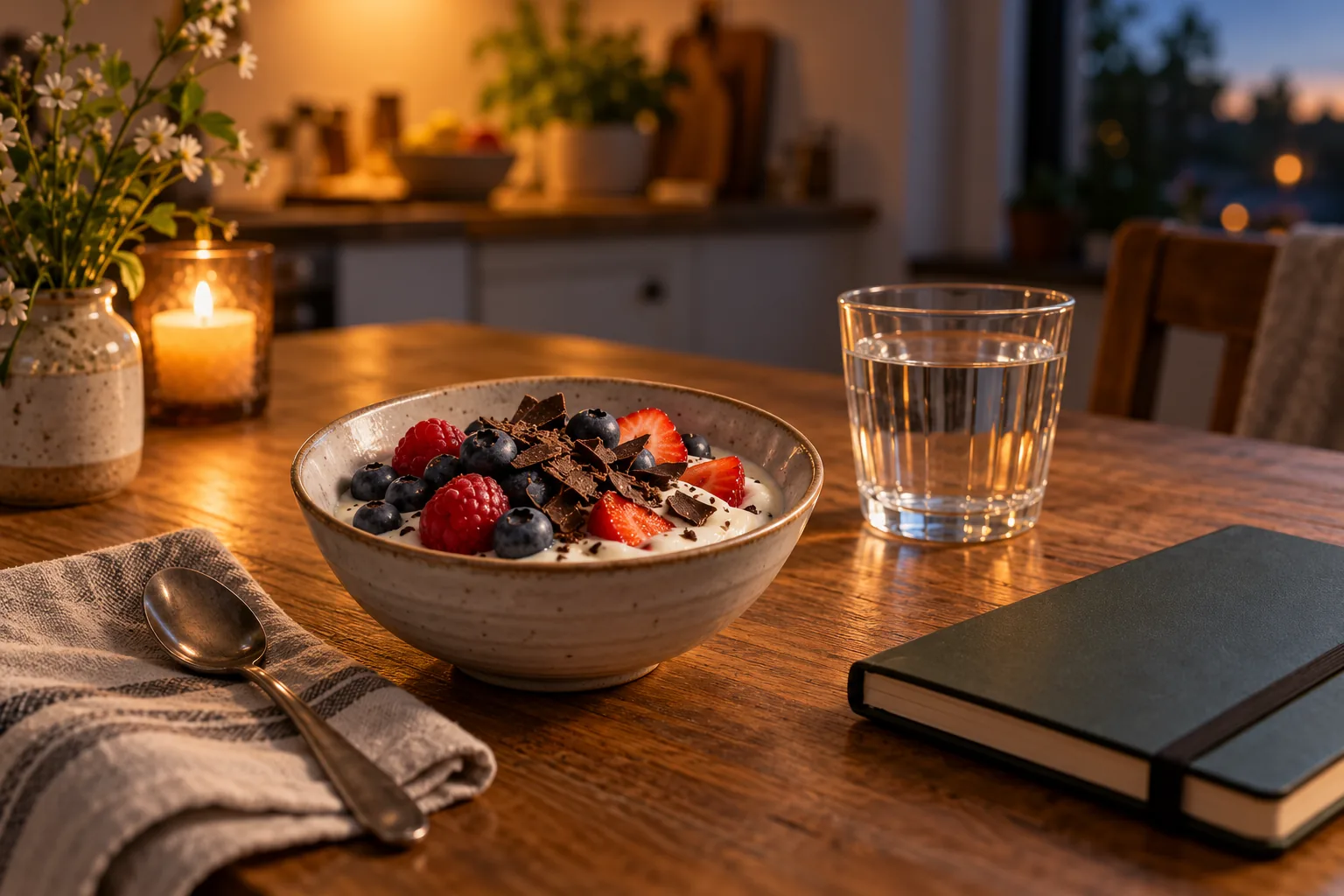
If eating feels better with a planned dessert, keep it. You could choose fruit with yogurt, a small piece of chocolate, a favorite baked item or something else you enjoy. A “healthy” substitute is not mandatory. Check portions if they affect your overall intake, but avoid turning one sweet food into a daily moral verdict.
Pick the response that matches the cause
Our general cravings guide covers broader strategies, while late-night hunger focuses on physical hunger later in the evening. If your question is whether the earlier meal was enough, start with dinner structure and portion checks.
When the pattern deserves extra help
Repeated episodes of eating with loss of control, compensatory behaviors, intense distress or a rigid cycle of restriction and overeating deserve professional attention. A dietitian or clinician can help without reducing the issue to willpower. If you have diabetes or medicines that can cause low blood sugar, follow your care plan rather than treating symptoms as a casual craving experiment.
Fat Burn Active is not a treatment for emotional eating or an answer to dessert cravings. A stimulant may affect appetite temporarily and can disturb sleep for some people; neither outcome proves durable weight loss. If you are considering the product for a broader plan, read the evidence and safety review independently from this behavior question.
What a planned dessert can look like
Choose the actual food you want and decide when and where to eat it. A few squares of chocolate at the table may be more satisfying than repeatedly opening the pantry for “healthier” substitutes you do not like. On another night, fruit and yogurt may sound better. Neither choice is a failure. Serve it, sit down, notice the taste and move on; the rest of the day still matters.
If the urge returns immediately after a planned portion, ask whether dinner was enough and whether you are using dessert to postpone sleep or decompress. More restriction is not the automatic solution. A consistent after-dinner routine, enough food earlier and less guilt around a favorite treat can be more useful than cycling between a ban and an unplanned large portion.
Frequently asked questions
Does craving sugar mean I lack a vitamin?
Not necessarily. A specific craving cannot identify a deficiency. Review patterns and seek medical advice for persistent concerning symptoms.
Should I ban dessert to lose weight?
No universal ban is required. A planned portion can fit; severe restriction may make some patterns harder to sustain.
Is fruit a good dessert?
It can be enjoyable and nutritious, especially paired with yogurt or another food if you need a snack. You do not have to substitute fruit for every favorite sweet.
Sources
- Controlled sleep-restriction study on evening snacks
- Sleep-extension trial and free-sugar intake
- NIDDK: Sustainable eating patterns
- CDC: Healthy weight-loss habits
- NIDDK: Binge eating disorder
Sources reviewed September 27, 2026. Educational information, not a diagnosis or treatment plan.